
One Festival, Many Traditions
Every year, on the full moon of the twelfth month in the traditional Thai lunar calendar, rivers, canals, and lakes across Thailand are illuminated by countless floating lights. It is Loi Krathong, one of the country’s most beautiful and widely celebrated festivals.
Traditionally, people release small floating baskets, known as krathongs, decorated with flowers, candles, and incense. The practice is commonly associated with paying respect to water, expressing gratitude for its importance to life, and symbolically letting go of misfortunes.
Yet Loi Krathong is far more diverse than the familiar image of a flower-filled basket drifting down a river.
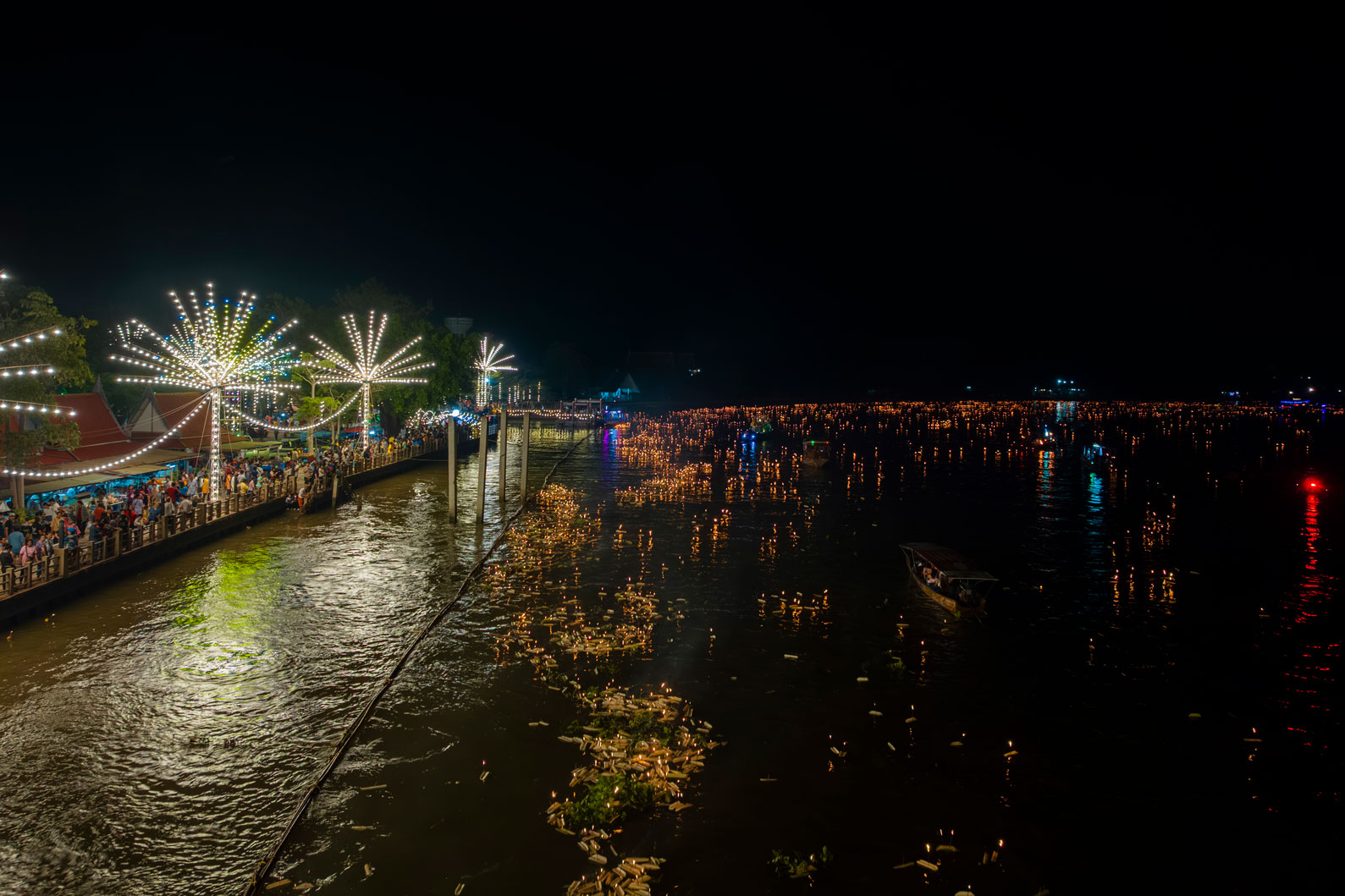
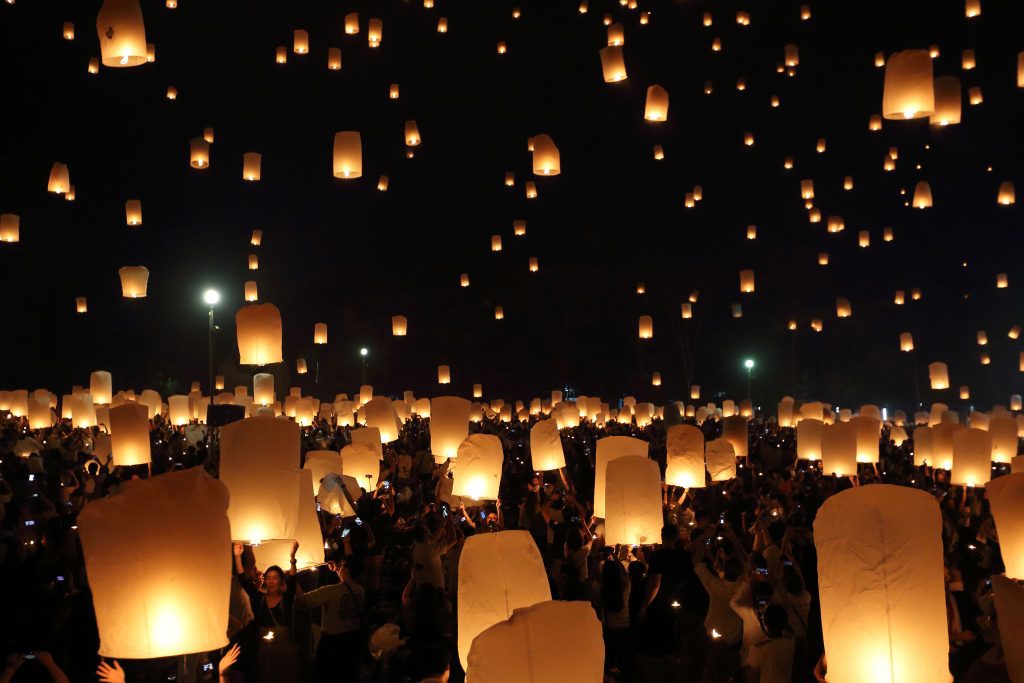
Across Thailand, different communities have developed their own ways of celebrating, shaped by local beliefs, natural surroundings, and generations of traditional knowledge. In Chiang Mai, thousands of glowing lanterns rise into the night sky. In Tak, coconut-shell lamps form a continuous ribbon of light along the Ping River. And in Samut Songkhram, simple banana sheaths become thousands of tiny floating lights.
Three remarkable traditions, each offering a different way to experience the beauty and meaning of Loi Krathong.
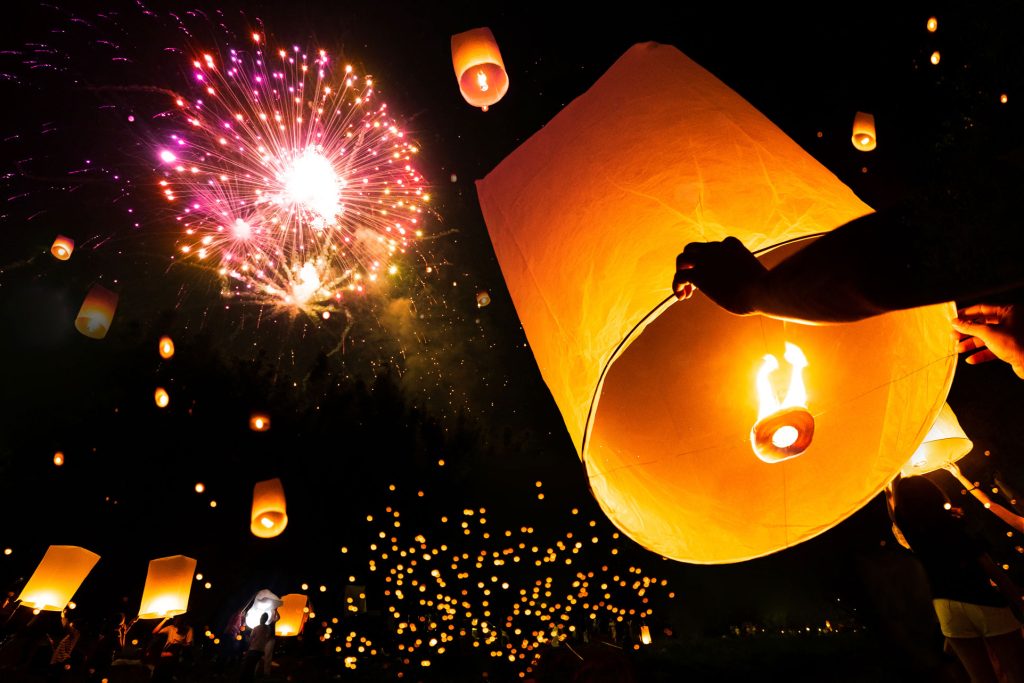
Yi Peng: A Sky Full of Wishes
Chiang Mai, Northern Thailand
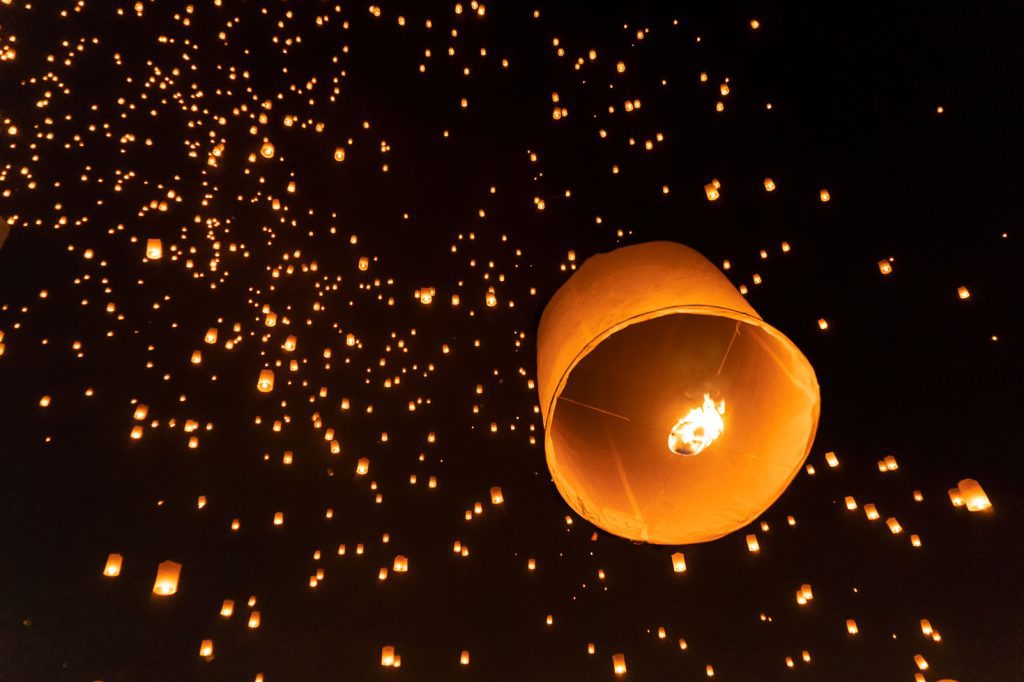
Of all Thailand’s Loi Krathong celebrations, few scenes are as breathtaking as thousands of illuminated lanterns rising together into the night sky. Their warm glow gradually spreads across the darkness, creating a spectacle that has become one of Chiang Mai’s most recognisable festival images.
This is the sky lantern celebration associated with Yi Peng, an ancient Lanna festival that has a much deeper meaning than the spectacular lantern releases seen today.
In the Lanna language, Yi refers to the second lunar month, while Peng means the full moon. The festival takes place during the full moon of the second month in the traditional northern lunar calendar, coinciding with Loi Krathong in November.
Historically, Yi Peng has been an important Buddhist merit-making occasion following the agricultural harvest. Families visit temples, make offerings to monks, listen to Buddhist sermons, and dedicate merit to their ancestors. Homes and temples are decorated with colourful lanterns, candles, and traditional ornaments, creating an atmosphere of celebration and devotion.
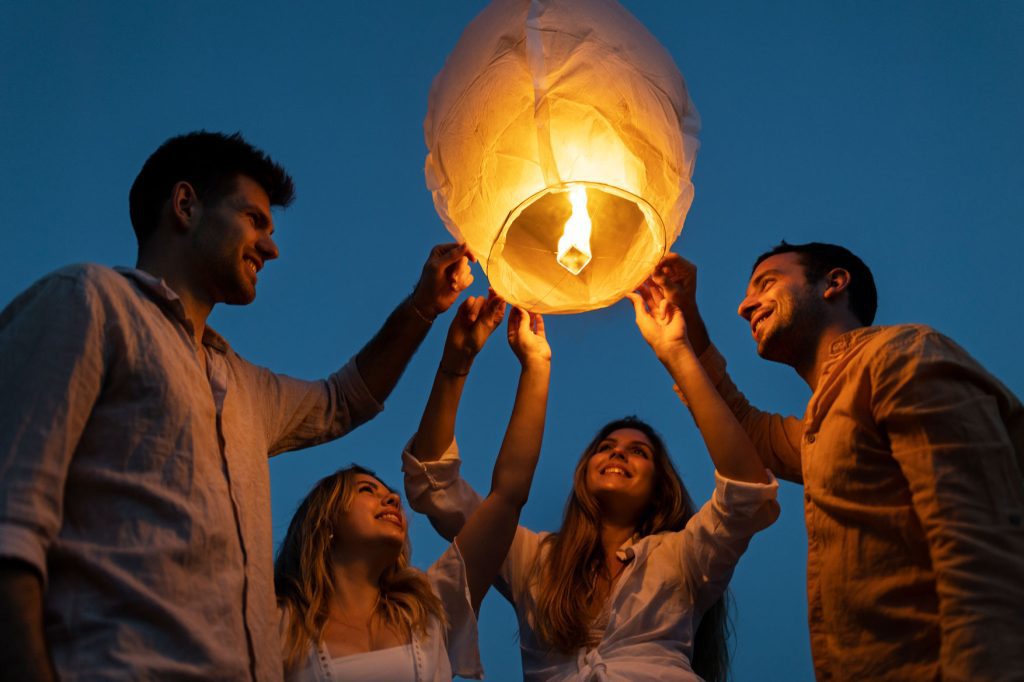
Lanterns have long played a significant role in Lanna religious culture. They come in many forms, including elaborate hanging lanterns displayed at temples and the familiar khom loi, or sky lanterns, made from lightweight paper supported by a bamboo frame.
One traditional belief associates the release of sky lanterns with paying homage to Phra That Kaew Chulamanee, a sacred Buddhist stupa believed to enshrine a relic of the Buddha in Tavatimsa Heaven. Sending a glowing lantern into the sky is thus understood as an act of worship, while some people also regard it as a symbolic way of releasing misfortune and welcoming a better future.
Interestingly, although Yi Peng itself is centuries old, the spectacular mass release of thousands of illuminated sky lanterns is a relatively recent development. It has grown in popularity over the past few decades, transforming one aspect of a traditional religious celebration into an internationally recognised festival experience.
The beauty of the event, however, comes with responsibilities. Sky lanterns can create fire hazards, interfere with aircraft, and leave debris after landing. Chiang Mai therefore regulates their release through designated areas, permitted times, and safety requirements.
One option for visitors is to attend an organised lantern release, such as the Chiang Mai CAD Khomloy Sky Lantern Festival, which combines cultural activities with coordinated lantern releases and safety arrangements.
An interesting aspect of CAD’s environmental management is its lantern buy-back programme. In addition to employing teams to collect fallen lanterns, the organiser has offered to purchase discarded lanterns gathered by residents in surrounding communities. This provides an incentive for waste collection while generating additional local income. Although it does not eliminate the environmental impact of sky lanterns, it offers a practical approach to managing some of the waste they leave behind.
Beyond the spectacular photographs, Yi Peng is an opportunity to discover the spiritual traditions of Lanna culture, where light symbolises faith, devotion, and hope.
Loi Krathong Sai: A Ribbon of Light
Tak, Northern Thailand
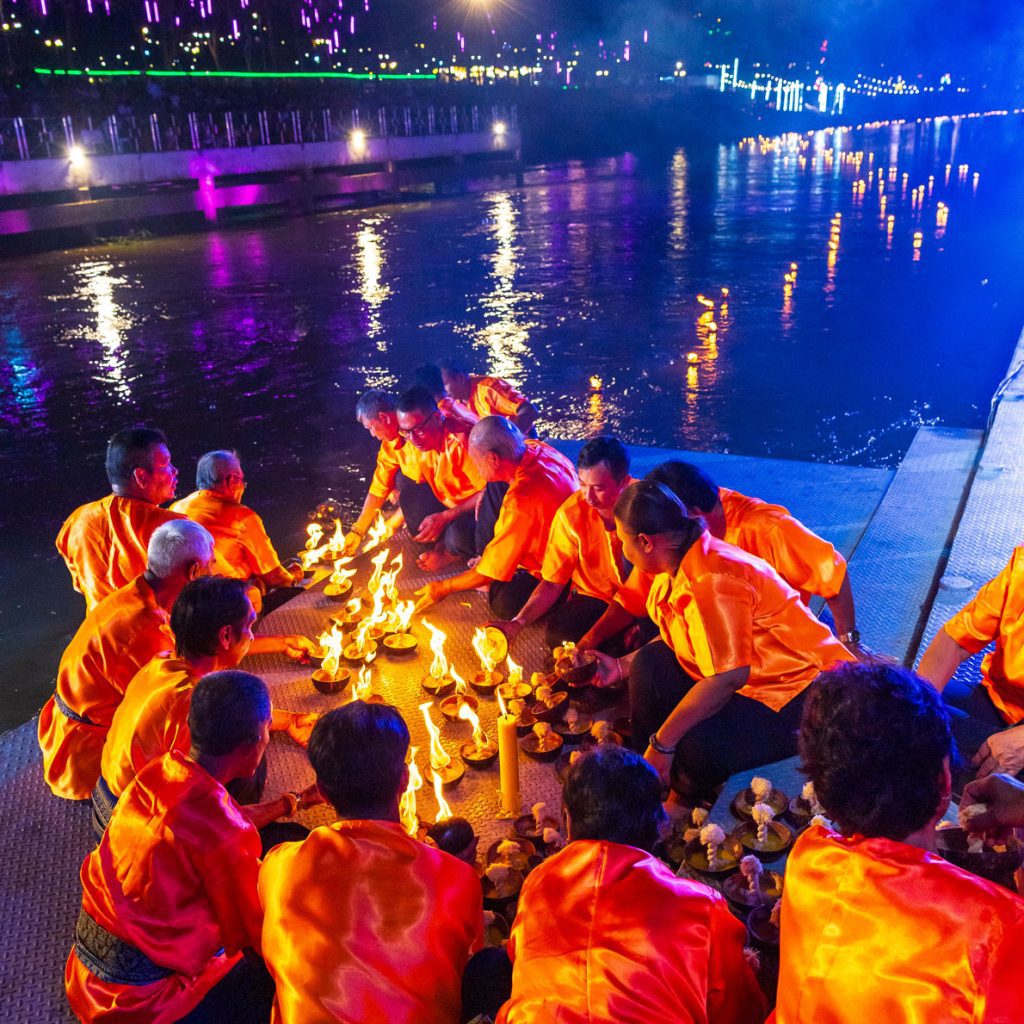
Imagine standing beside a river at night, watching hundreds of tiny flames drifting downstream. Rather than scattering randomly across the water, they move in a continuous, winding line, forming a shimmering ribbon of light that stretches into the distance.
This remarkable spectacle is known as Loi Krathong Sai, a distinctive local tradition celebrated along the Ping River in Tak Province.
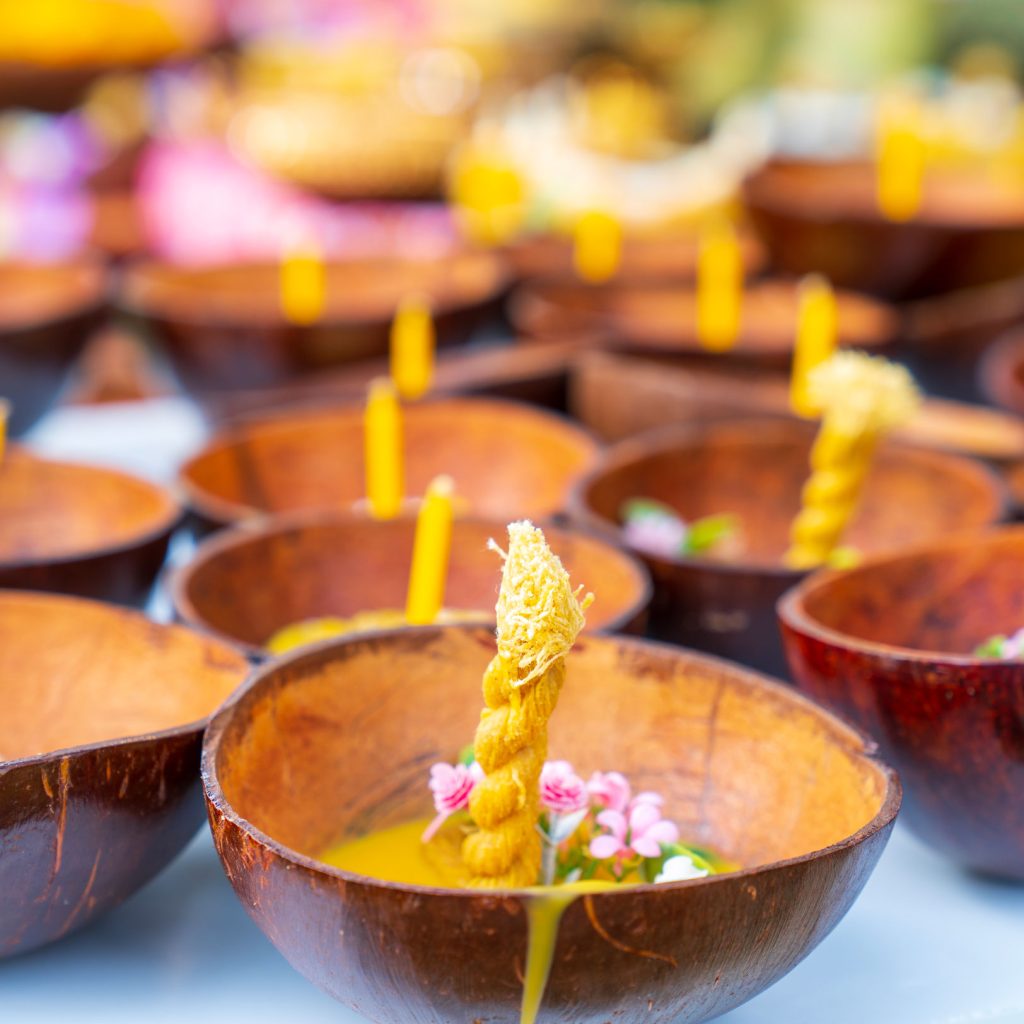
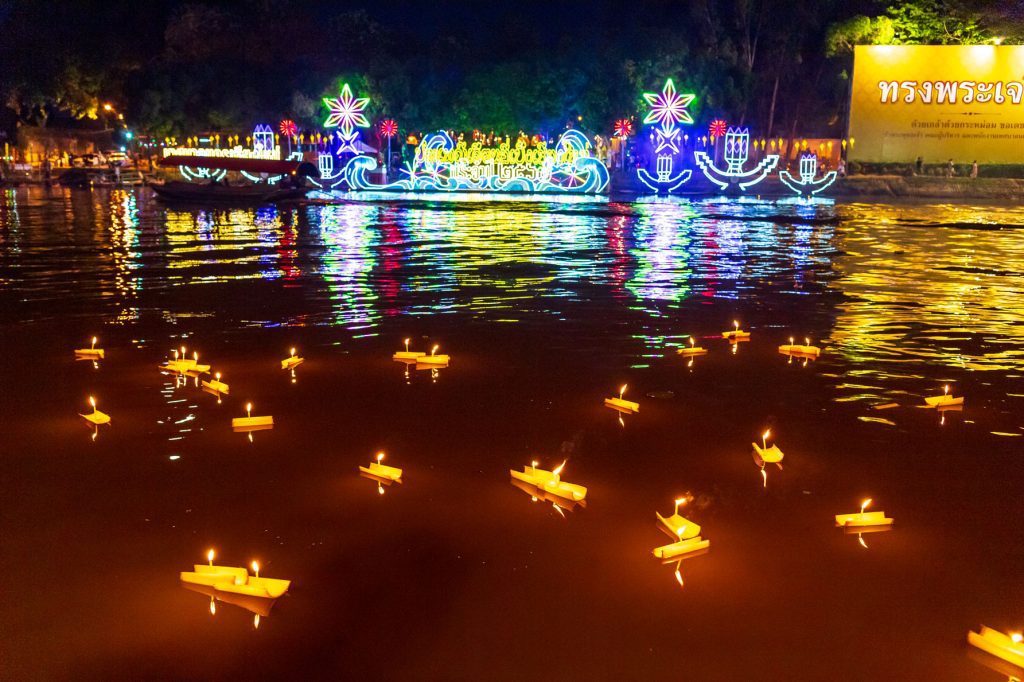
Unlike conventional krathongs made from folded banana leaves and decorated with flowers, those used in Tak are remarkably simple. They are made from coconut shells, each containing a small flame. These natural materials are inexpensive and readily available, reflecting the practical resourcefulness of local communities.
But the most fascinating feature of Loi Krathong Sai is not the krathong itself. It is the extraordinary relationship between the floating lights and the river.
Along this stretch of the Ping River, sandbanks and variations in the riverbed shape the movement of the water, creating distinct channels and currents. Local people have learned to use these natural conditions to guide the krathongs into a continuous flowing line.
When the coconut-shell lamps are released in carefully timed succession, the river carries them along the same course. From the riverbank, the tiny flames appear to join together, creating a long, luminous ribbon that follows the movement of the water.
The effect is especially striking against the darkness of the river, where each flame seems to become part of a much larger work of art.
Over time, the tradition has developed into a major community celebration, including the famous Loi Krathong Sai Lai Prathip Phan Duang, or the Festival of a Thousand Floating Lights.
One of the festival’s highlights is a competition in which participating teams release 1,000 illuminated coconut-shell krathongs in a continuous procession. Creating an unbroken line requires teamwork, precision, and an understanding of the river’s currents. The participants must coordinate the timing and spacing of each release to produce the most beautiful display.
The celebration also features cultural performances, ceremonial processions, and activities that bring together local communities.
What makes Loi Krathong Sai particularly special is that its beauty cannot be separated from its location. The shape of the river, the movement of the current, and the knowledge passed down through generations all contribute to a tradition that could hardly be reproduced in exactly the same way elsewhere.
It is a beautiful example of nature and human creativity working together.
Loi Krathong Kap Kluai: Beauty in Simplicity
Samut Songkhram, Central Thailand
Not every beautiful festival requires elaborate decorations or complicated craftsmanship. Sometimes, an ordinary piece of a banana plant and a small flame are enough to create an unforgettable scene.
In Samut Songkhram, a riverside province southwest of Bangkok, local communities celebrate Loi Krathong using one of the simplest materials imaginable: banana sheaths.
The tradition is known as Loi Krathong Kap Kluai, or the Banana Sheath Krathong Festival, and is closely associated with life along the Mae Klong River.
Banana plants have long been part of everyday life in Thailand. Their leaves are used for wrapping food, their fruit is eaten in numerous forms, and various parts of the plant have practical uses in local households.
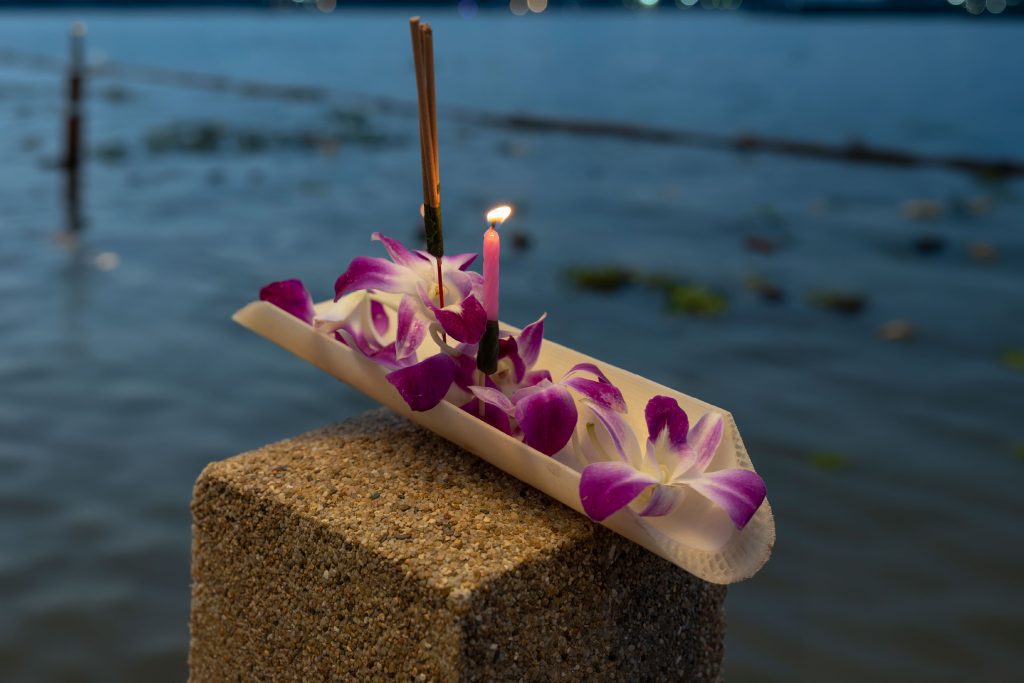
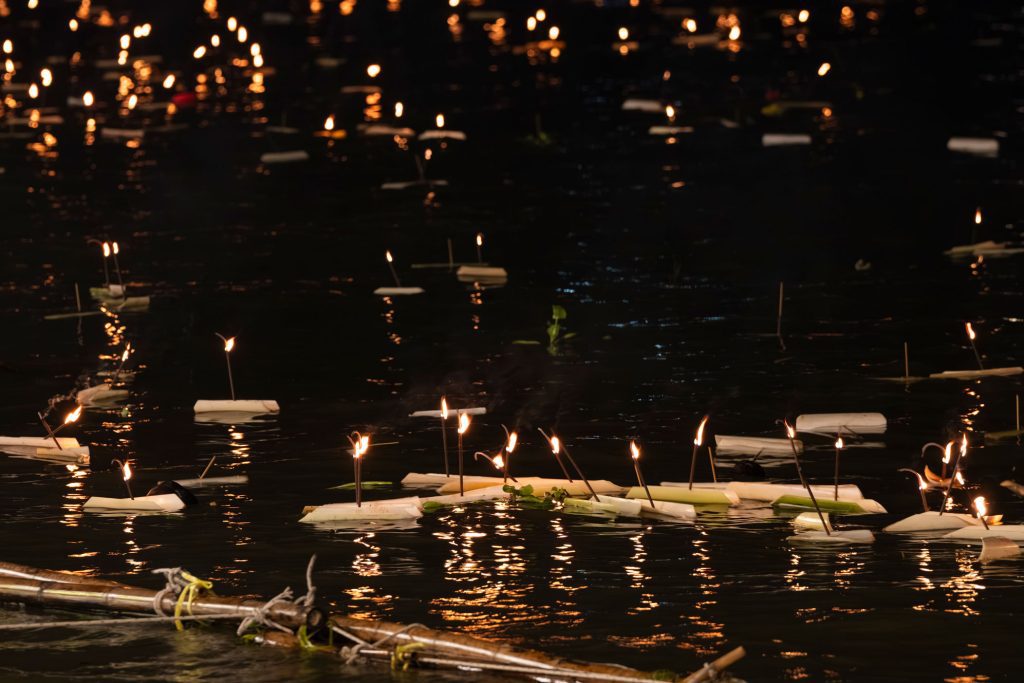
In Samut Songkhram, the thick outer sheaths of banana trunks are transformed into small floating vessels. Each sheath is cut into a short, boat-like shape, taking advantage of its natural buoyancy.
Instead of elaborate floral decorations, a specially prepared incense stick is placed in each piece.
The incense is traditionally treated with natural tree resin and wax through a careful preparation process, allowing it to burn for an extended period even when exposed to the breeze over the river.
Once lit, thousands of these simple krathongs are released onto the Mae Klong River. Their tiny flames spread across the water, creating a glittering scene that resembles a field of stars floating through the darkness.
There is something particularly appealing about the contrast between the simplicity of each individual krathong and the extraordinary beauty of the collective display.
The tradition also reflects a long-established understanding of locally available materials. Banana sheaths are natural and biodegradable, offering an alternative to krathongs made with plastic or synthetic decorations. However, even natural materials can accumulate as waste when released in large quantities, making responsible management essential.
The history of Loi Krathong Kap Kluai also tells a story of cultural preservation. The tradition had faded from local celebrations for several decades before being revived in 2005 through the efforts of local communities and authorities.
Today, the festival has become one of Samut Songkhram’s distinctive cultural events, bringing people together to prepare the krathongs, organise the celebration, and preserve their local heritage.
More than simply an alternative way of celebrating Loi Krathong, it demonstrates how everyday natural materials can become expressions of cultural identity.
And perhaps that is its greatest charm: a beautiful tradition created not through extravagance, but through simplicity, resourcefulness, and the collective spirit of a community.
QUICK INFO
Planning Your Loi Krathong Journey in 2026
1. Yi Peng — Chiang Mai
When: 24–25 November 2026.
Where: Chiang Mai Province, Northern Thailand. Traditional Yi Peng decorations, temple ceremonies, and cultural activities can be enjoyed throughout the city, while sky lantern releases are restricted to authorised locations.
Sky Lantern Regulations: In 2026, sky lantern releases are permitted on 24 and 25 November, between 7 PM and 1 AM the following morning, only in approved locations. Releases are prohibited throughout Mueang Chiang Mai and Hang Dong districts, as well as other restricted areas near flight paths. Locations outside these zones may still require advance permission. Visitors should check the regulations with local authorities before planning to release a lantern.
Organised Lantern Festival: The Chiang Mai CAD Khomloy Sky Lantern Festival takes place on 24–25 November 2026 at CAD Cultural Center Lanna, Mae On District, east of Chiang Mai. Admission tickets are required, and advance booking is recommended.
Information & Booking: https://yipenglanternfestival.in.th/
Getting There: Chiang Mai is easily reached by domestic flights, trains, or buses from Bangkok. Organised lantern events may include transfers from designated meeting points in the city.
2. Loi Krathong Sai — Tak
When: 21–24 November 2026.
Where: Along the Ping River, near the Rattanakosin Bicentennial Bridge in Mueang Tak District, Tak Province.
Highlights: The spectacular procession of 1,000 illuminated coconut-shell krathongs, traditional competitions, cultural performances, and riverside celebrations.
Getting There: Tak is approximately 420 km north of Bangkok, around 5–6 hours by car. Intercity buses also operate between Bangkok and Tak. The main festival grounds are located in the provincial town.
Information: Tourism Authority of Thailand, Tak Office.
3. Loi Krathong Kap Kluai — Samut Songkhram
When: Around the Loi Krathong period in November 2026. The main full moon falls on 24 November, but the exact local festival dates and programme should be reconfirmed.
Where: Along the Mae Klong River, particularly around Wat Phummarin Kudi Thong and the King Rama II Memorial Park area in Amphawa District, Samut Songkhram Province.
Highlights: Thousands of illuminated banana-sheath krathongs, local cultural activities, and traditional riverside celebrations.
Getting There: Samut Songkhram is approximately 75–85 km southwest of Bangkok, around 1.5–2 hours by car depending on traffic. Public buses and minivans connect Bangkok with the Mae Klong area, while local transport can be arranged to reach Amphawa.
Travel Tip: Festival programmes, release times, and viewing arrangements may change. Check official local announcements before travelling, especially if planning to attend a particular ceremony or lantern release.
Share


