
Some places are defined by cities, beaches, or landmarks.
But Khao Yai is defined by its living ecosystem — forests, waterfalls, grasslands, and wildlife connected together.
As Thailand’s first national park and part of the Dong Phayayen–Khao Yai Forest Complex, a UNESCO World Heritage Site, Khao Yai National Park is not simply a mountain escape. It is a living forest system where rivers begin, rare cloud forests survive, and wildlife still moves freely between valleys and mountains.
Khao Yai is not defined by a single viewpoint or attraction. Its true beauty lies in how everything connects — waterfalls feeding rivers, grasslands feeding deer, giant trees sheltering hornbills, and mist-covered forests absorbing moisture from the sky itself.
Haew Suwat Waterfall
The Waterfall of Lam Ta Khong
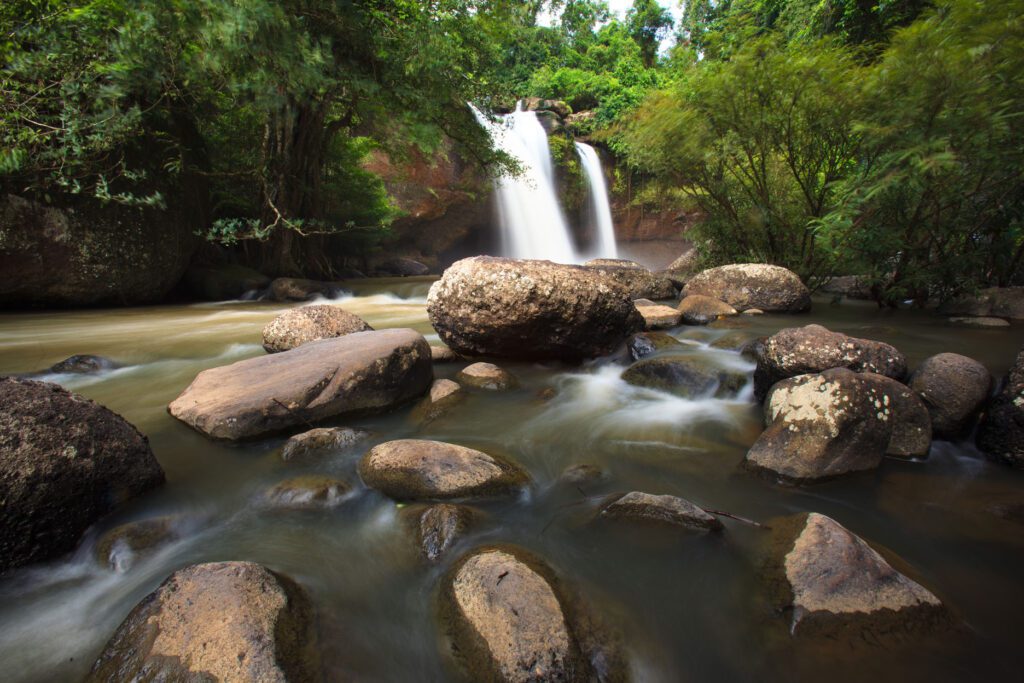
One of the most visited waterfalls in Khao Yai is also one of its most important. Haew Suwat Waterfall is easily accessible, but beyond its beauty lies the beginning of the Lam Ta Khong stream — one of the major waterways flowing through the park.
The waterfall drops dramatically into a deep basin surrounded by dense forest, especially beautiful during the rainy season when the forest becomes intensely green and the water grows powerful. But more importantly, this stream system helps sustain the ecosystems downstream, eventually flowing toward communities and agricultural lands beyond the mountains.
In Khao Yai, water is not simply scenery. It is the foundation of life.
Haew Narok Waterfall
The Power of the Forest
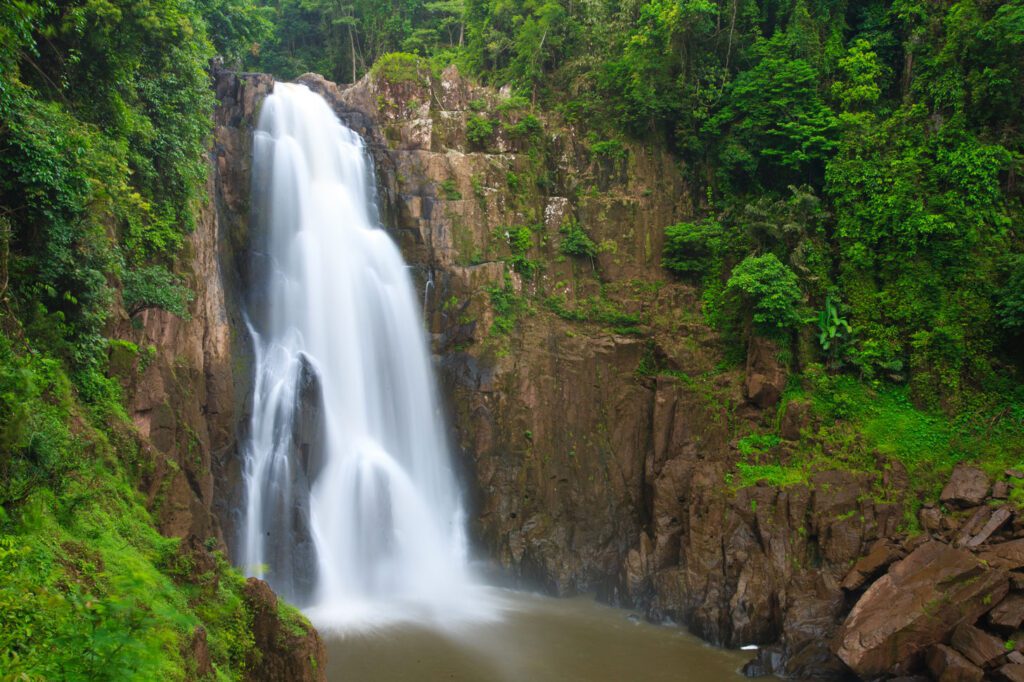
If Haew Suwat feels graceful, Haew Narok feels immense.
Hidden deeper within the forest, Haew Narok is one of the largest waterfalls in the park, plunging through steep cliffs into a dense jungle gorge below. During the rainy season, the sound of the water can be heard long before the waterfall itself appears.
The journey to the viewpoint passes through thick forest alive with humidity, insects, and birdsong — a reminder that waterfalls here are inseparable from the rainforest around them.
Pha Diao Dai
The Edge of the Mountain
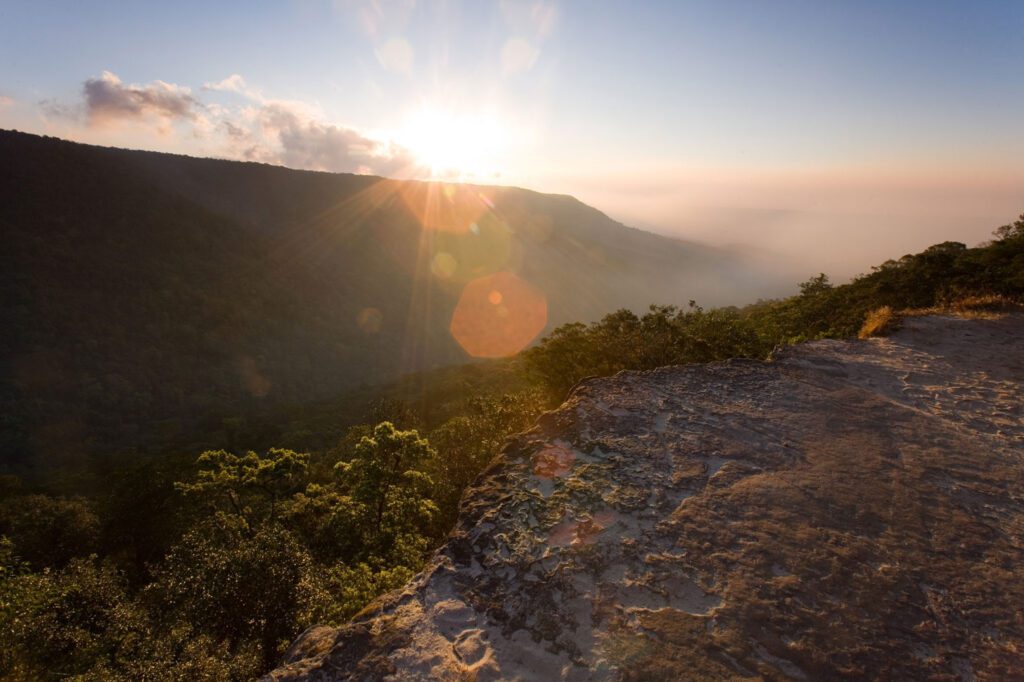
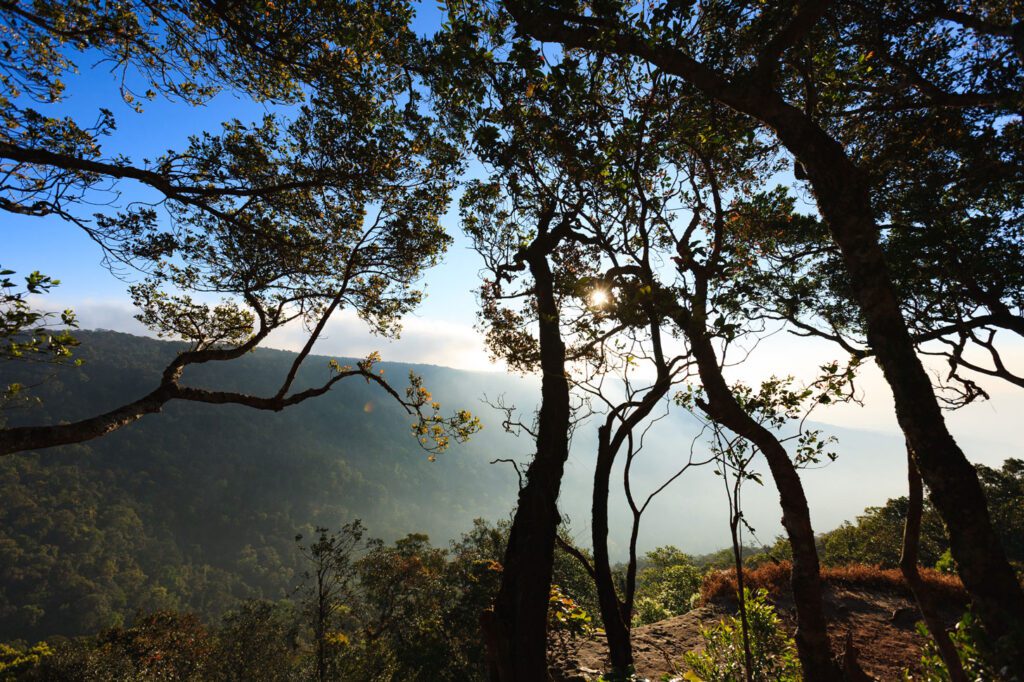
Pha Diao Dai, literally meaning “the lonely cliff,” is one of the most peaceful viewpoints in Khao Yai.
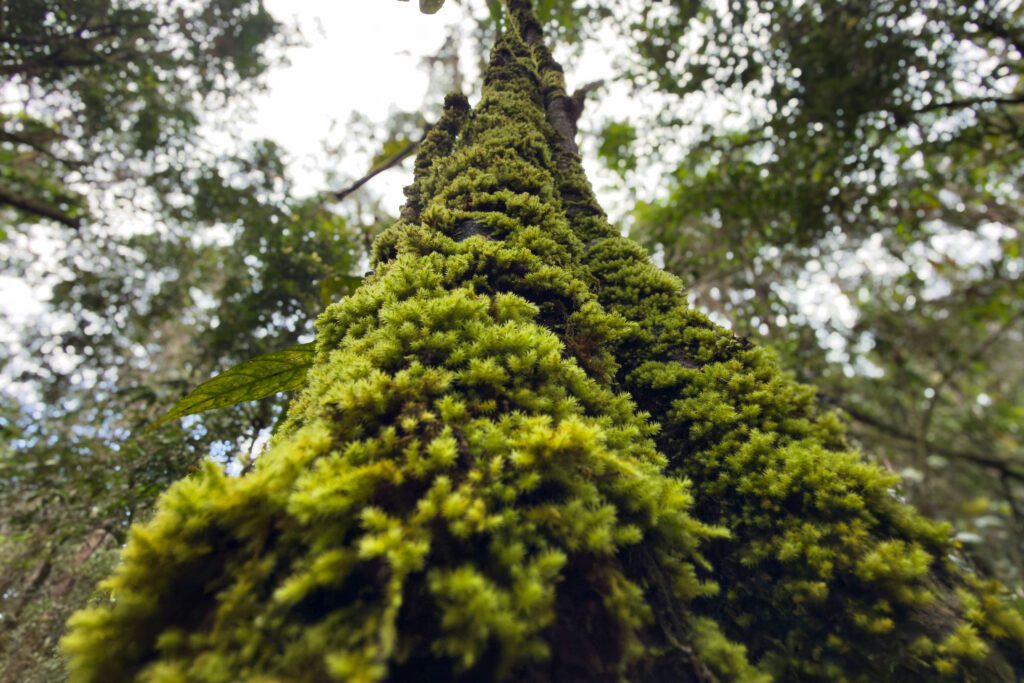
Located on Khao Khiao — the highest peak in Central Thailand — the trail leading to the cliff is as meaningful as the destination itself. The wooden nature trail passes through cool mountain forest covered with moss, ferns, and twisted trees shaped by moisture and wind.
When the mist drifts through the forest, the atmosphere feels almost prehistoric.
From the cliff edge, layers of mountains stretch endlessly toward the horizon, especially beautiful in the early morning light.
The Montane Rainforest of Khao Khiao
A Rare Forest Above the Clouds
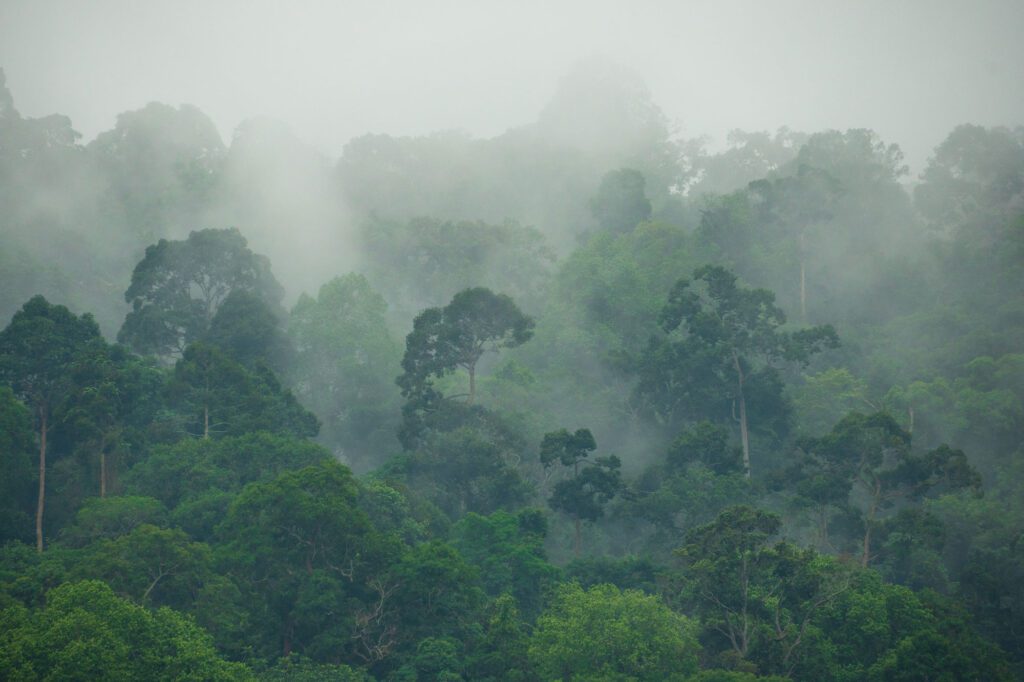
One of Khao Yai’s most important ecosystems is the montane rainforest found on higher elevations like Khao Khiao.
This type of forest is increasingly rare in Thailand. Because temperatures are cooler and moisture remains high throughout the year, trees here grow differently from lowland tropical forests. Moss blankets tree trunks, lichens cover branches, and epiphytes cling to every surface.
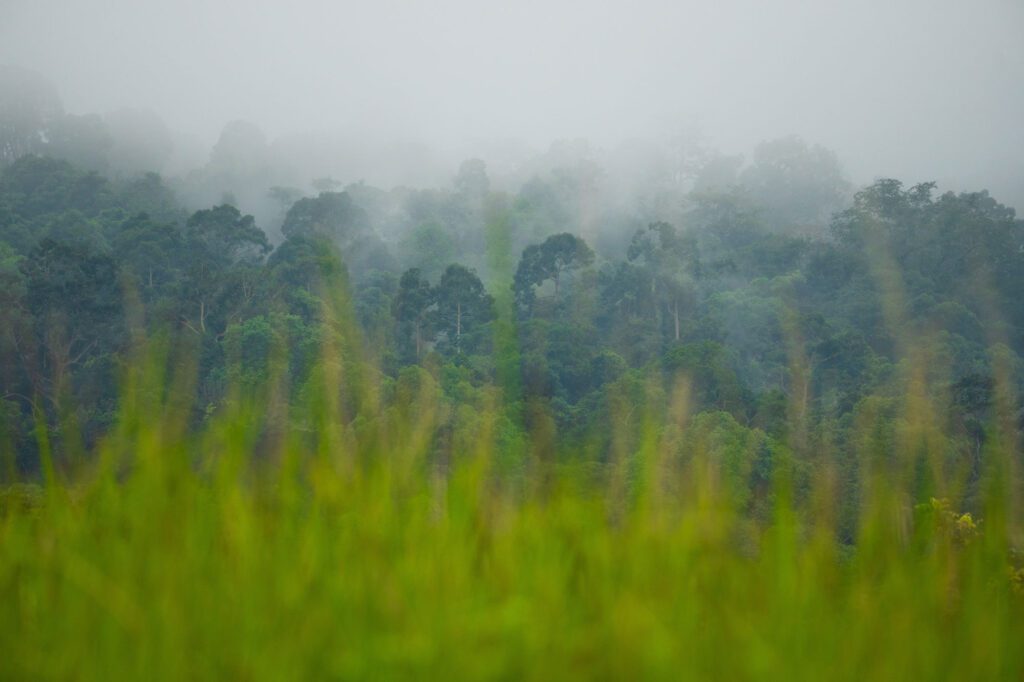
Clouds and mist are not occasional visitors here — they are part of the ecosystem itself.
These forests act like giant natural sponges, absorbing moisture and slowly releasing water into streams and rivers below. They are also home to many sensitive species that cannot survive elsewhere.
The Grasslands
A Landscape Reclaimed by Nature
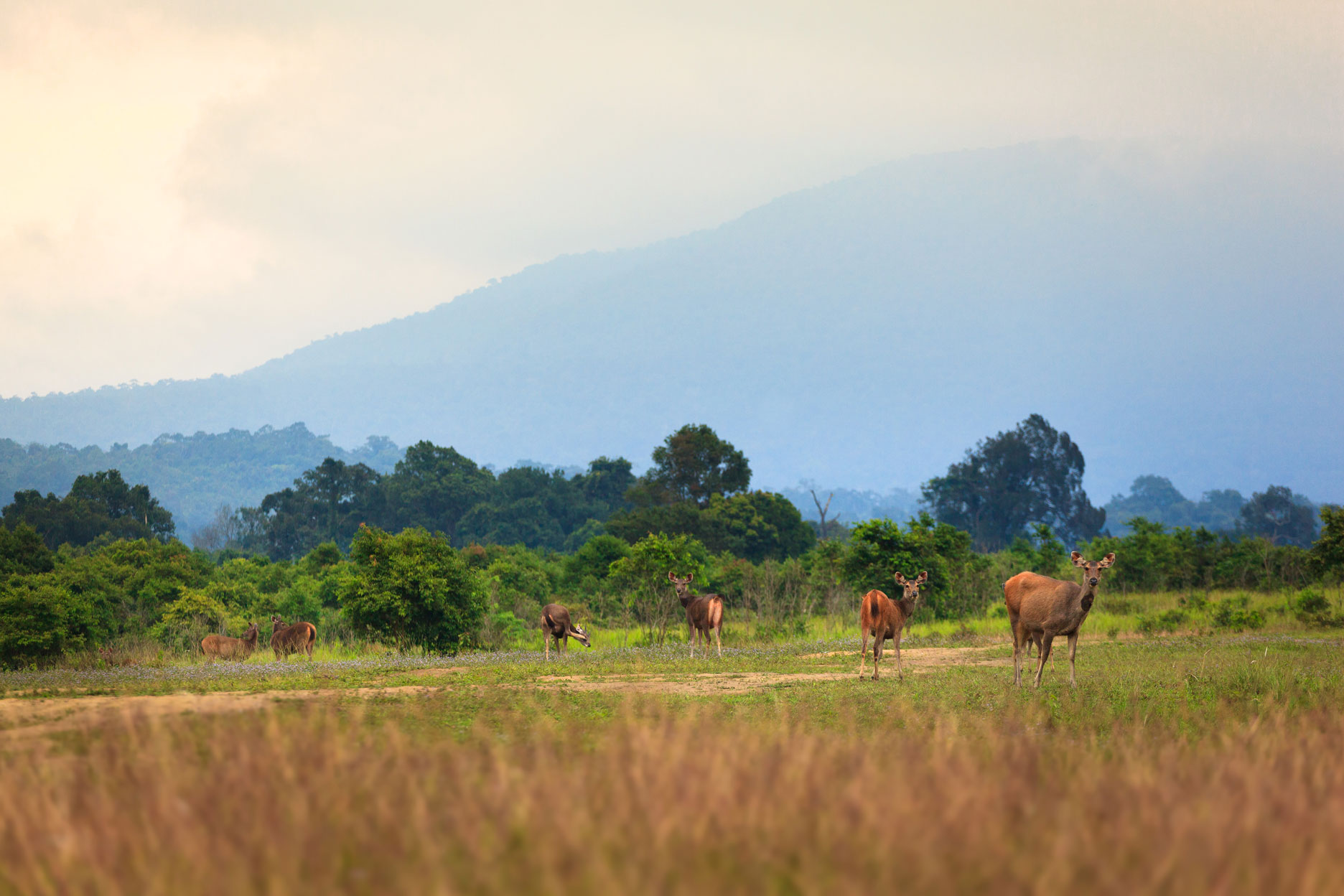
Many visitors are surprised to learn that Khao Yai’s open grasslands were once agricultural settlements before the national park was established.
When villages were relocated decades ago, nature slowly reclaimed the abandoned land. Today, these grasslands have become vital feeding grounds for wildlife.
At sunrise and sunset, mist drifts low across the fields while deer emerge cautiously from the forest edge. The open landscape also creates opportunities to observe larger animals moving between forest zones.
What was once shaped by people has become part of the ecosystem again.
Deer
Quiet Keepers of the Grasslands
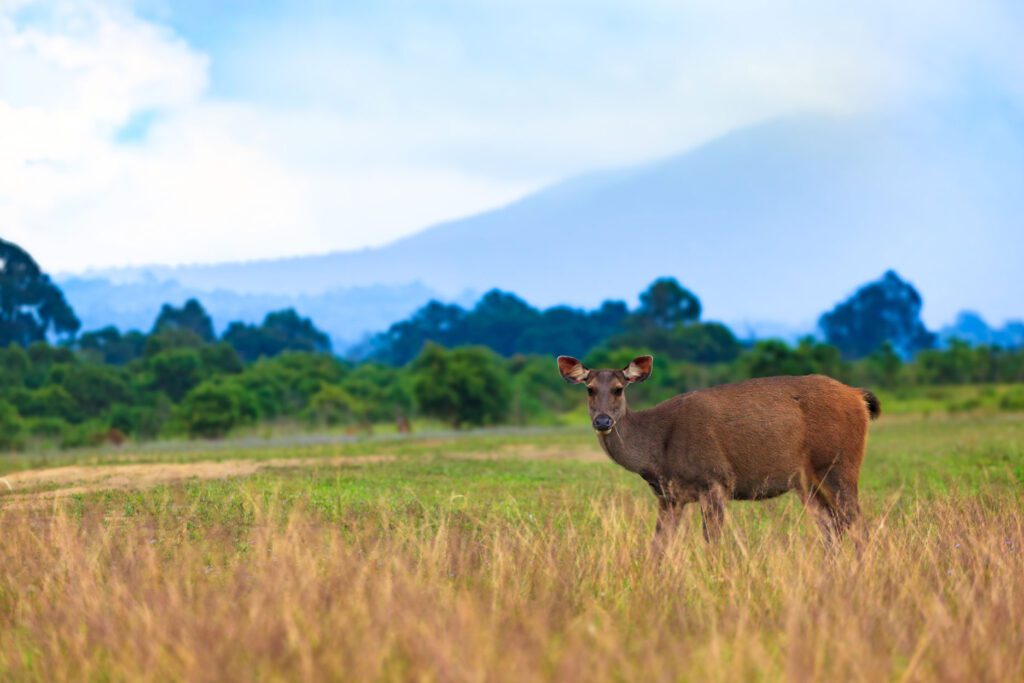
Deer are among the most iconic animals of Khao Yai and play an important ecological role as grazers within the grassland ecosystem.
They help maintain vegetation balance while also serving as prey species for larger predators within the forest system.
Some of the best places to observe deer are around Nong Phak Chi Wildlife Observation Tower and the grasslands near Mo Singto, particularly during the cooler hours of early morning and evening.
Their presence is often one of the clearest signs of how healthy the ecosystem remains.
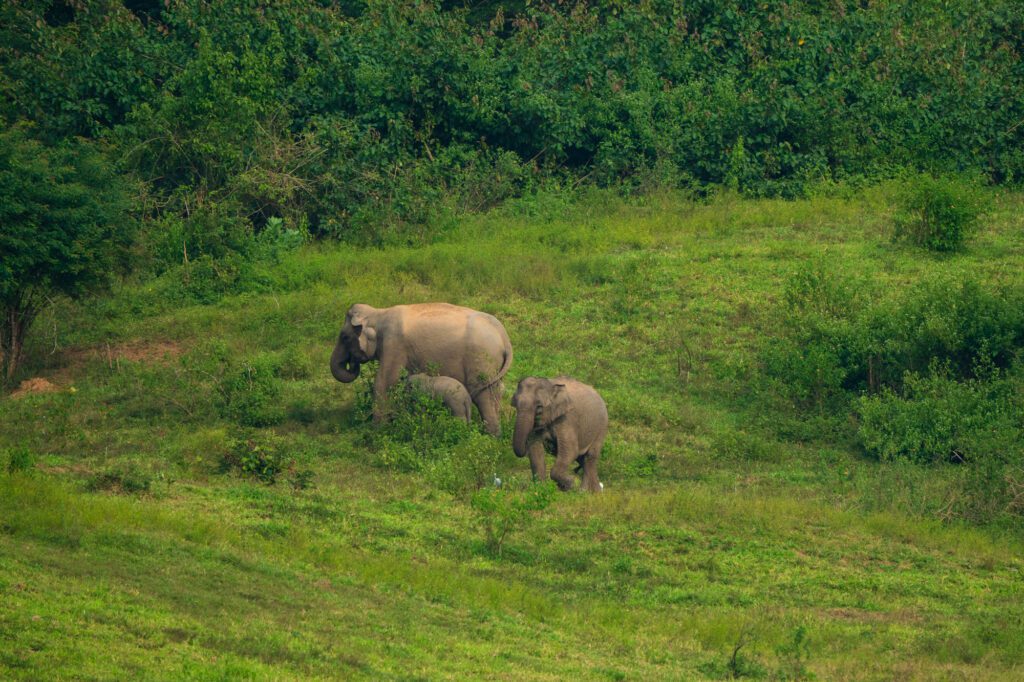
Wild Elephants
The Giants of Khao Yai
Few experiences in Thailand feel as unforgettable as encountering a wild elephant in Khao Yai.
Asian elephants are one of the park’s most important species, shaping the forest itself by opening pathways, dispersing seeds, and altering vegetation patterns as they move.
Visitors sometimes observe elephants from wildlife watchtowers or near natural mineral licks where animals gather to obtain essential minerals.
But wild elephants must always be respected. They are not tourist attractions — they are powerful wild animals moving through their natural habitat. Visitors should never approach them closely, block roads, use flash photography, or attempt selfies.
In Khao Yai, distance is part of respect.
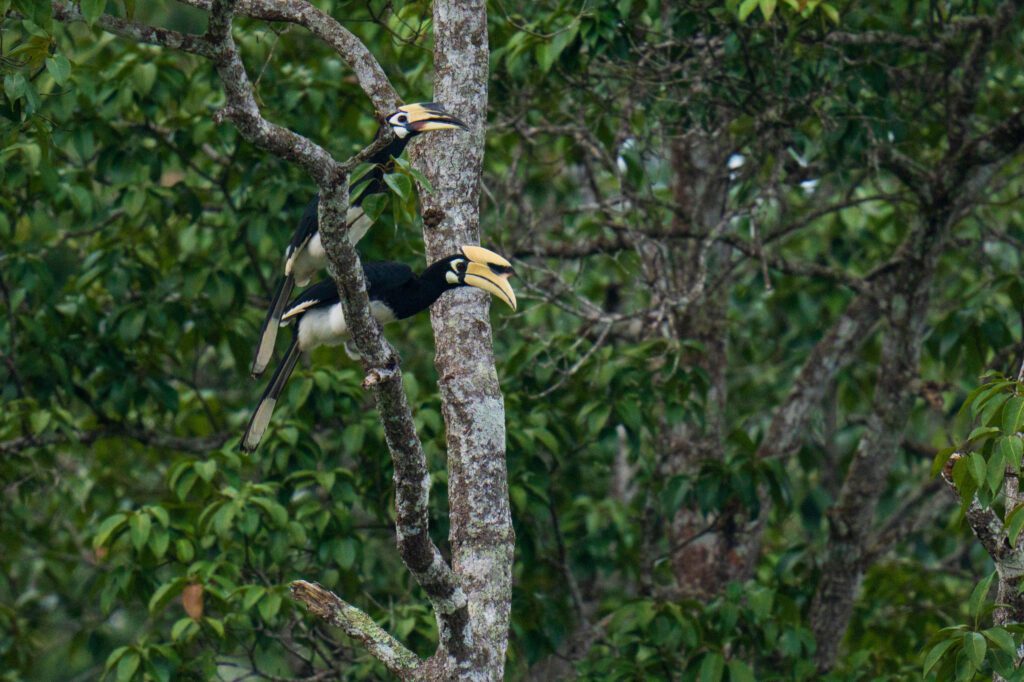
Hornbills
The Forest’s Greatest Gardeners
Hornbills are often considered symbols of forest abundance, and Khao Yai remains one of the best places in Thailand to see them.
These birds play a crucial ecological role as seed dispersers. By consuming fruits and flying long distances, they help regenerate the forest itself.
The breeding season, usually from late dry season into early rainy season, is one of the best periods for observation. Sightings are often possible around the higher forests of Khao Khiao and viewpoints near Kilometer 33.
Their deep wingbeats echo through the forest long before they appear overhead.
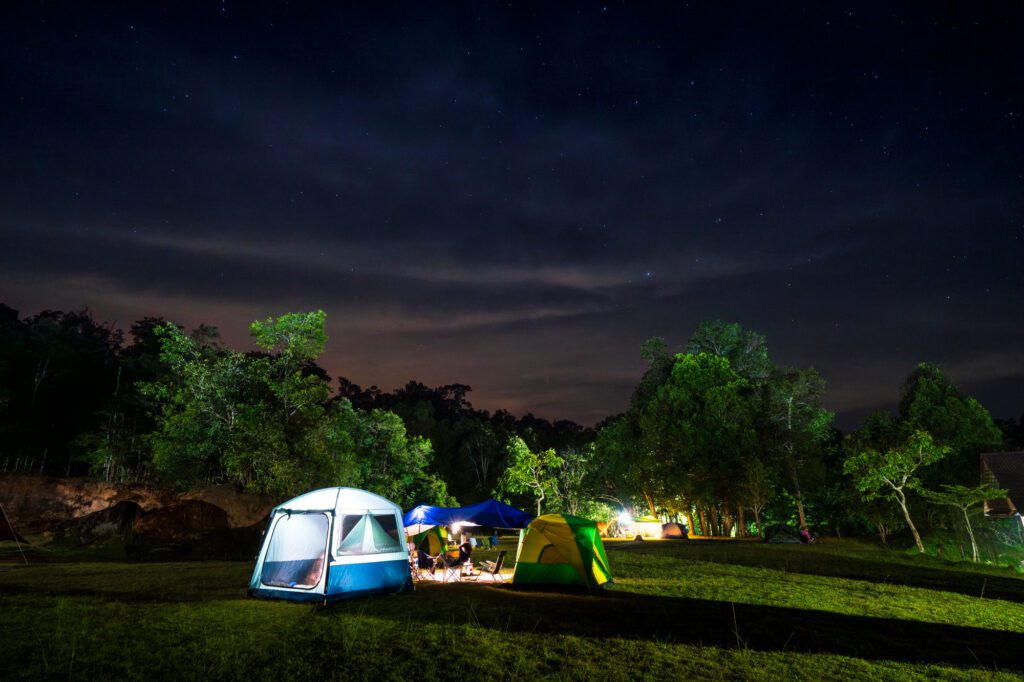
Camping
Sleeping Beside the Forest
Camping in Khao Yai is one of the closest ways to experience the rhythm of the forest.
At night, temperatures cool quickly. Deer sometimes wander near campsites, insects sing continuously in the darkness, and mist slowly settles over the grasslands before dawn.
Without rushing between destinations, visitors begin to notice smaller details — distant animal calls, changing light, the smell of rain approaching through the forest.
Khao Yai is best understood slowly.
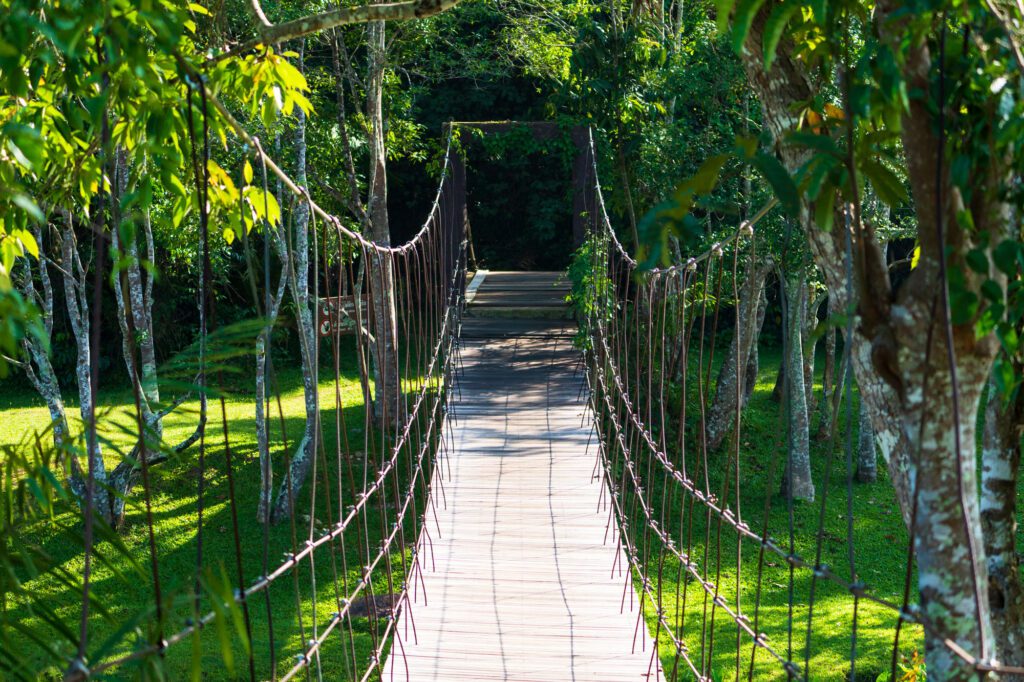
Trekking
The Journey Between the Destinations
In Khao Yai, hiking is rarely about reaching a summit.
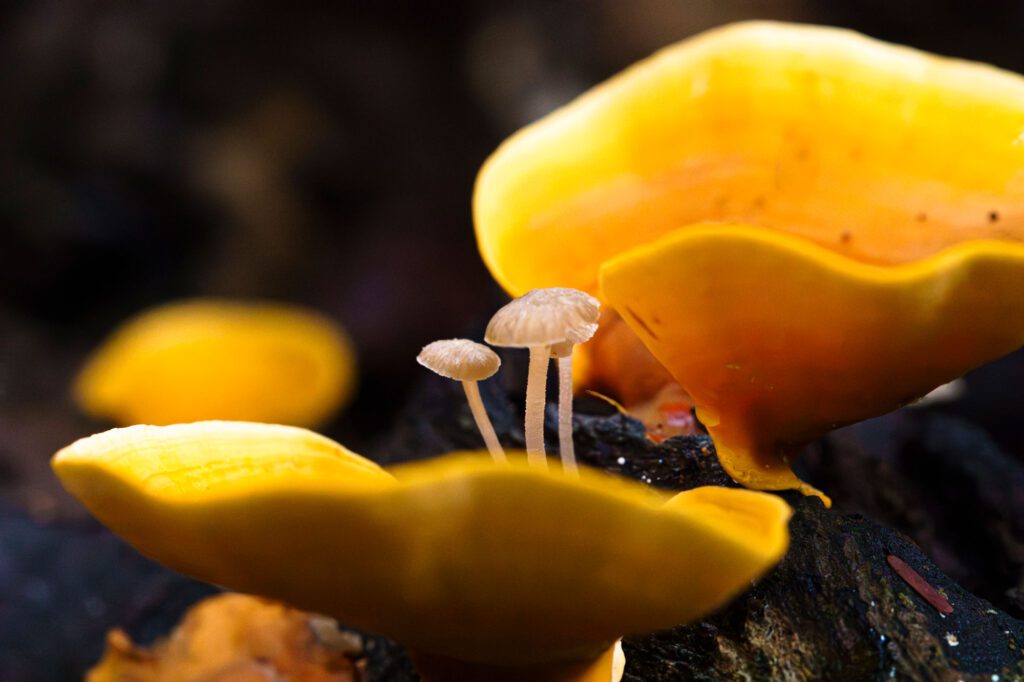
The real experience lies in the countless small discoveries along the way — strange fungi growing from fallen trees, animal tracks in wet soil, giant roots twisting across the forest floor, or the sudden sound of hornbills overhead.
Every trail becomes an introduction to how complex and interconnected the rainforest truly is.
Rainy Season Flowers and Mushrooms
The Beauty of Small Things
During the rainy season, Khao Yai transforms again.
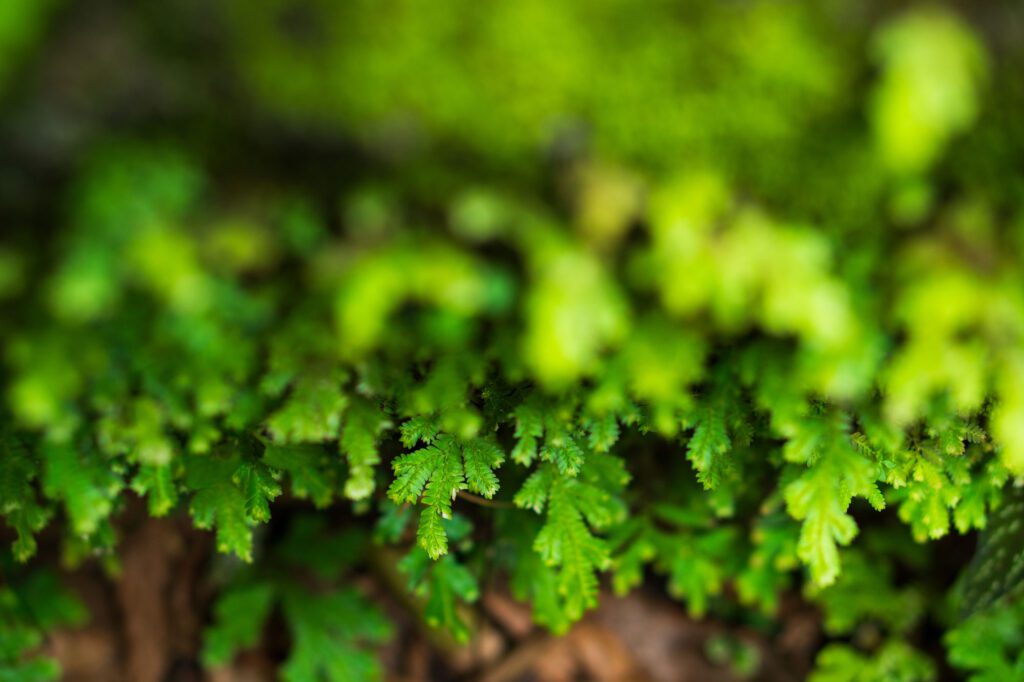
Tiny wildflowers bloom quietly along trails and roadsides. Mushrooms emerge from decaying wood in extraordinary shapes, colors, and textures — some delicate, some bizarre, some lasting only a few days before disappearing back into the forest.
These small organisms are essential to the ecosystem. Fungi break down fallen organic matter, returning nutrients back into the soil and supporting new life within the forest cycle.
In Khao Yai, even the smallest things help sustain the forest.
Quick Info
- Khao Yai is located approximately 180 kilometers from Bangkok. By car, it takes around 3 hours to reach the national park headquarters.
- Visitors can also travel by bus from Bangkok to Pak Chong (departing from the Northeastern Bus Terminal). From Pak Chong town, local transportation can be hired to continue into the national park.
- Even without hiring a vehicle inside the park, several hiking trails connect major attractions. For example, there is an 8-kilometer trail linking the Visitor Center to Haew Suwat Waterfall, as well as trails connecting the Pha Kluai Mai Campsite area to the waterfall.
Share


