
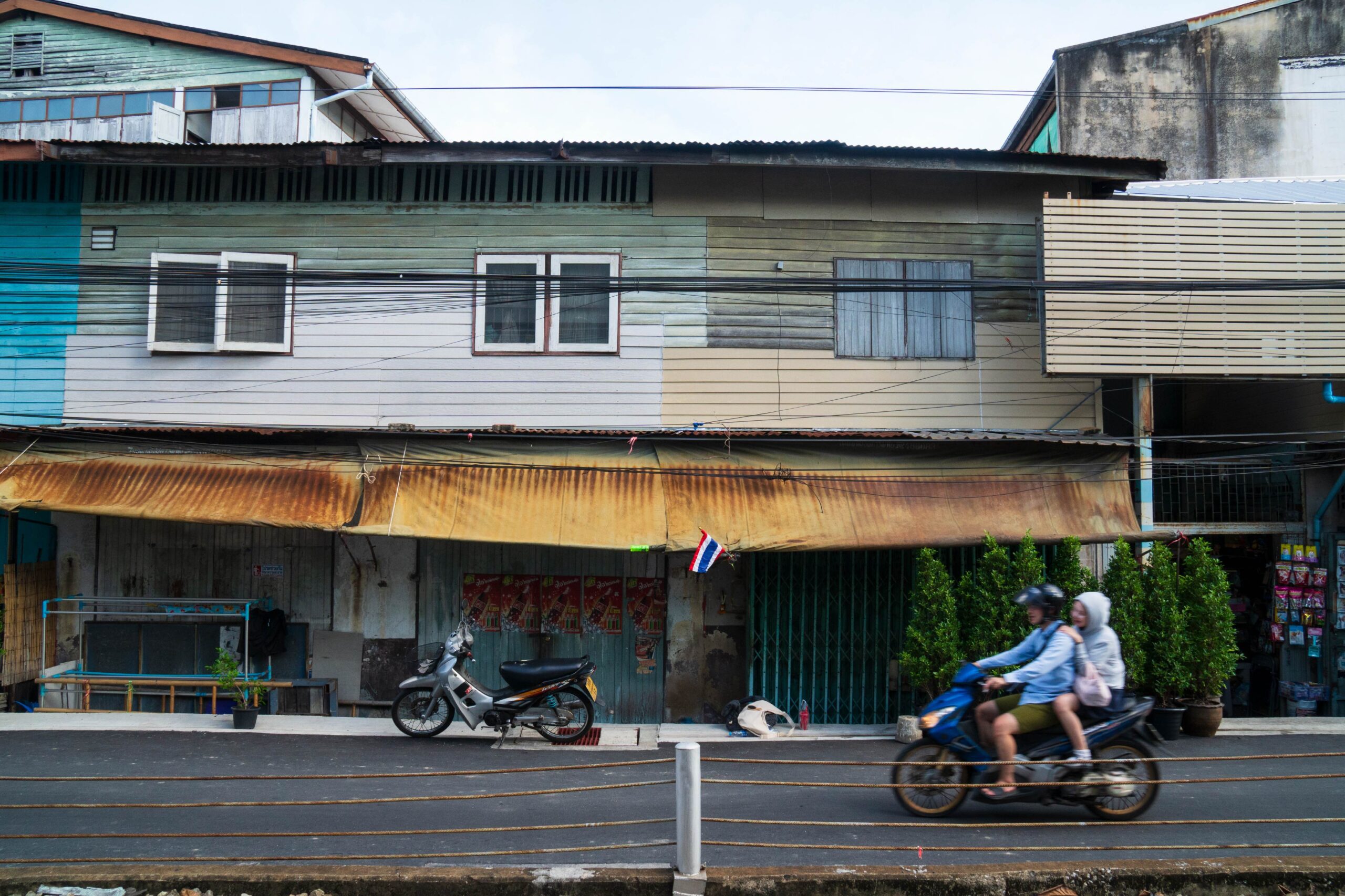
On the western side of Bangkok, beyond the modern skyline and busy commercial districts, Talat Phlu remains one of the city’s most atmospheric old neighbourhoods — a place where railway tracks, old markets, canals, and street food culture still shape everyday life.
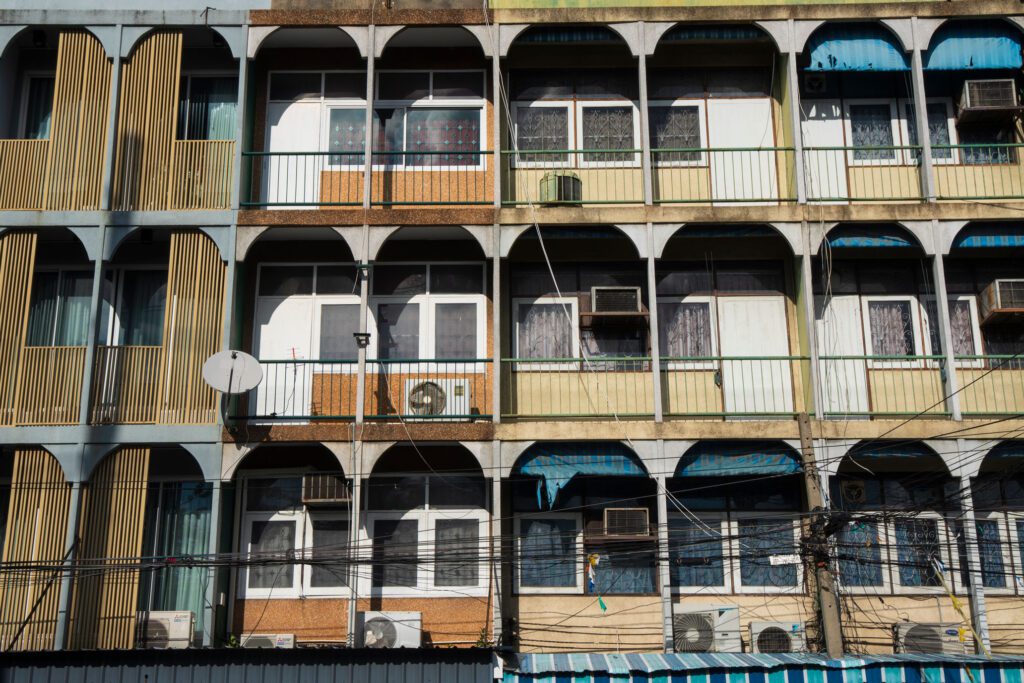
For generations, Talat Phlu was one of the most important trading areas of Thonburi, long before modern Bangkok expanded across the river. The neighbourhood has been closely connected with the Chinese community since the early Rattanakosin period, much like Yaowarat on the opposite side of the city. Because of this, many locals still refer to the area as the “Little Chinatown of Thonburi.”
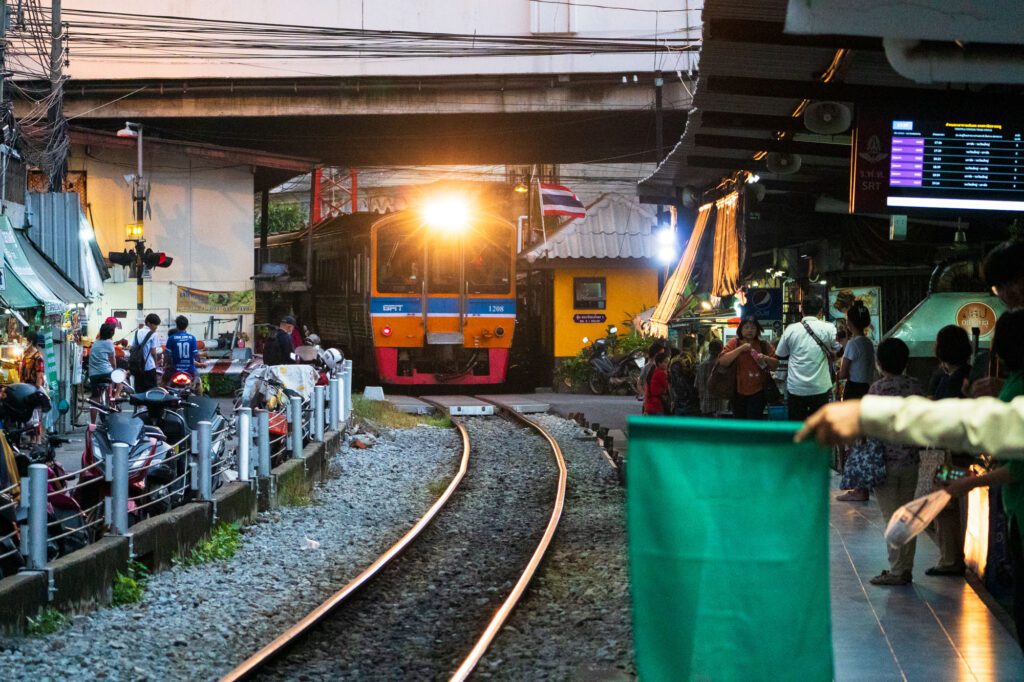
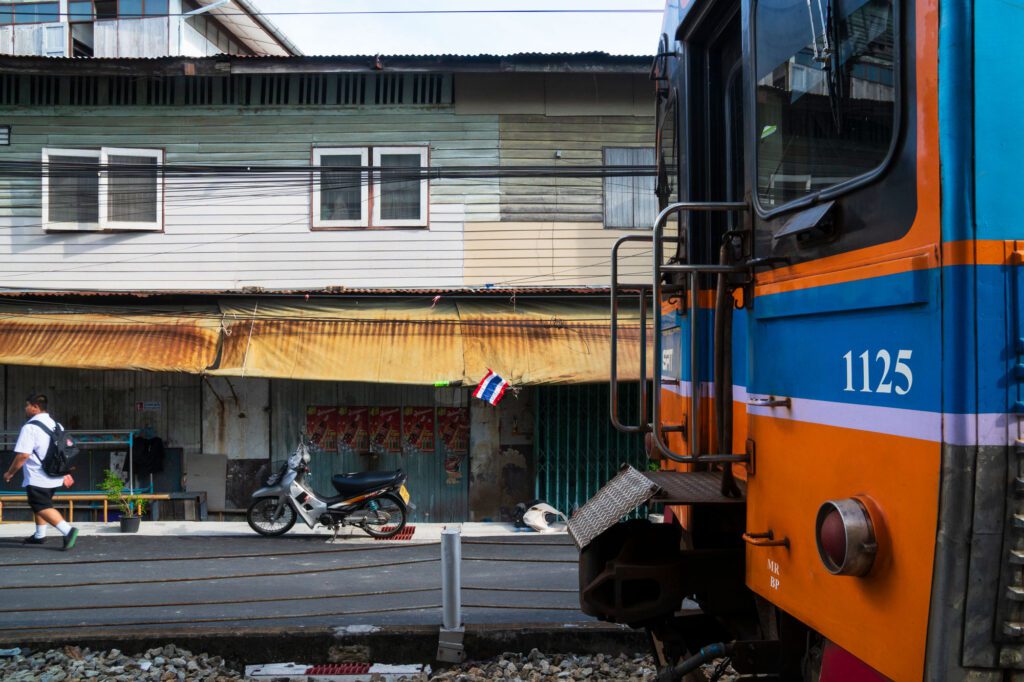
The heart of the neighbourhood lies around Talat Phlu Railway Station, where old shophouses, local markets, and food stalls gather around the railway tracks in a way that feels distinctly old Bangkok.
And fittingly, the best way to arrive here is by train.
Visitors can connect from the BTS Skytrain at Wongwian Yai Station and continue on the local Wongwian Yai–Mahachai railway line. The journey to Talat Phlu takes only one station, but the atmosphere changes immediately — from elevated modern transit into a slower and more nostalgic side of the city.
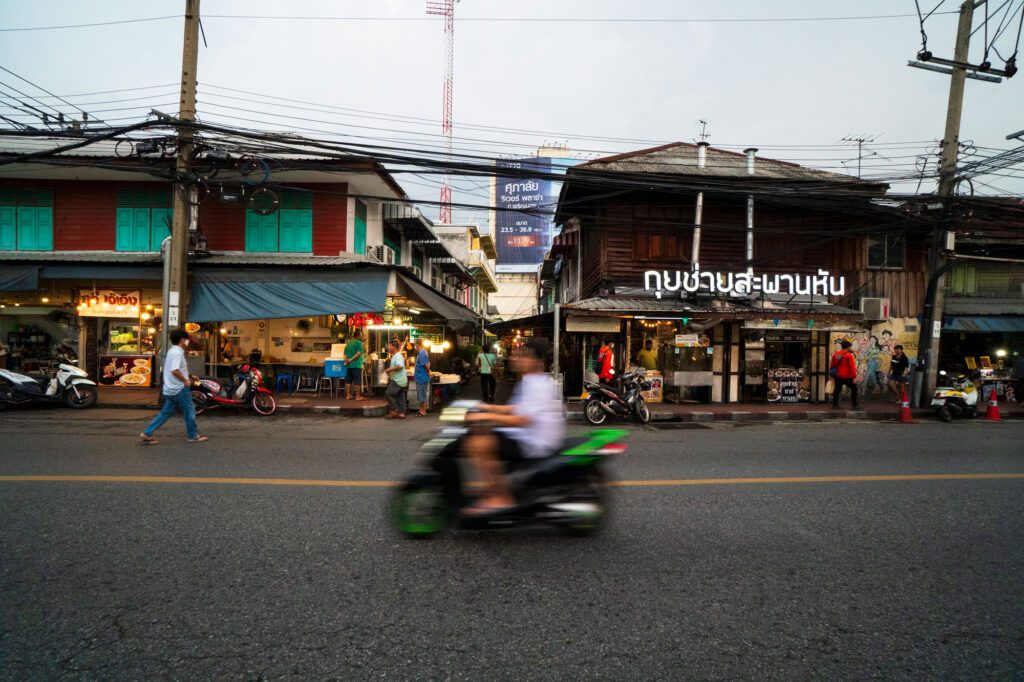
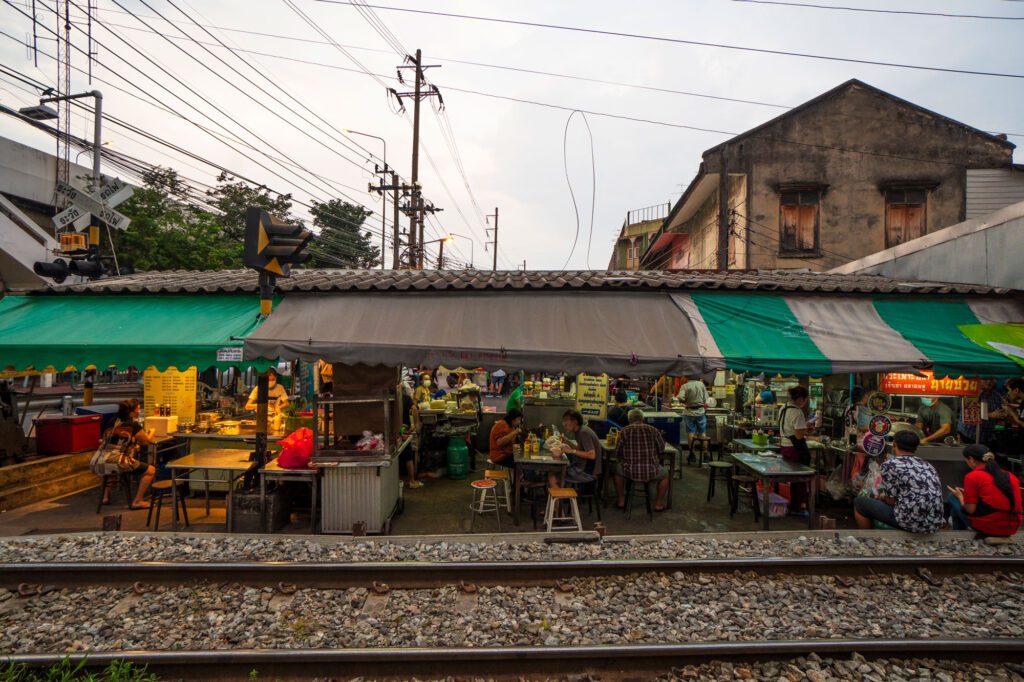
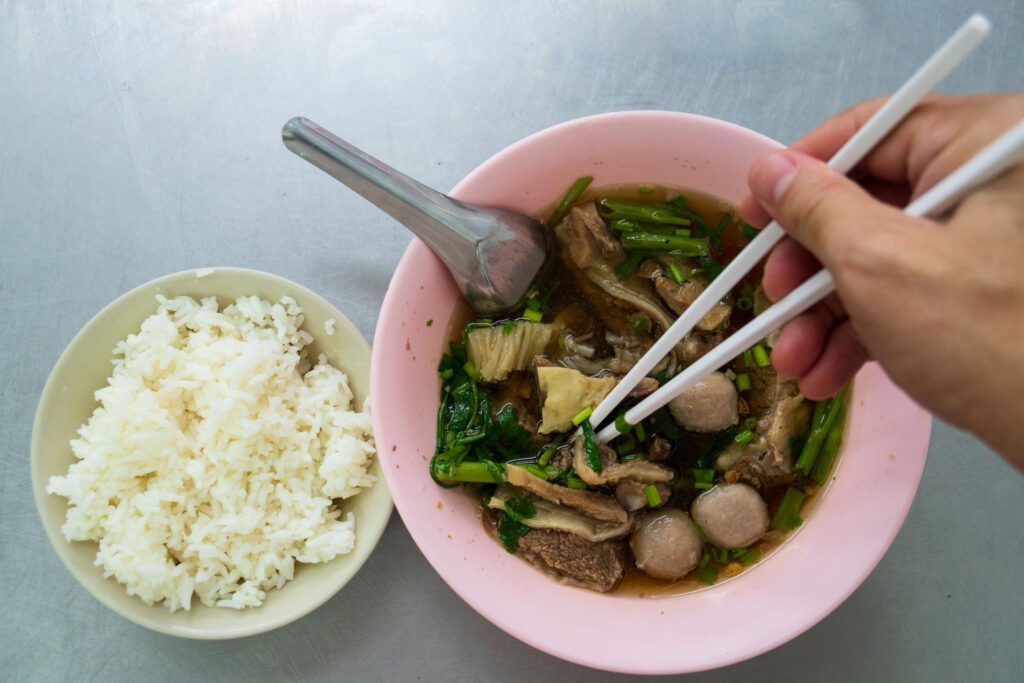
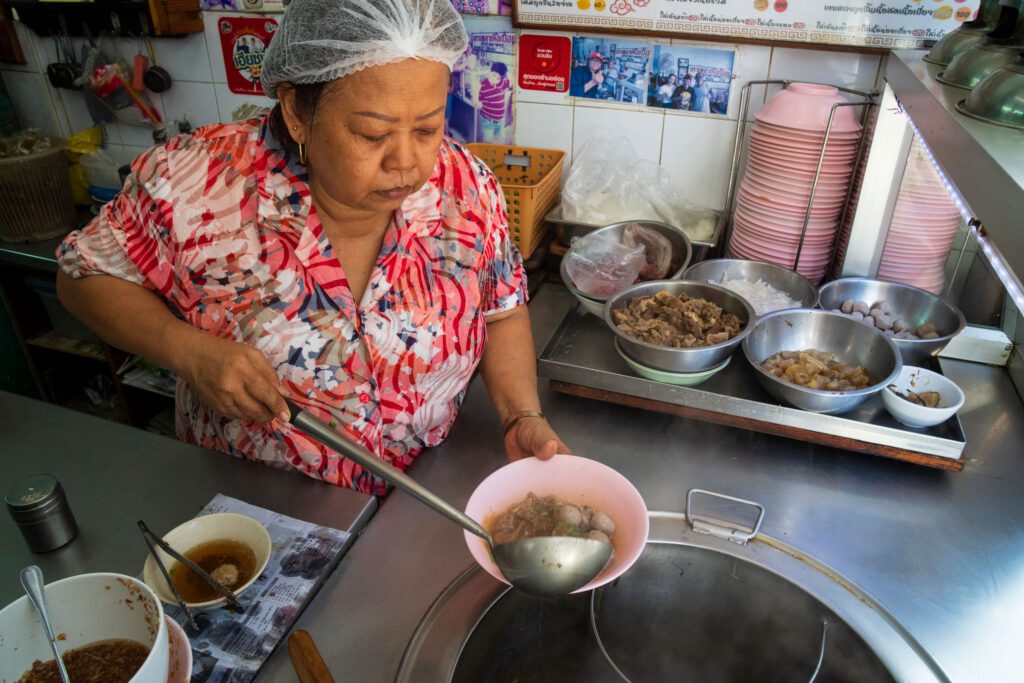
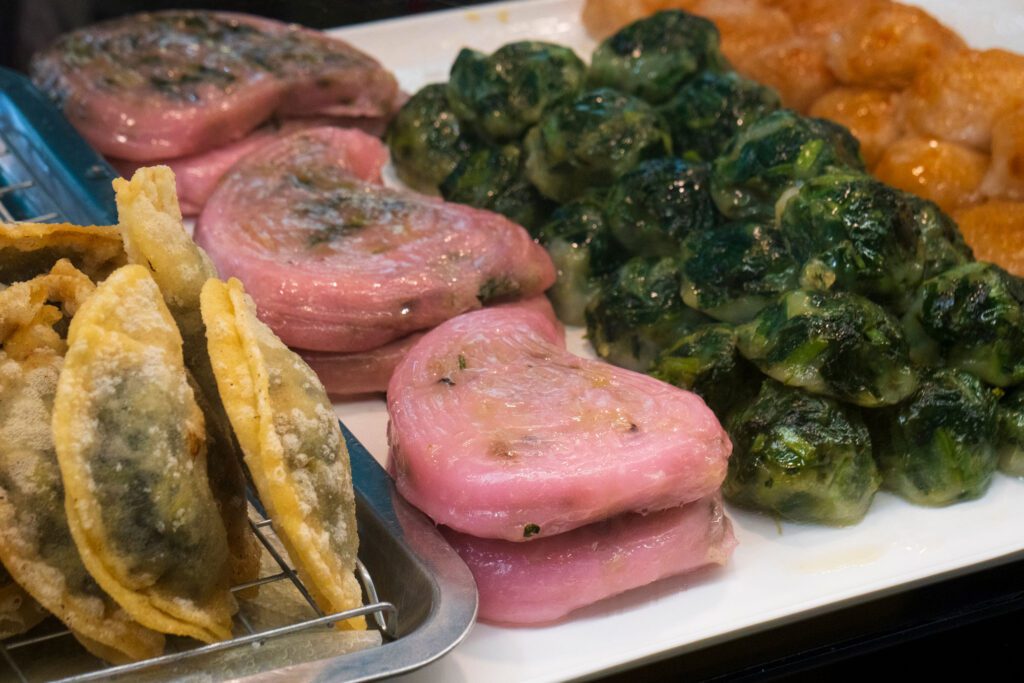

Even inside the small railway station itself, famous local food stalls already begin to appear. Talat Phlu has long been known as one of Bangkok’s classic street food neighbourhoods, where recipes are passed down through generations and many shops have been operating for decades.
Among the best-known local dishes are slow-braised beef noodles, freshly made Chinese chive dumplings, and traditional crispy Thai pancakes prepared on old charcoal stoves. The neighbourhood is especially lively in the late afternoon and evening, when smoke, steam, and the aroma of street food drift through the narrow lanes beside the railway.
There are two especially enjoyable ways to explore Talat Phlu on foot.
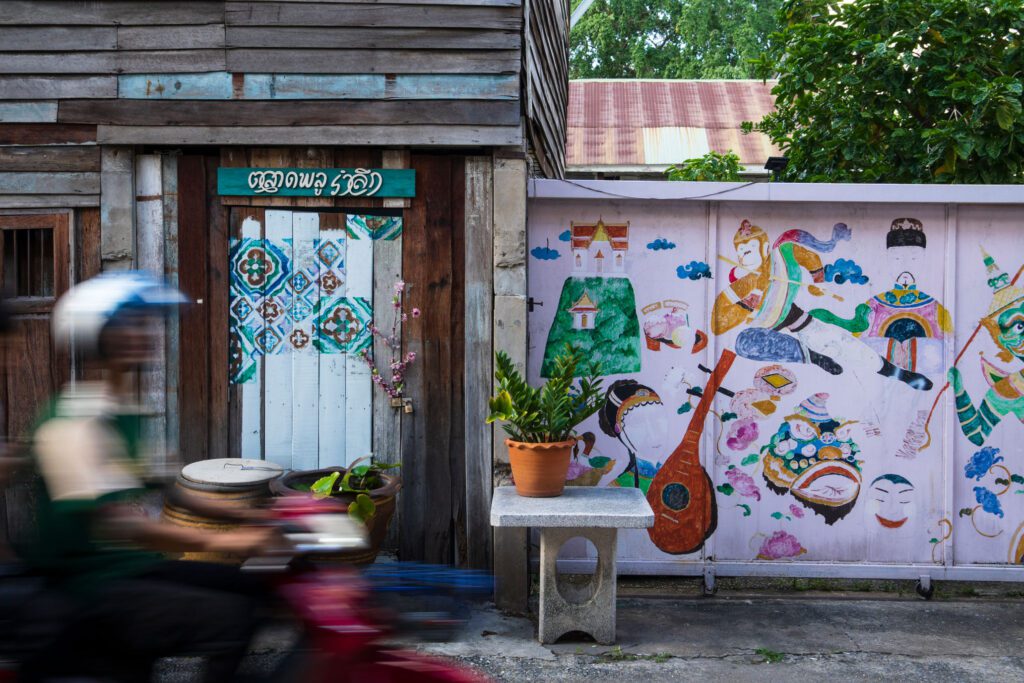
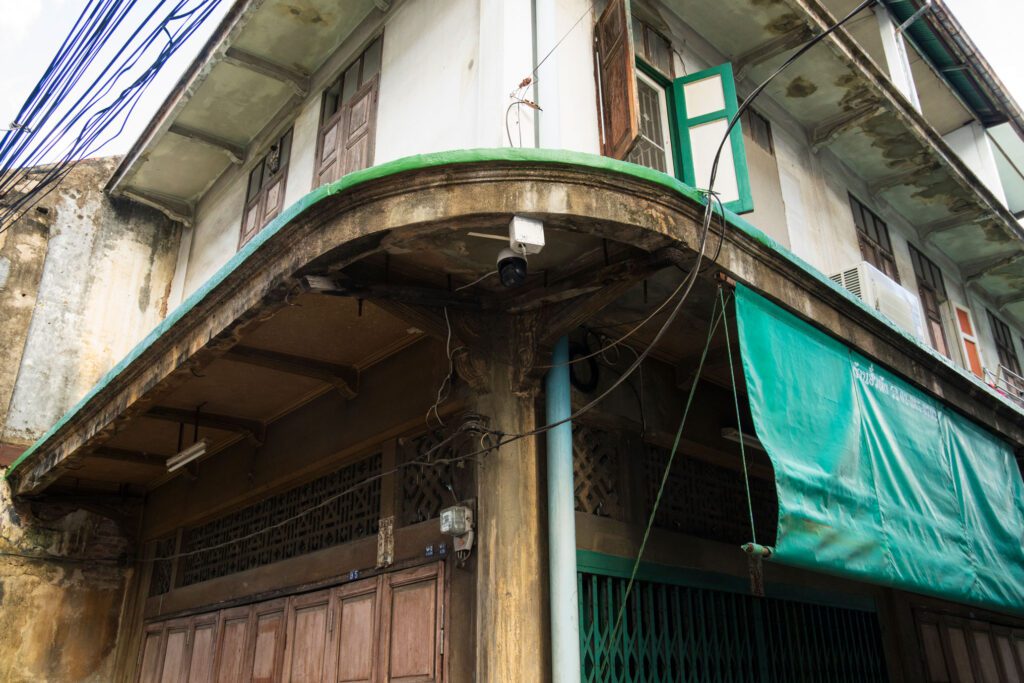
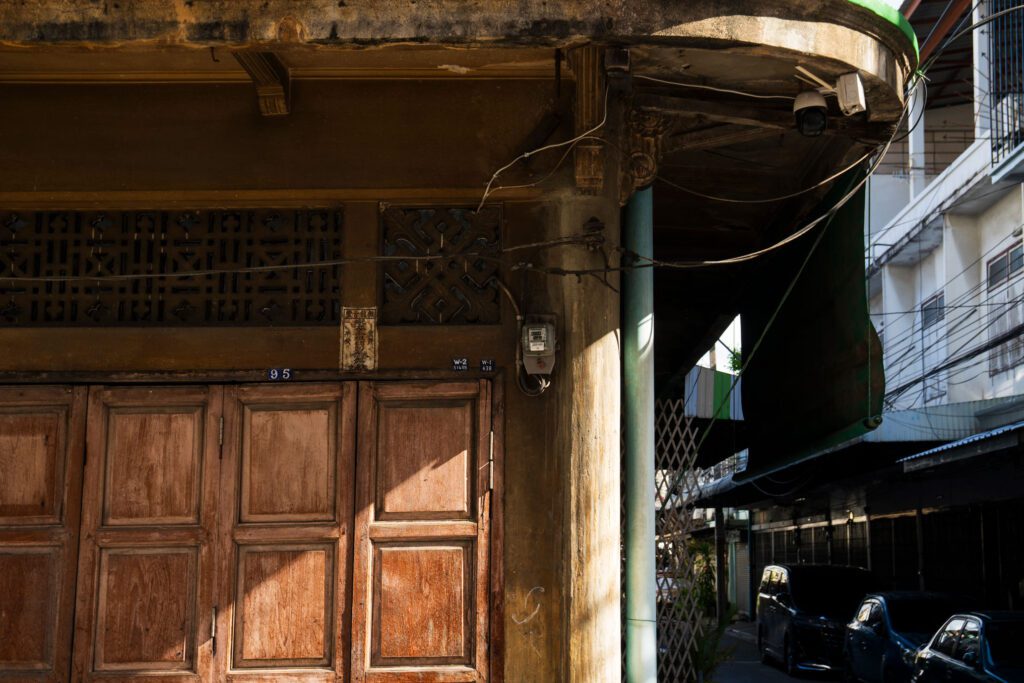
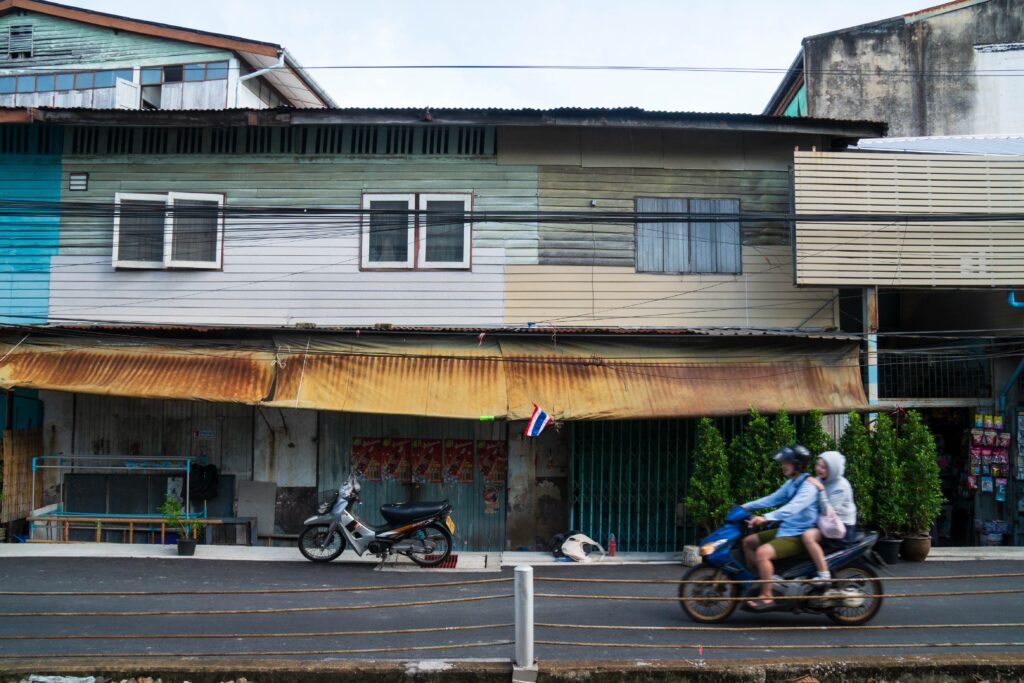
One route follows the railway tracks themselves, passing rows of old wooden houses, local grocery shops, and everyday scenes that still preserve the character of a traditional railway community. Trains continue to pass slowly through the neighbourhood, becoming part of daily life rather than an interruption to it.
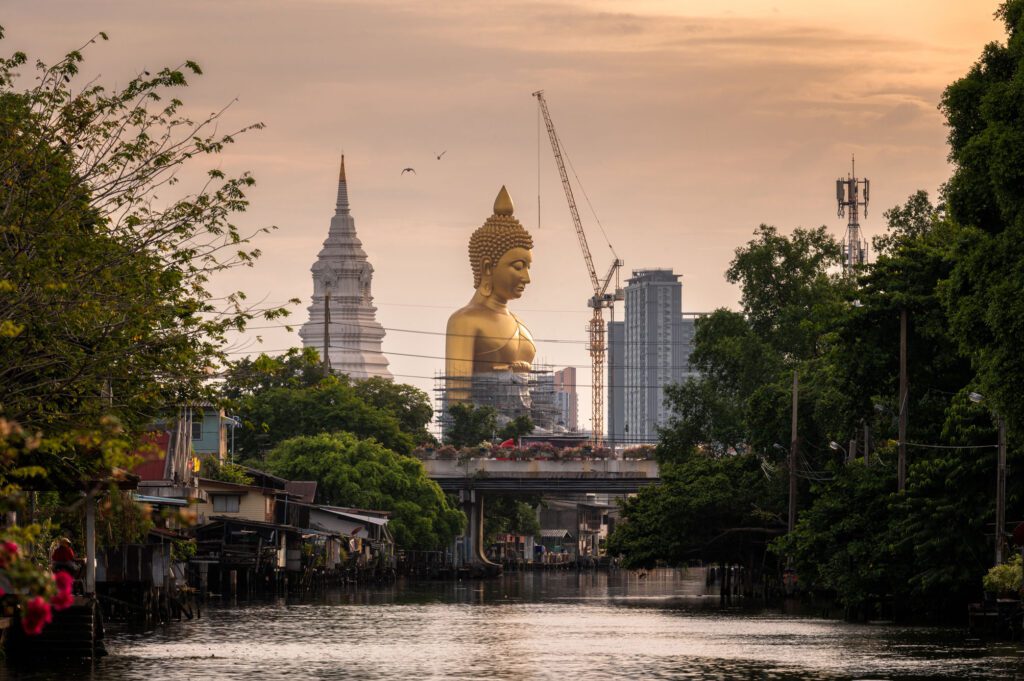
The second route winds through narrow lanes beside Khlong Bangkok Yai, where old trading houses and long-established local businesses reflect the area’s history as a canal-side commercial district.
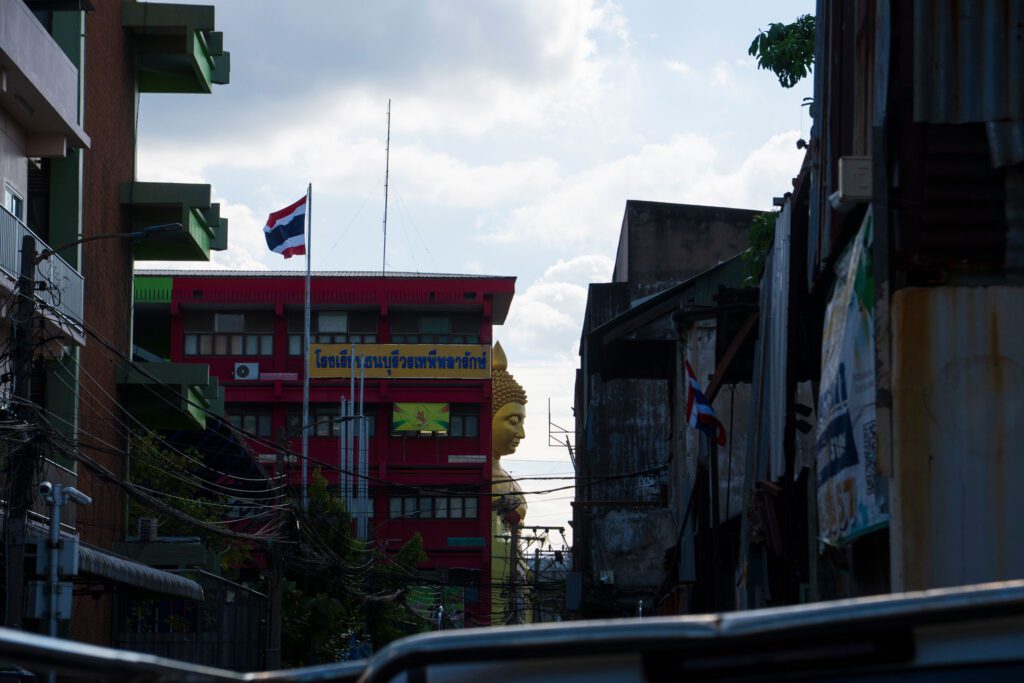
Following these small alleyways eventually leads toward Wat Paknam Phasi Charoen, now one of the district’s most recognizable landmarks thanks to its enormous Buddha image rising above the canal landscape.
Yet despite the growing attention around the temple, Talat Phlu itself still feels deeply local. It is not polished or curated for tourism. What makes the neighbourhood memorable is the feeling that life here continues much as it always has — around food, railway tracks, old communities, and the slow rhythm of Thonburi’s historic waterways.
- Getting there by public transport:
Visitors can take the BTS Skytrain to Talat Phlu Station and walk around 500 metres into the old market neighbourhood. Another atmospheric option is to get off at Wongwian Yai Station and continue on the local Wongwian Yai–Mahachai railway line, getting off at Talat Phlu Railway Station after just one stop.
Location & Infos :
The Big Buddha at Wat Paknam Pasicharoen
https://maps.app.goo.gl/C26T4urvVVY9vM8C6
Photo spot for the big Buddha
https://maps.app.goo.gl/8AAD6X5LdUisiE6z6
Talat Phlu Railway Station
https://maps.app.goo.gl/JyNvhSn9tRQW2Rdq5
Share


