
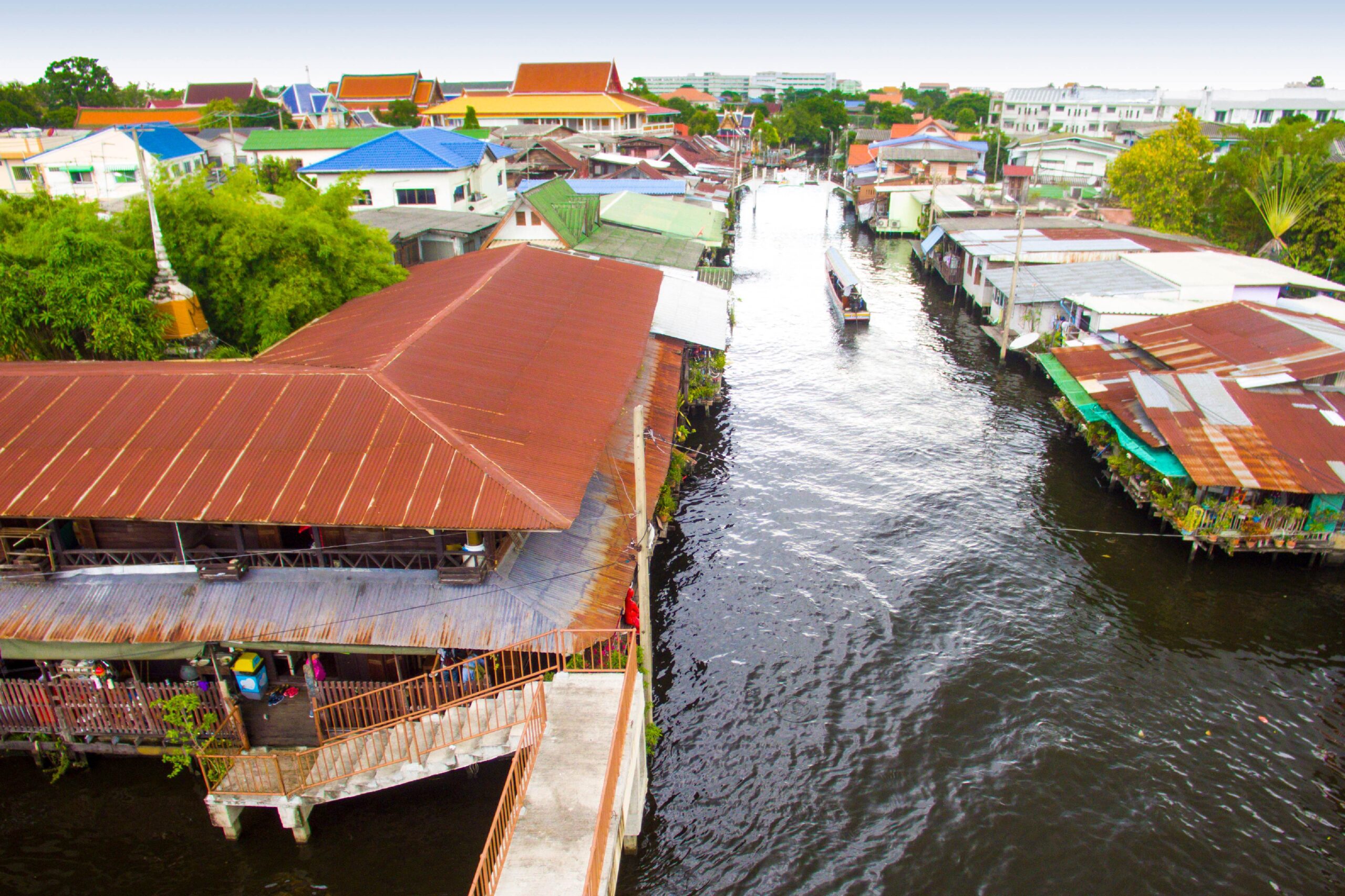
In a city increasingly shaped by skyscrapers and modern transport systems, Khlong Bang Luang offers a quieter vision of Bangkok — one where wooden houses still lean gently over the water, narrow walkways connect old riverside communities, and life continues at the slow rhythm of the canal.
Officially known today as Khlong Bangkok Yai, the canal is still widely called “Khlong Bang Luang,” its older and more familiar name. In Thai, the original name “Khlong Bang Ka Luang (คลองบางข้าหลวง)” roughly refers to a canal associated with royal officials during the Thonburi period.
But the canal’s history stretches back even further.
Long before modern Bangkok existed, this waterway was once part of the original course of the Chao Phraya River. During the Ayutthaya period, a shortcut canal was excavated to bypass a large bend in the river. Over time, the new canal widened and gradually became the main river itself, while the old river course transformed into the smaller canal seen today.
Because of this, Khlong Bang Luang preserves traces of Bangkok from centuries ago — layers of history that have survived remarkably unchanged along the old waterways.
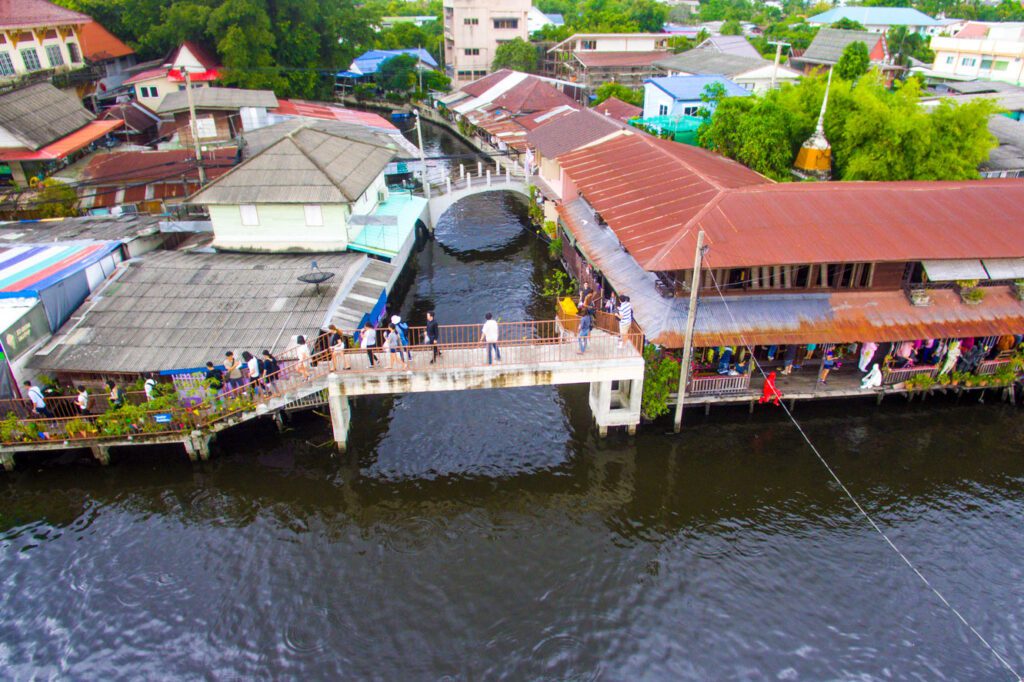
Life along the canal has existed continuously for generations, but the area became widely known after the emergence of Baan Silapin Khlong Bang Luang , often called the Artist’s House Bangkok. What began as an old wooden canal-side home gradually evolved into a creative community space, drawing visitors toward the surrounding neighbourhood and revealing the quiet beauty of the canal community around it.
The Artist’s House today functions as a bookstore, café, art space, and riverside gathering place where visitors can simply spend time observing the atmosphere of the canal and the rhythm of local life.
One of the most remarkable details hidden inside the house is the old Ayutthaya-period chedi standing quietly in the central courtyard. The ancient structure, now surrounded by later buildings and community life, suggests that this location may once have been an old temple long before the present neighbourhood developed around it.
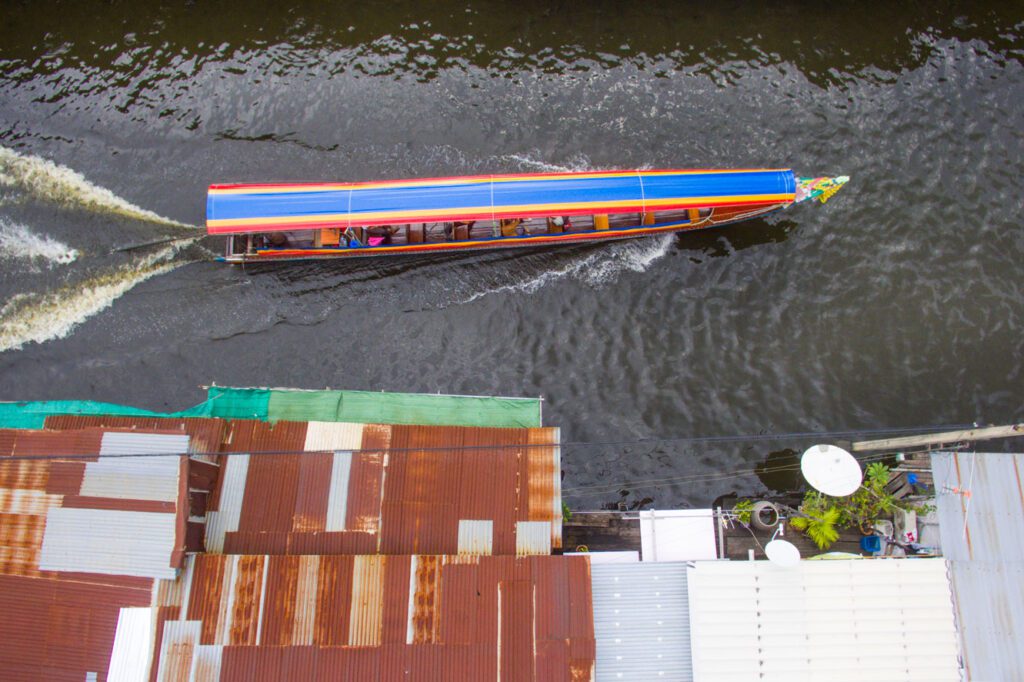
The wooden riverside terrace remains one of the most relaxing corners of the community. People sit here sketching, reading, drinking coffee, or simply watching longtail boats pass slowly through the canal.
Surrounding the Artist’s House are rows of traditional wooden homes and narrow canal-side walkways that resemble the old floating-market communities more commonly associated with Thailand’s rural provinces.
And yet, this is still Bangkok.
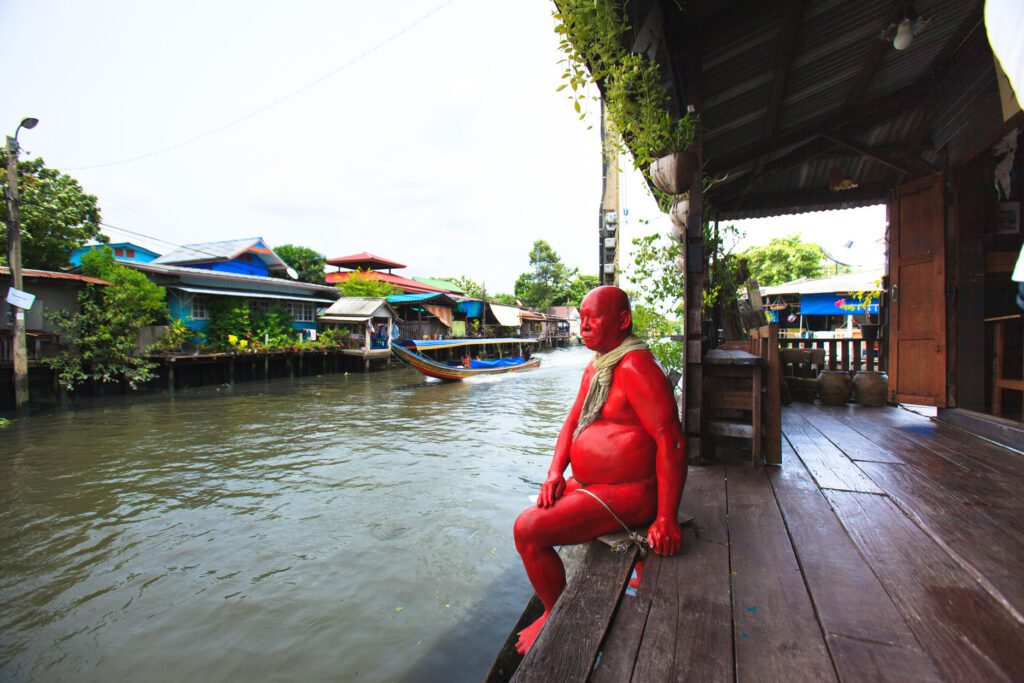
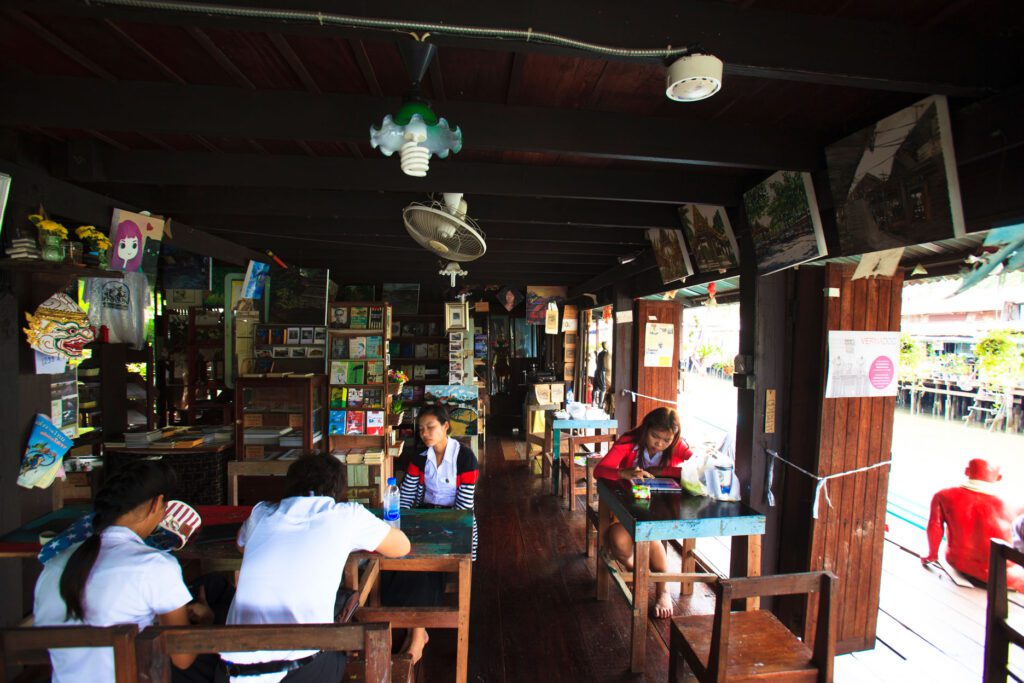
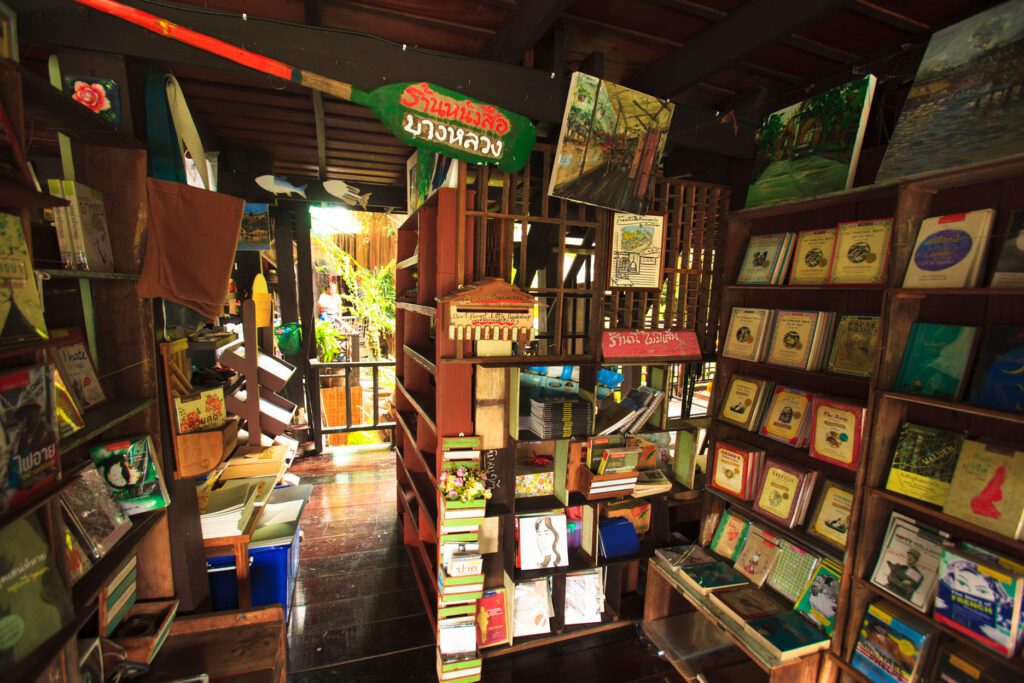
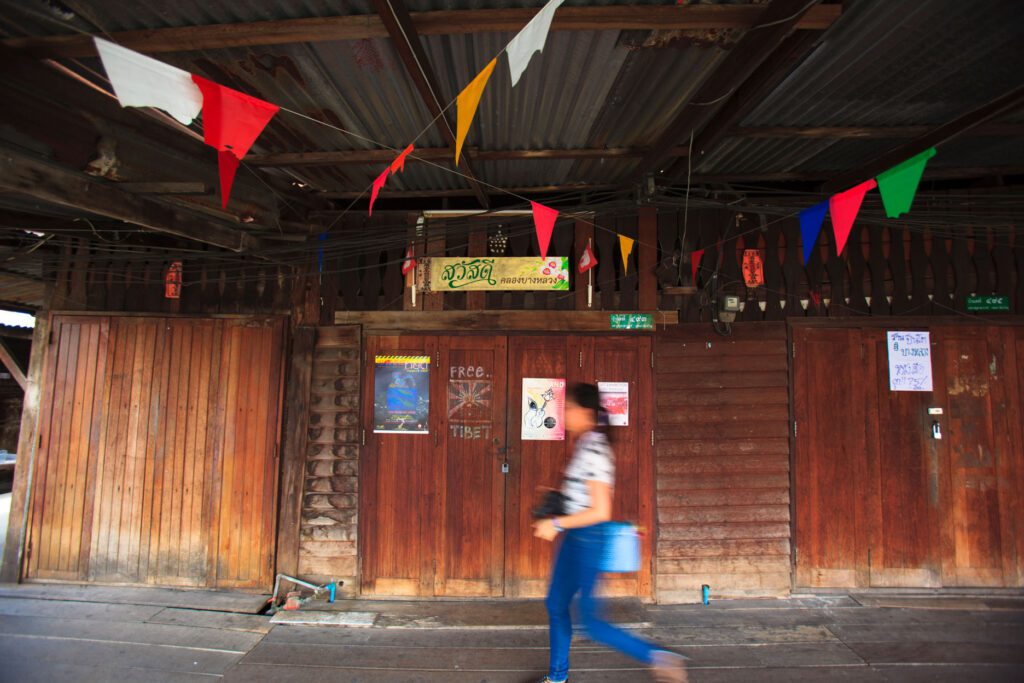
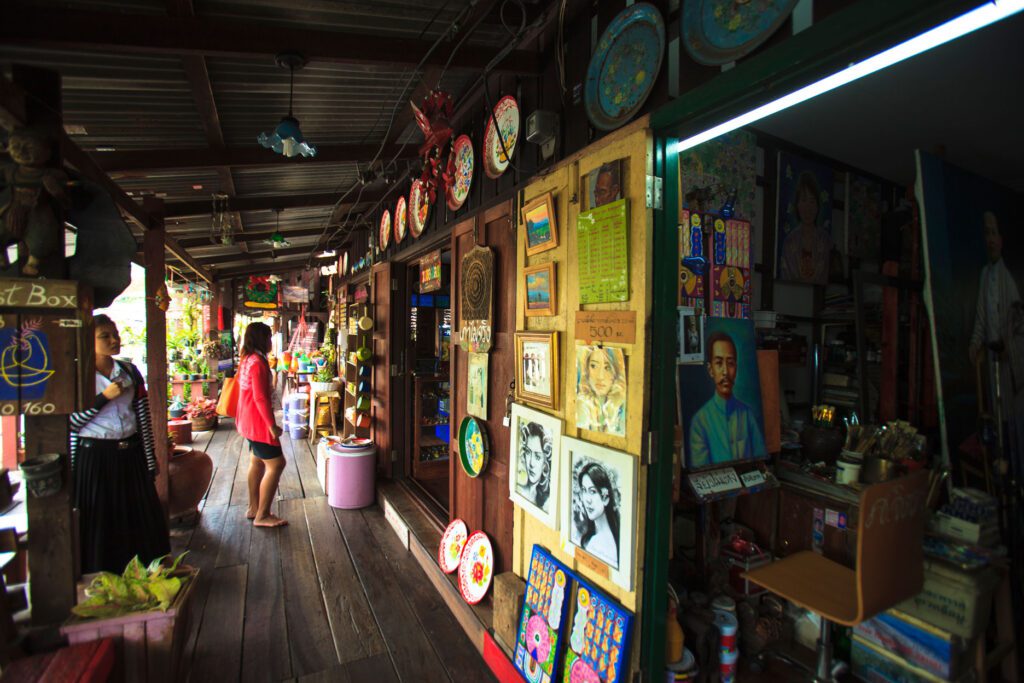
In recent years, many of these old spaces have gradually come back to life. Small cafés, galleries, handmade craft shops, and local businesses now bring new energy into the historic neighbourhood without erasing its original character.
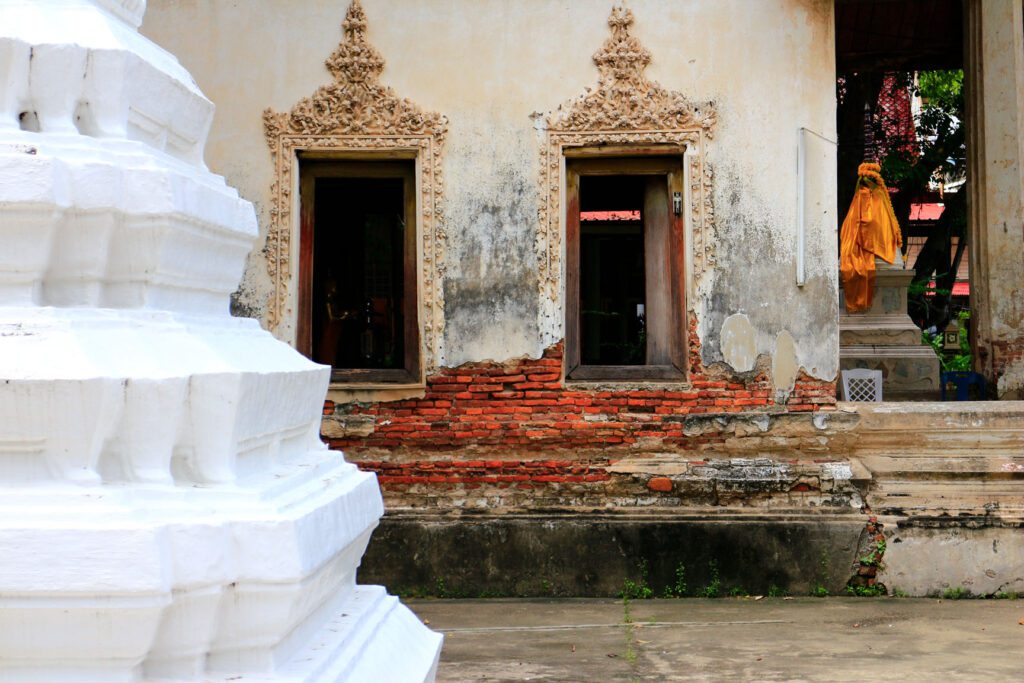
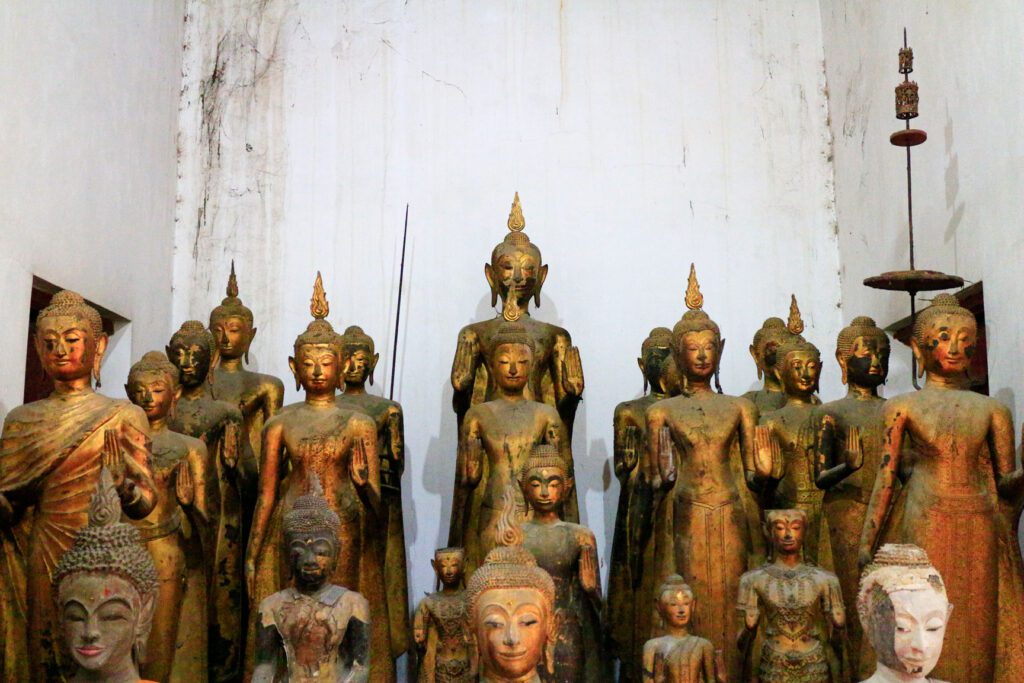
Crossing a small bridge to the opposite side of the canal leads to Wat Kamphaeng Bangchak, another old temple hidden quietly within the community. Its aged viharn carries a solemn and almost mystical atmosphere, while dozens of old Buddha images inside reflect the deep historical roots of the area.
And for visitors who find themselves wanting to stay longer, the canal community now offers several small guesthouses and homestays along the water — allowing a rare opportunity to experience Bangkok not as a fast-moving capital city, but as a living canal-side community shaped by history, art, and everyday life beside the water.
Quick Info
- Getting there by car:
Access via Ratchaphruek Road (Soi Ratchaphruek 6) or Phetkasem Road (Soi Phetkasem 22/1). Parking is available at Wat Kuhasawan or Wat Kamphaeng Bangchak. - Getting there by MRT:
Take the MRT Blue Line to Bang Phai Station, then walk into Soi Phetkasem 22/1 for around 800 metres to reach the canal community. - Getting there by boat:
Charter a longtail boat from Talat Phlu Pier or Tha Chang Pier. Boat rental prices usually range from around 700–1,500 THB depending on the route and duration.
Share


