
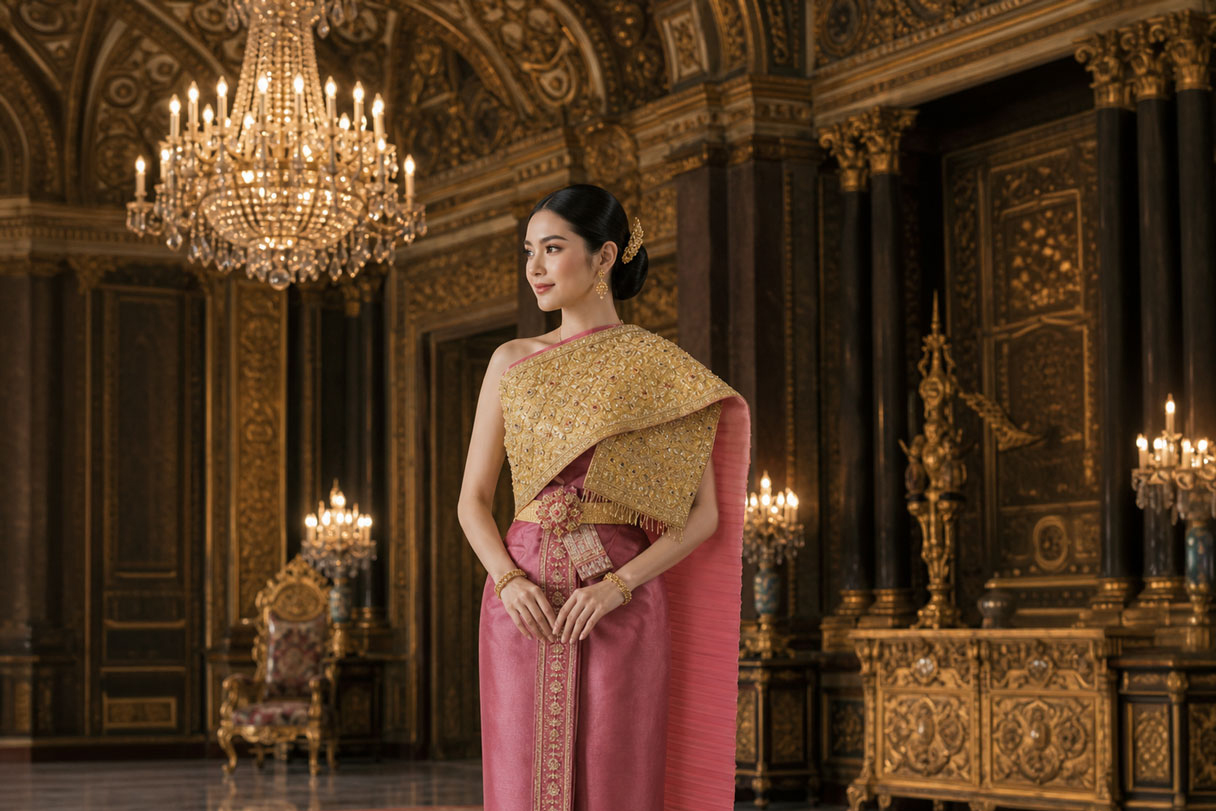
Clothing has always been more than appearance. It reflects identity, history, and the values of a culture. In Thailand, traditional attire carries layers of meaning—shaped by centuries of craftsmanship, social customs, and royal influence.
In Thai, traditional dress is often referred to as Chut Thai (ชุดไทย), which simply means “Thai attire.” Yet the term carries a deeper cultural meaning. Chut Thai is not a single costume or a frozen image from the past, but a living expression of Thai identity that has evolved across generations.
A defining turning point in that evolution came in the mid-20th century, when the eight styles of Thai Royal Attire were commissioned by Queen Sirikit during the reign of King Bhumibol Adulyadej.
Her Majesty recognized the importance of presenting Thailand with a unified and dignified cultural identity on the global stage. At a time when Western dress dominated formal occasions, she envisioned a set of national costumes that would reflect Thai heritage while remaining appropriate for modern, international settings.
The result was a carefully curated collection of eight distinct styles—each designed for different levels of formality, from relaxed daytime wear to the most elaborate evening ceremonies.
In recent years, global attention toward Thai culture has quietly grown, and moments on the international stage often become windows into this heritage. During the royal visit of King Maha Vajiralongkorn and Queen Suthida Bajrasudhabimalalakshana to Sweden, one detail that drew particular interest was the elegance of the Queen’s attire. Graceful, refined, and distinctly Thai, the ensemble sparked curiosity among international audiences—many asking what defines this unique style.
The Eight Styles of Thai Royal Attire
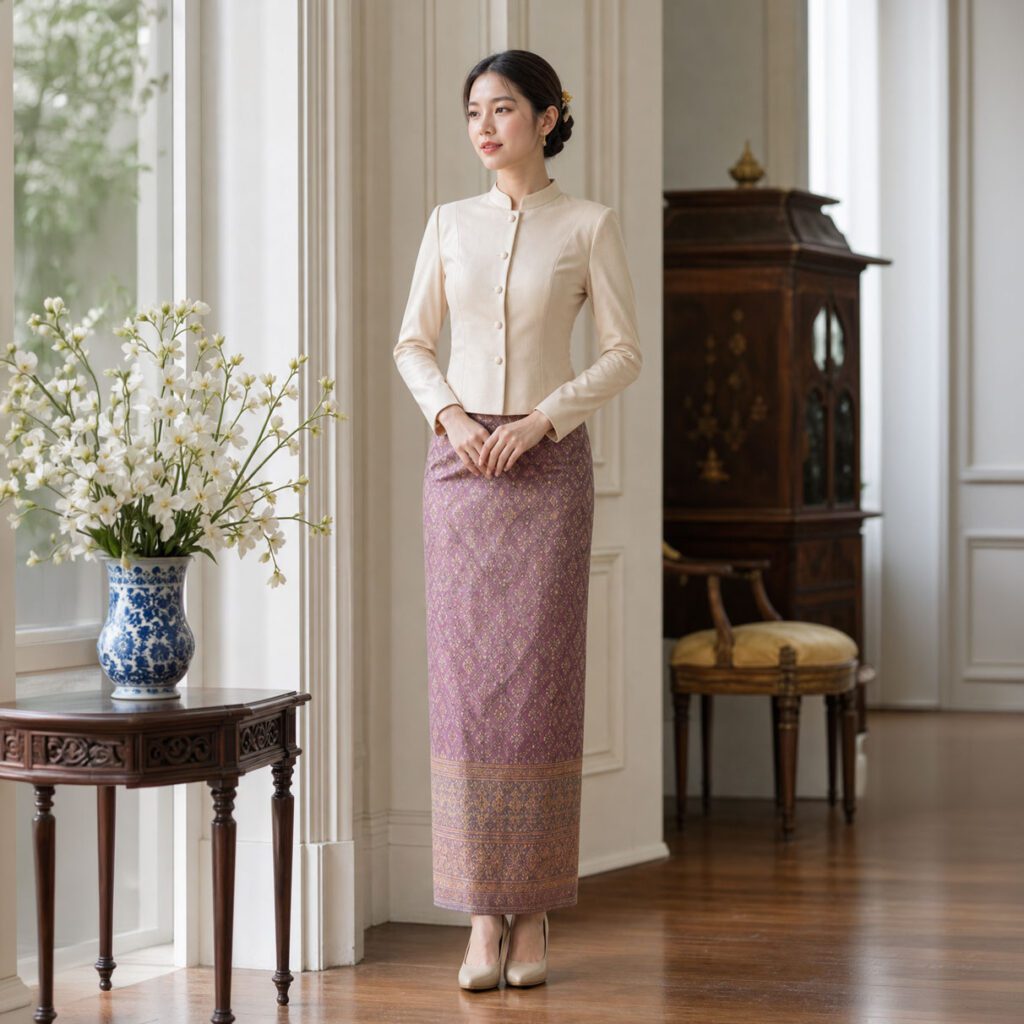
1. Ruean Ton
A simple and graceful style, often worn for informal occasions. It features a fitted blouse paired with a traditional sinh(wrapped skirt). Its charm lies in its understated elegance—reflecting everyday Thai life with quiet refinement.
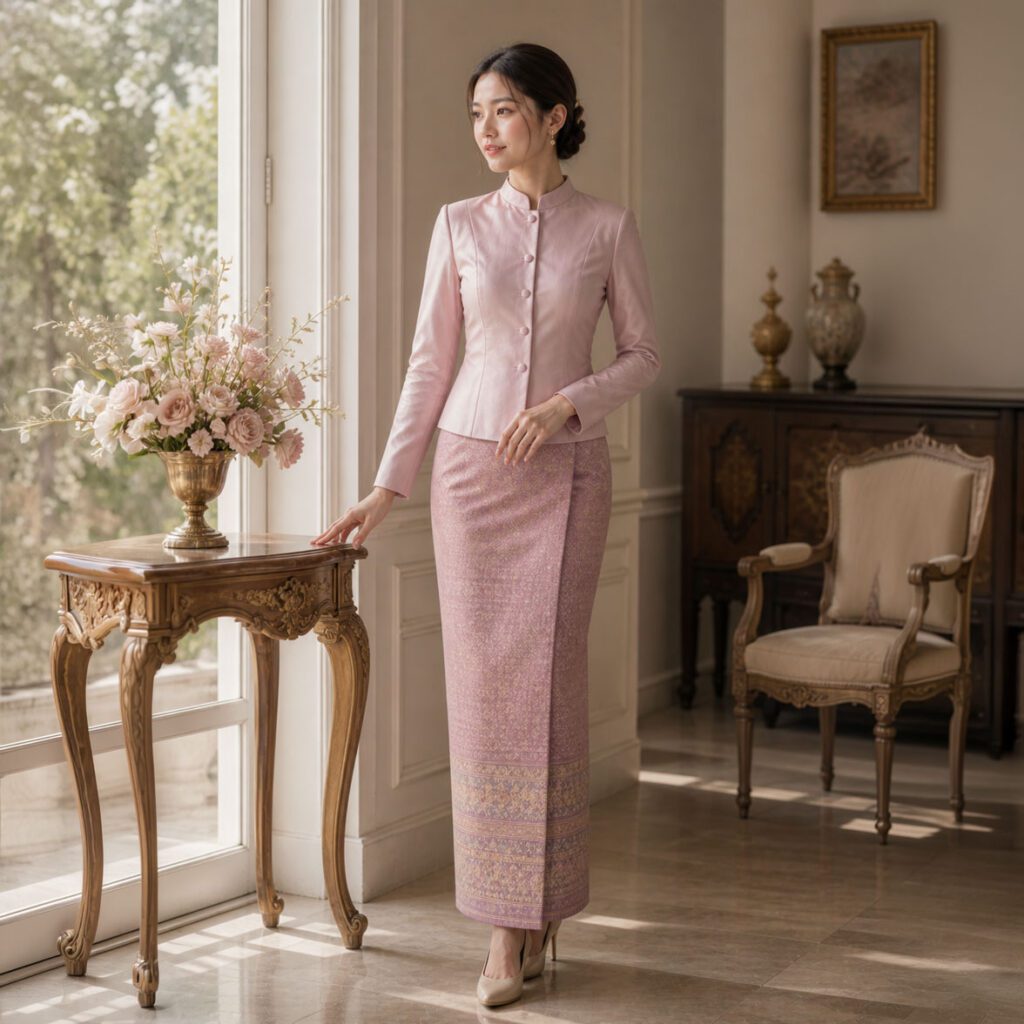
2. Chitralada
A step toward formality, Chitralada is suitable for daytime ceremonies. With long sleeves and refined tailoring, it presents a polished appearance without excessive ornamentation—balanced, composed, and dignified.
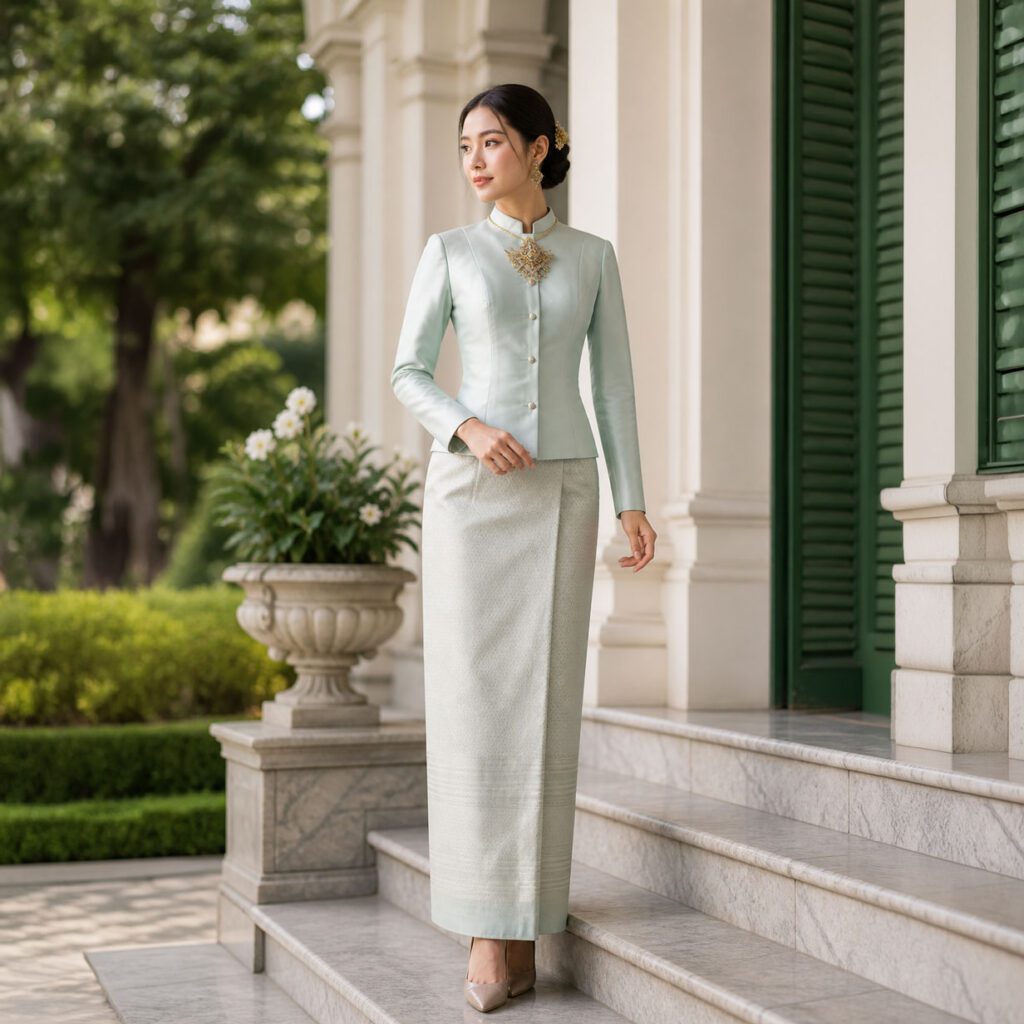
3. Amarin
More luxurious in appearance, Amarin is often crafted from richly woven silk, sometimes with gold-thread detailing. It reflects a heightened level of elegance, suitable for formal receptions.
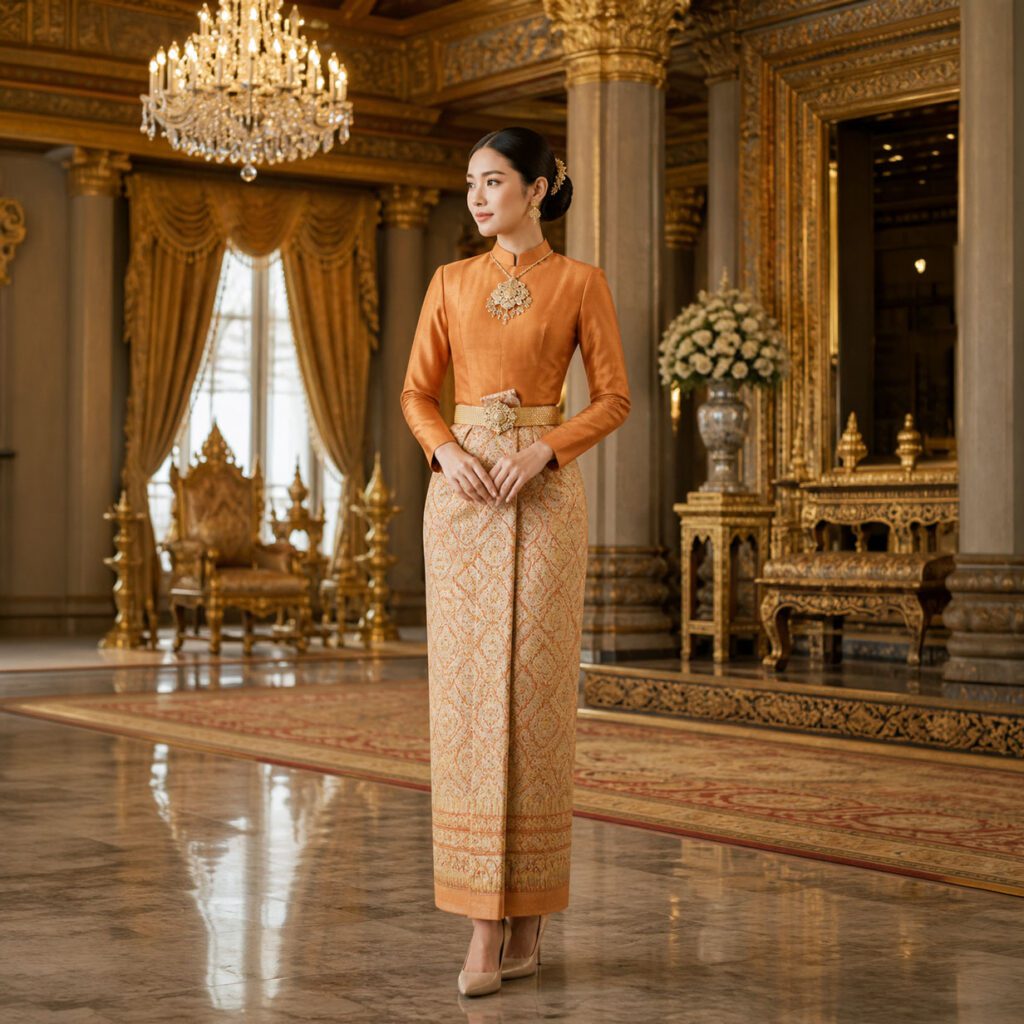
4. Boromphiman
A fully structured dress with long sleeves and a high neckline, Boromphiman conveys formality and composure. Its tailored silhouette gives it a stately presence, often worn at official ceremonies.
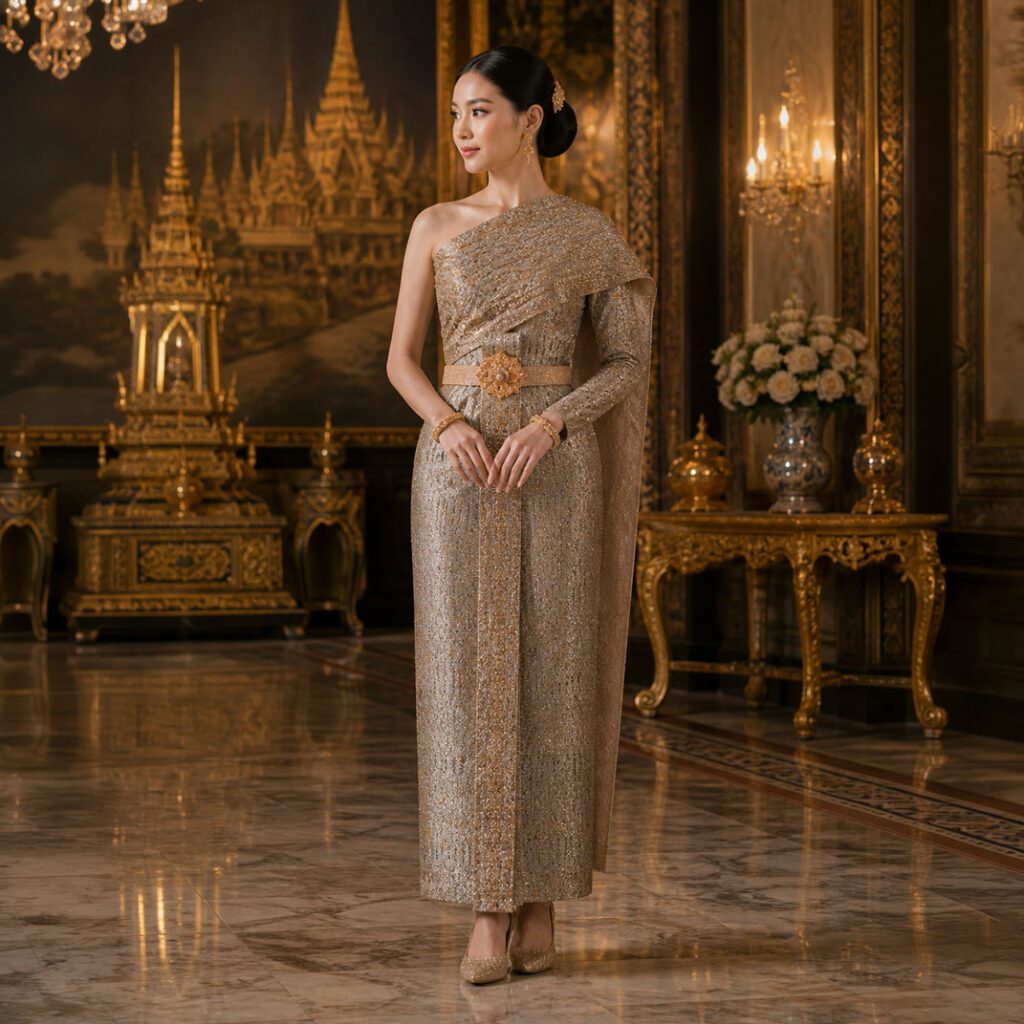
5. Chakri
Perhaps one of the most recognizable styles, Chakri features a sabai—a silk cloth draped elegantly over one shoulder. It blends tradition with visual fluidity, creating a look that is both classic and distinctly Thai.
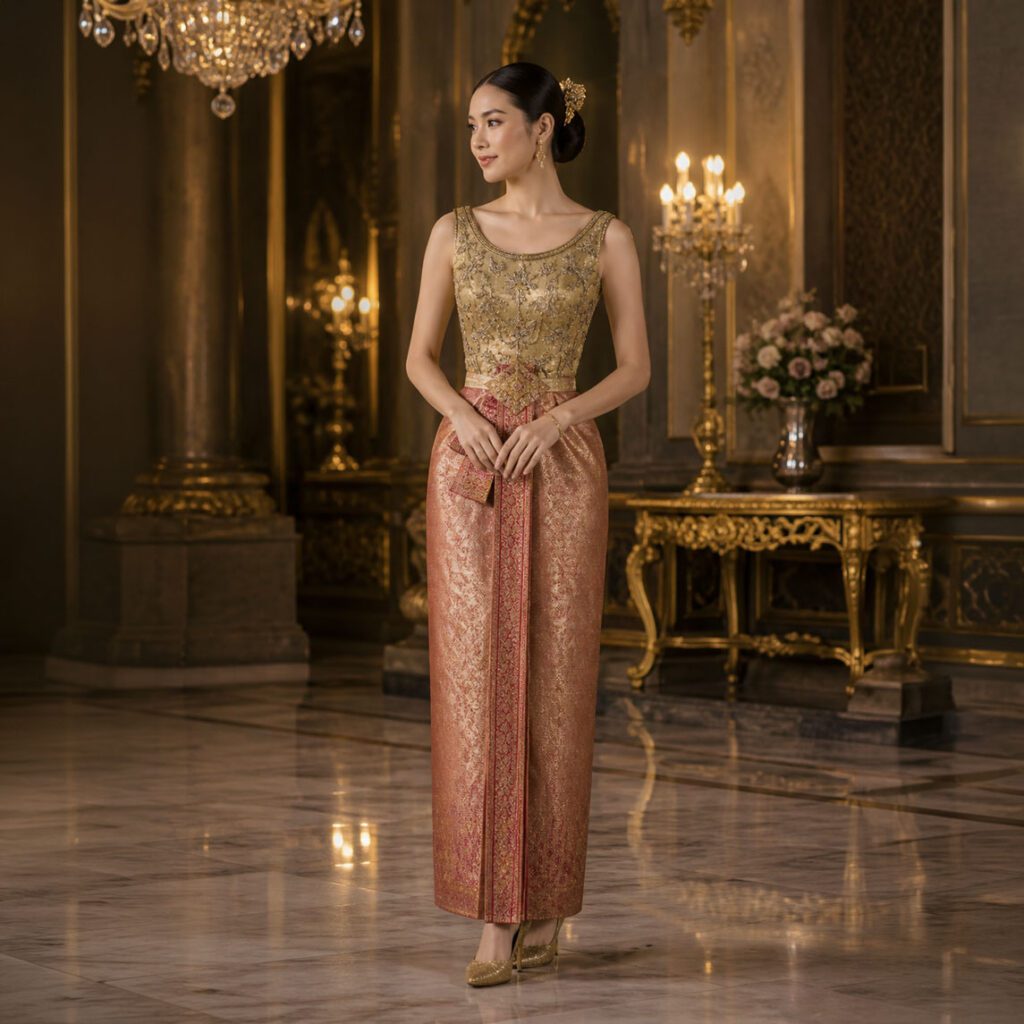
6. Dusit
A more modern interpretation, Dusit is often sleeveless and designed for evening events. While inspired by traditional forms, it adapts to contemporary aesthetics, making it suitable for formal international gatherings.
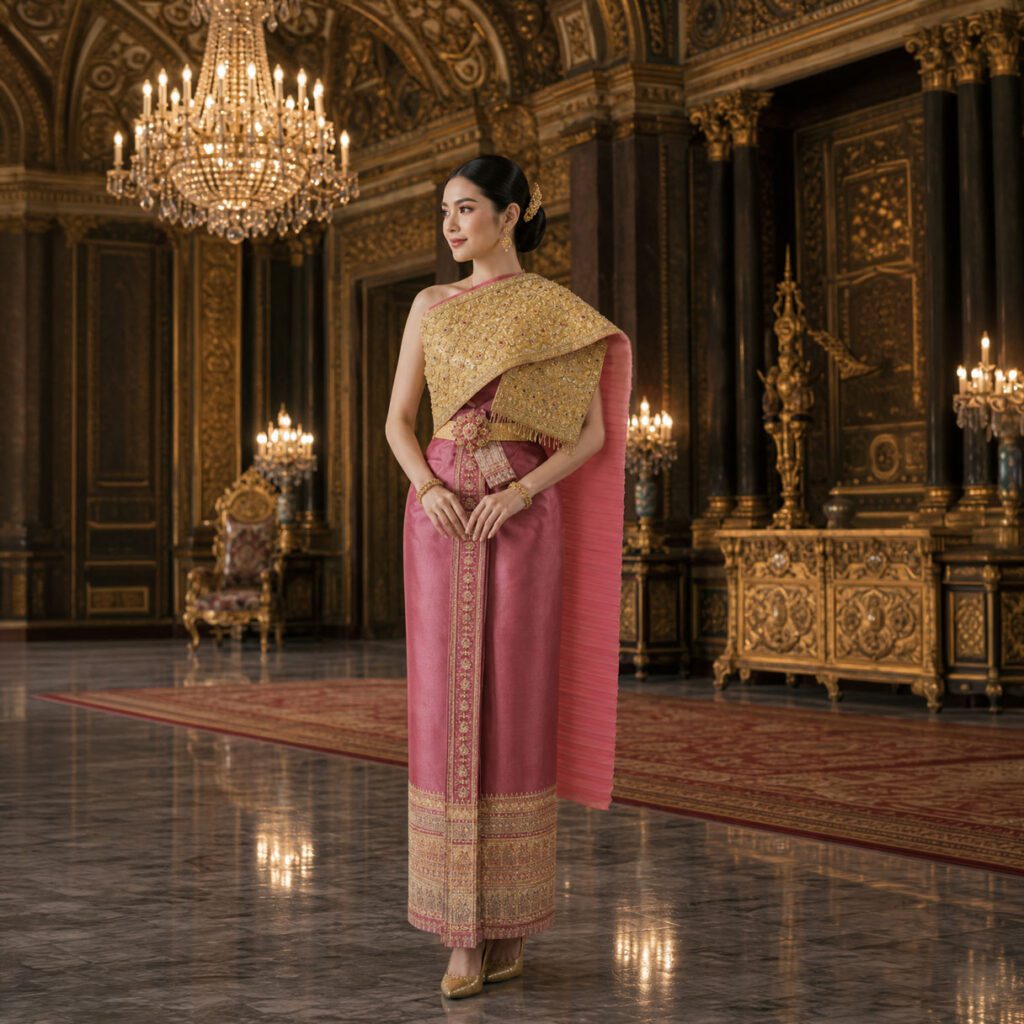
7. Chakkraphat
The most elaborate of all, Chakkraphat represents ceremonial grandeur. Rich fabrics, intricate detailing, and layered draping create a majestic appearance—reserved for the most formal and significant occasions.
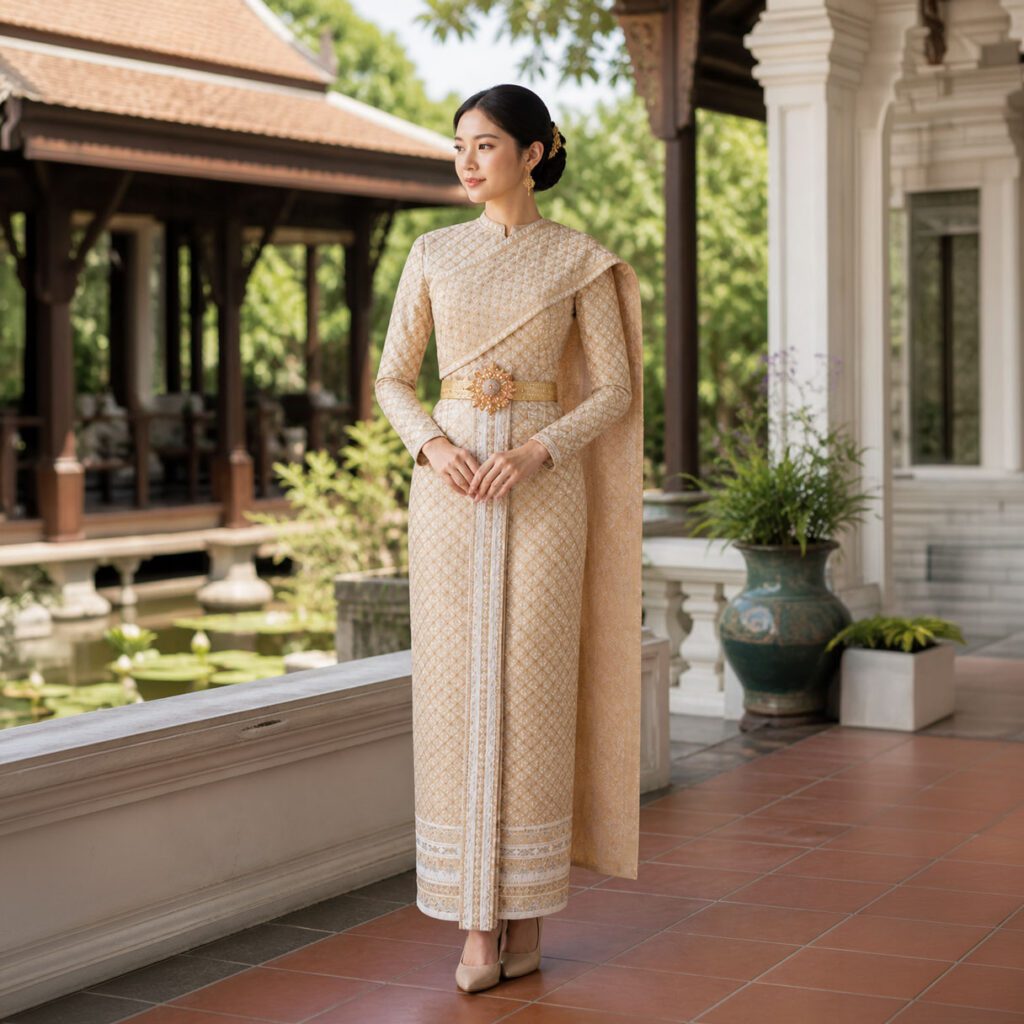
8. Siwalai
Combining elements of Chakri and Boromphiman, Siwalai is highly formal and often worn for royal ceremonies. The addition of a shoulder drape enhances its grandeur while maintaining structure.
Where to Learn More
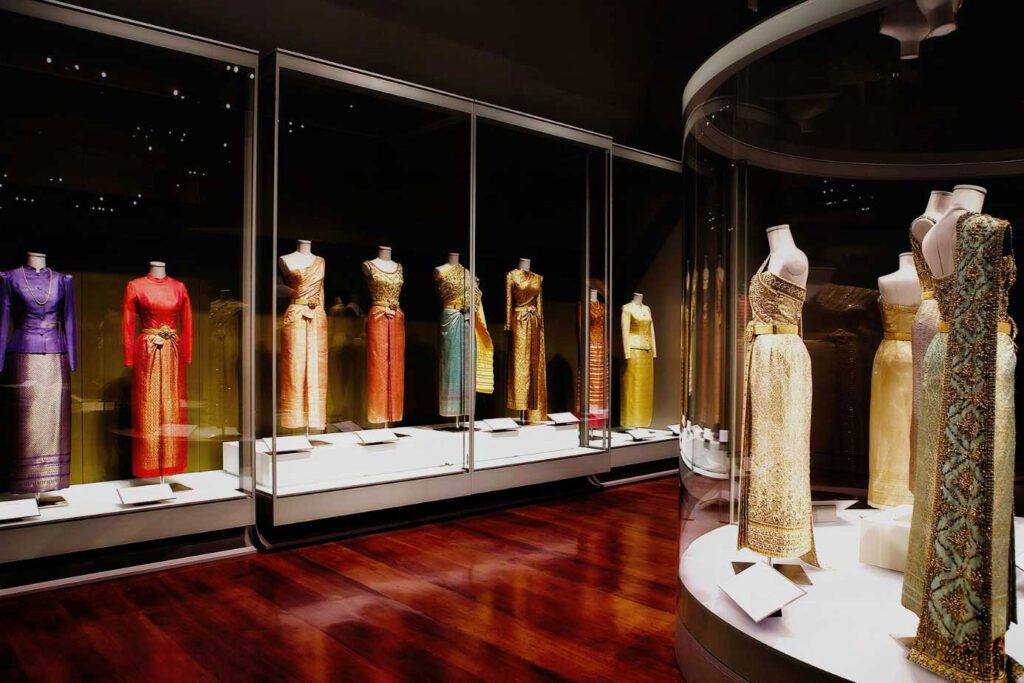
For those who wish to deepen their understanding of Thai textiles and the Thai Royal Attire, one of the most meaningful places to visit is the Queen Sirikit Museum of Textiles.
Located within the grounds of the Grand Palace, the museum offers a closer look into the craftsmanship, history, and cultural significance behind Thai fabrics and royal garments. Through carefully curated exhibitions, visitors can explore how traditional weaving techniques, intricate patterns, and royal aesthetics come together to form what we now recognize as Thai Royal Attire.
More than a display of beautiful textiles, the museum reveals the story of preservation and revival—how these traditions have been studied, refined, and passed on. It brings context to what might otherwise be seen simply as costume, allowing each detail to be understood with greater depth.
For travelers, this experience adds another layer to wearing or appreciating Thai dress. It transforms a visual impression into knowledge—connecting style with heritage, and beauty with meaning.
—-
Queen Sirikit Museum of Textiles is located in The Royal Grand Palace
Map & Info :
https://maps.app.goo.gl/ubZQb3EhDHPtpsLC8
Beyond Costume: Wearing Meaning
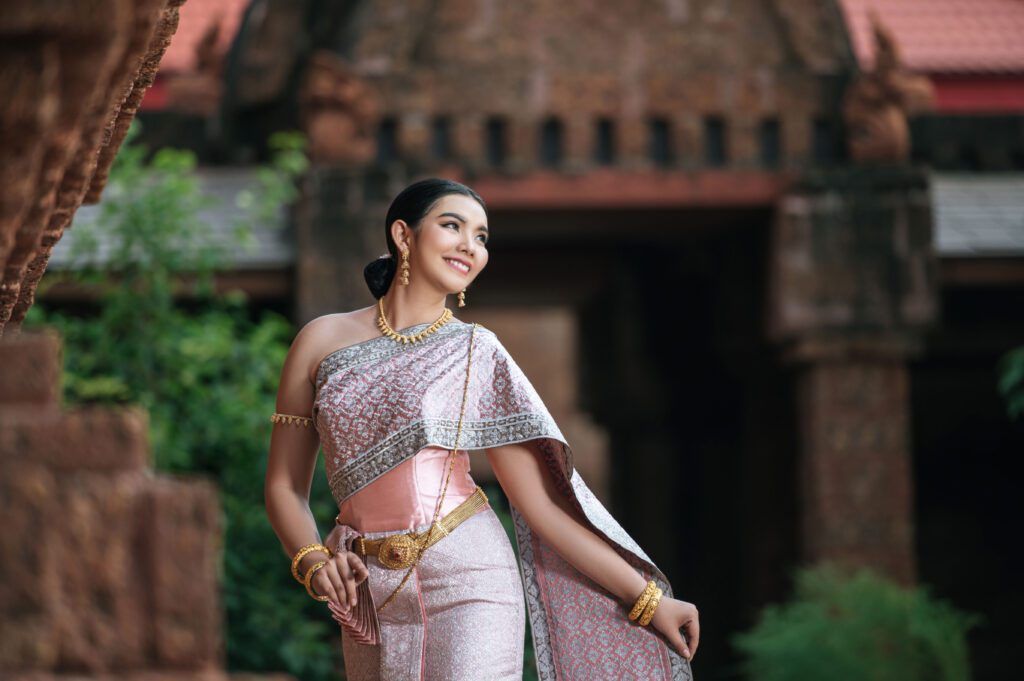
Today, Thai traditional attire is not confined to royal ceremonies. Visitors to Thailand often have the opportunity to experience it firsthand—especially at cultural landmarks such as Wat Arun Ratchawararam, where dressing in Thai costume has become a popular activity.
Yet beyond the photographs, there is something deeper to be appreciated.
Understanding the story behind each style transforms the experience. A simple outfit becomes a reflection of daily life. A formal dress carries echoes of ceremony and tradition. Each detail—fabric, draping, silhouette—connects to a broader cultural narrative shaped by history and refined through royal vision.
To wear Thai attire, then, is not only to dress beautifully, but to step—briefly—into a living heritage.
Share


