
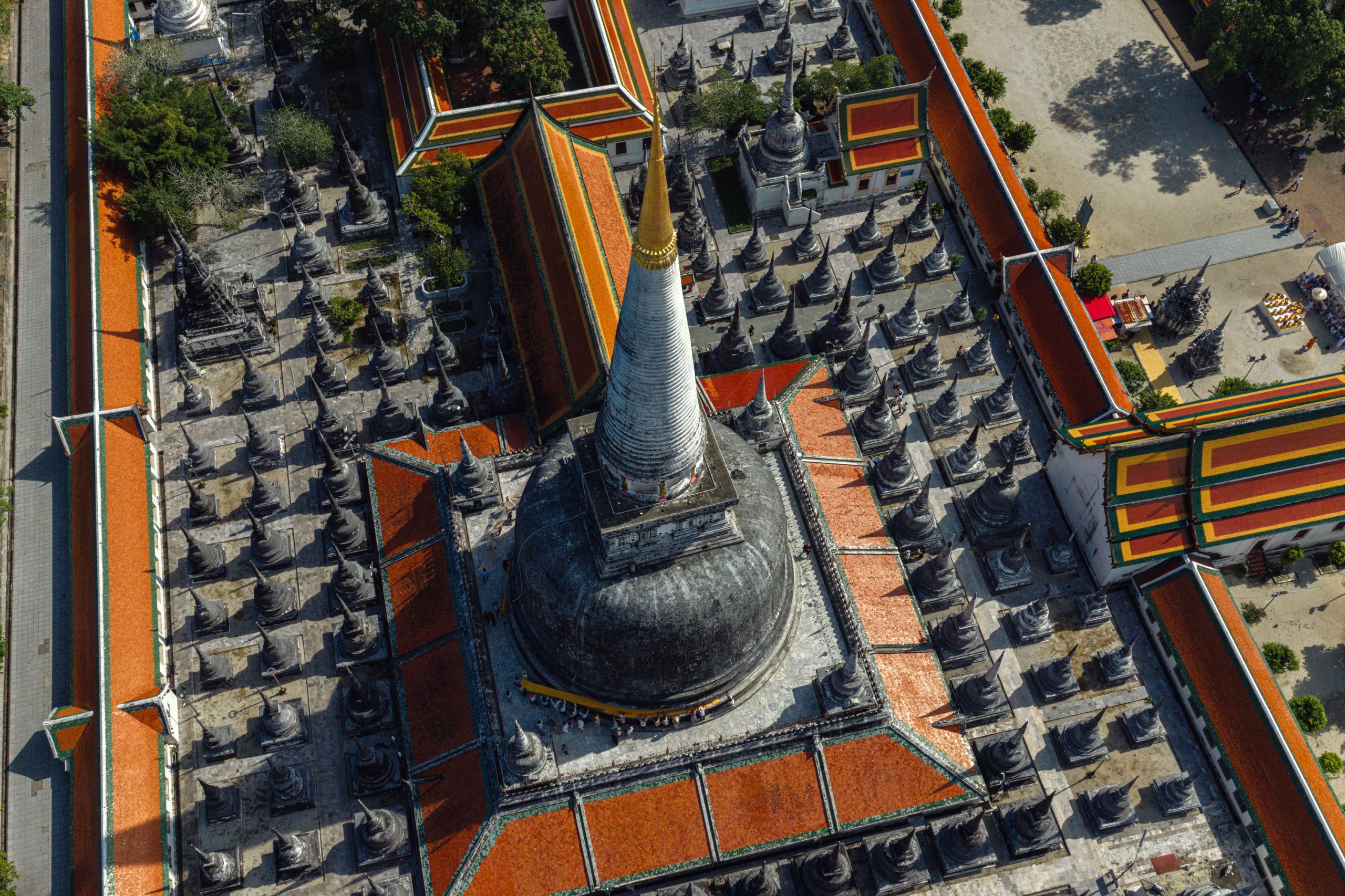
Long before the great kingdoms of Sukhothai and Ayutthaya rose to prominence, a thriving maritime kingdom on Thailand’s southern coast had already become one of Southeast Asia’s most important centres of Theravada Buddhism.
At its heart stands Phra Borommathat Chedi, the sacred monument within Wat Phra Mahathat Woramahawihan in Nakhon Si Thammarat, recently inscribed as a UNESCO World Heritage Site. More than an architectural masterpiece, this is the place where faith, craftsmanship and local traditions have continued to shape one another for well over a millennium.
Every brick, every gilded surface and every annual ceremony tells a story that extends far beyond the monument itself. Here, Buddhism was not simply introduced—it evolved, inspired later generations of Thai architecture, and became woven into everyday life. Visiting this remarkable temple is therefore not only about admiring an ancient chedi, but about discovering one of the cultural foundations upon which Thailand was built.
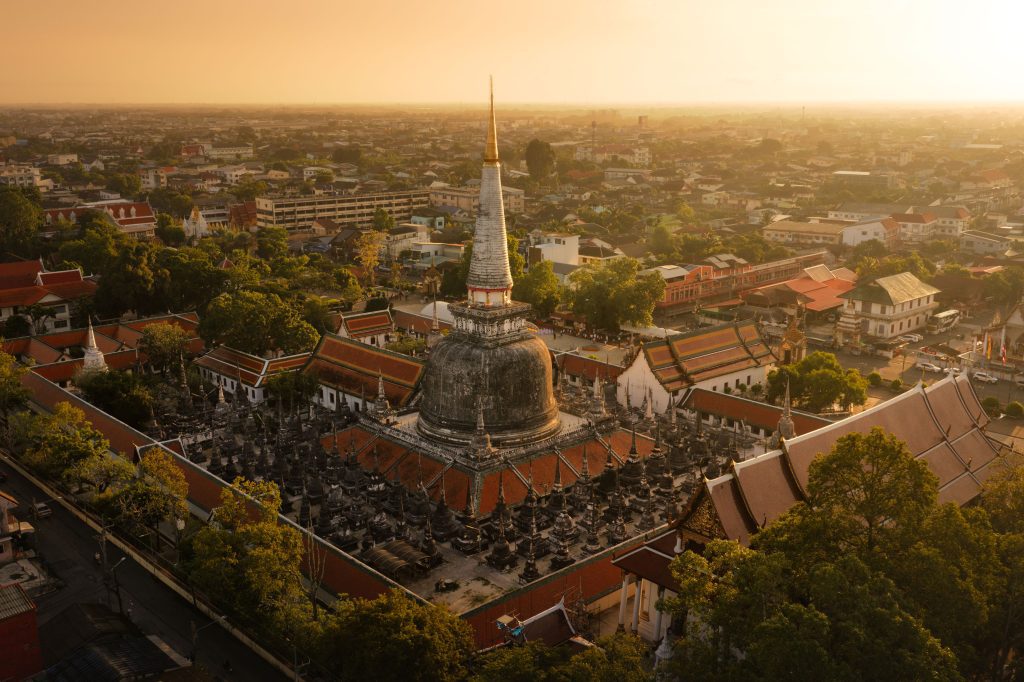
The Prototype of Thailand’s Bell-shaped Chedis
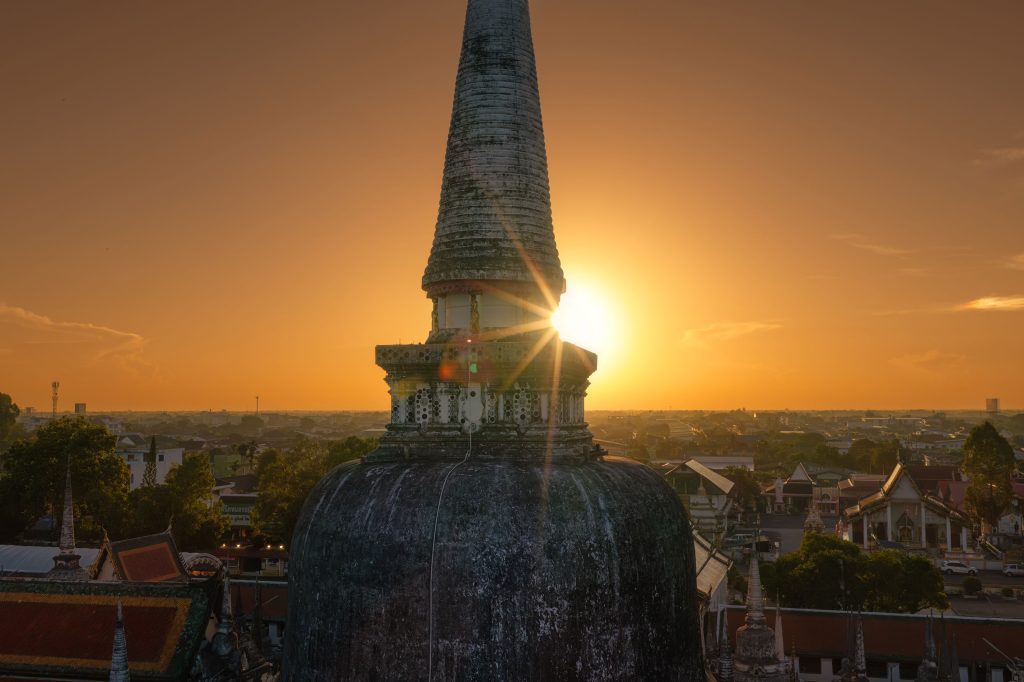
The soaring bell-shaped Phra Borommathat Chedi is among the most influential Buddhist monuments in Thailand. Around 1,250 years ago, the Kingdom of Tambralinga adopted Theravada Buddhism together with this Sinhalese architectural style from Sri Lanka. Centuries later, the Sukhothai Kingdom embraced the same tradition, making this elegant bell-shaped form the prototype for countless Thai chedis that followed. In many ways, this monument marks the beginning of a distinctive architectural lineage that continues across Thailand today.
A Sacred Landscape Designed as the Buddhist Cosmos
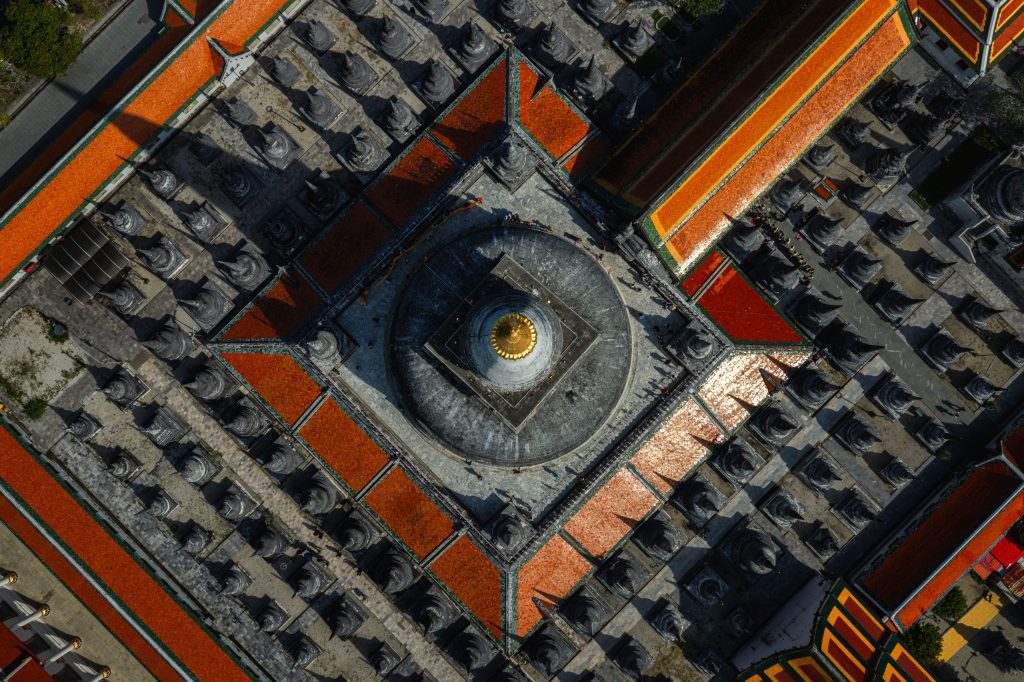
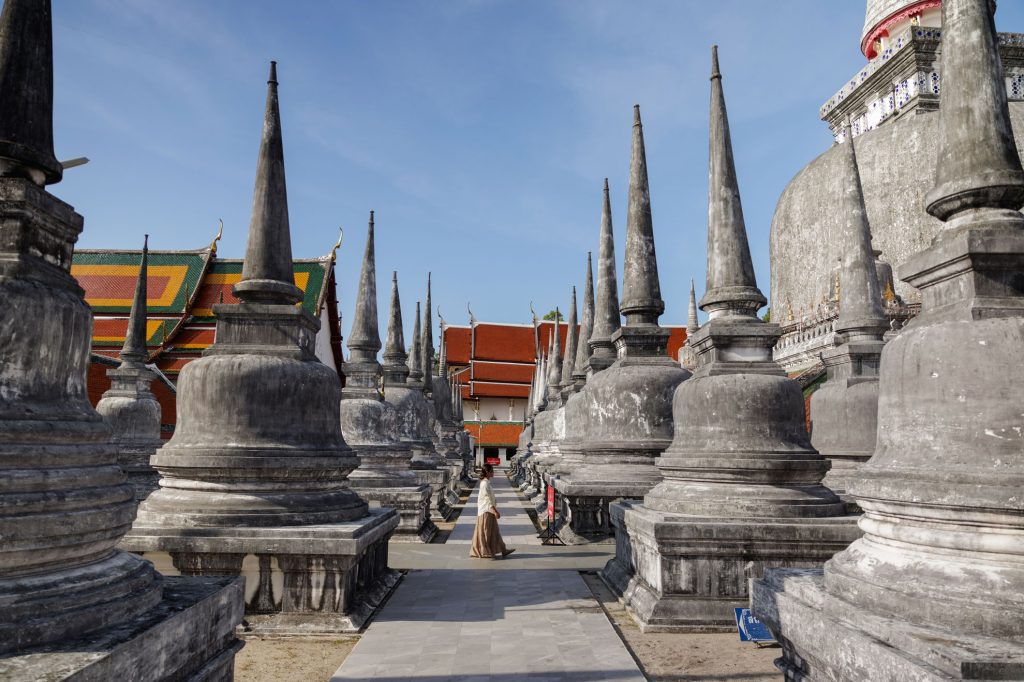
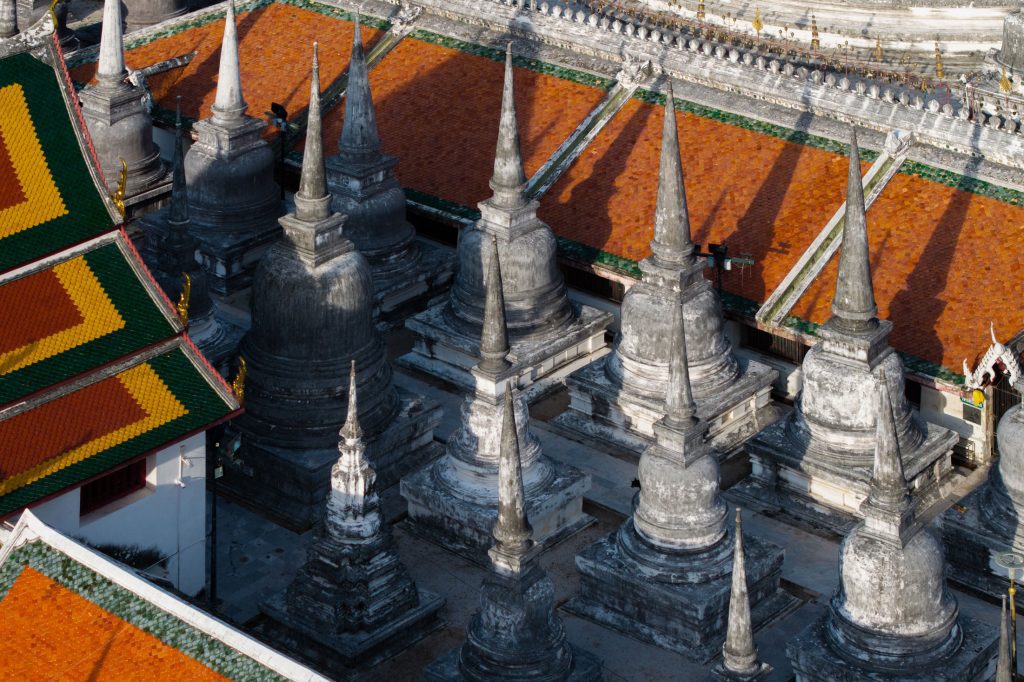
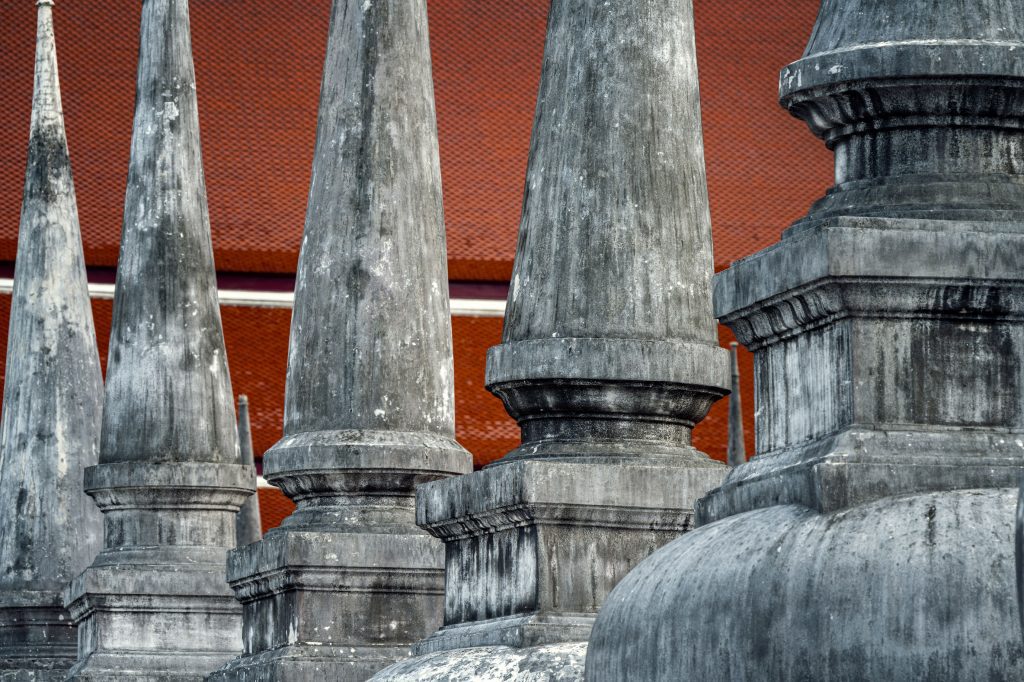
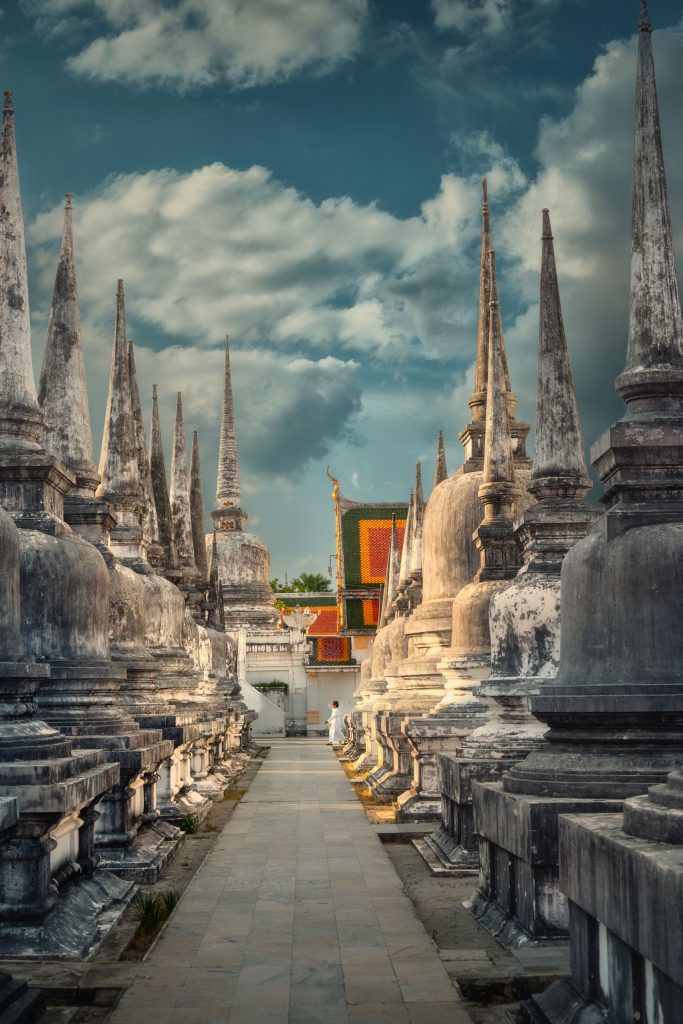
Seen from above, 153 smaller chedis surround the main monument in three concentric layers. Their arrangement is far from decorative—it represents the ideal Buddhist universe, with the central chedi symbolising Mount Meru, the spiritual centre of the cosmos, while the surrounding chedis evoke the sacred mountains and heavenly realms described in Buddhist cosmology.
Unlike monuments built all at once, these smaller chedis were added gradually over centuries by generations of devotees. Together they form a remarkable landscape shaped by collective faith rather than a single architectural plan.
A Golden Pinnacle Built by Generations of Devotion
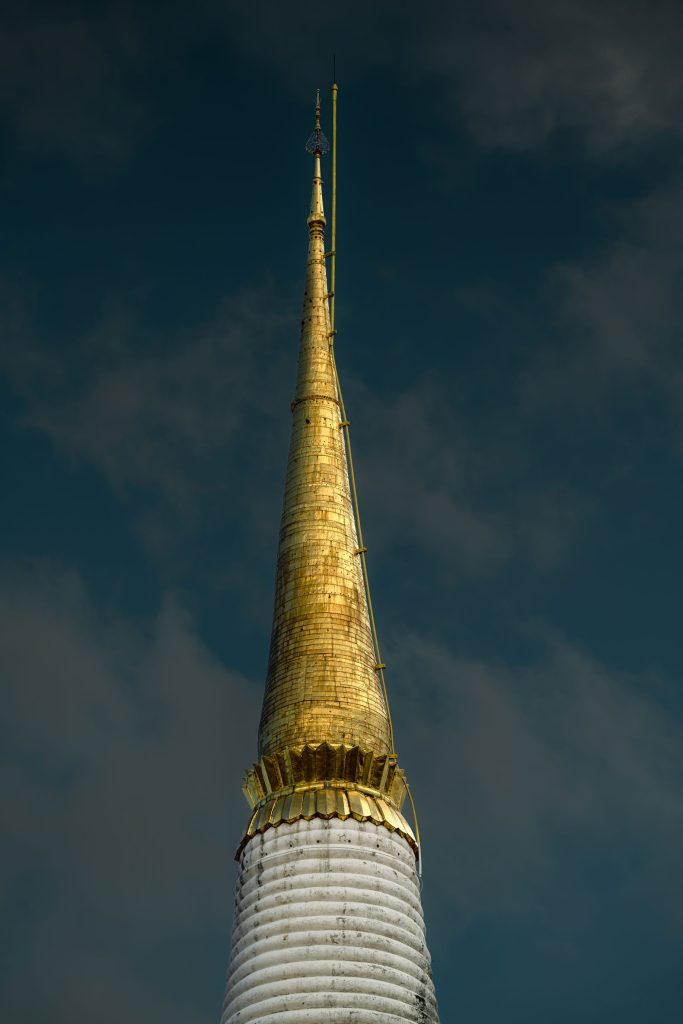
The gleaming golden spire crowning the chedi is covered with approximately 725 kilograms of solid gold. Rather than being the gift of a single ruler, it reflects centuries of offerings made by kings, local communities and ordinary worshippers alike. The monument itself therefore stands as a testament not only to royal patronage but also to the enduring generosity of countless believers whose contributions have accumulated across generations.
The Chedi That Casts Almost No Shadow
One of the most intriguing features of Phra Borommathat Chedi is the belief that its shadow never stretches beyond its own base.
The explanation lies not in mystery, but in ingenious engineering. Because the monument was constructed on sandy ground, its builders created an unusually broad base to support the immense weight of the towering structure above. As a result, the shadow of the upper section remains within the footprint of the monument itself.
In Buddhist symbolism, however, the absence of a visible shadow has long carried a deeper meaning—representing the enlightened state, free from worldly attachments and defilements.
A Living Heritage That Still Unites the Community
Architecture alone did not earn this site its World Heritage recognition.
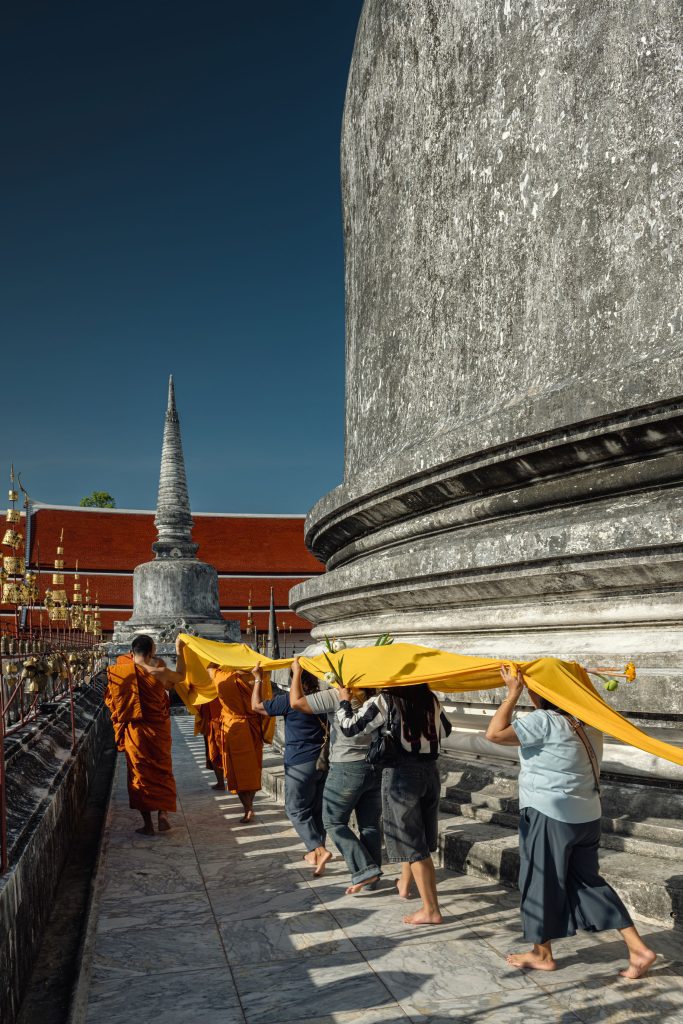
Twice each year, thousands of people gather for Hae Pha Khuen That, the ancient ceremony of carrying a long painted Buddhist cloth, known as Phra Bot, before wrapping it around the base of the chedi. This tradition has continued for nearly 800 years without interruption, transforming the monument into a living place of worship rather than a relic of the past.
It is a powerful reminder that heritage is not only preserved in stone, but also in the people who continue to give it meaning.
Where Beliefs Came Together
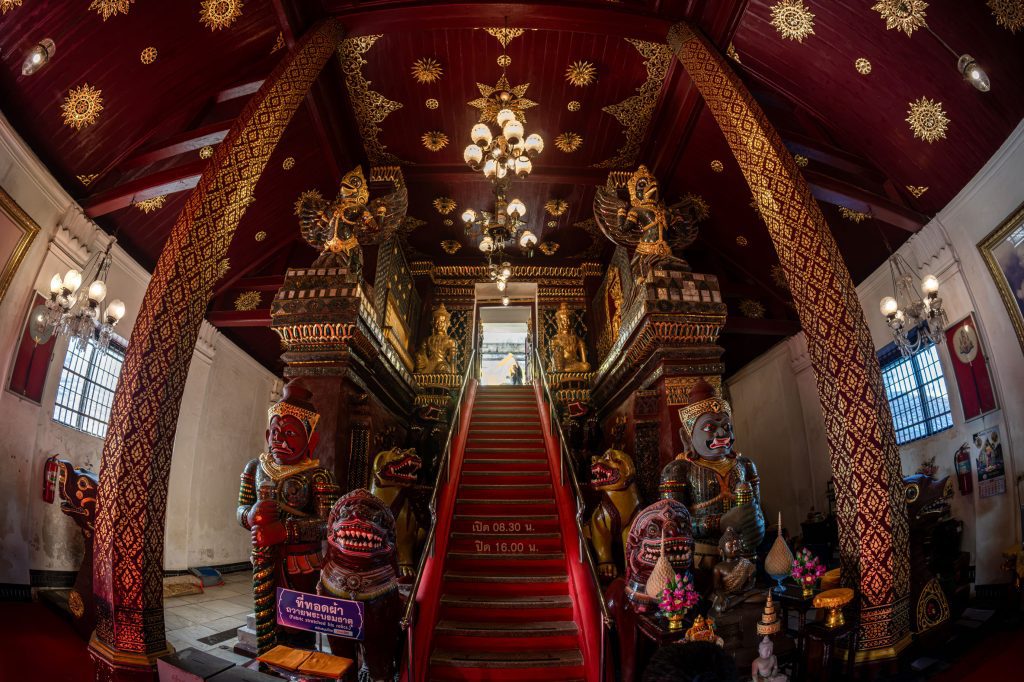
Among the many sculptures within the temple grounds are Thao Jatukham and Thao Ramathep, guardian figures standing at the stairway leading to the sacred chedi.
Originally rooted in local Brahman-Hindu beliefs, these guardian deities were gradually incorporated into the Buddhist tradition, reflecting the cultural openness that has characterised Nakhon Si Thammarat for centuries. Their presence illustrates how different belief systems coexisted and merged naturally within the region’s religious landscape.
Many visitors may also recognise the names Jatukham and Ramathep from a remarkable cultural phenomenon in the early 2000s, when amulets bearing their images became one of Thailand’s most celebrated spiritual movements, attracting devotees from across the country. Yet their true significance remains here, where they have guarded the entrance to one of Thailand’s most sacred Buddhist monuments for generations.
Quick Info :
Wat Phra Mahathat Woramahawihan is located in the heart of Nakhon Si Thammarat, approximately 780 km south of Bangkok. The city is easily accessible by direct flights from Bangkok, Southern Line trains, and long-distance buses operating daily. From Nakhon Si Thammarat Airport, the temple is about a 20-minute drive from the airport.
Share


