
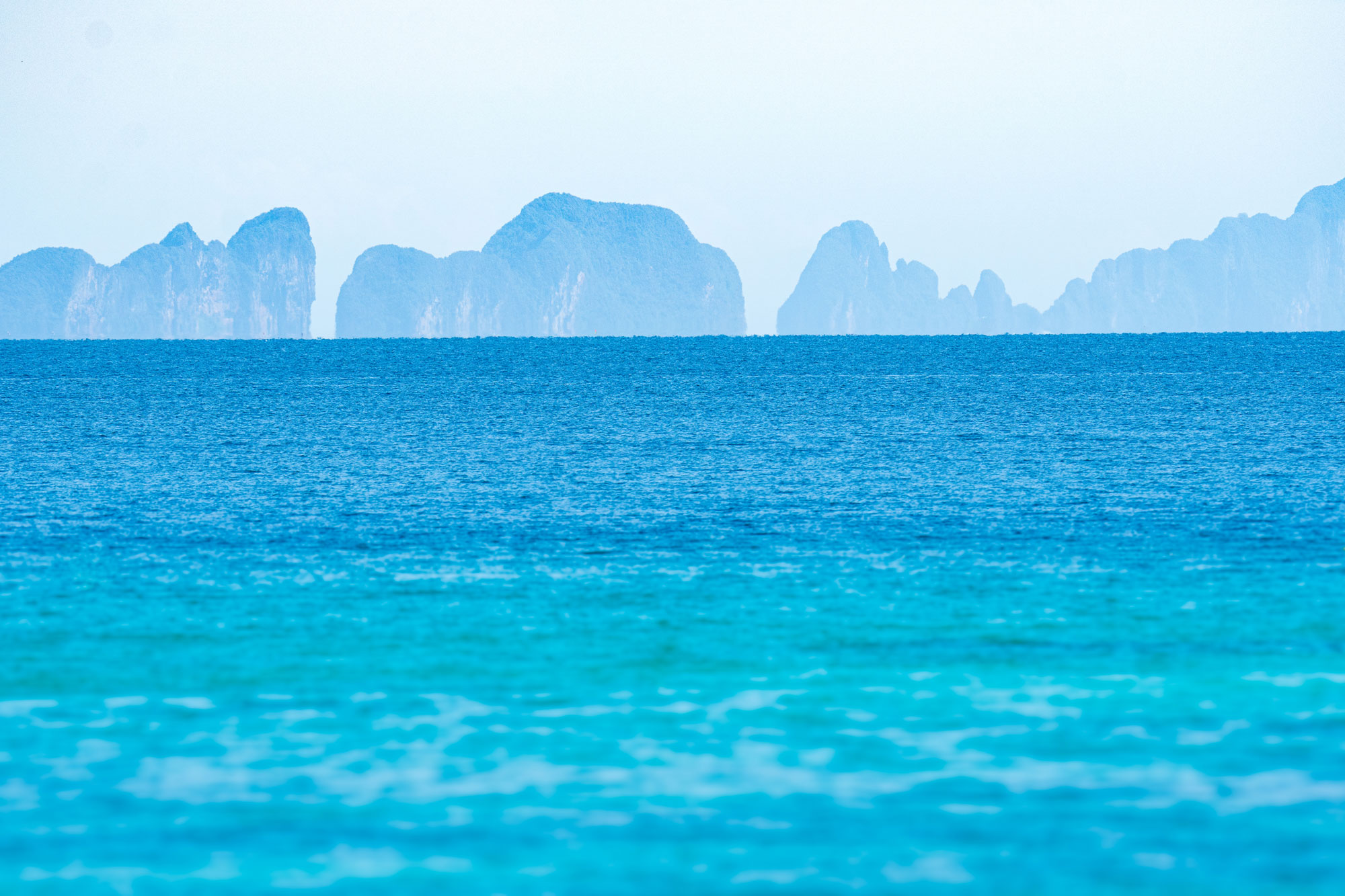
Trang is the Andaman at its quietest—and perhaps at its most rewarding.
While neighbouring destinations may draw bigger crowds, Trang moves at a different pace. This southern province combines an old trading-town character with limestone mountains, caves, mangrove forests and a long coastline facing an archipelago of remarkably different islands.
Here, a day might begin before sunrise over dim sum, roasted pork and kopi, continue by train to a century-old terminus, wind through limestone country and mangrove waterways, and end on a beach where hermit crabs emerge after dark.
Then there is the sea.
White-sand islands, hidden caves, shallow coral gardens and remote limestone cliffs turn the waters off Trang into far more than a single beach destination. To understand Trang, it is worth taking your time—starting with the traditions that have shaped the province before gradually making your way towards the Andaman.

Classic Trang
To experience Trang like a local, start early—and start with breakfast.
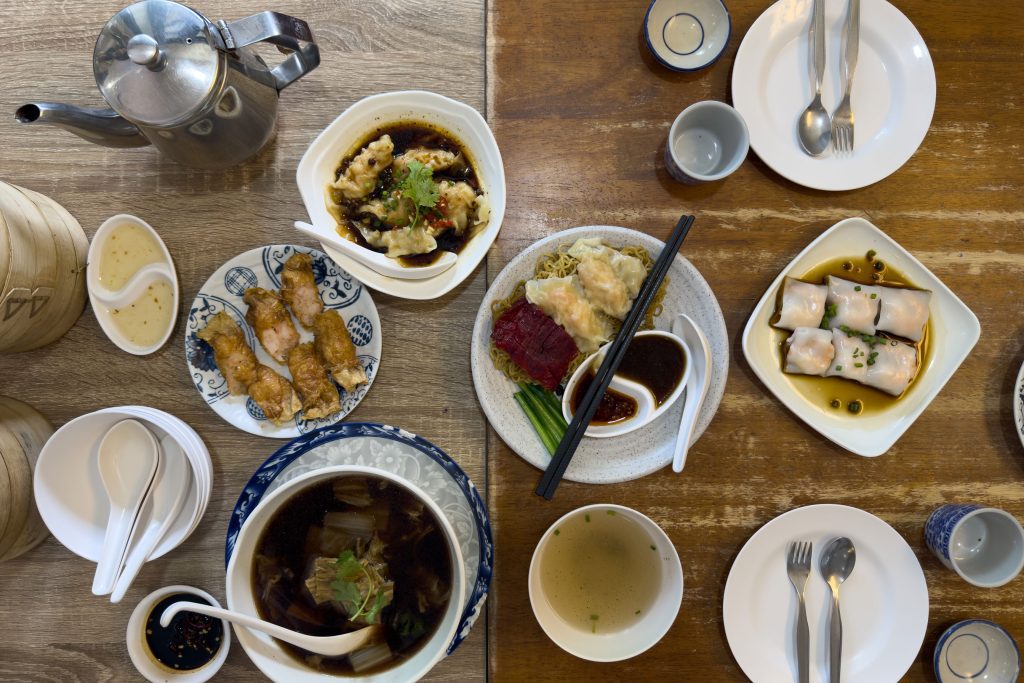
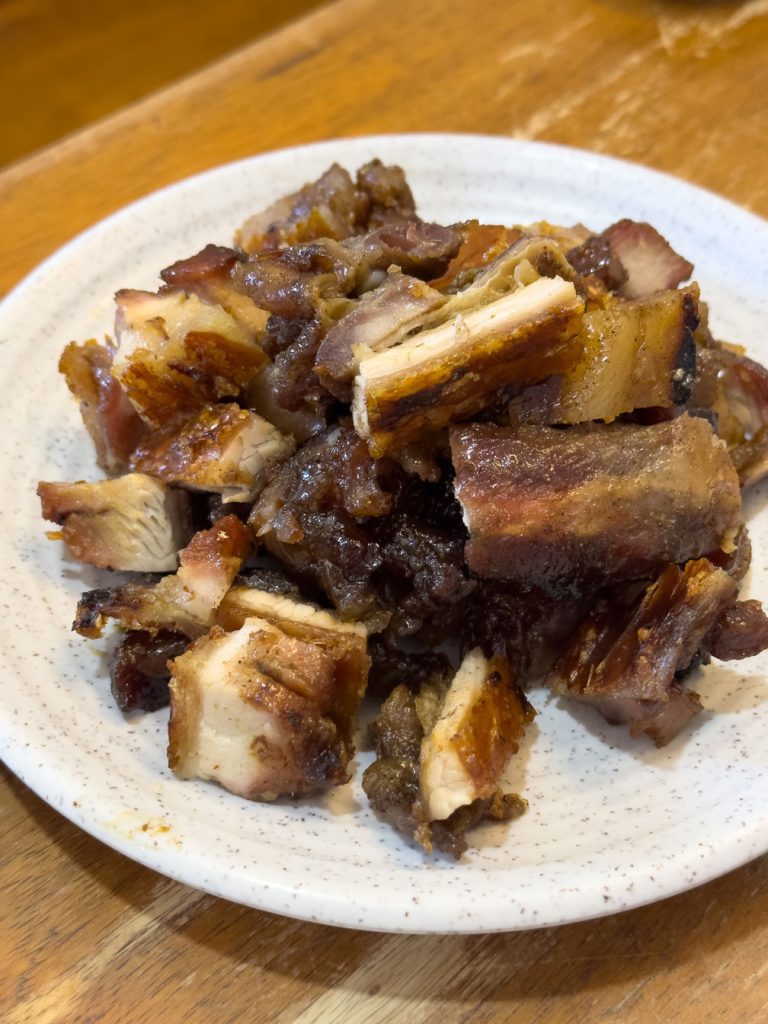
Trang has deep roots in southern Thailand’s Chinese communities, and nowhere is that heritage more visible than at the breakfast table. For generations, rubber tappers began their working day before sunrise, then returned in the morning ready for something substantial. That rhythm helped shape the Trang breakfast tradition: tables filled with steaming baskets of dim sum, strong local kopi, Chinese tea and, very often, slices of Trang roasted pork, an icon in its own right. Whole pigs are traditionally seasoned with a mixture influenced by Chinese cooking, then roasted until the skin becomes crisp and the meat develops Trang’s characteristic sweet, aromatic flavour. Together with dim sum, it remains one of the tastes most closely associated with the province. Trang still has plenty of old local breakfast shops, alongside newer cafés and dim sum restaurants that reinterpret the same morning ritual in a more contemporary setting.
Another piece of classic Trang arrives on rails.
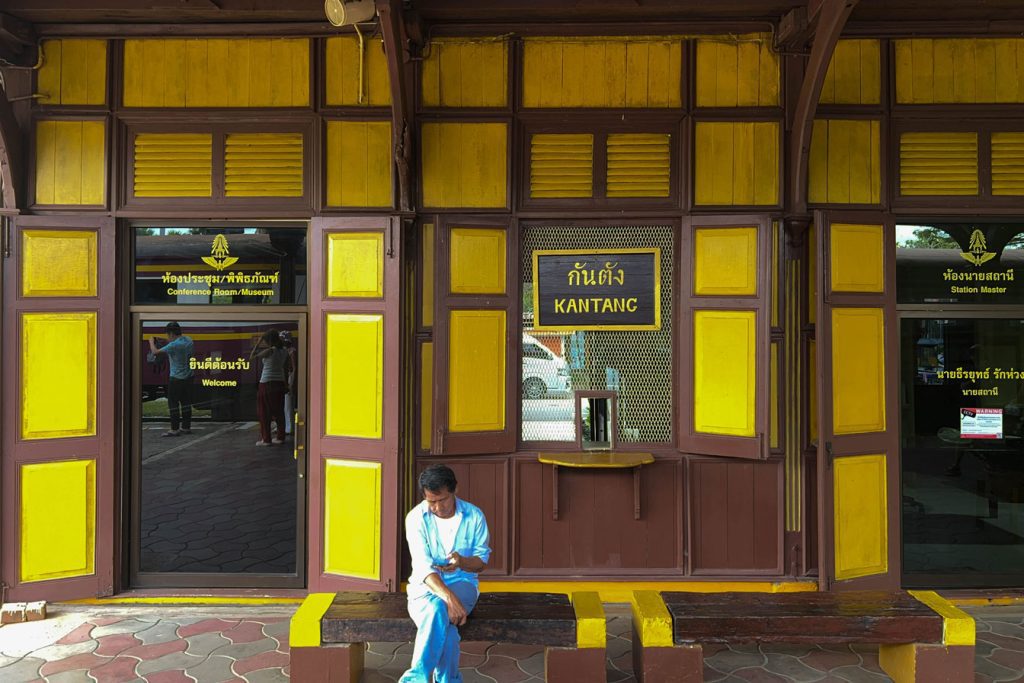
Trang is unusual among Thailand’s Andaman provinces in being directly connected to the national railway network. Follow the tracks beyond Trang town and they eventually reach Kantang Railway Station, the final station on the Andaman side of the Southern Line. Kantang was once an important port and commercial centre, and the railway formed part of the infrastructure that connected this coast with the rest of the country.
Today, the old wooden station remains beautifully nostalgic. You can still make rail travel part of the Trang experience, or simply visit Kantang to see where the tracks finally come to an end.
Food in the morning, an old railway in the afternoon—these are simple experiences, but together they reveal something essential about Trang. Before the beaches and islands, there was already a town here with its own rhythm, history and character.
Wandering Through Trang
Leave the town behind and Trang quickly changes.
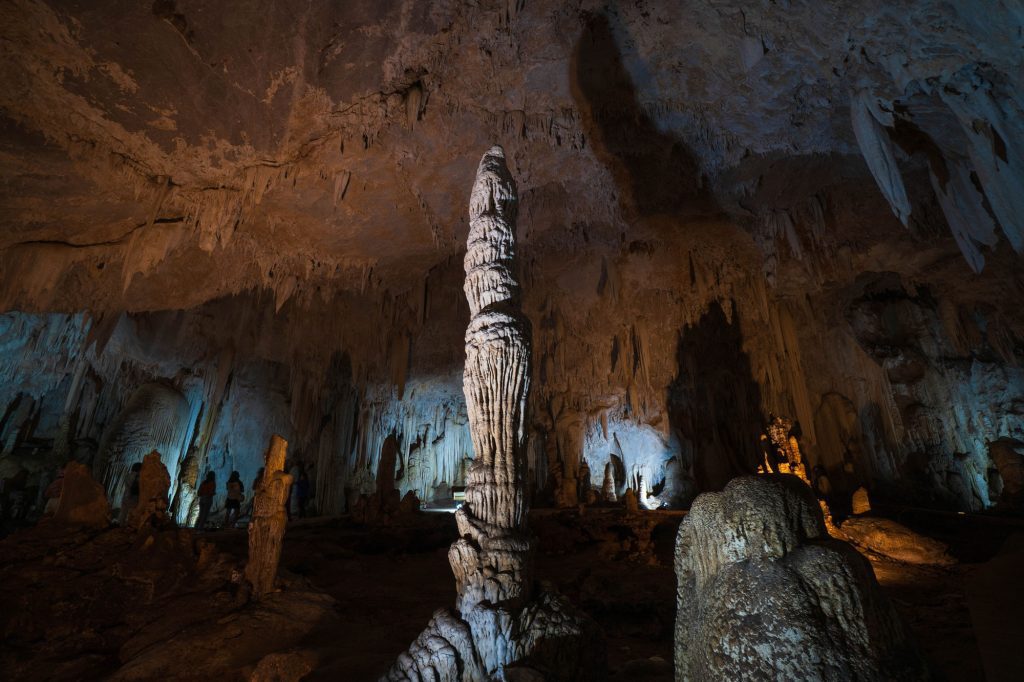
Limestone is one of the defining features of the province, appearing as mountains on the mainland and again as dramatic islands offshore. At Tham Khao Chang Hai, the landscape opens underground instead. Walk into the cave and chambers of stalactites and stalagmites reveal how slowly water has been shaping this limestone world over thousands of years.
From the mountains, continue west towards the coast.
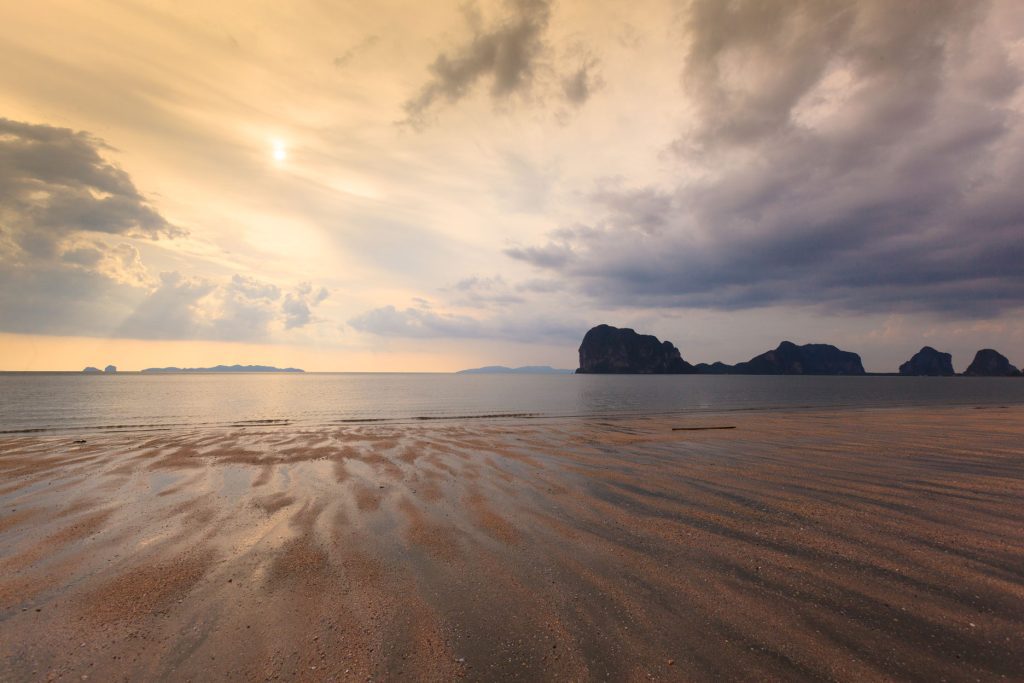
Pak Meng Beach is perhaps Trang’s classic mainland seaside view—a long, relaxed stretch of coast looking towards offshore limestone formations, with the distinctive silhouette of Khao Meng marking the landscape. It is both a destination and a gateway, with boats leaving this part of the coast for Trang’s islands.
But some of the province’s most interesting experiences are found by turning away from the obvious route.
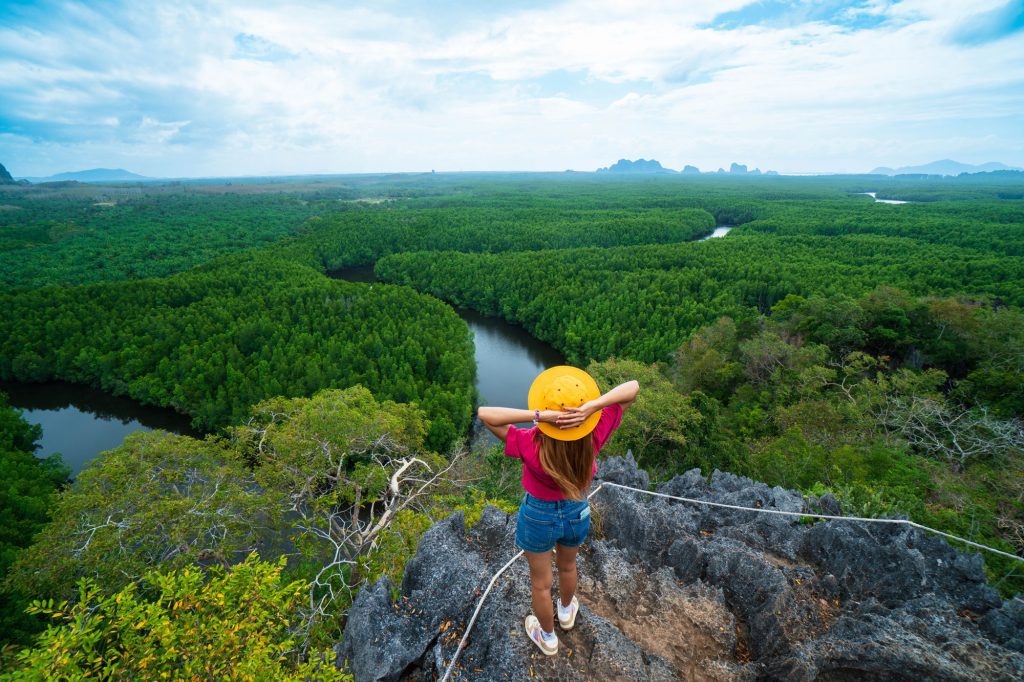
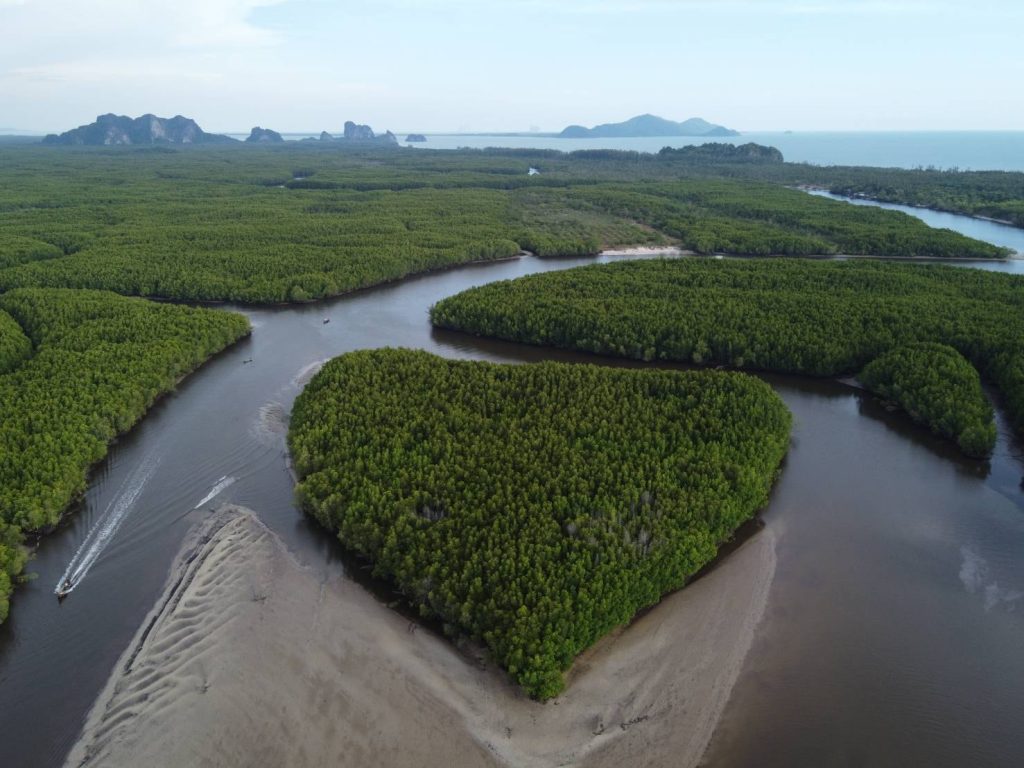
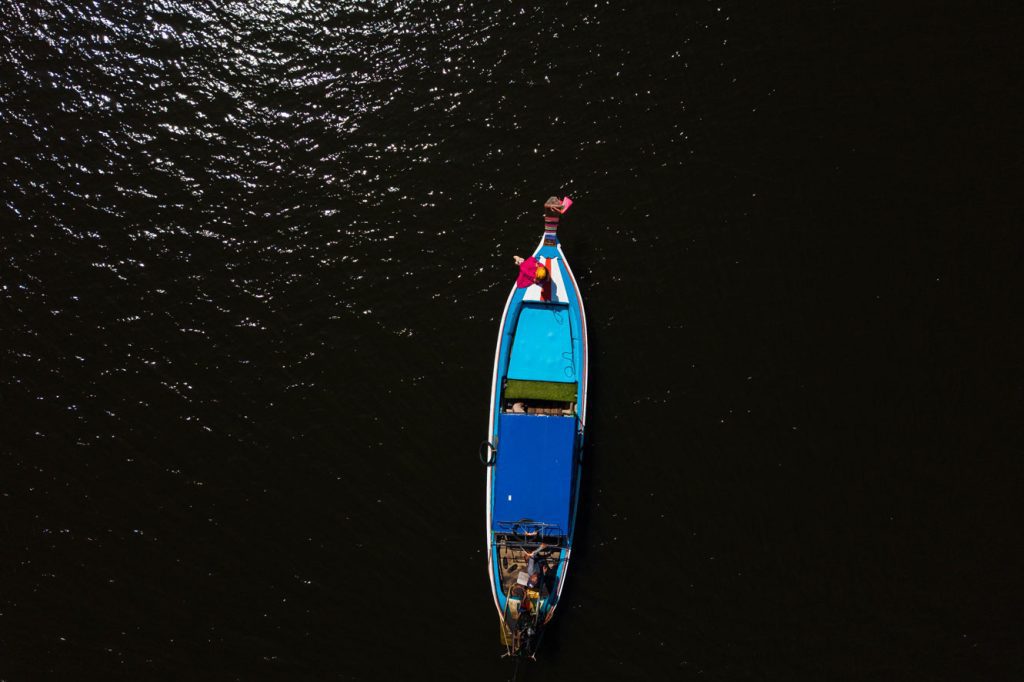
At Ban Nam Rap, local community tourism takes travellers into an extraordinary mangrove landscape. A local long-tail boat follows narrow waterways through dense forest before reaching Khao Chom Pa, a small limestone mountain almost swallowed by the mangroves around it.
Its Thai name describes exactly what you see: a mountain that appears to be “submerged in the forest.”
The climb is short but steep enough to make you work for the reward. From the top, the view suddenly opens in every direction—a vast green carpet of mangroves crossed by winding tidal channels, with islands and the Andaman Sea beyond. The viewpoint offers a spectacular 360-degree perspective of a landscape that is almost impossible to appreciate from ground level.
The community journey can continue towards the mouth of the canal, where sediment carried downstream meets the sea and shifting tides reveal long natural sandbars.
Trang becomes quieter still at Mot Tanoi Beach.
Although it can be reached by road, this secluded stretch of coast feels surprisingly removed from the outside world. Development is minimal, nature dominates the shoreline, and staying here means accepting the slower rhythm of the place.
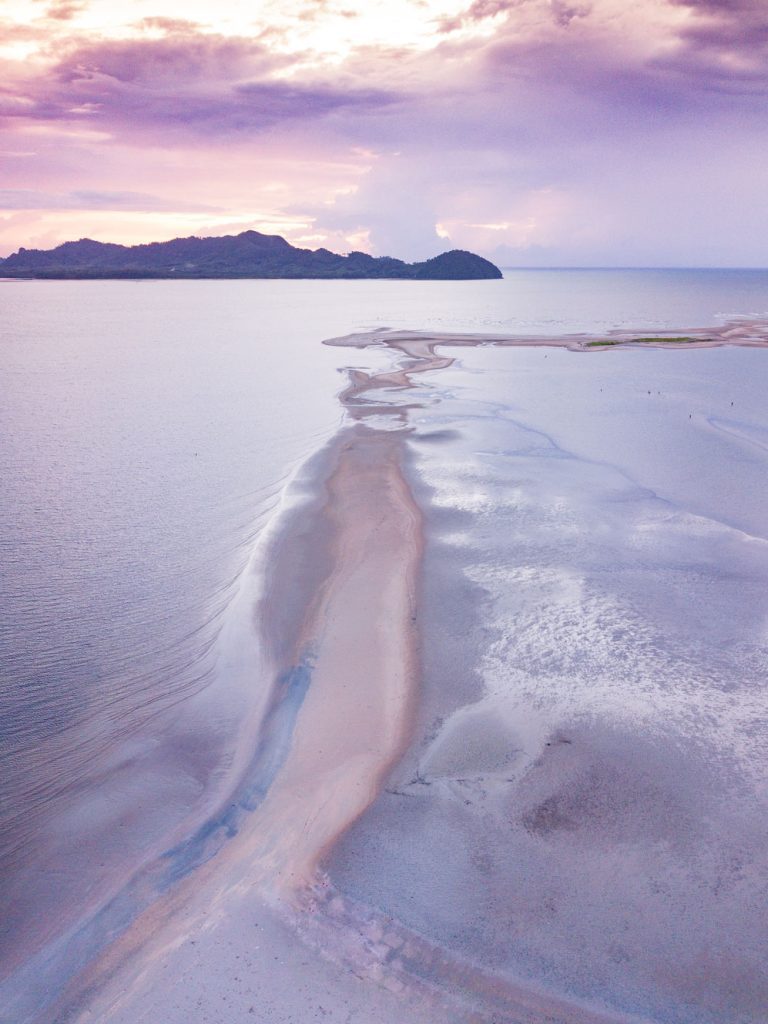
Nearby lies San Lang Mangkon Phueak, the “White Dragon’s Back”—a natural sand ridge that emerges when the tide falls sufficiently low. At the right time, the sea seems to part, revealing a pale pathway of sand stretching into the shallows. Like many coastal experiences in Trang, it is controlled less by a timetable than by the tide.
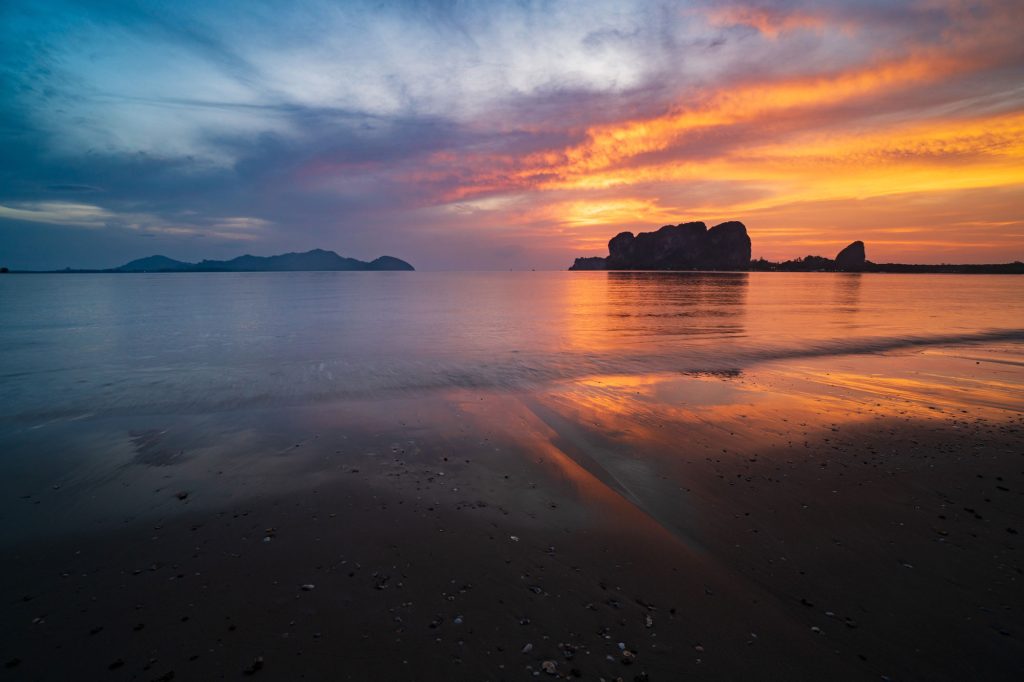
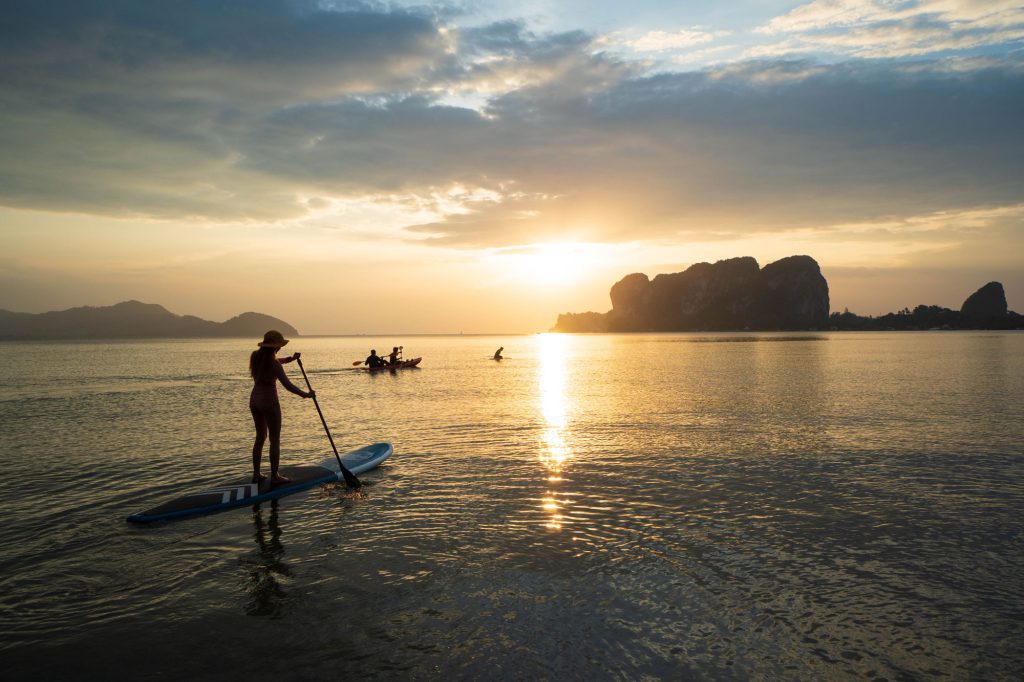
Back at Mot Tanoi, there is little reason to rush anywhere. Take a kayak or SUP board onto the water in the late afternoon and paddle beneath the changing colours of an Andaman sunset.
Then wait until dark.
On a quiet night, tiny movements begin appearing across the sand as hermit crabs venture out along the beach. It is hardly a headline attraction—and that is precisely the point. In places where the coastline remains quiet enough, small encounters with nature become part of the journey.
Into the Trang Sea
Eventually, every journey through Trang seems to lead towards the water.
But the Trang Sea is not one single experience. Its islands can look remarkably different from one another, both above and below the surface.
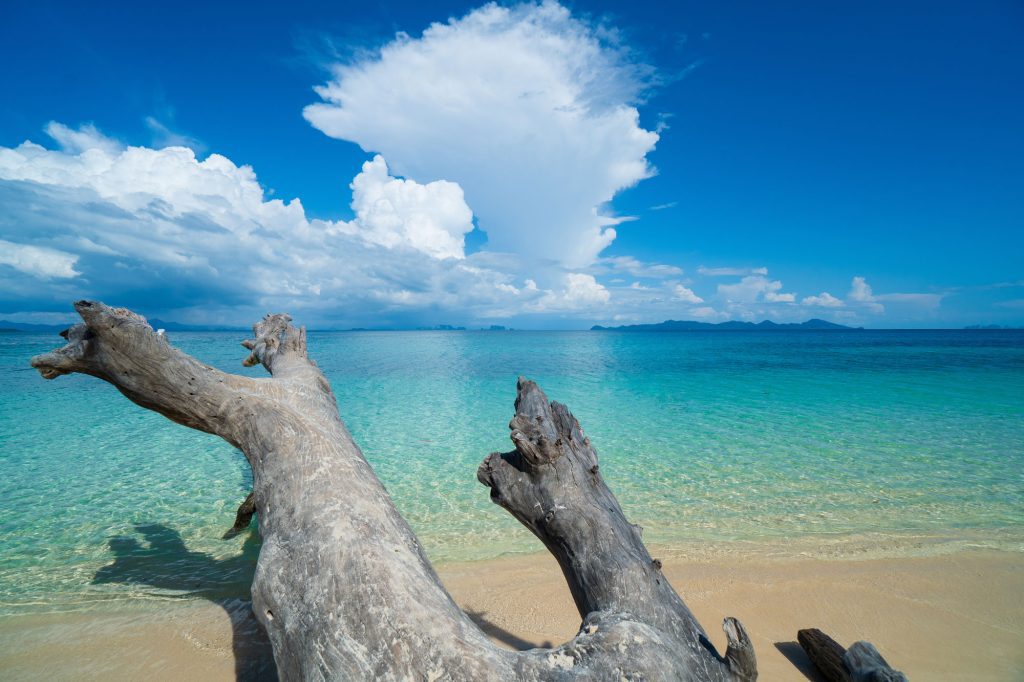
Start with Ko Kradan, where powdery white sand meets exceptionally clear turquoise water. Its beauty has received international recognition, including being placed at the top of World Beach Guide’s Top 100 Beaches on Earth list in 2023. Rankings come and go, but Ko Kradan hardly needs one—the combination of white sand, clear shallows and an undeveloped island backdrop speaks for itself.
And the island is just as interesting underwater.
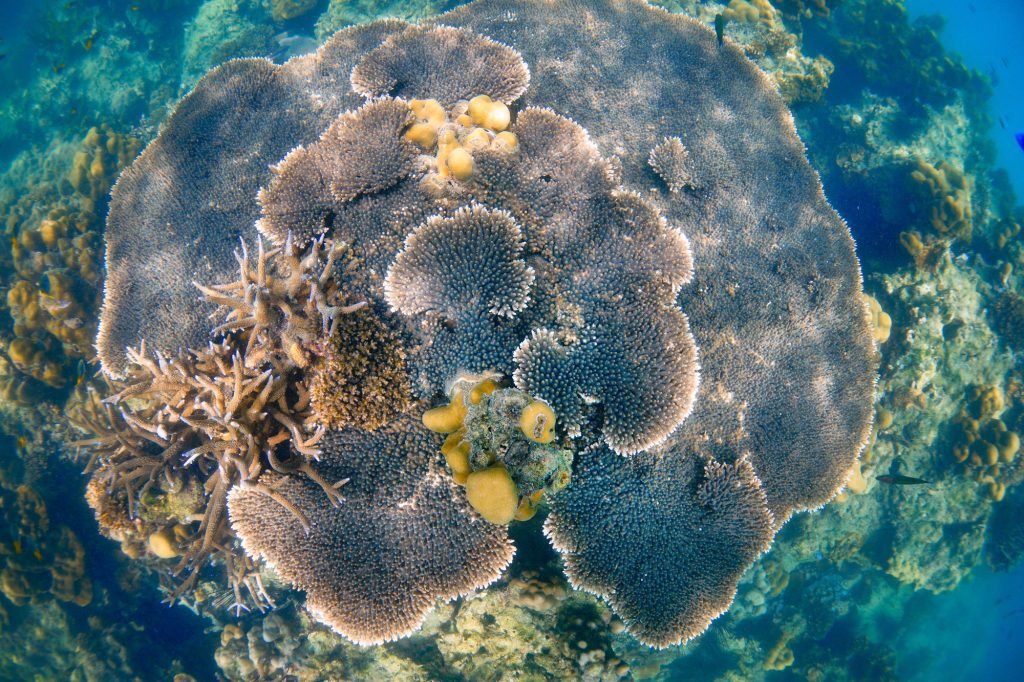
Hard-coral reefs lie remarkably close to parts of the shore, making Ko Kradan particularly accessible for snorkelling. You do not always need a boat or a deep dive; on a calm day, simply swimming out from the beach can reveal an entirely different landscape beneath the surface.
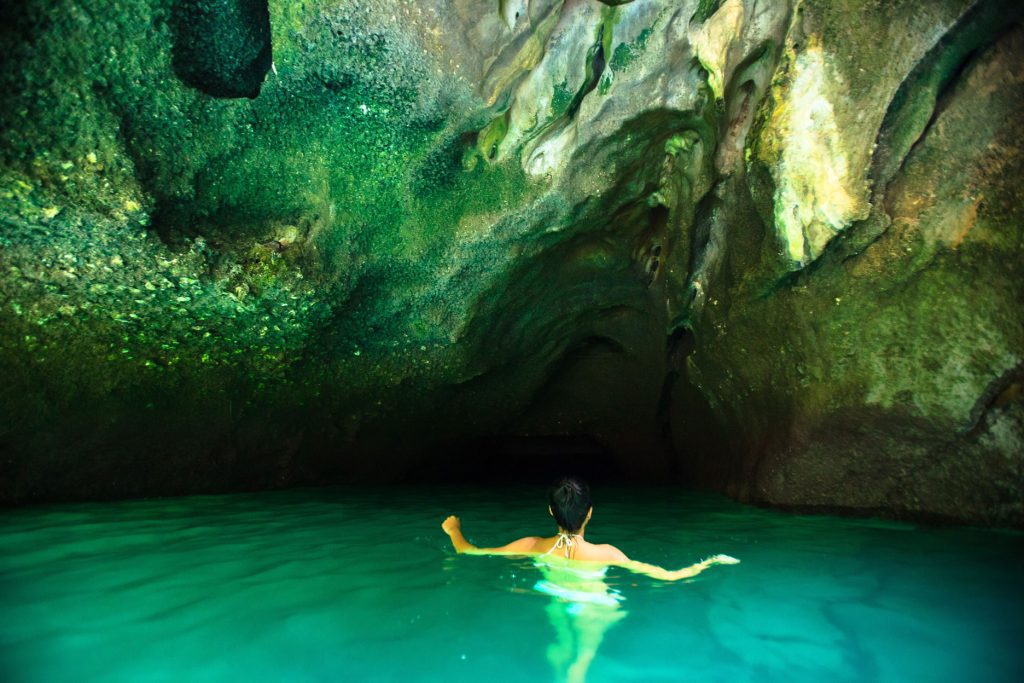
Nearby Ko Muk hides one of Trang’s most famous natural wonders inside the island itself.
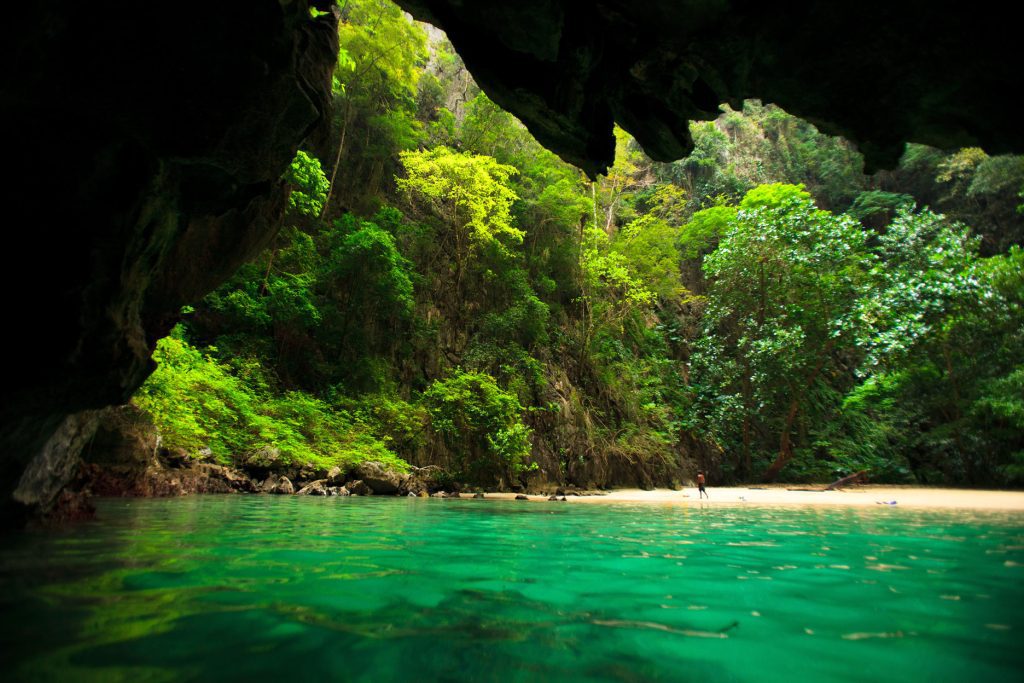
To enter Tham Morakot, or Emerald Cave, visitors swim or float through a dark sea tunnel beneath towering limestone. For a moment, almost everything disappears except the sound of water and the small patch of light ahead. Then the passage opens unexpectedly into a hidden beach enclosed by cliffs.
The journey through darkness is as memorable as the destination itself.
Other islands offer no beach at all.
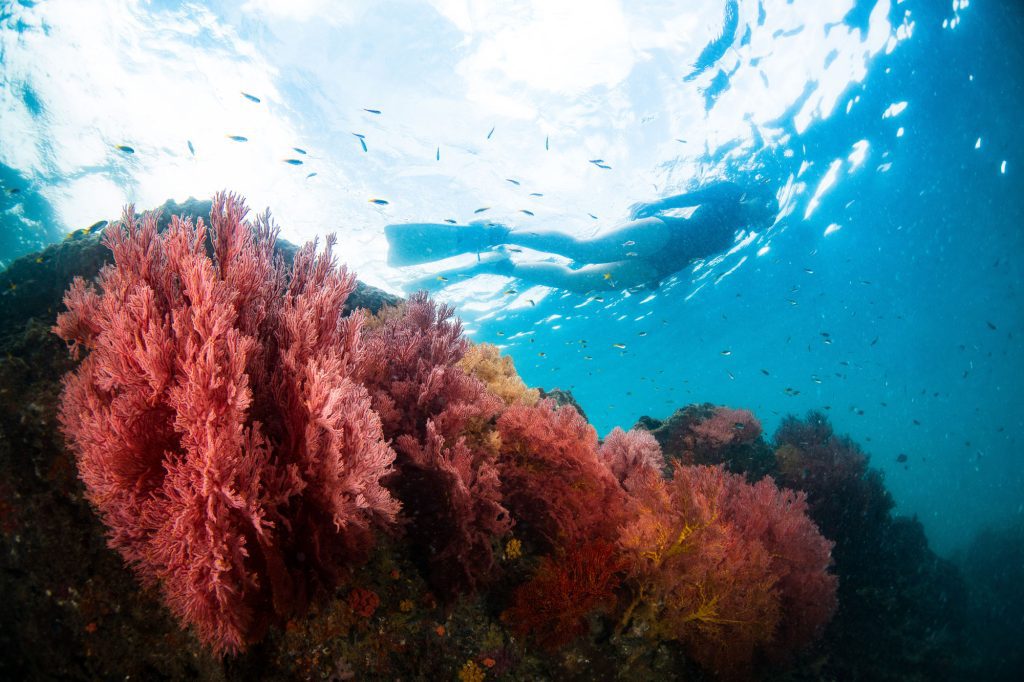
Ko Waen is essentially a rocky outcrop rising from the sea, but beneath the water lies something much more colourful. Soft corals and sea fans grow around the island, including in relatively shallow water. Together with nearby Ko Chueak, it has long been known as one of Trang’s interesting shallow- and deeper-water coral sites.
Travel farther south and the scenery becomes wilder.
The twin islands of Ko Lao Liang rise dramatically from the Andaman, their immense limestone walls towering above small beaches and clear water. Coral reefs lie below while the scale of the cliffs transforms the landscape above. Located around 40 kilometres off Trang’s coast and away from the province’s busiest island routes, Lao Liang still carries a sense of remoteness that is increasingly difficult to find.
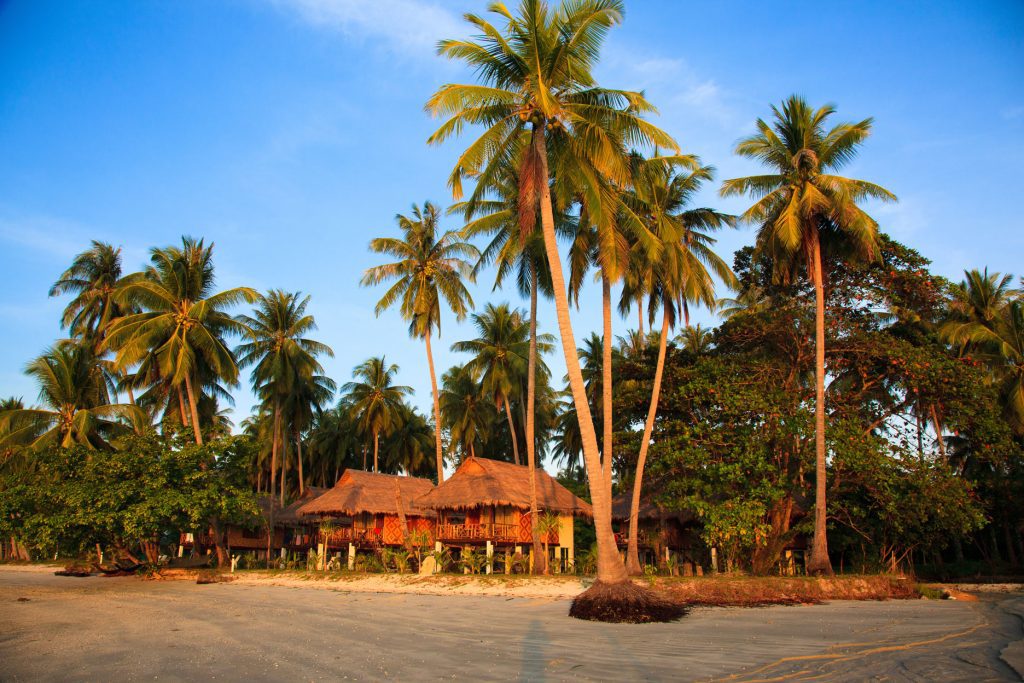
Then there is Ko Ngai.
Geographically, the island belongs to Krabi Province, but it fits naturally into a journey through the Trang Sea and is commonly reached from Trang’s coast. Resorts line parts of its long beach, but the real attraction is simpler than any activity programme.
There is almost nothing you have to do.
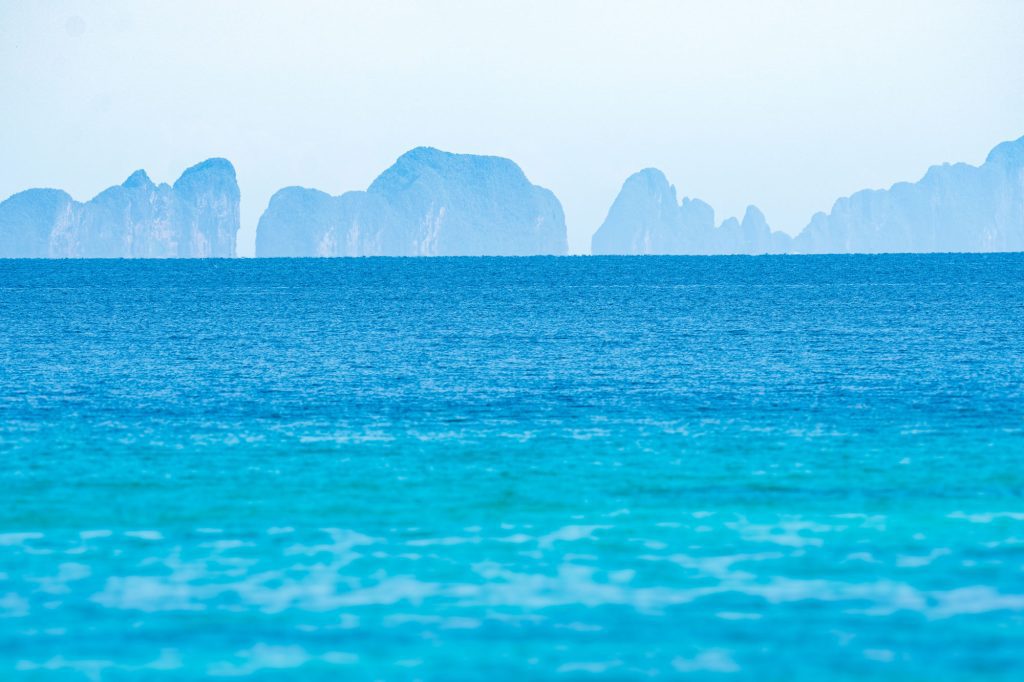
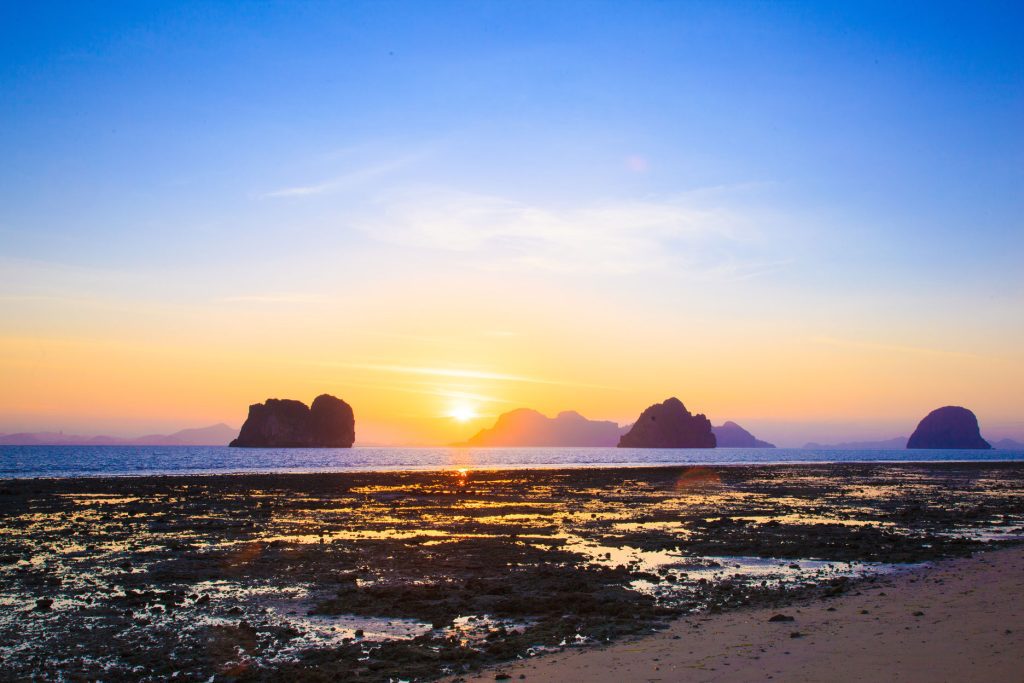
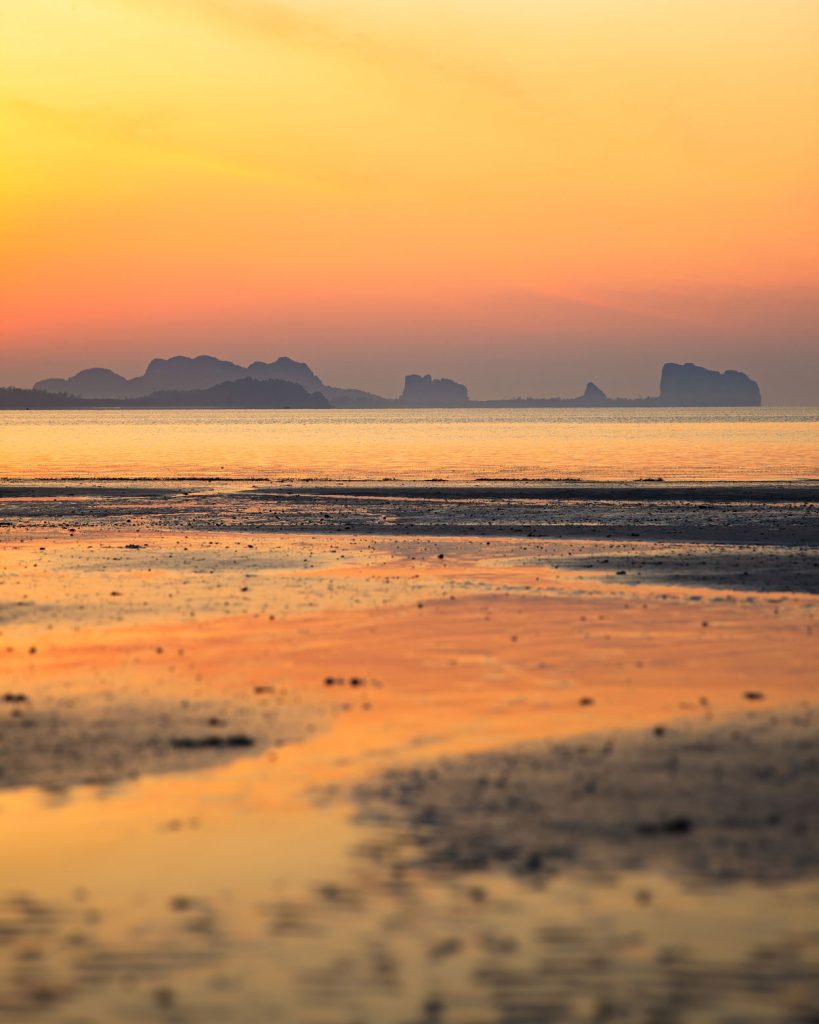
Swim. Walk along the beach. Sit outside your room. Watch the light change across the water. From the eastern shore, limestone islands rise one behind another across the horizon like a forest of stone in the sea.
Perhaps that is the best way to end a journey through Trang.
This is a province that rarely needs to shout for attention. Its pleasures come from waking early enough to join the breakfast crowd, following railway tracks towards their final station, taking a boat deeper into the mangroves, waiting for the tide to reveal a hidden sandbar, or simply doing nothing on an island while the Andaman stretches out in front of you.
Trang rewards those who slow down long enough to discover it.
QUICK INFO
- Getting to Trang: Direct flights from Bangkok take around 1.5 hours. Two overnight trains also run daily from Bangkok to Trang.
- Dim sum: Popular breakfast spots include Phong Ocha, Ruanthai Dim Sum, Laytrang and Chen Jia Dim Sum Café.
- Khao Chang Hai Cave: Around 15–20 km from Trang town. Foreign admission is around 200 THB.
- Pak Meng Beach: Around 40 km from Trang town and one of the main gateways to the Trang islands.
- Mot Tanoi Beach: Around 45–50 km from Trang town. Accommodation is very limited, with small resorts and homestays near the beach.
- Khao Chom Pa, Ban Nam Rap: Community-based tours include a mangrove boat trip and a climb to the viewpoint. Prices start from around 2,000 THB per boat, depending on group size and programme.
- Trang island tours: Typical trips include Ko Muk & Emerald Cave, Ko Kradan and snorkelling around Ko Waen or nearby islands. Shared trips usually cost around 800–1,500 THB per person, depending on the boat type and route.
• • Ko Ngai: Although part of Krabi Province, it is easily reached from Trang via Pak Meng Pier. Shared boats cost around 350–400 THB per person, while private long-tail boats start from around 1,500 THB per boat.
— THE QUIETER SIDE OF THE ANDAMAN
Trang is the Andaman at its quietest—and perhaps at its most rewarding.
While neighbouring destinations may draw bigger crowds, Trang moves at a different pace. This southern province combines an old trading-town character with limestone mountains, caves, mangrove forests and a long coastline facing an archipelago of remarkably different islands.
Here, a day might begin before sunrise over dim sum, roasted pork and kopi, continue by train to a century-old terminus, wind through limestone country and mangrove waterways, and end on a beach where hermit crabs emerge after dark.
Then there is the sea.
White-sand islands, hidden caves, shallow coral gardens and remote limestone cliffs turn the waters off Trang into far more than a single beach destination. To understand Trang, it is worth taking your time—starting with the traditions that have shaped the province before gradually making your way towards the Andaman.
Classic Trang
To experience Trang like a local, start early—and start with breakfast.
Trang has deep roots in southern Thailand’s Chinese communities, and nowhere is that heritage more visible than at the breakfast table. For generations, rubber tappers began their working day before sunrise, then returned in the morning ready for something substantial. That rhythm helped shape the Trang breakfast tradition: tables filled with steaming baskets of dim sum, strong local kopi, Chinese tea and, very often, slices of Trang roasted pork, an icon in its own right. Whole pigs are traditionally seasoned with a mixture influenced by Chinese cooking, then roasted until the skin becomes crisp and the meat develops Trang’s characteristic sweet, aromatic flavour. Together with dim sum, it remains one of the tastes most closely associated with the province. Trang still has plenty of old local breakfast shops, alongside newer cafés and dim sum restaurants that reinterpret the same morning ritual in a more contemporary setting.
Another piece of classic Trang arrives on rails.
Trang is unusual among Thailand’s Andaman provinces in being directly connected to the national railway network. Follow the tracks beyond Trang town and they eventually reach Kantang Railway Station, the final station on the Andaman side of the Southern Line. Kantang was once an important port and commercial centre, and the railway formed part of the infrastructure that connected this coast with the rest of the country.
Today, the old wooden station remains beautifully nostalgic. You can still make rail travel part of the Trang experience, or simply visit Kantang to see where the tracks finally come to an end.
Food in the morning, an old railway in the afternoon—these are simple experiences, but together they reveal something essential about Trang. Before the beaches and islands, there was already a town here with its own rhythm, history and character.
Wandering Through Trang
Leave the town behind and Trang quickly changes.
Limestone is one of the defining features of the province, appearing as mountains on the mainland and again as dramatic islands offshore. At Tham Khao Chang Hai, the landscape opens underground instead. Walk into the cave and chambers of stalactites and stalagmites reveal how slowly water has been shaping this limestone world over thousands of years.
From the mountains, continue west towards the coast.
Pak Meng Beach is perhaps Trang’s classic mainland seaside view—a long, relaxed stretch of coast looking towards offshore limestone formations, with the distinctive silhouette of Khao Meng marking the landscape. It is both a destination and a gateway, with boats leaving this part of the coast for Trang’s islands.
But some of the province’s most interesting experiences are found by turning away from the obvious route.
At Ban Nam Rap, local community tourism takes travellers into an extraordinary mangrove landscape. A local long-tail boat follows narrow waterways through dense forest before reaching Khao Chom Pa, a small limestone mountain almost swallowed by the mangroves around it.
Its Thai name describes exactly what you see: a mountain that appears to be “submerged in the forest.”
The climb is short but steep enough to make you work for the reward. From the top, the view suddenly opens in every direction—a vast green carpet of mangroves crossed by winding tidal channels, with islands and the Andaman Sea beyond. The viewpoint offers a spectacular 360-degree perspective of a landscape that is almost impossible to appreciate from ground level.
The community journey can continue towards the mouth of the canal, where sediment carried downstream meets the sea and shifting tides reveal long natural sandbars.
Trang becomes quieter still at Mot Tanoi Beach.
Although it can be reached by road, this secluded stretch of coast feels surprisingly removed from the outside world. Development is minimal, nature dominates the shoreline, and staying here means accepting the slower rhythm of the place.
Nearby lies San Lang Mangkon Phueak, the “White Dragon’s Back”—a natural sand ridge that emerges when the tide falls sufficiently low. At the right time, the sea seems to part, revealing a pale pathway of sand stretching into the shallows. Like many coastal experiences in Trang, it is controlled less by a timetable than by the tide.
Back at Mot Tanoi, there is little reason to rush anywhere. Take a kayak or SUP board onto the water in the late afternoon and paddle beneath the changing colours of an Andaman sunset.
Then wait until dark.
On a quiet night, tiny movements begin appearing across the sand as hermit crabs venture out along the beach. It is hardly a headline attraction—and that is precisely the point. In places where the coastline remains quiet enough, small encounters with nature become part of the journey.
Into the Trang Sea
Eventually, every journey through Trang seems to lead towards the water.
But the Trang Sea is not one single experience. Its islands can look remarkably different from one another, both above and below the surface.
Start with Ko Kradan, where powdery white sand meets exceptionally clear turquoise water. Its beauty has received international recognition, including being placed at the top of World Beach Guide’s Top 100 Beaches on Earth list in 2023. Rankings come and go, but Ko Kradan hardly needs one—the combination of white sand, clear shallows and an undeveloped island backdrop speaks for itself.
And the island is just as interesting underwater.
Hard-coral reefs lie remarkably close to parts of the shore, making Ko Kradan particularly accessible for snorkelling. You do not always need a boat or a deep dive; on a calm day, simply swimming out from the beach can reveal an entirely different landscape beneath the surface.
Nearby Ko Muk hides one of Trang’s most famous natural wonders inside the island itself.
To enter Tham Morakot, or Emerald Cave, visitors swim or float through a dark sea tunnel beneath towering limestone. For a moment, almost everything disappears except the sound of water and the small patch of light ahead. Then the passage opens unexpectedly into a hidden beach enclosed by cliffs.
The journey through darkness is as memorable as the destination itself.
Other islands offer no beach at all.
Ko Waen is essentially a rocky outcrop rising from the sea, but beneath the water lies something much more colourful. Soft corals and sea fans grow around the island, including in relatively shallow water. Together with nearby Ko Chueak, it has long been known as one of Trang’s interesting shallow- and deeper-water coral sites.
Travel farther south and the scenery becomes wilder.
The twin islands of Ko Lao Liang rise dramatically from the Andaman, their immense limestone walls towering above small beaches and clear water. Coral reefs lie below while the scale of the cliffs transforms the landscape above. Located around 40 kilometres off Trang’s coast and away from the province’s busiest island routes, Lao Liang still carries a sense of remoteness that is increasingly difficult to find.
Then there is Ko Ngai.
Geographically, the island belongs to Krabi Province, but it fits naturally into a journey through the Trang Sea and is commonly reached from Trang’s coast. Resorts line parts of its long beach, but the real attraction is simpler than any activity programme.
There is almost nothing you have to do.
Swim. Walk along the beach. Sit outside your room. Watch the light change across the water. From the eastern shore, limestone islands rise one behind another across the horizon like a forest of stone in the sea.
Perhaps that is the best way to end a journey through Trang.
This is a province that rarely needs to shout for attention. Its pleasures come from waking early enough to join the breakfast crowd, following railway tracks towards their final station, taking a boat deeper into the mangroves, waiting for the tide to reveal a hidden sandbar, or simply doing nothing on an island while the Andaman stretches out in front of you.
Trang rewards those who slow down long enough to discover it.
QUICK INFO
- Getting to Trang: Direct flights from Bangkok take around 1.5 hours. Two overnight trains also run daily from Bangkok to Trang.
- Dim sum: Popular breakfast spots include Phong Ocha, Ruanthai Dim Sum, Laytrang and Chen Jia Dim Sum Café.
- Khao Chang Hai Cave: Around 15–20 km from Trang town. Foreign admission is around 200 THB.
- Pak Meng Beach: Around 40 km from Trang town and one of the main gateways to the Trang islands.
- Mot Tanoi Beach: Around 45–50 km from Trang town. Accommodation is very limited, with small resorts and homestays near the beach.
- Khao Chom Pa, Ban Nam Rap: Community-based tours include a mangrove boat trip and a climb to the viewpoint. Prices start from around 2,000 THB per boat, depending on group size and programme.
- Trang island tours: Typical trips include Ko Muk & Emerald Cave, Ko Kradan and snorkelling around Ko Waen or nearby islands. Shared trips usually cost around 800–1,500 THB per person, depending on the boat type and route.
• • Ko Ngai: Although part of Krabi Province, it is easily reached from Trang via Pak Meng Pier. Shared boats cost around 350–400 THB per person, while private long-tail boats start from around 1,500 THB per boat.
Share


