

Most people know Yaowarat as Bangkok’s Chinatown—a place of neon signs, gold shops, and legendary street food. But Yaowarat is only the most visible chapter of a much longer story. Just beyond its busy arteries lie neighboring districts that feel quieter, deeper, and more textured. These are areas where Bangkok’s origins as a river-based trading city are still written into walls, lanes, and everyday routines.
This is a route best explored slowly. Walk it, wander it, or cycle through it. The experience unfolds not in highlights alone, but in the spaces between—where tradition and contemporary creativity coexist without trying to impress.
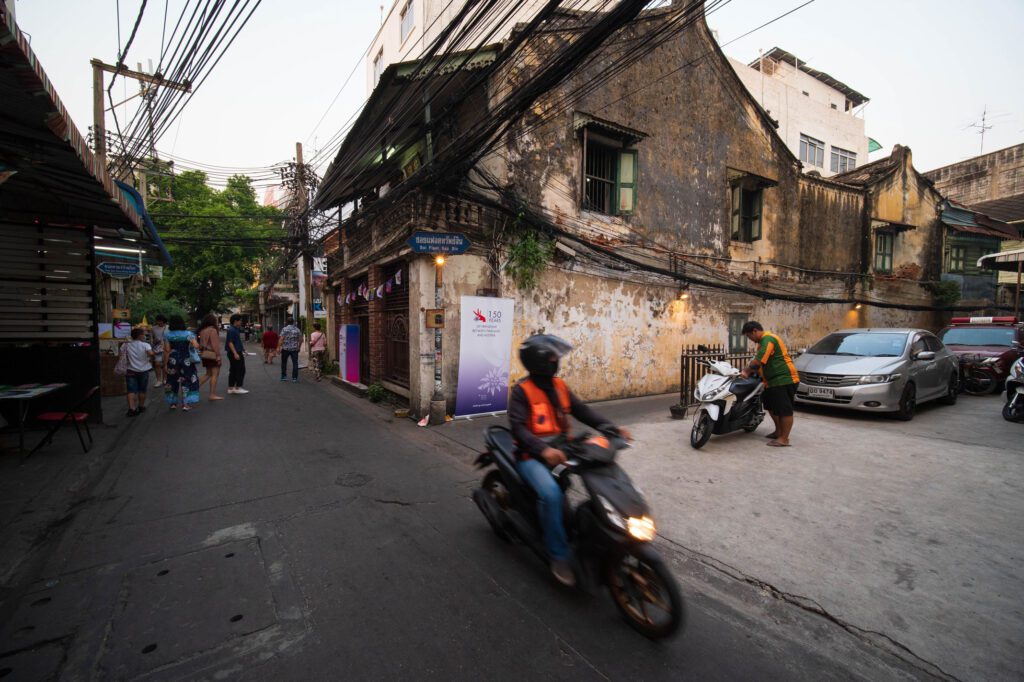
Talat Noi: Before Bangkok Had a Name
Begin near Si Phraya Pier and follow the narrow paths leading toward Talat Noi, a neighborhood that quietly predates modern Bangkok itself. Along the way stands Holy Rosary Church, a Catholic church established more than a century ago in what was once a French residential enclave. A few steps further, you pass the Talat Noi branch of Siam Commercial Bank, the first branch of Thailand’s first bank still in operation—an architectural marker of the country’s economic turning point.
Yet Talat Noi invites you to look even further back.
Located at the northern end of Charoen Krung Road, Talat Noi existed as a riverside settlement long before the founding of Rattanakosin. When this stretch of land was still defined by water routes, Chinese junks sailed past carrying goods to and from Ayutthaya. Trade shaped everything here—street patterns, building forms, and the layered identities of the people who settled along the river.
Wander through the maze-like alleys and you’ll encounter rows of old Chinese-style shophouses, some so rare that similar structures are now hard to find even in China. Many have been gently repurposed into cafés and studios, opening their doors to curious visitors and offering a rare chance to step inside living history. Other corners feel almost cinematic—weathered walls, quiet courtyards, and the famously abandoned antique turtle car rusting against a wall, now an accidental landmark and a favorite photographic subject.


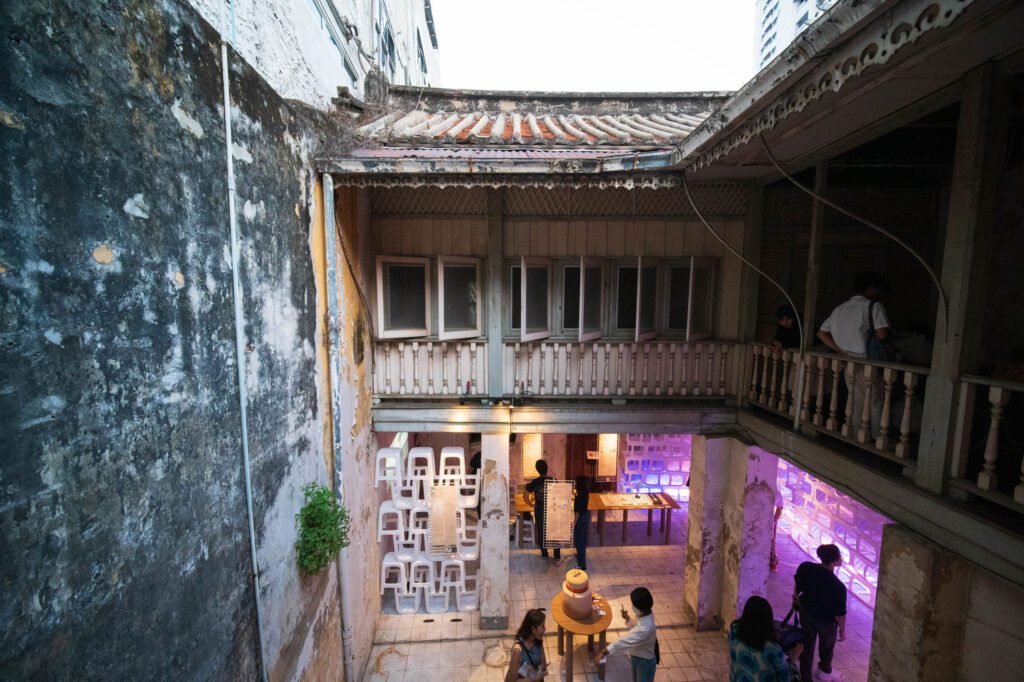
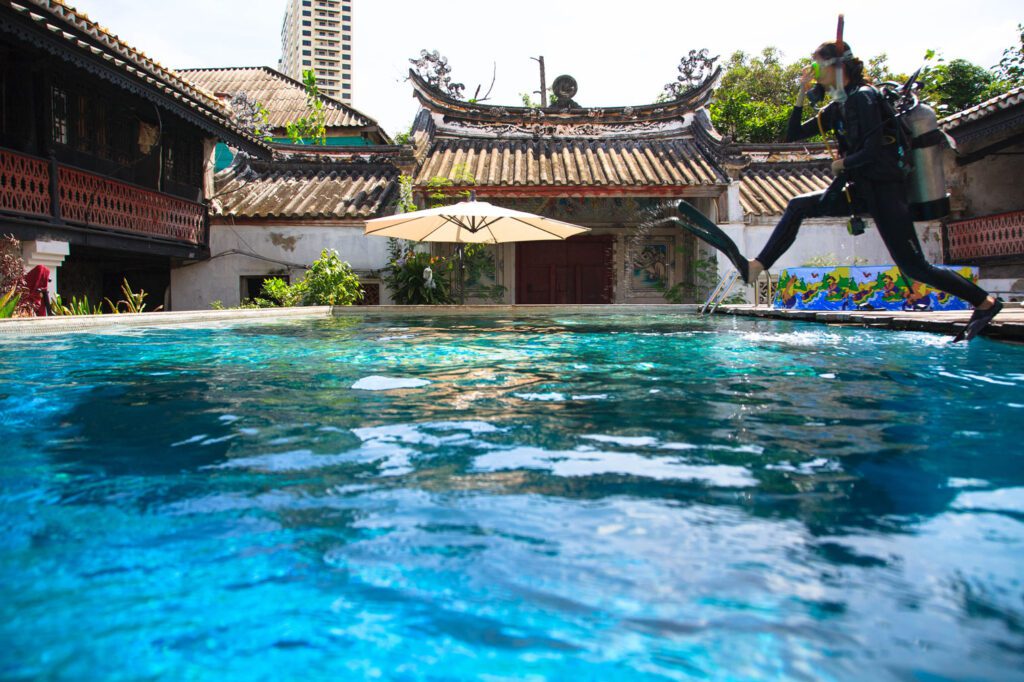
One stop not to miss is So Heng Tai Mansion. Built in the early 19th century by a prosperous Chinese merchant family, this rare siheyuan-style courtyard house once symbolized wealth and status. Today, it remains in the hands of the original family’s descendants and has found new life as a diving school, with a swimming pool at its center. A small café allows visitors to linger, sip coffee, and quietly explore one of Bangkok’s most extraordinary private homes.
As you move through Talat Noi, another story reveals itself in plain sight: shops selling second-hand car parts stacked floor to ceiling. The origins of this trade trace back to a time when locals repaired bicycles for a living. After World War II, abandoned vehicles and surplus machinery became a new resource. Ever pragmatic, the community turned discarded parts into opportunity. Over time, the area became known as Siang Kong, named after a nearby Chinese shrine, and remains one of Bangkok’s most distinctive mechanical markets.
At a major intersection, a modern landmark ties past and present together—a towering robot sculpture assembled from hundreds of old car parts. It stands as a playful tribute to the district’s working identity, blending folk ingenuity with contemporary street art.
Song Wat: Where Commerce Meets Creativity
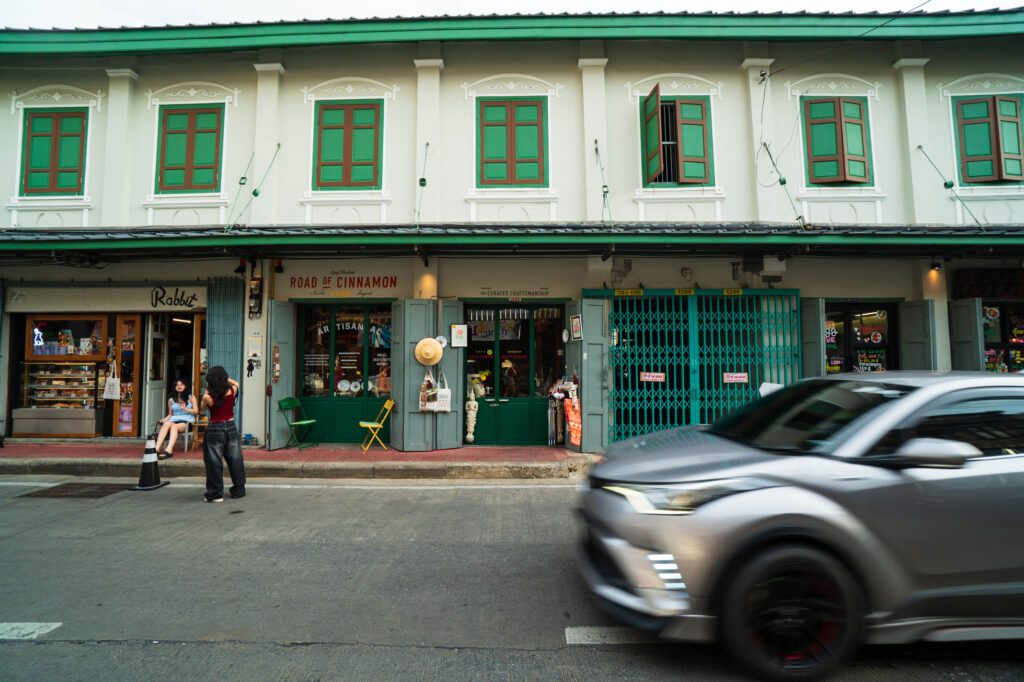
Talat Noi flows seamlessly into Song Wat, but the atmosphere shifts. Where Talat Noi is dense and labyrinthine, Song Wat opens out into a linear riverside road lined with elegant shophouses from the reign of King Rama V. This was once Bangkok’s most important commercial strip, where trading vessels from distant lands docked and unloaded goods that would shape the city’s economy.
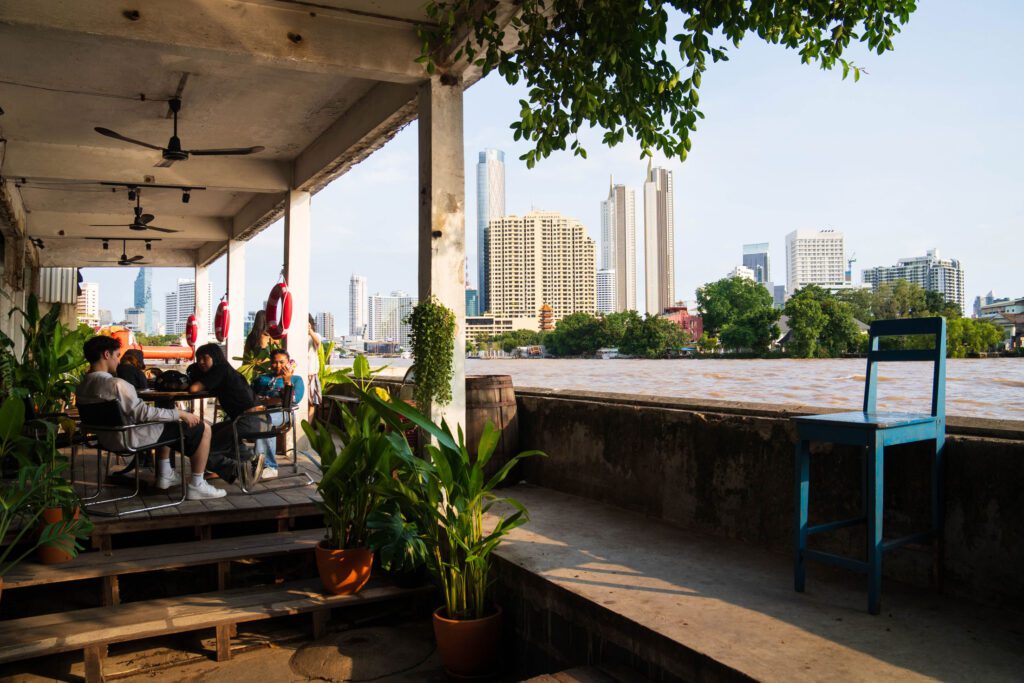
Many of the original businesses still survive—rope merchants, wooden barrel makers, and specialty wholesalers quietly continuing trades that once powered the city. At the same time, a new creative wave has taken hold. Old storefronts now host cafés, art galleries, design studios, and experimental retail spaces. The transformation feels organic rather than forced, giving Song Wat a rare balance between continuity and reinvention.



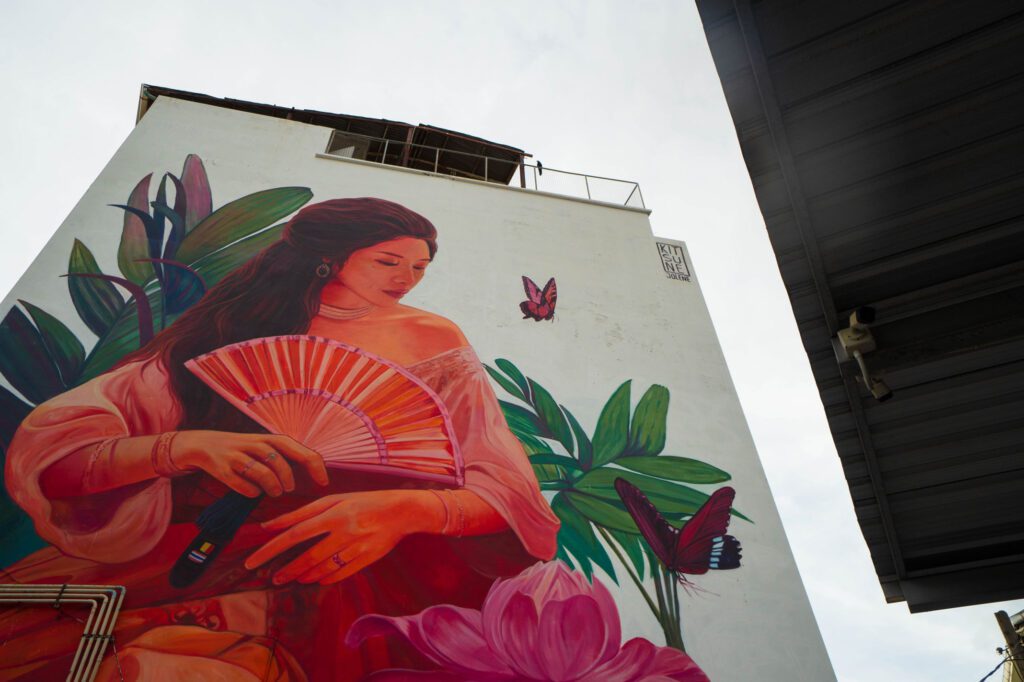
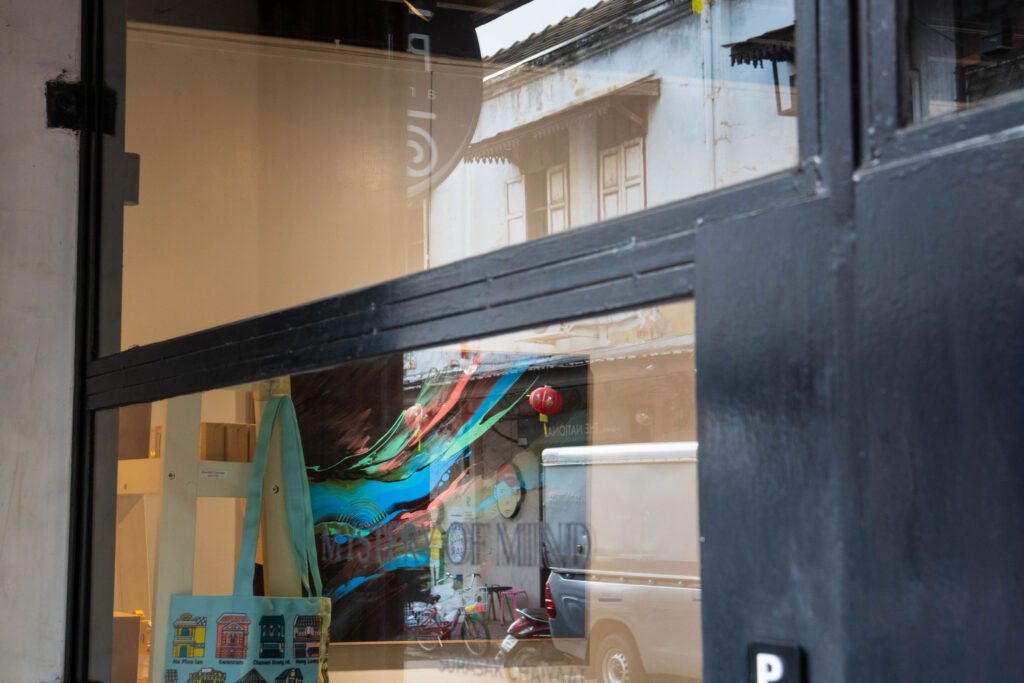
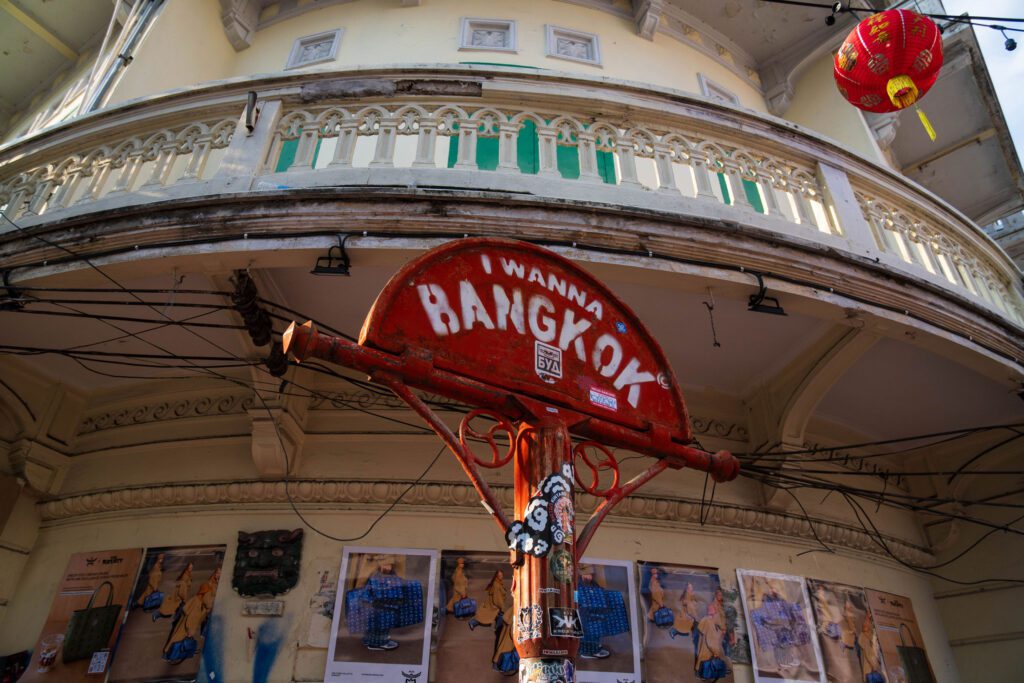
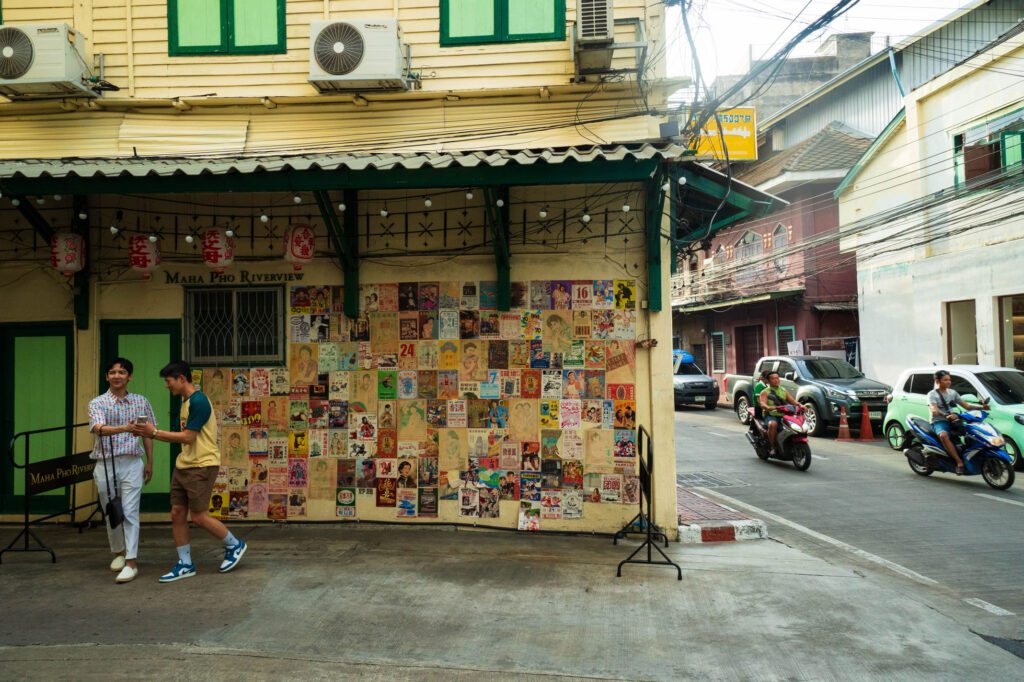
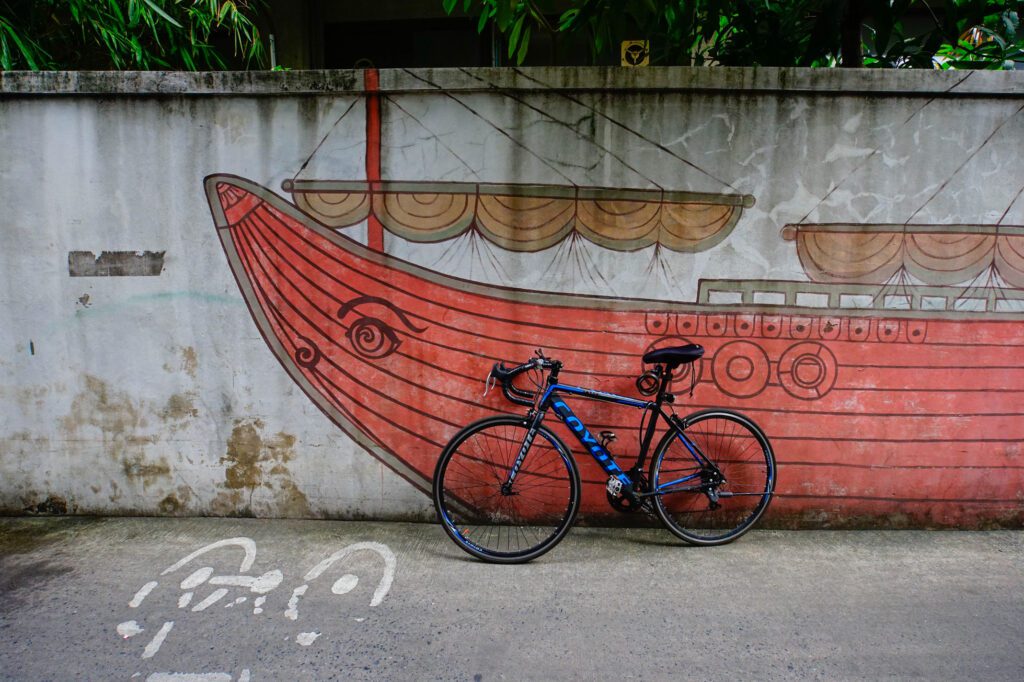
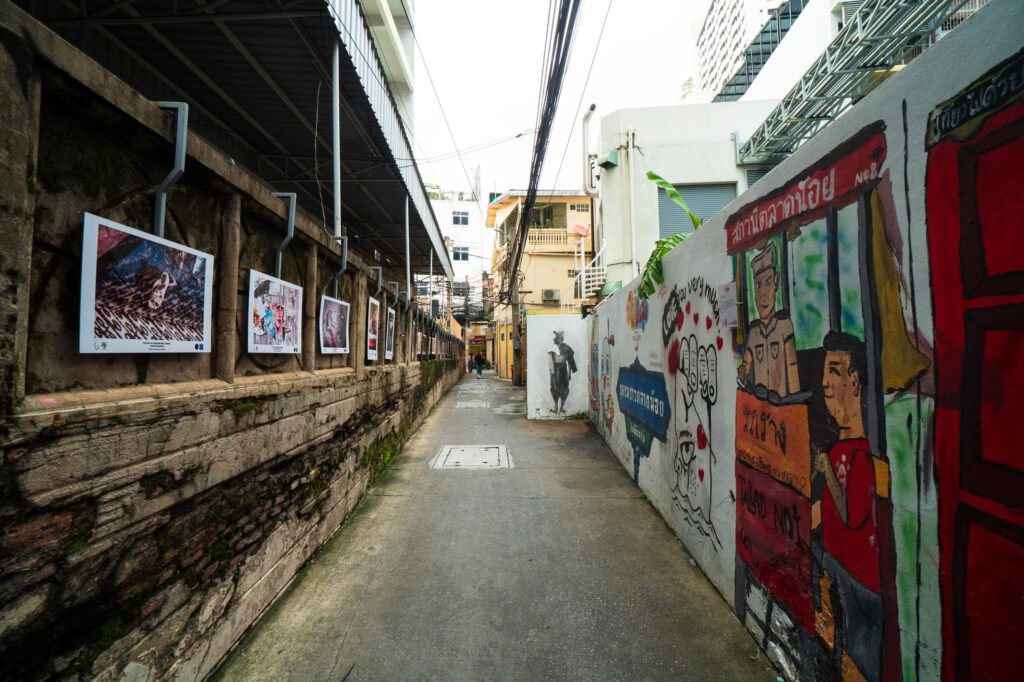
Street art plays an important role here. Murals appear unexpectedly on side walls and shuttered doors, often responding to the neighborhood’s history rather than overwriting it. Some works reference river life and trade, others reinterpret Chinese motifs or mechanical forms borrowed from nearby Siang Kong. Together, they turn the district into an open-air gallery that rewards slow exploration.
Song Wat’s energy changes throughout the day. Mornings feel working and purposeful. Afternoons invite wandering. By evening, warm light spills from cafés onto the pavement, and the road becomes one of Bangkok’s most pleasant places to stroll—creative, lived-in, and quietly confident in its identity.
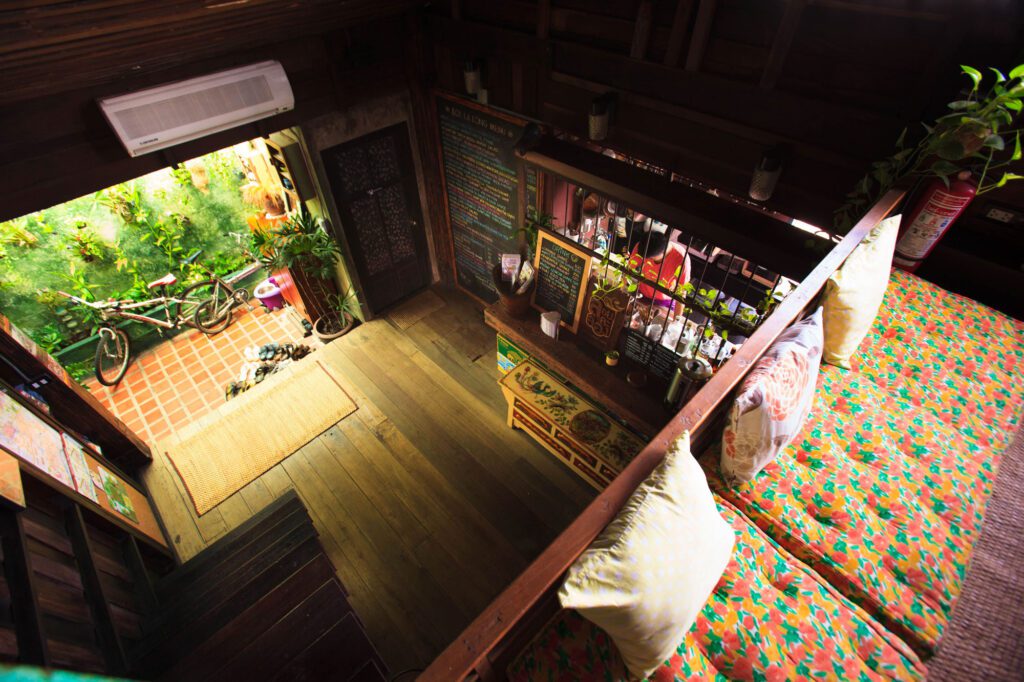
For travelers who find themselves genuinely drawn to this area, staying overnight deepens the experience. Loy La Long Hotel, a restored wooden house set right on the river, offers calm, intimacy, and a sense of floating just outside the city’s rush. It’s the kind of place where Bangkok feels less like a metropolis and more like a river town, gently breathing between past and present.
Together, Talat Noi and Song Wat reveal a Bangkok many visitors never see—not louder or flashier than Chinatown, but richer in layers. This is a city that remembers where it came from, even as it quietly experiments with what comes next.

TRAVEL SNAPSHOT / QUICK INFO
Talat Noi
Getting there
The easiest way to start is by boat. Take a Chao Phraya River Express boat to Si Phraya Pier, then explore on foot through small lanes—or join a bicycle tour.
Community cycling tours
Guided bicycle tours that explore Talat Noi and nearby historic neighborhoods.
http://www.covankessel.com/https://maps.app.goo.gl/BepJZQVzU6HSS5Az6
965bkk
A beautifully preserved rare old shophouse turned into a café and rotating art exhibition space.
www.965bkk.comhttps://maps.app.goo.gl/pPoDpUoevwpbv1wj8
Horseshoe Shrine (San Chao Rong Kueak)
A riverside Chinese shrine that has served the local community for generations.
https://maps.app.goo.gl/APoobwr3meA2EhjC8
So Heng Tai Mansion
Admission: 50 THB per person, redeemable as a discount at the on-site café.
https://maps.app.goo.gl/vGcyXPPSqCpPR41N9
Scuba diving course in an old mansion
Learn to dive in a historic courtyard house—an experience unlike any other. Advance booking required.
https://www.facebook.com/dumnamdotcom/
Antique Turtle Car
A classic rusted Mini car by an old wall—now an iconic symbol of Talat Noi.
https://maps.app.goo.gl/N2ar1GfjSJHGMqDRA
Robot sculpture, Khao Lam Road Circle
A striking landmark made from hundreds of recycled car parts, celebrating the area’s mechanical heritage.
https://maps.app.goo.gl/FkWzcU5mr1prXSCF9
Song Wat
Getting there
Travel by Chao Phraya Express Boat to Ratchawong Pier, then walk along Song Wat Road. You can also walk directly from Talat Noi.
Lao Pun Tao Kong Shrine
A community shrine that has long served as the spiritual heart of Song Wat.
https://maps.app.goo.gl/7yyX8MCiSnXfUWLC9
Clay Songwat
A ceramics shop and hands-on pottery studio offering workshops.
www.claycirclebkk.comhttps://maps.app.goo.gl/9237oFBT6yPNzfAQ6
Long Dang Dang
A lively riverside café tucked at the end of an alley, especially vibrant in the late afternoon.
https://maps.app.goo.gl/ZWmfkCTVNFZv8cTg6
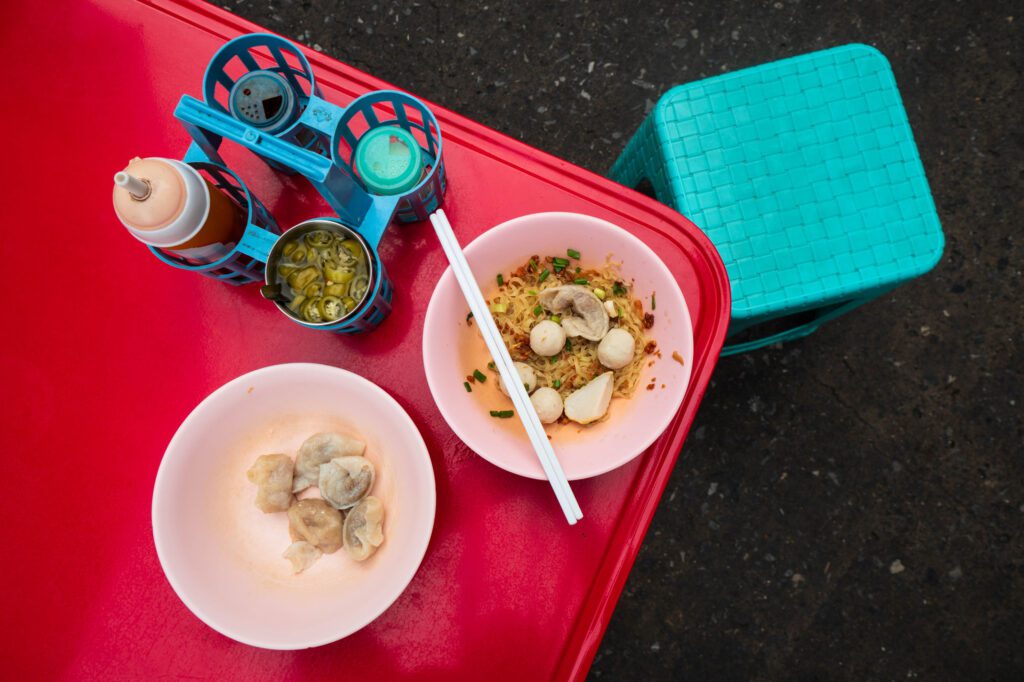
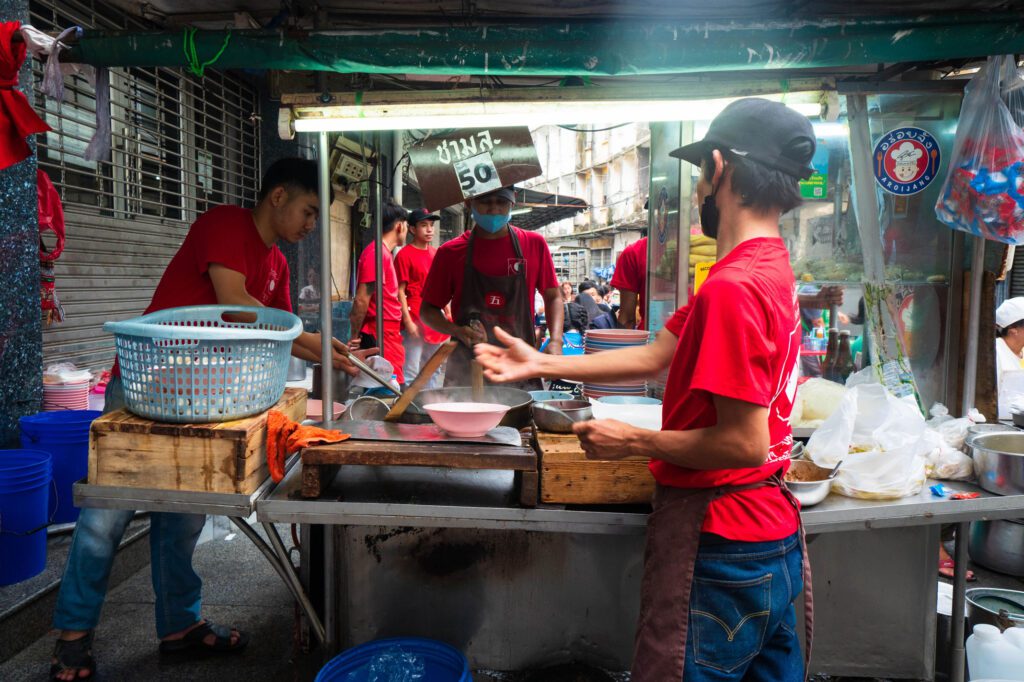
Lim Lao Ngow Fishball Noodle
A legendary fishball noodle shop serving the neighborhood for over 50 years. Street-food atmosphere, opens in the evening.
https://maps.app.goo.gl/73CK2m7CpxR7AvpTA
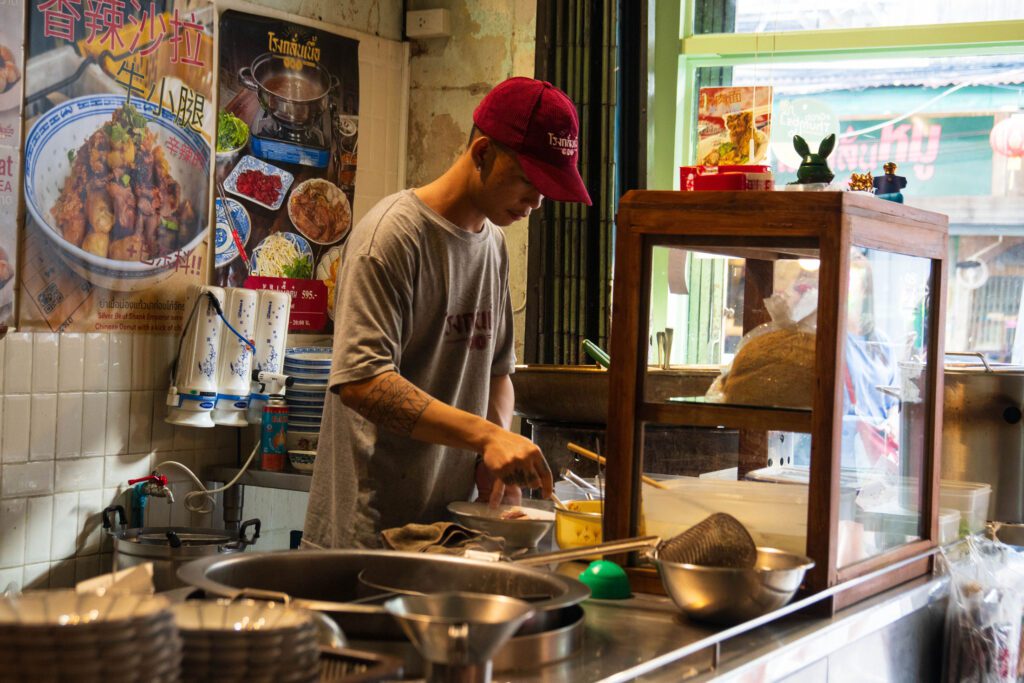
Rong Klan Nuea
A well-loved braised beef noodle shop with a contemporary setting.
https://maps.app.goo.gl/ri6U9uAM7JnVQmTv7
Loy La Long Hotel
An artistically restored wooden riverside house with a peaceful waterside deck.
www.loylalong.com
Share


