
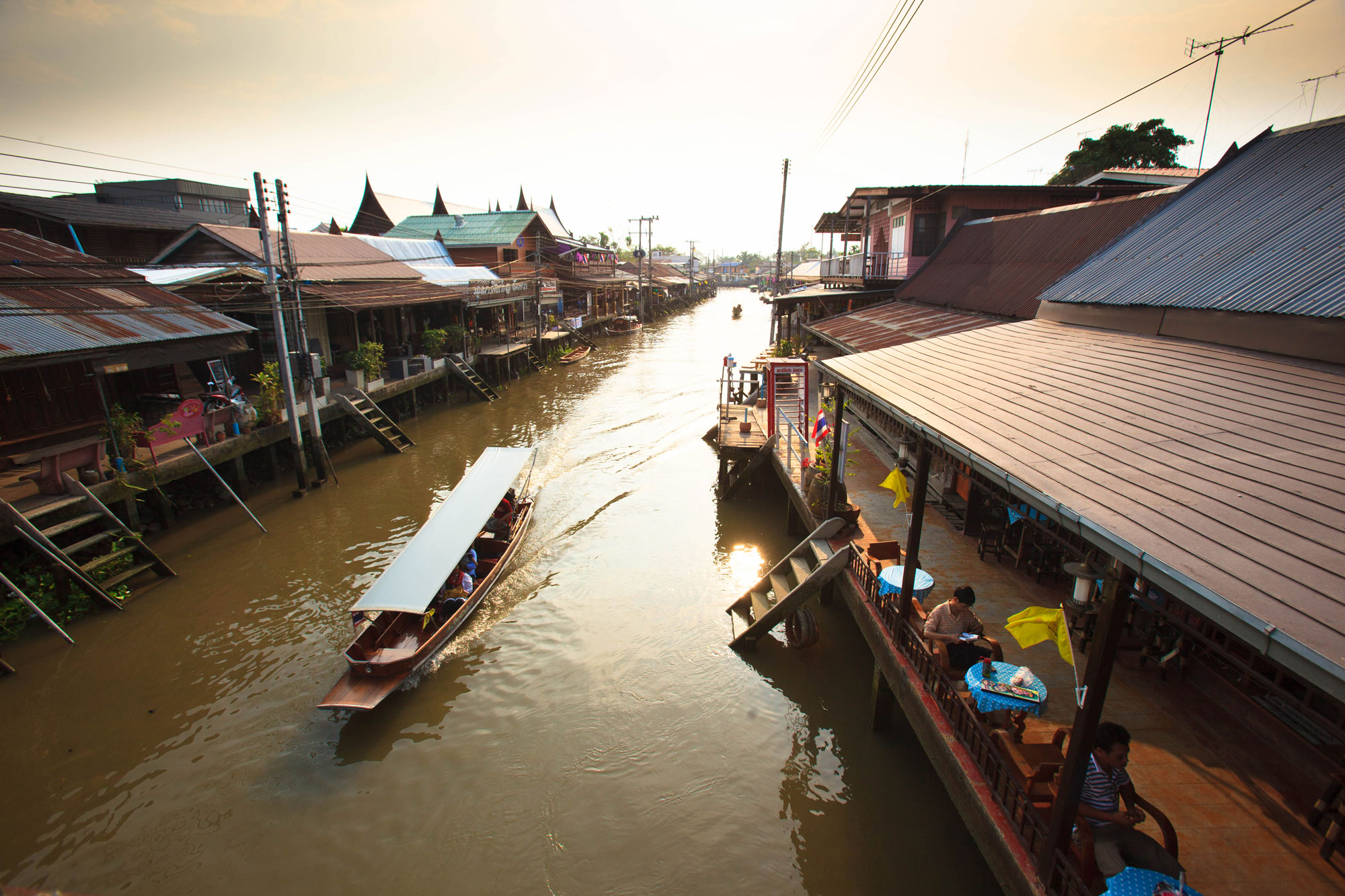
Some journeys are not measured by distance, but by rhythm.
The Mahachai–Maeklong route is one of them.
This journey unfolds at the pace of trains pulling into stations, ferries crossing wide rivers, and markets that briefly pause before returning to life. Beginning in the city and gradually moving outward, the route connects railways, waterways, fishing communities, floating markets, and orchard landscapes—revealing a way of life shaped by movement, timing, and everyday routines.
Rather than rushing between landmarks, traveling along this route invites you to slow down. It is a journey where rail tracks and rivers run side by side, where food reflects local labor, and where communities continue their daily rhythms alongside some of Thailand’s most iconic sights.
From the City to the Sea: Mahachai and Tha Chalom
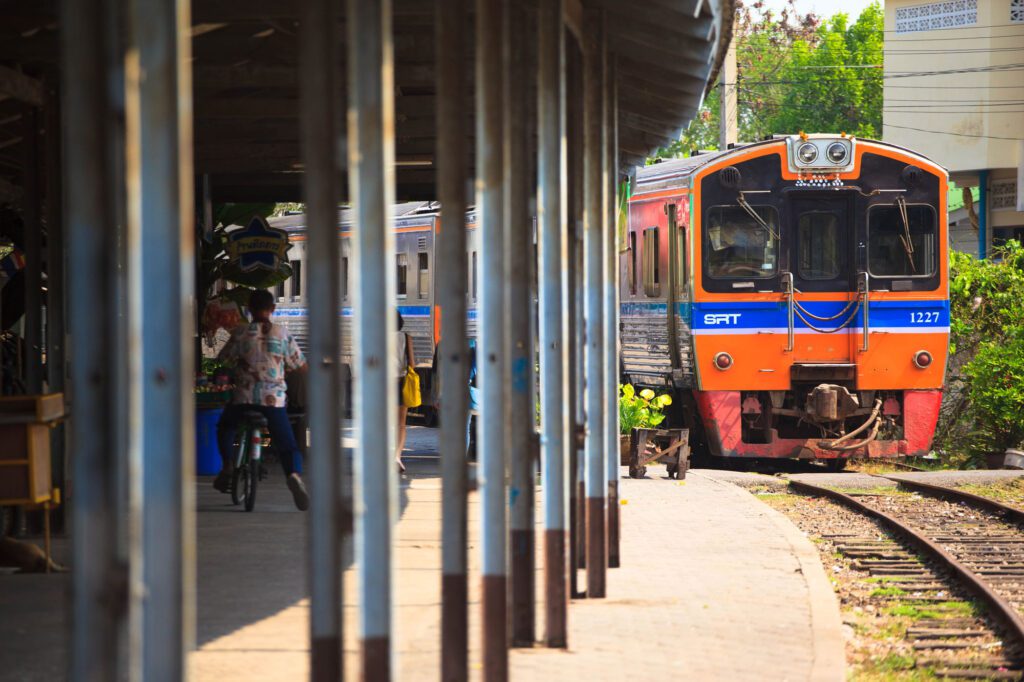
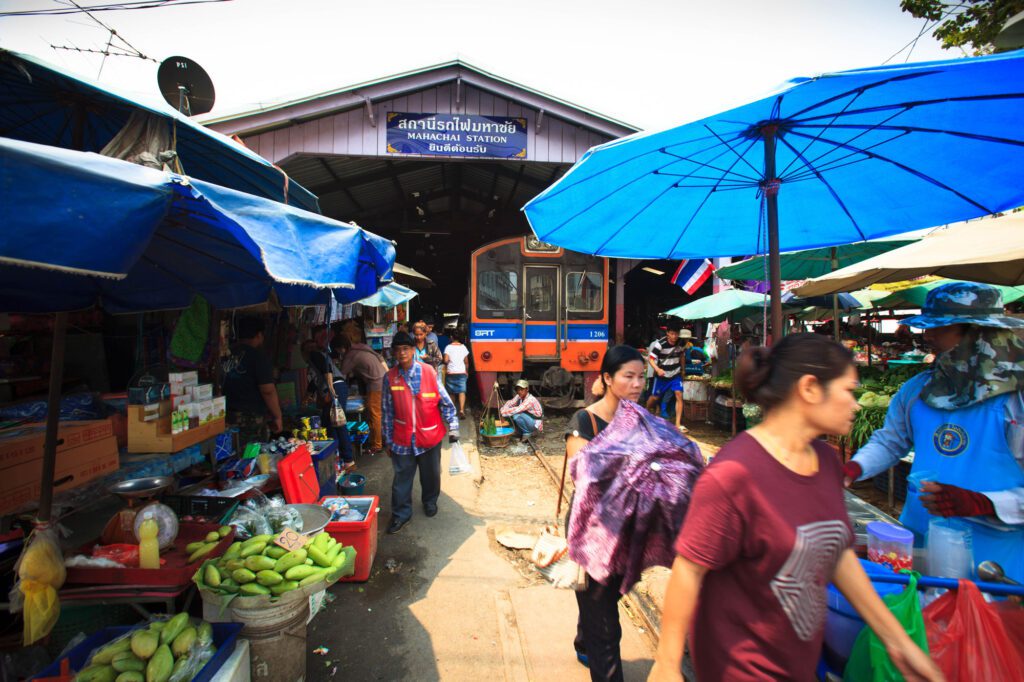
The journey begins with a train ride from Wongwian Yai (on the Thon Buri side of Bangkok) toward Mahachai, a town where the railway remains deeply woven into everyday life. Even today, Mahachai Station hosts a bustling market layered directly onto the tracks, echoing scenes found later along the route.
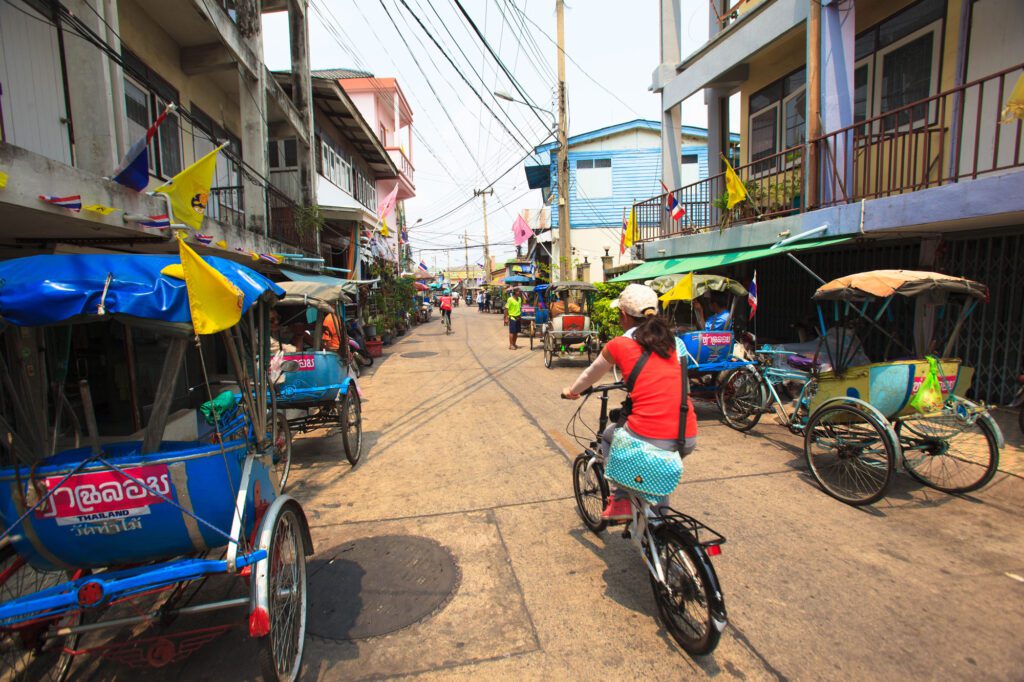
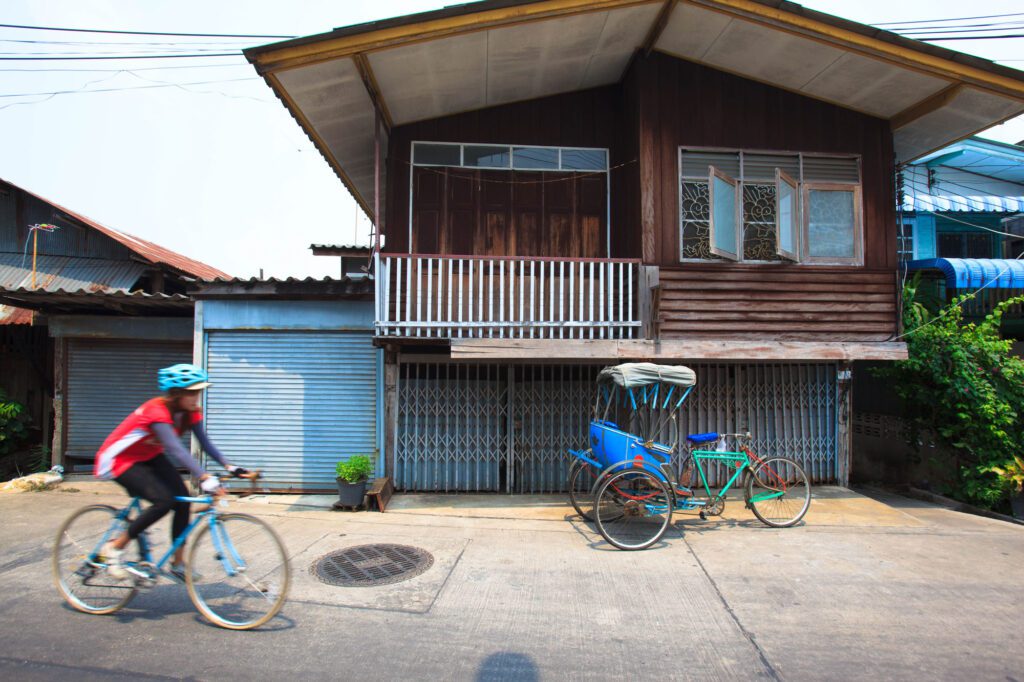
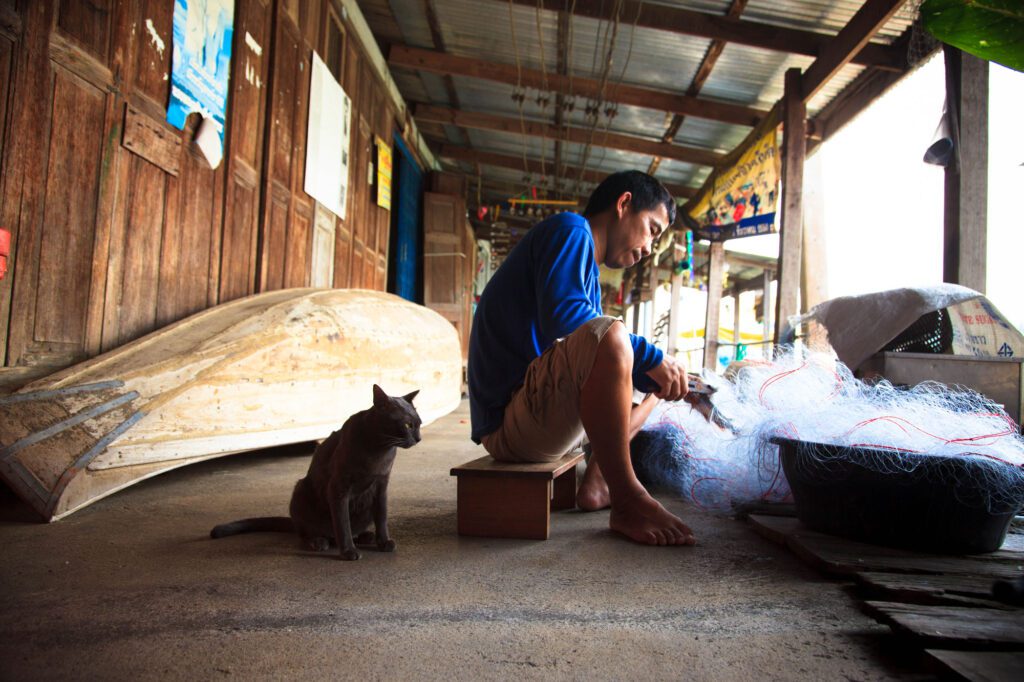
From Mahachai, a short ferry ride crosses the Tha Chin River to Tha Chalom, an old fishing village with a quieter, more nostalgic atmosphere. Wooden houses line the waterfront, and daily life moves at a gentler pace. Though many travelers pass through simply to catch the next train, Tha Chalom rewards those who linger.
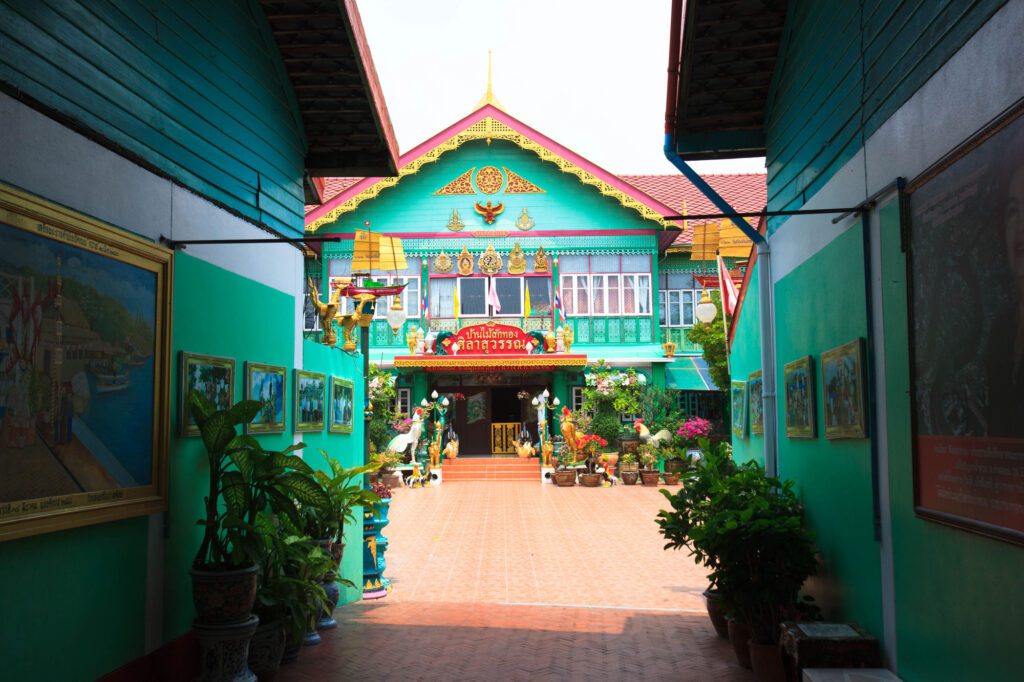
One notable stop is Baan Silasuwan, a century-old teakwood house once owned by a prominent local family. Today, it serves as a small community museum, offering insight into the village’s history and traditional way of life.
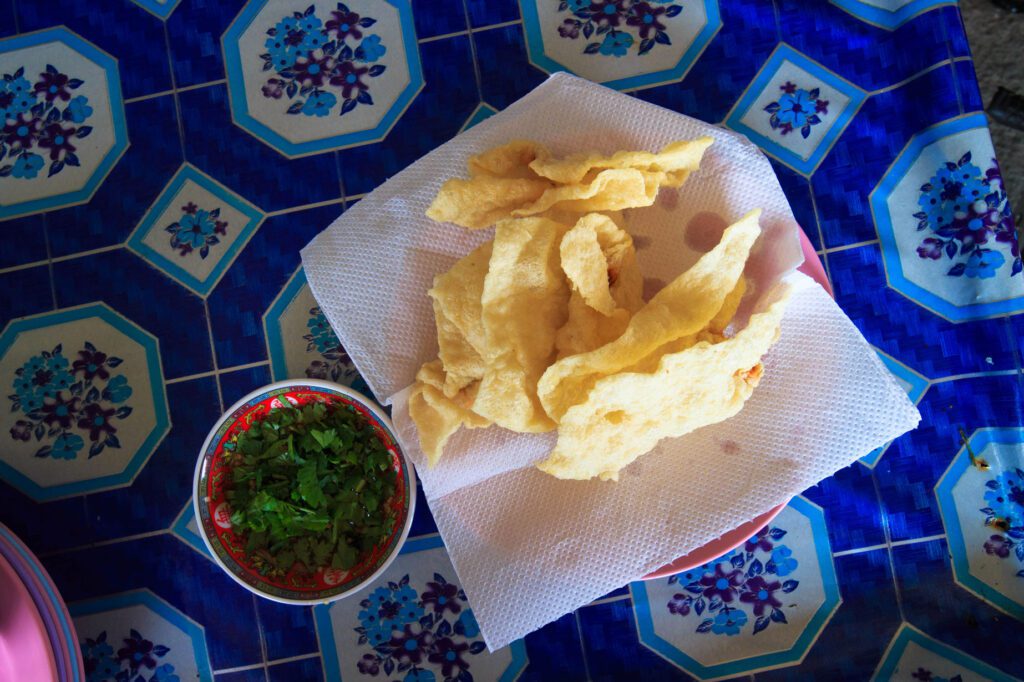
Food is another reason to pause here. Tha Chalom is known for its fried fish dumplings, made with fresh local fish and cooked over high heat until crisp. Simple and satisfying, they reflect the village’s close connection to the sea.
From Tha Chalom, the journey continues by train along the Ban Laem line, gradually approaching its most famous destination.
Markets on the Tracks: Maeklong and Its Flavors
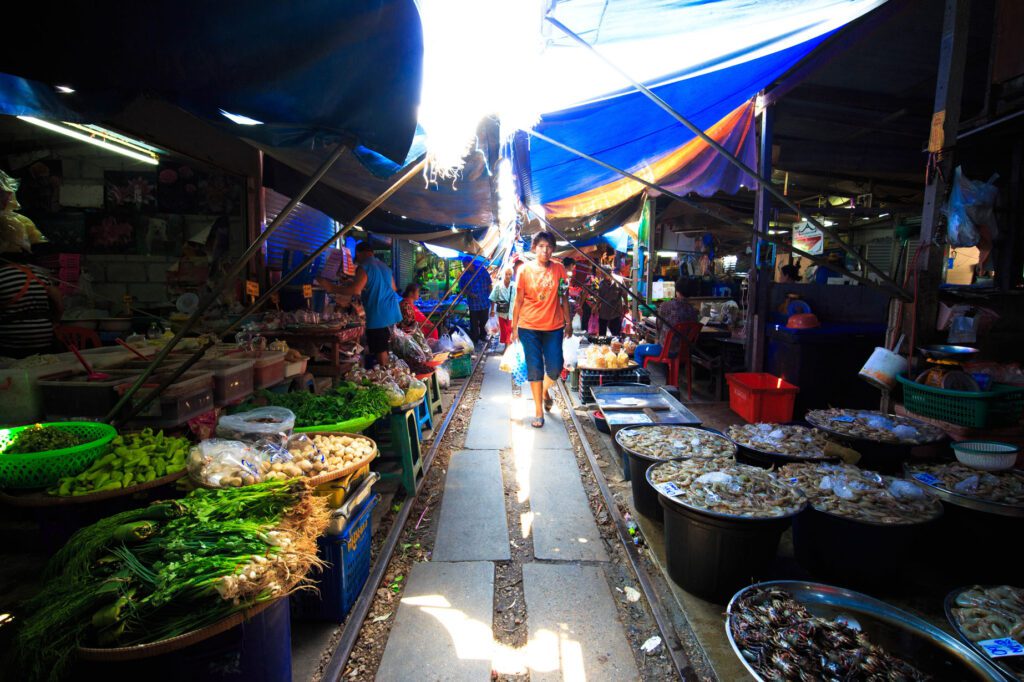
Arriving at Maeklong, the railway delivers travelers straight into the heart of one of Thailand’s most recognizable scenes. The Maeklong Railway Market stretches tightly along the tracks, where vendors swiftly fold back their awnings as the train passes through. While often described as unusual, the market is first and foremost a working local market, filled with seafood, produce, and goods from nearby orchards.
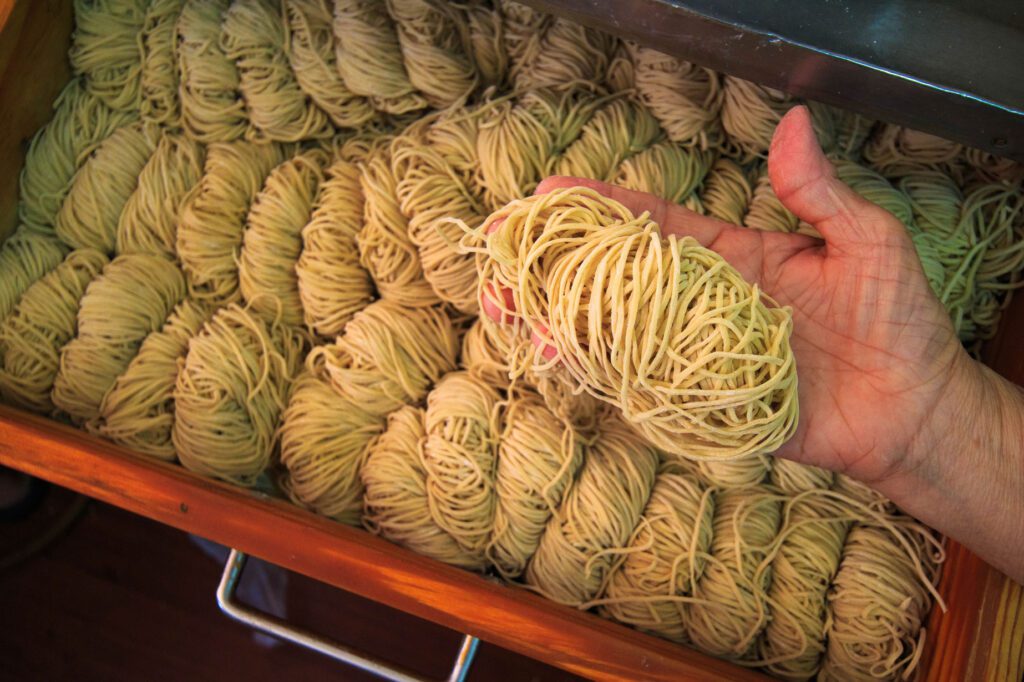
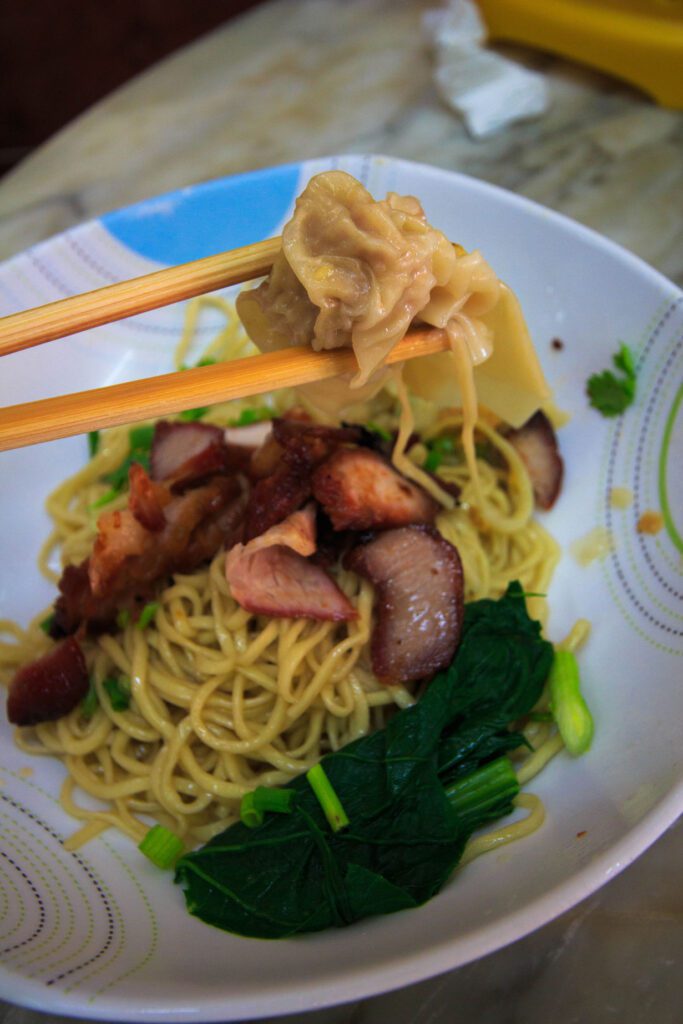
Beyond the market, Maeklong’s food culture reveals layers of local history. A long-established noodle shop is known among locals for its handmade dry egg noodles. After the noodles are freshly made, they are stored in drawers to preserve their texture and limit exposure to air—a method that gave rise to the nickname “drawer noodles.”
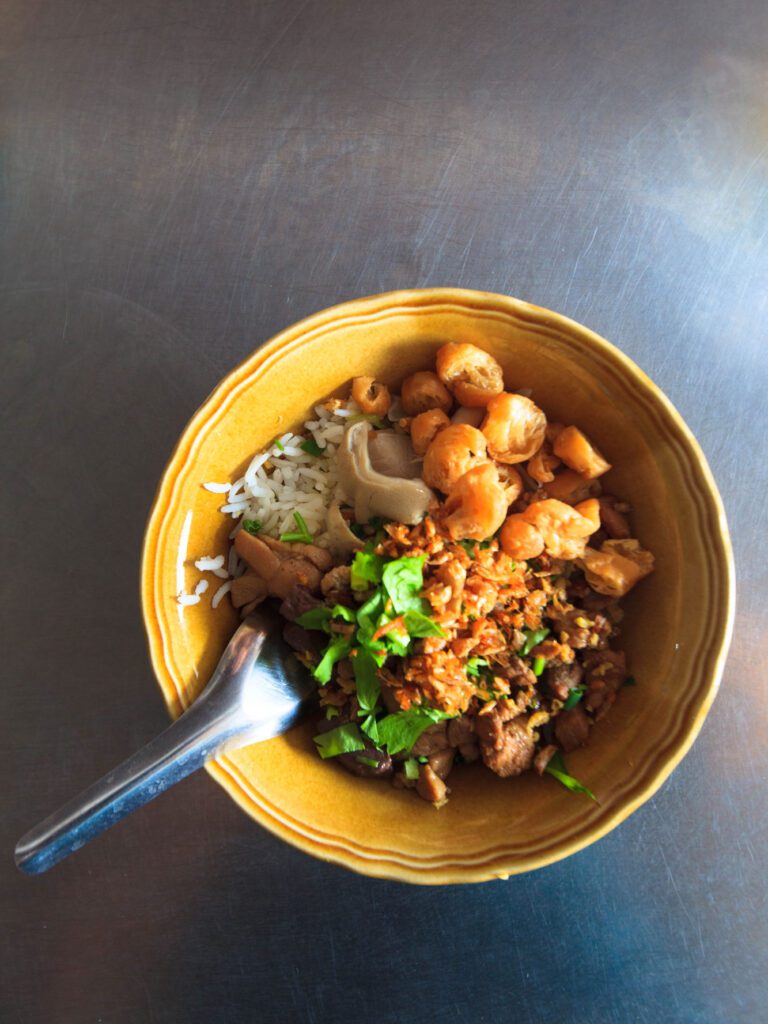
Another local specialty is khao haeng, a dry-style rice dish adapted from rice porridge. Created by orchard workers who needed a filling, energy-rich meal, the dish is prized for its rich seasoning and comforting texture. Though now known across Thailand, traditional versions are still closely associated with Maeklong.
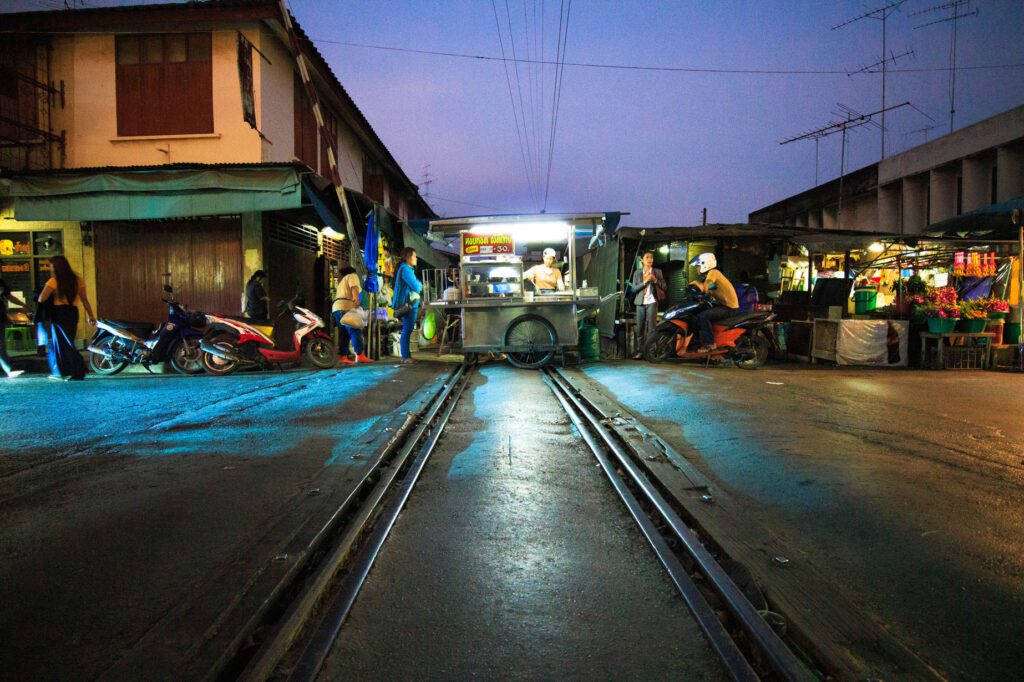
As evening falls, the area around Maeklong Station transforms. Street food stalls line the road toward Wat Phet Samut, including a well-known Pad Thai stall set directly on the railway tracks. Nicknamed “Risky Pad Thai,” the stall only opens after the last train has passed, turning a playful name into a late-night ritual.
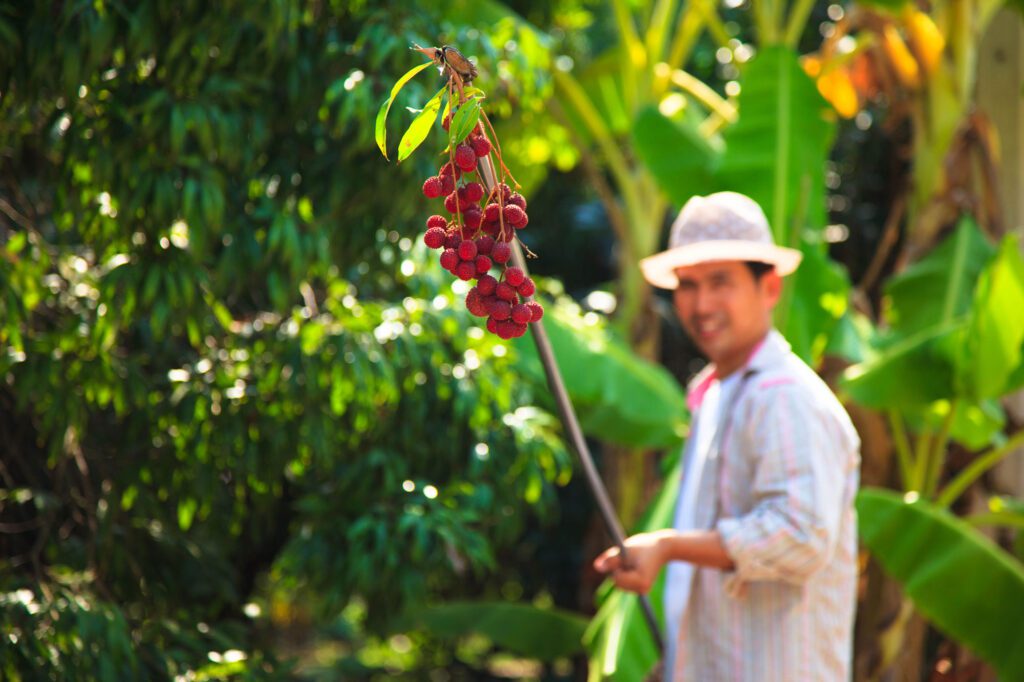
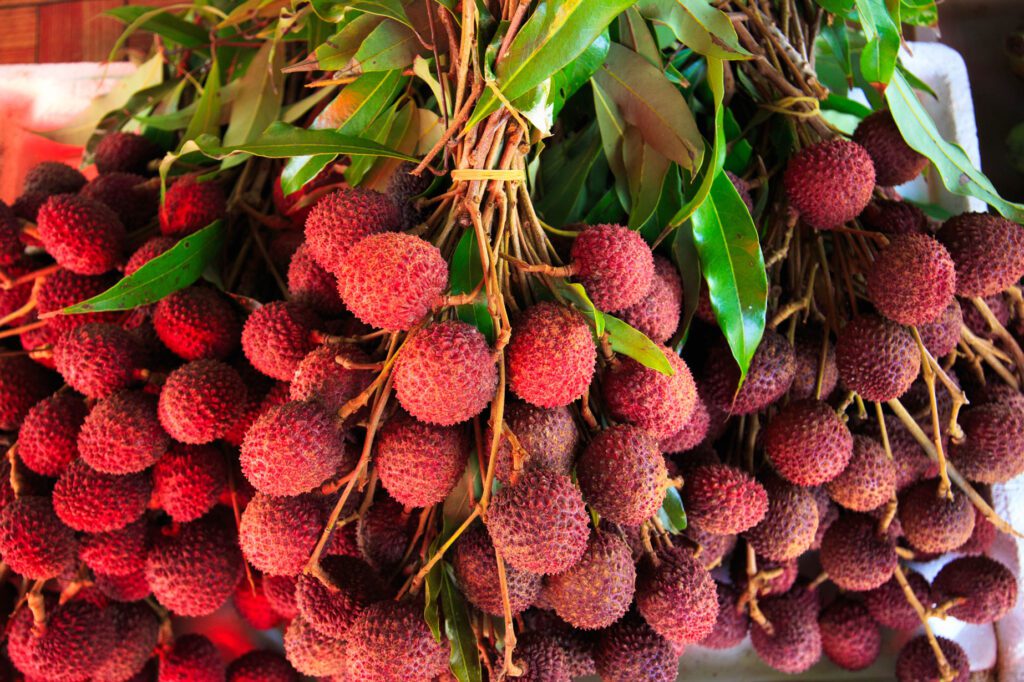
Maeklong is also surrounded by fertile farmland and orchards. Among its most famous fruits is the Maeklong lychee, a rare variety that bears fruit only once every few years, adding another seasonal rhythm to the region.
Canals, Floating Markets, and Orchard Life
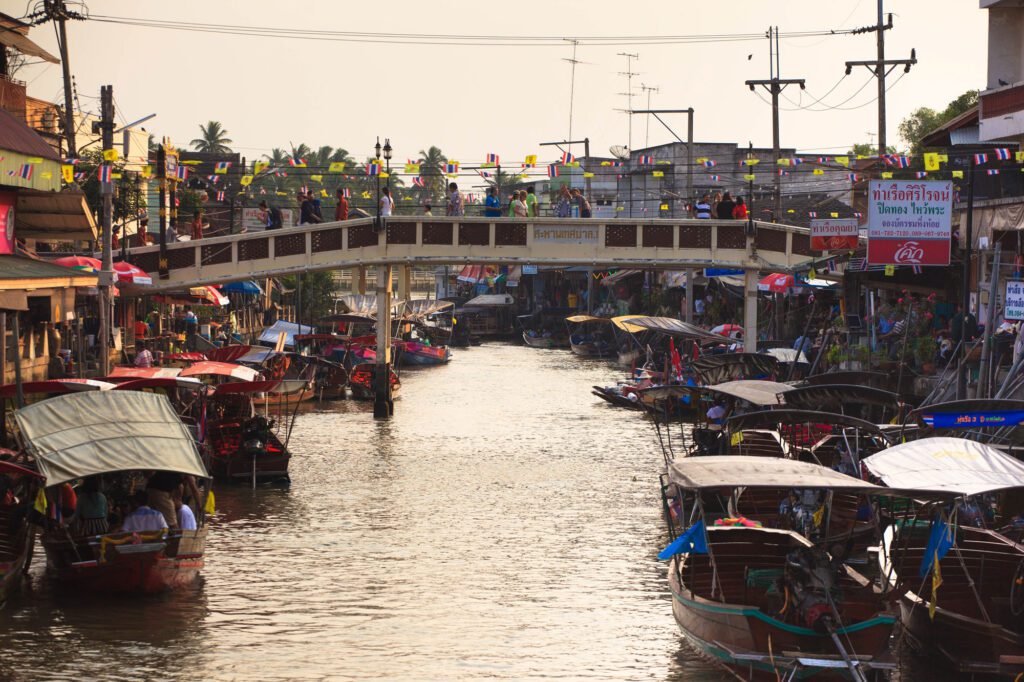
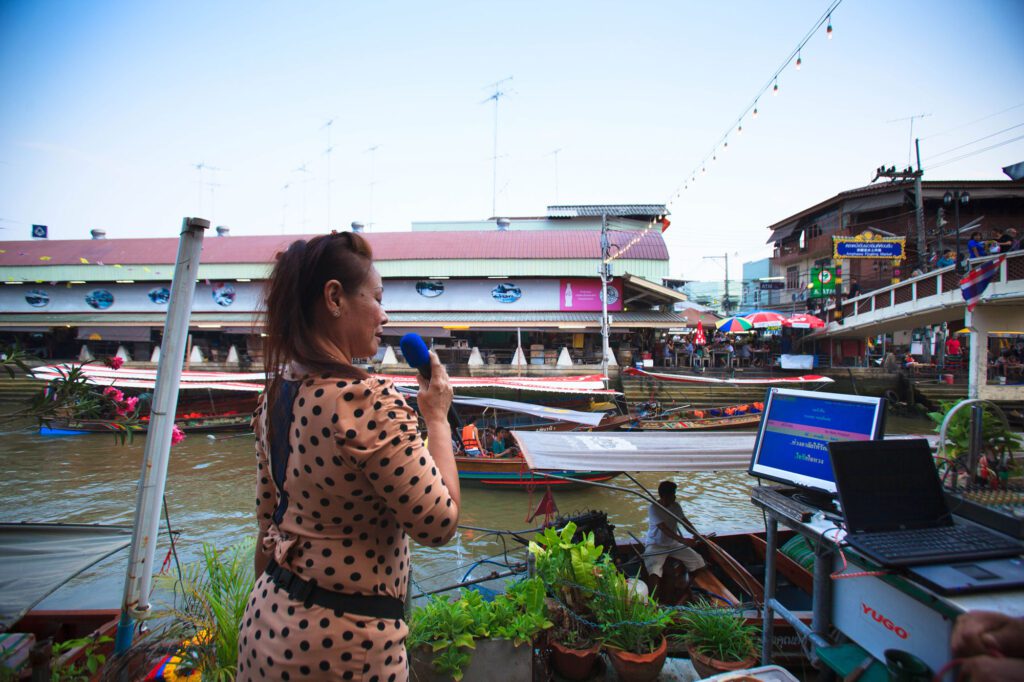
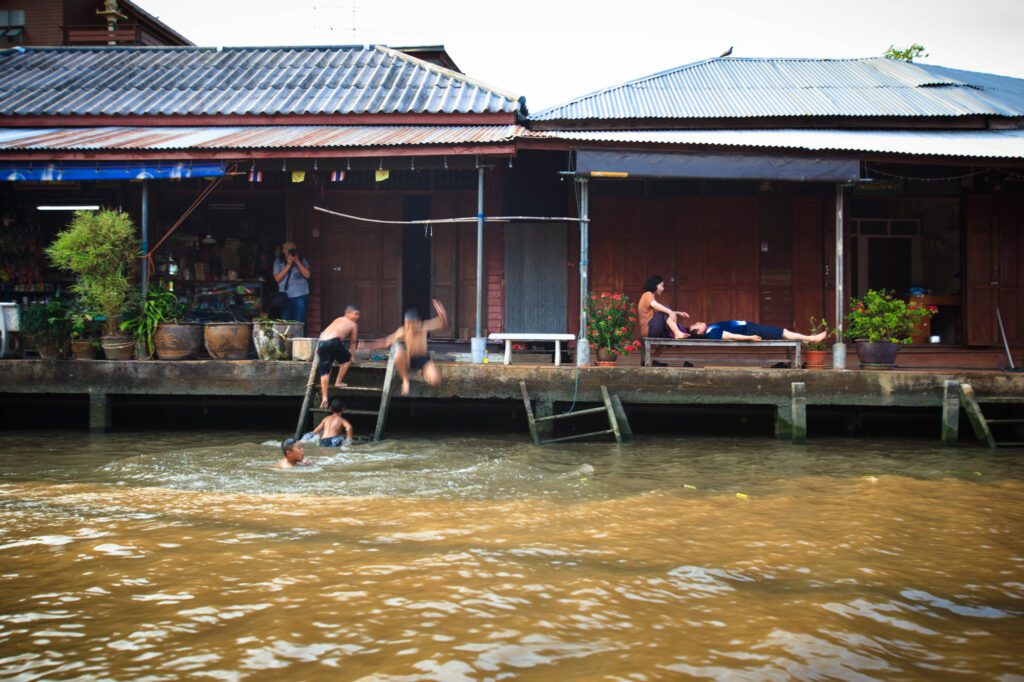
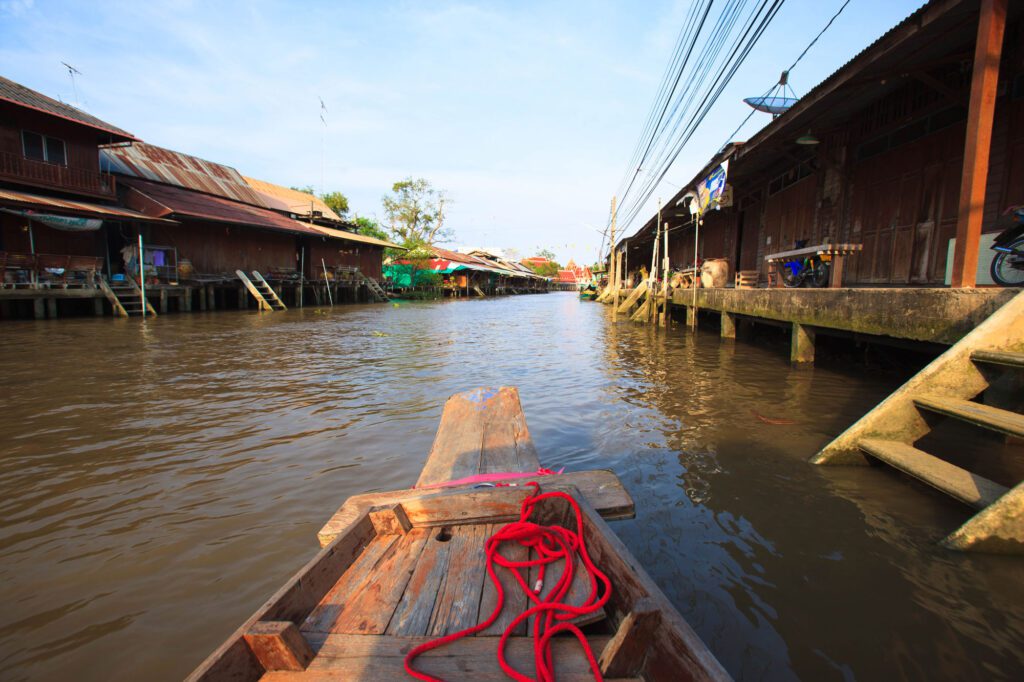
A short drive from Maeklong leads to Amphawa Floating Market, one of Thailand’s most well-known canal-side markets. In the late afternoon and evening, old wooden houses along the canal come alive with restaurants, cafés, and souvenir shops. The atmosphere is lively yet nostalgic, especially as locals gather to sing karaoke by the water, adding unexpected charm to the scene.
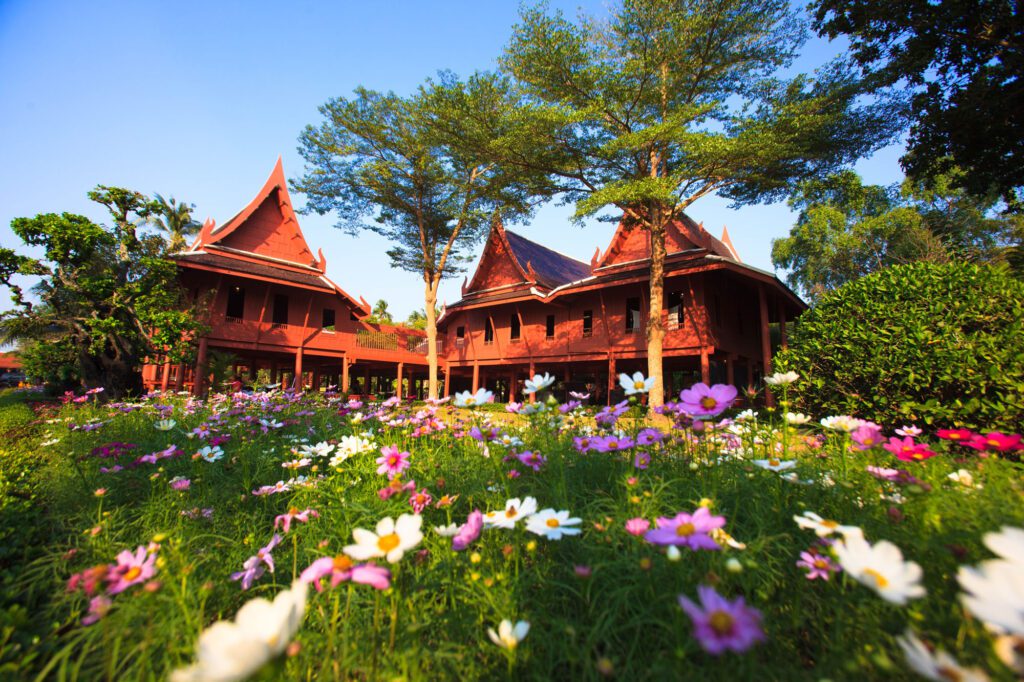
Next to the market lies King Rama II Memorial Park, a peaceful green space featuring beautifully preserved traditional Thai houses. The park offers a quieter counterpoint to the market’s energy and a deeper look into classical Thai architecture.
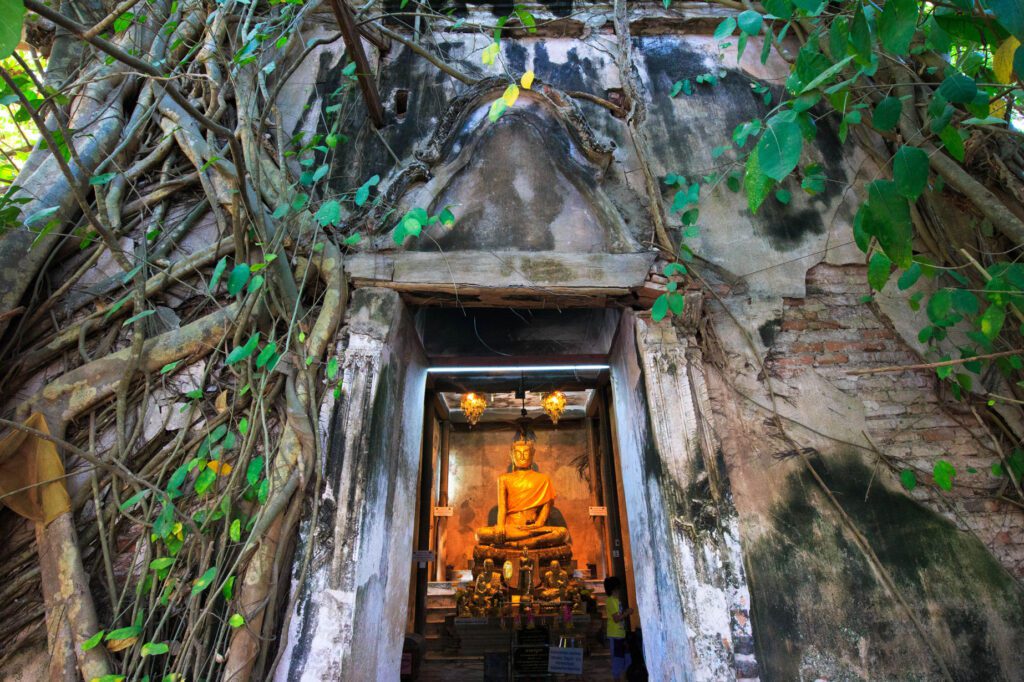
Boat trips from Amphawa often explore nearby waterways, including a visit to Bang Kung Temple, where a centuries-old chapel is almost completely enveloped by the roots and branches of surrounding trees.
For travelers seeking a more traditional atmosphere, nearby floating markets provide alternatives. Bang Nok Khwaekretains a strong sense of local life and is especially known for Pad Thai made with large freshwater prawns from the Maeklong River.
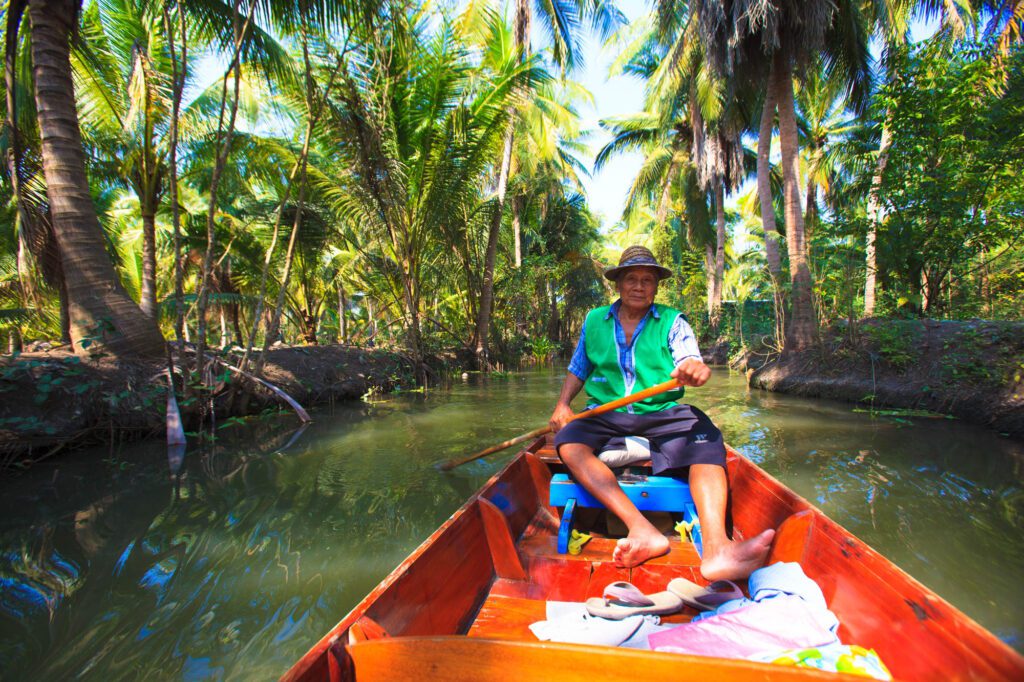
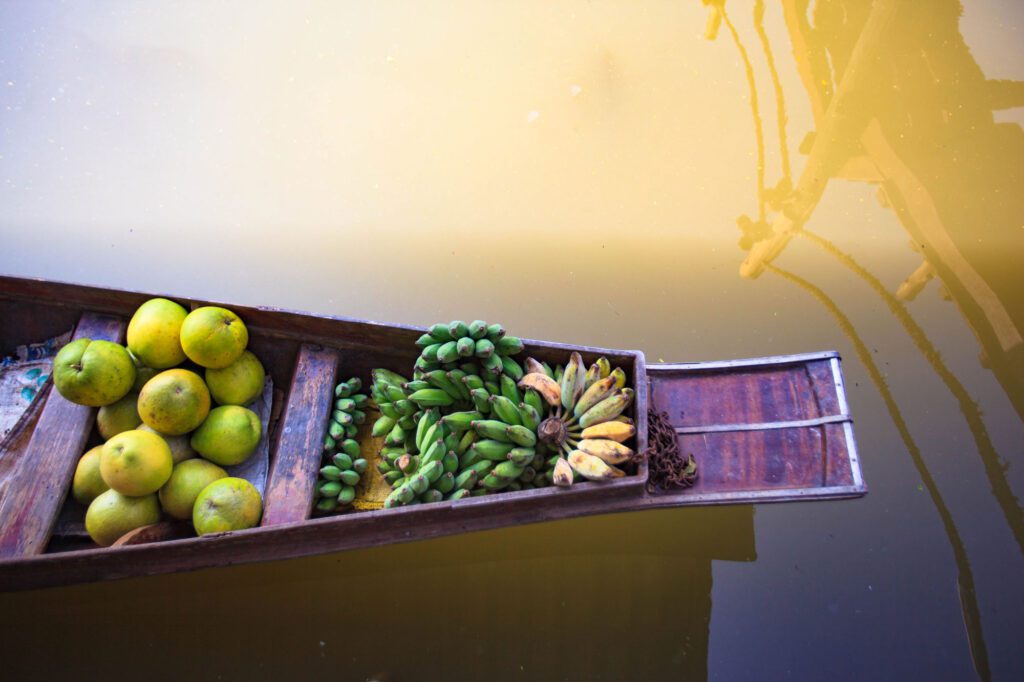
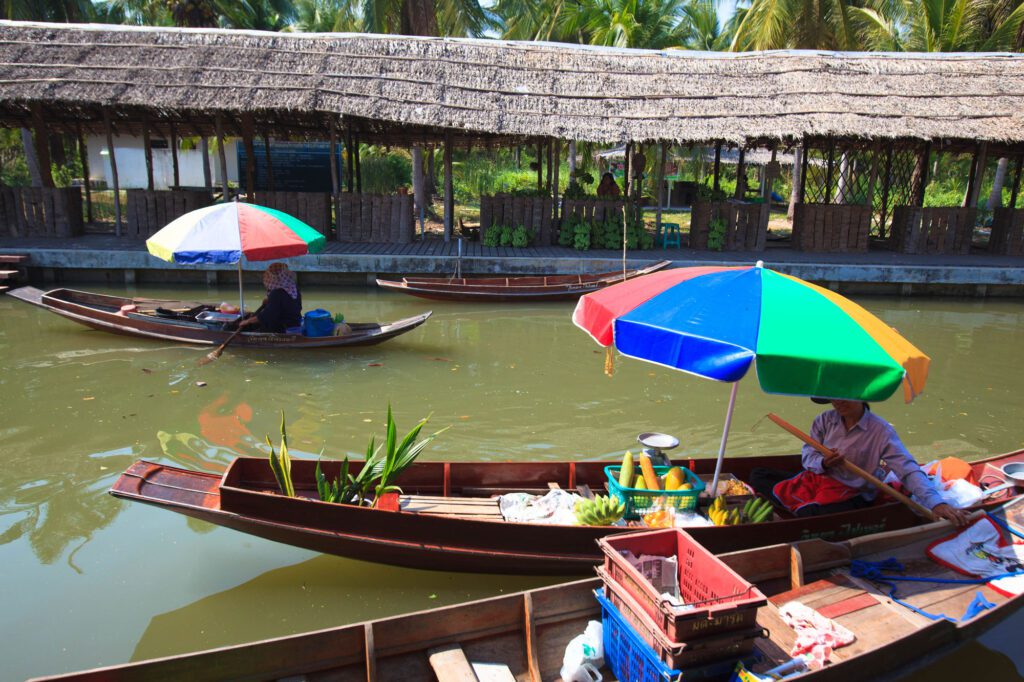
Another traditional market is Tha Kha Floating Market, where villagers still paddle boats filled with produce from their gardens to sell and exchange. A boat ride through the surrounding orchards reveals a network of narrow canals dug to irrigate fruit trees and support water-based travel.
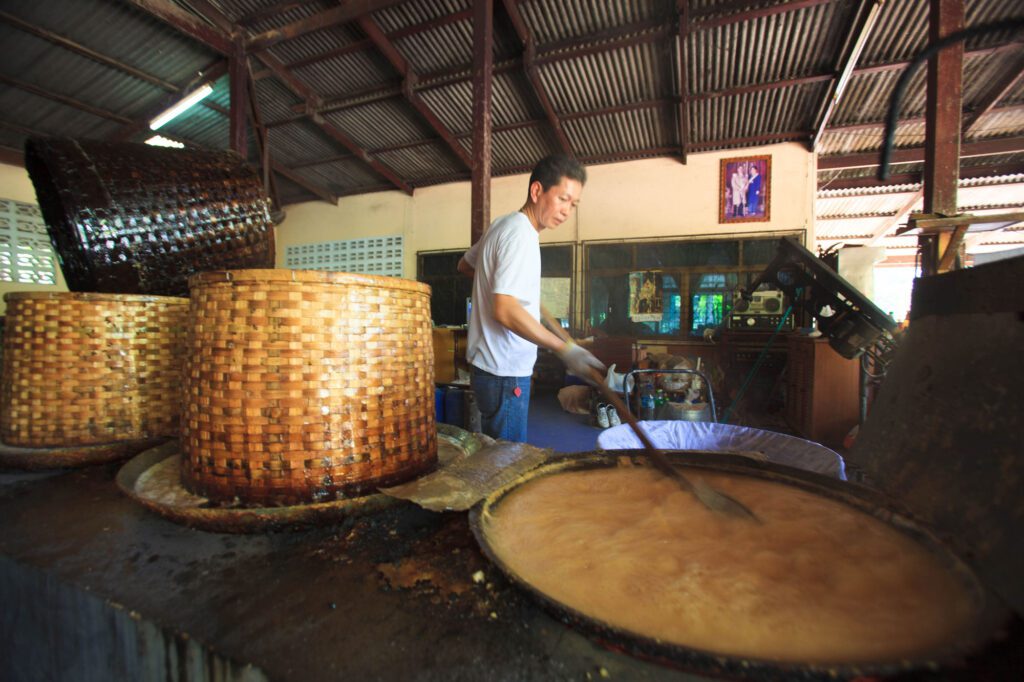
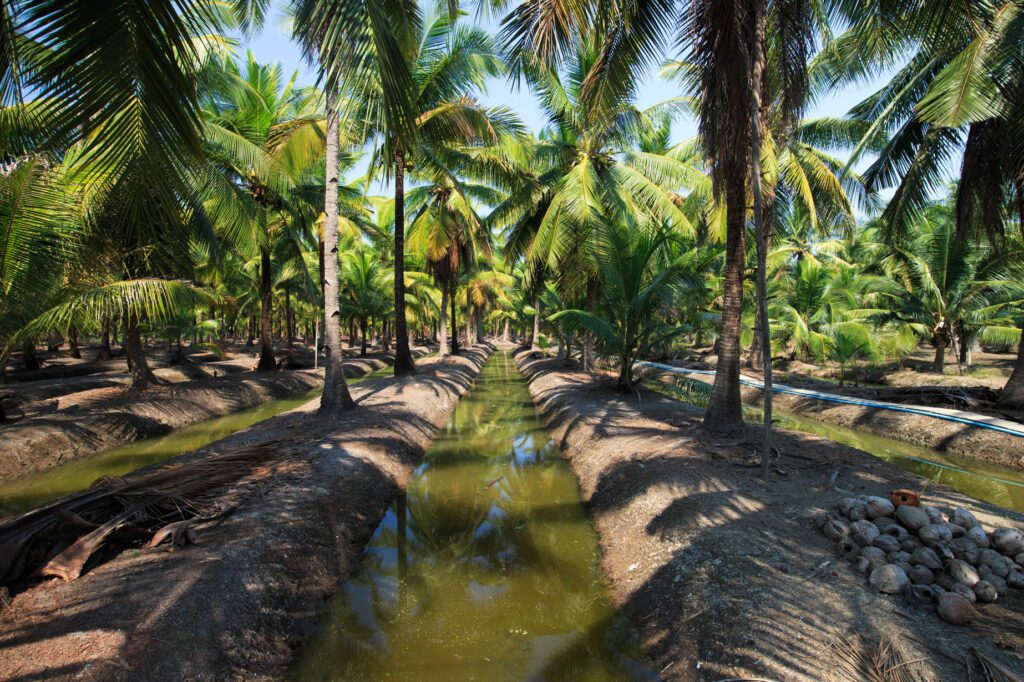
These boat journeys often include stops at coconut plantations and small workshops producing traditional coconut palm sugar. The sweet aroma of simmering coconut nectar fills the air, offering a sensory glimpse into one of Maeklong’s most important local industries.
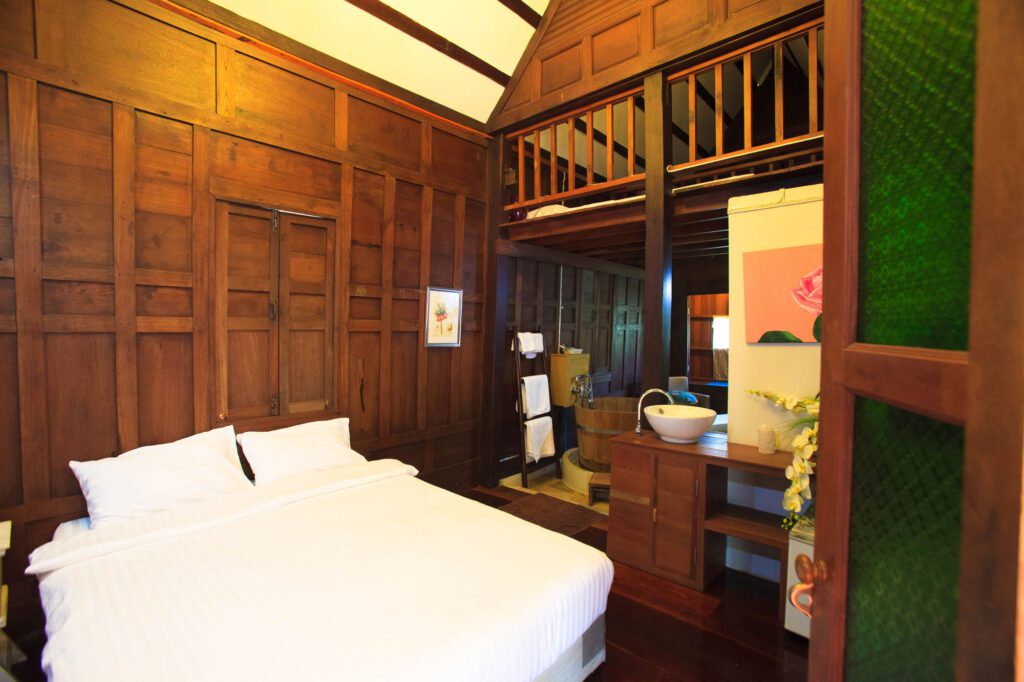
One of the most immersive ways to experience this region is by staying in a local homestay. With many options scattered throughout the communities, an overnight stay allows travelers to fully settle into the rhythms of rail, river, and everyday life along the Mahachai–Maeklong route.
Getting There & Getting Around
Travel by train from Wongwian Yai Railway Station (SRT), which is directly connected to Wongwian Yai BTS Station.
The journey to Mahachai takes approximately 58 minutes.
Recommended train times:
07:00–07:58
07:40–08:39
08:35–09:28
From Mahachai, cross the Tha Chin River by ferry at the Municipal Pier, located near Mahachai Railway Station, to reach Tha Chalom.
Google Maps: https://maps.app.goo.gl/yRneNhBHrt99MXD69
From Tha Chalom Pier, walk approximately 450 meters through the community to Ban Laem Railway Station.
Trains from Ban Laem to Maeklong operate at the following times:
10:10–11:10
13:30–14:30
To travel from Maeklong town to Amphawa Floating Market and Bang Nok Khwaek Floating Market, take the blue songthaew (shared pickup truck) on the Maeklong–Rong Je Amphawa route.
The most convenient boarding point is in front of 7-Eleven, opposite ttb Bank, located not far from Maeklong Railway Station (Maeklong Railway Market).
The songthaew passes directly through Amphawa Floating Market.
Boat trips along canals and the river to Bang Kung Temple, famous for its tree-covered chapel, can be booked at Amphawa Floating Market.
Ticket price: 60 THB per person.
To travel from Maeklong town to Tha Kha Floating Market, take the blue songthaew on the Maeklong–Wat Thep Prasit route.
Board the vehicle opposite ttb Bank in Maeklong town.
At Tha Kha Floating Market, visitors can hire a paddle boat to explore nearby orchards and traditional coconut palm sugar workshops.
Duration: approximately 1–1.5 hours
Boat rental: 200–300 THB per boat (maximum 3 passengers)
Travel to Maeklong and Amphawa by minivan is also available from Southern Bus Terminal (Sai Tai Mai), Bangkok.
For the return journey from Amphawa, board the minivan at:
https://maps.app.goo.gl/VNym1jZrvrNr92fm8
Places & Food Highlights
Gong Meng Chan Ba Mee Kiao
(Drawer Noodles)
Phet Samut Road, Maeklong
https://maps.app.goo.gl/VfSCSxwAEfFjh3Q9A
Phat Thai on the Railway
Opens daily from 16:00
https://maps.app.goo.gl/RkvpXUcRqWdkz14f9
Dry Porridge Stall near Wat Phet Samut
Located at the night market in front of Wat Phet Samut
Opens around 17:00
https://maps.app.goo.gl/BMf8aUmG5imPHfxt5
Amphawa Floating Market
Open Friday–Sunday, from 16:00 onward
https://maps.app.goo.gl/voE8Gm4sVZpxnwJL7
Bang Nok Khwaek Floating Market
Open Friday–Sunday, from 16:00 onward
Tha Kha Floating Market
Open Friday–Sunday, mornings only (until noon)
https://maps.app.goo.gl/RjwBwdtvdueu95xa7
Share


