
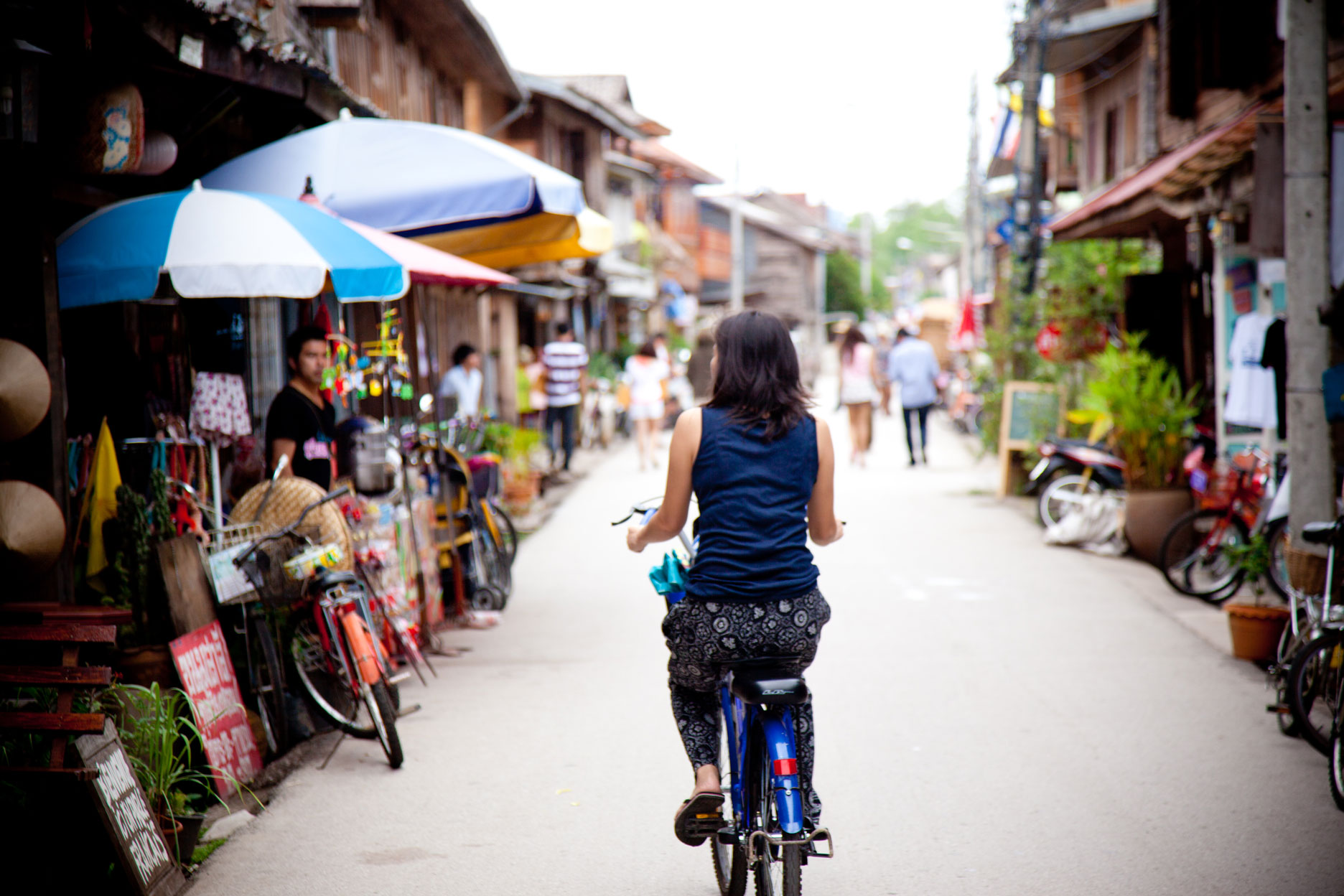
Some places are meant to be explored with a checklist. Chiang Khan is not one of them.
Set along the banks of the Mekong River in Thailand’s northeastern province of Loei, this small riverside town is best experienced not as a collection of attractions, but as a way of life. There are no busy schedules or famous landmarks demanding your attention. Instead, Chiang Khan invites you to slow down, follow the rhythm of the community, and enjoy the simple pleasures that define everyday life along the Mekong.
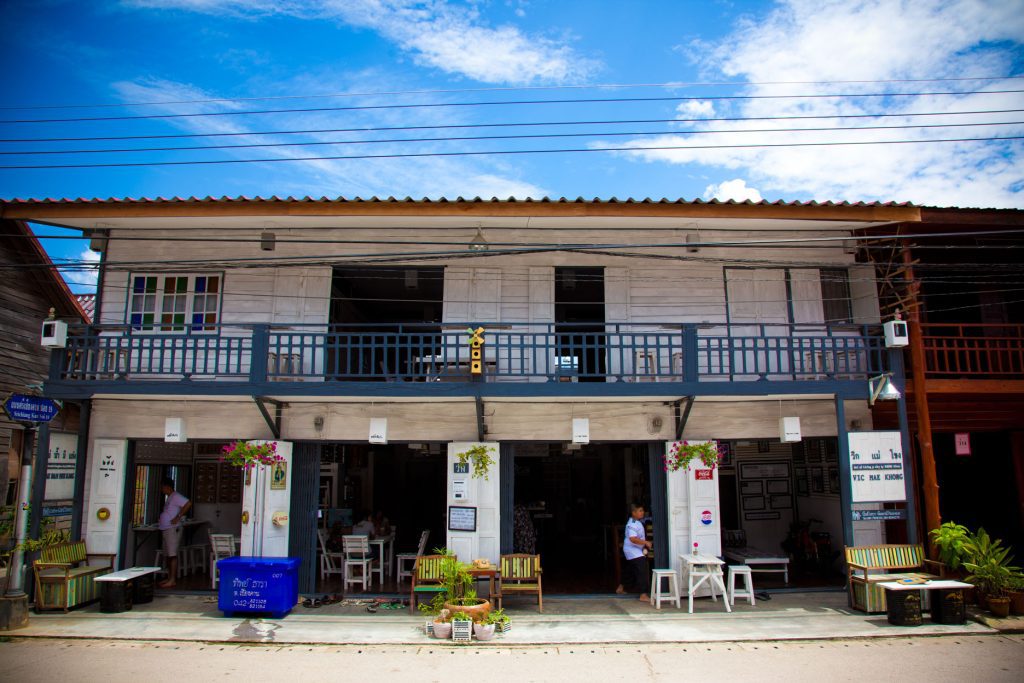
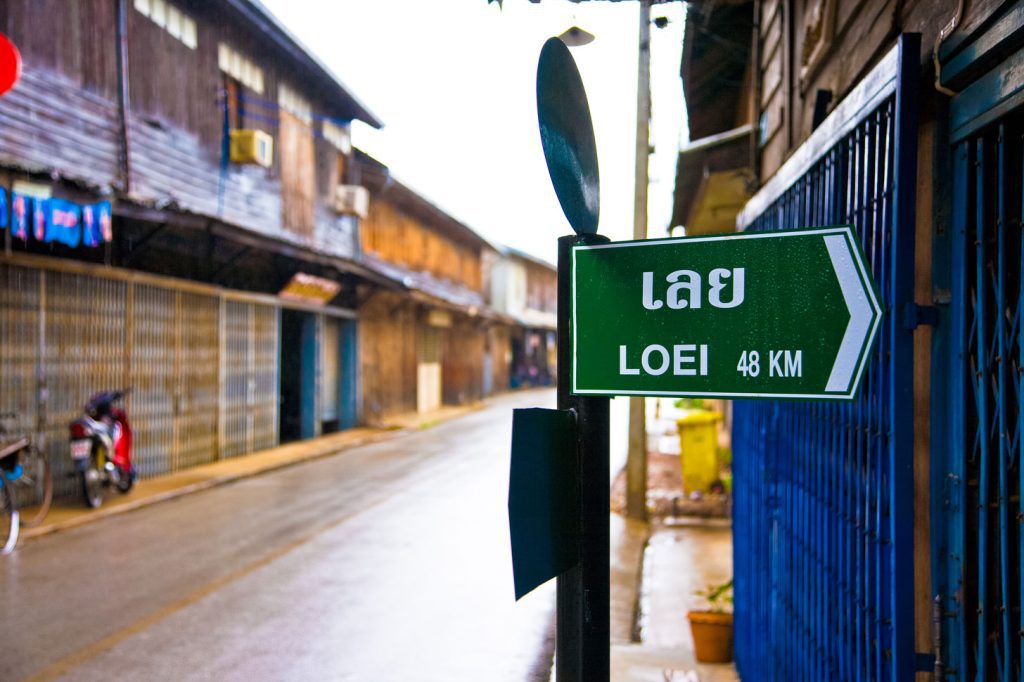
The best place to begin is in the old town itself. Stretching along two parallel streets beside the river are dozens of family-run guesthouses and homestays, many housed in beautifully preserved wooden buildings. Staying here allows you to step directly into the life of the neighbourhood, where mornings begin with the sound of temple bells and evenings end with locals gathering by the river.

Begin the day before sunrise
In Chiang Khan, the day starts early.
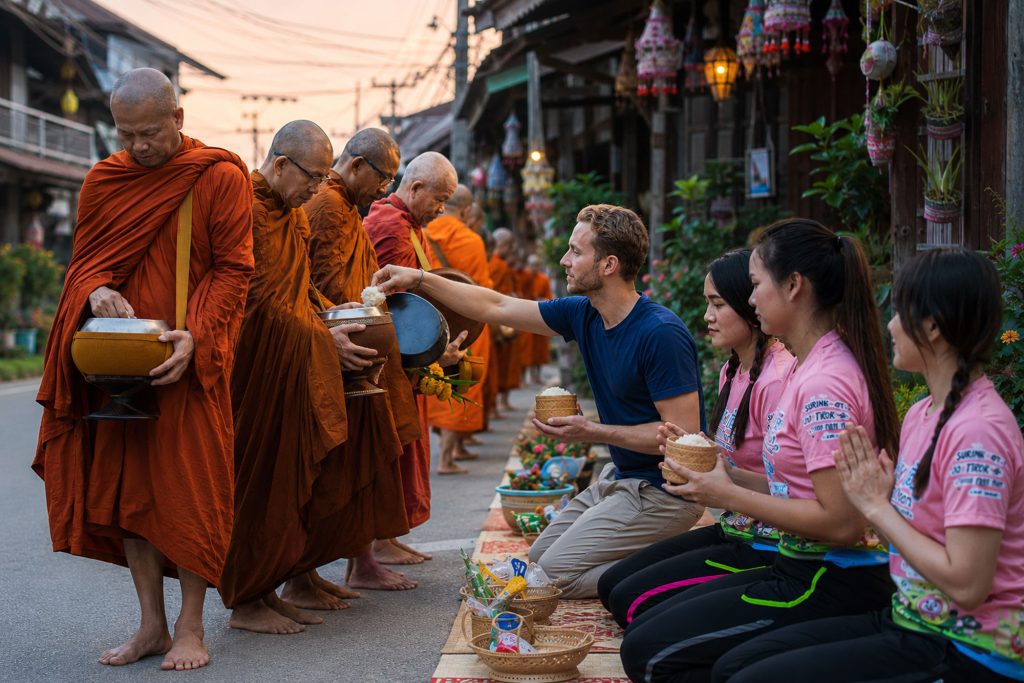
Before dawn, residents quietly place woven bamboo baskets of sticky rice outside their homes as they wait for the morning alms procession. Soon, a long line of monks walks barefoot through the streets, while locals and visitors kneel respectfully to offer sticky rice into their bowls.
Unlike elsewhere in Thailand, alms here are traditionally offered almost entirely as sticky rice—a custom shared with the Lao communities living across the Mekong River. It is a simple yet deeply meaningful tradition that has connected both sides of the river for generations.
If you’re staying for more than one morning, consider waking even earlier on another day and heading to Phu Thok, just outside town. As the first light breaks over layers of mist-covered hills, the sunrise reveals one of northeastern Thailand’s most beautiful sea-of-mist landscapes.
Discover the town at its own pace
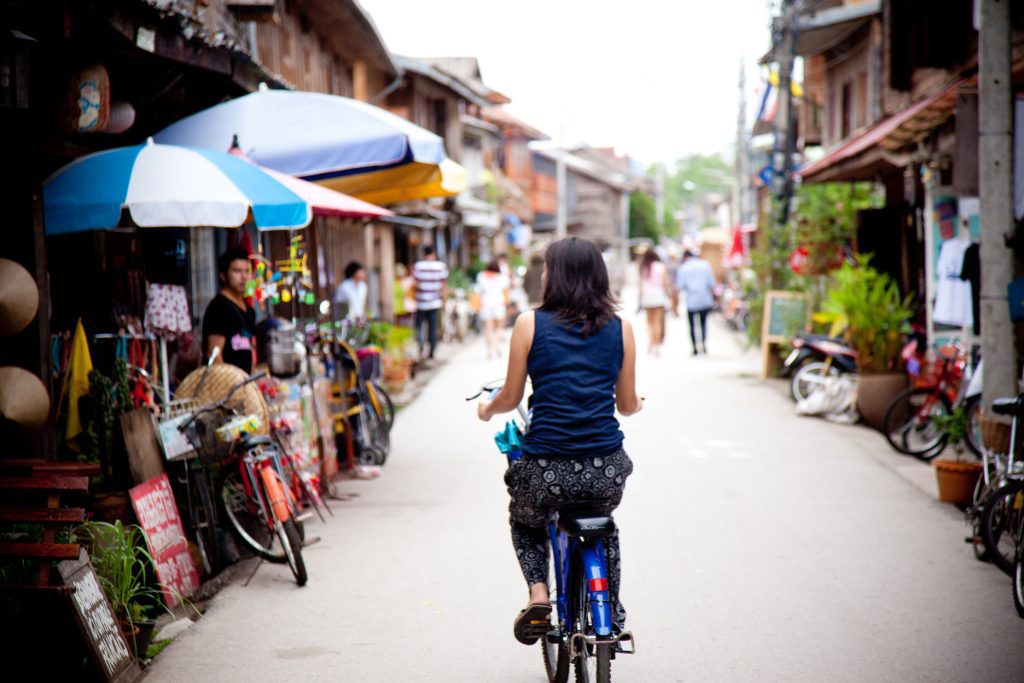
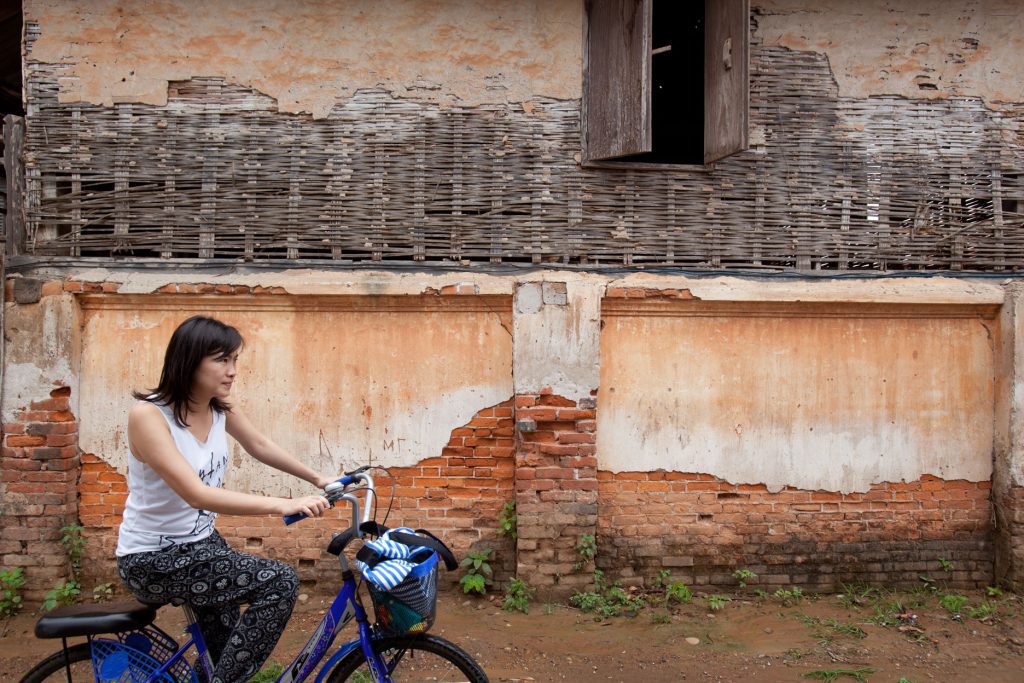
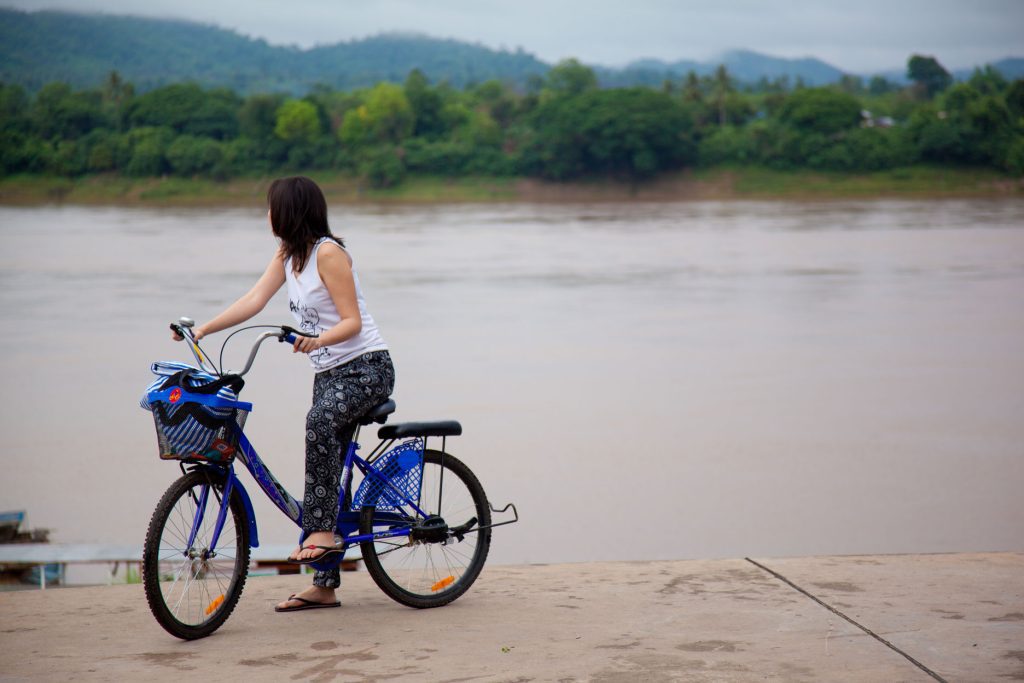
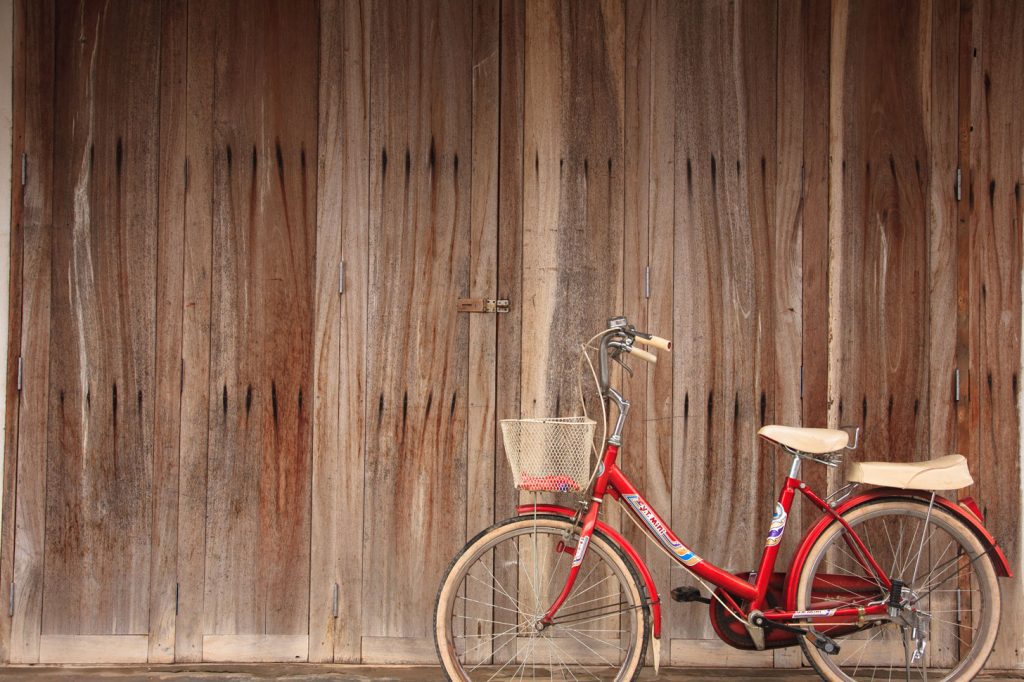
Once breakfast is over, there’s no better way to explore Chiang Khan than by bicycle.
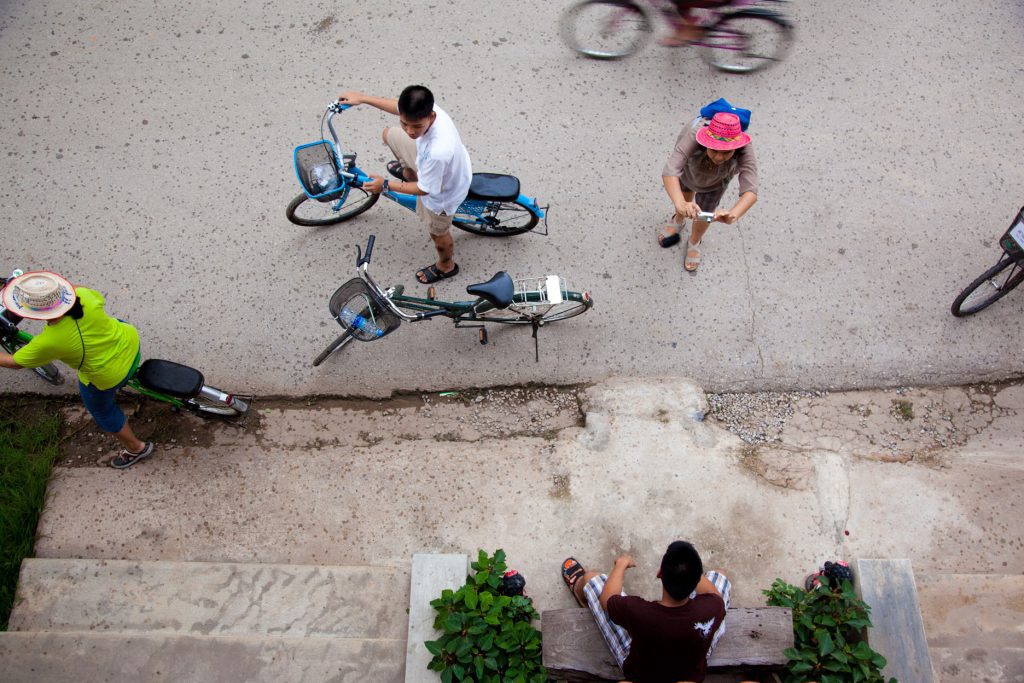
The town is too compact to require a car, yet just large enough that cycling feels effortless. Quiet lanes, wooden shop houses, cafés, temples and riverside viewpoints appear one after another, inviting you to stop whenever something catches your eye.
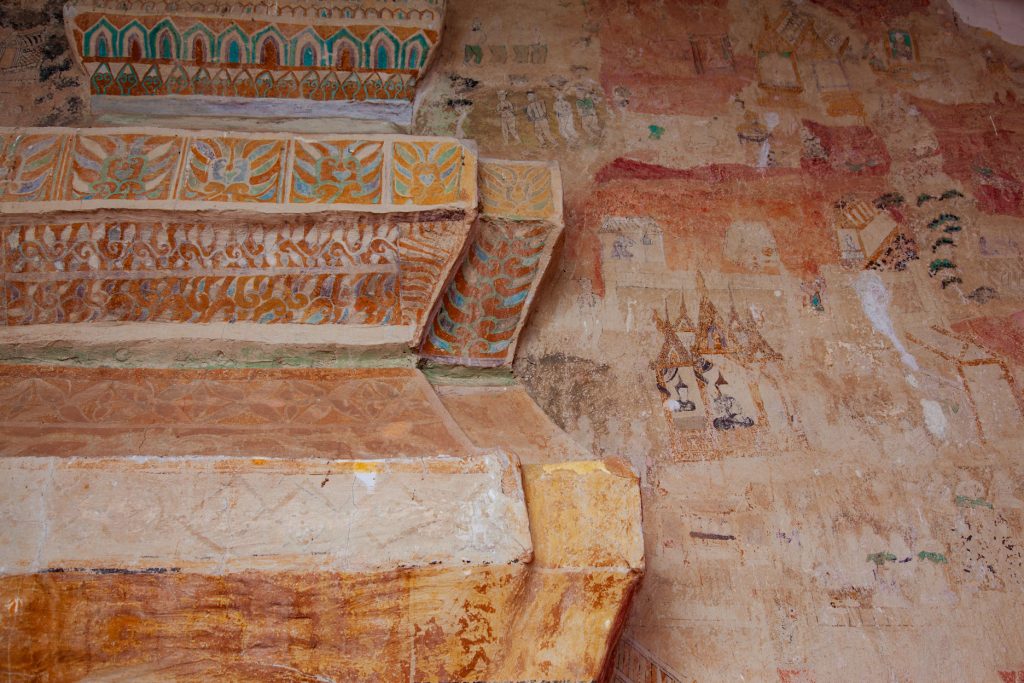
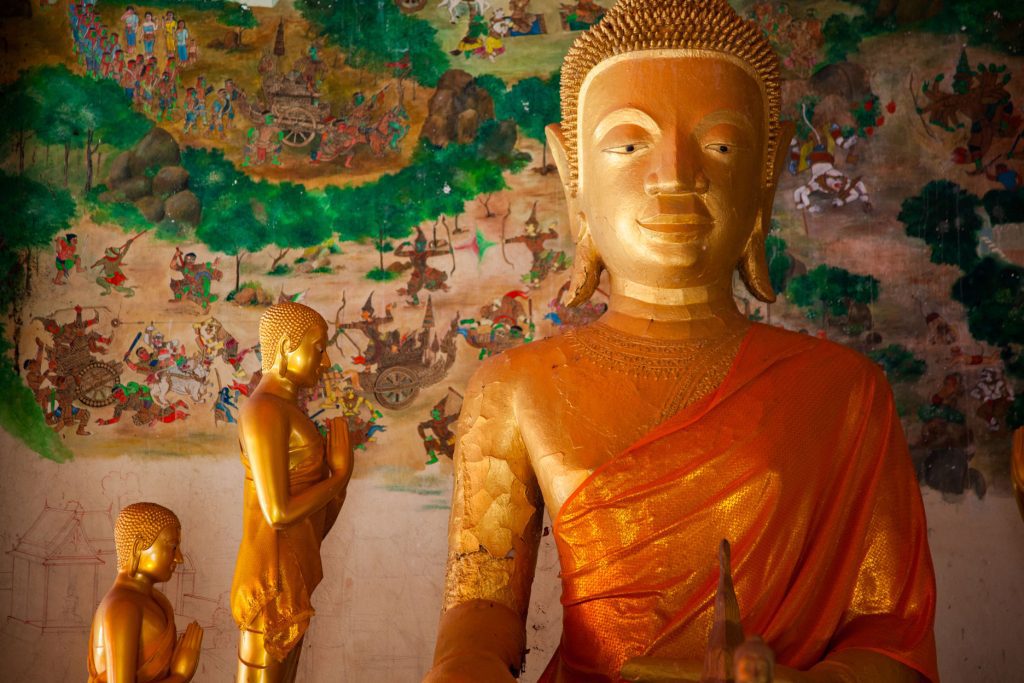
At the heart of town stands Wat Si Khun Mueang, Chiang Khan’s most revered temple and an important spiritual centre for the local community. Not far away is Wat Mahathat, whose name reflects a long-standing Thai tradition of building a temple to enshrine sacred relics in every important historic town. Inside its old ordination hall, faded mural paintings quietly tell stories of the Buddha alongside scenes from everyday life in centuries past. Though time has softened their colours, they remain among Chiang Khan’s hidden cultural treasures.
By late afternoon, the same quiet streets gradually transform into a lively walking street filled with local food vendors, handicrafts and cafés, yet the relaxed atmosphere that defines Chiang Khan never disappears.
Taste the flavours of Chiang Khan
One of the easiest ways to understand Chiang Khan is through its food.
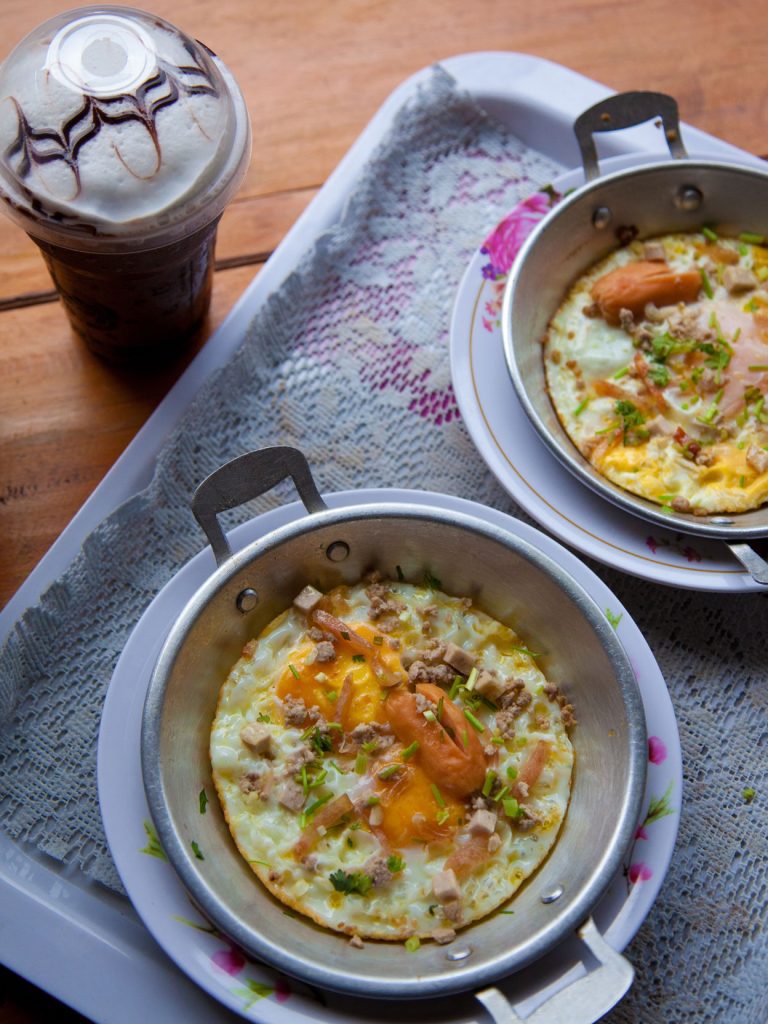
The morning often begins with Kai Kratha (ไข่กระทะ), eggs served in a small pan with local sausage, minced pork and herbs. Although inspired by Western breakfasts introduced through neighbouring Indochina, the dish has evolved into one of northeastern Thailand’s most beloved morning meals.
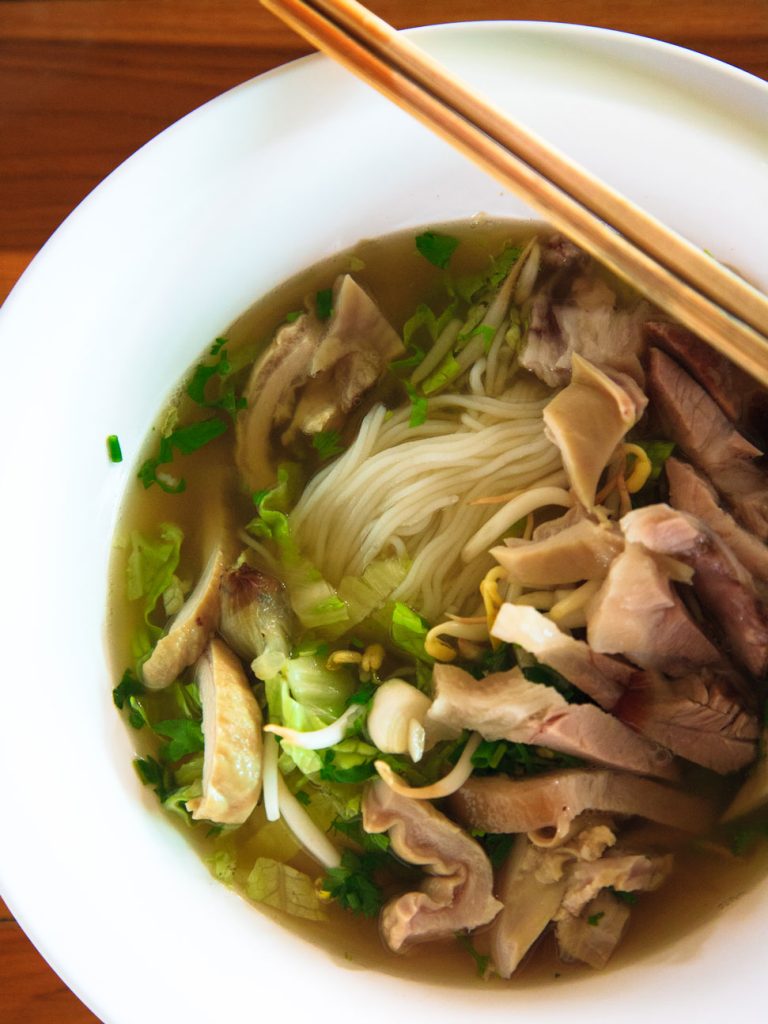
For lunch, try Khao Pun Nam Chaeo (ข้าวปุ้นน้ำแจ่ว), fresh rice noodles served in a comforting, mildly seasoned broth—a local speciality rarely found outside this part of Thailand.
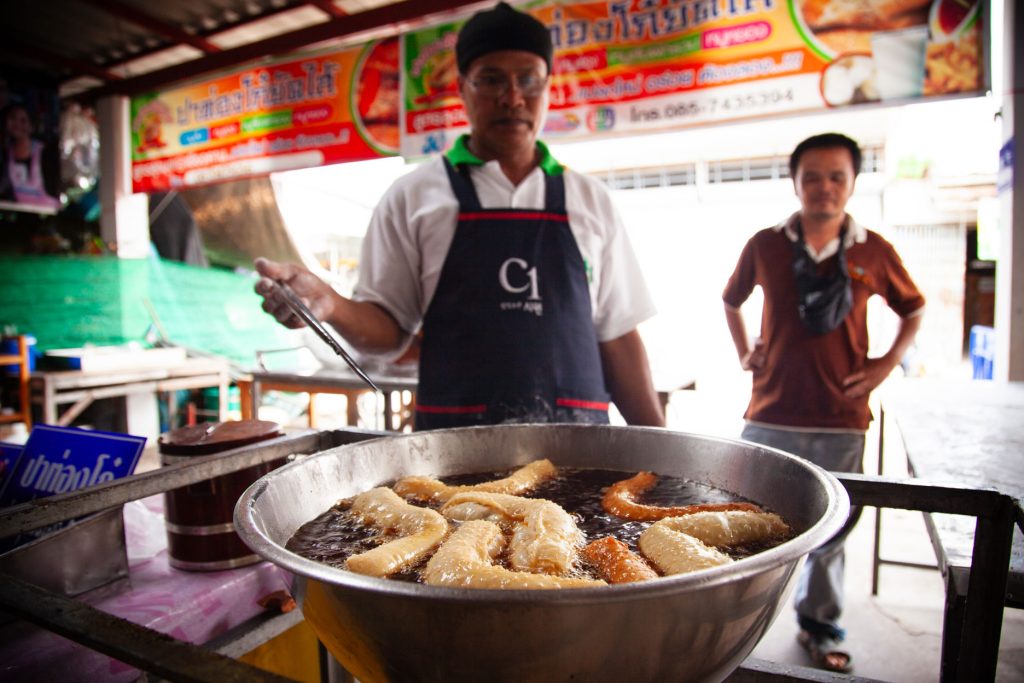
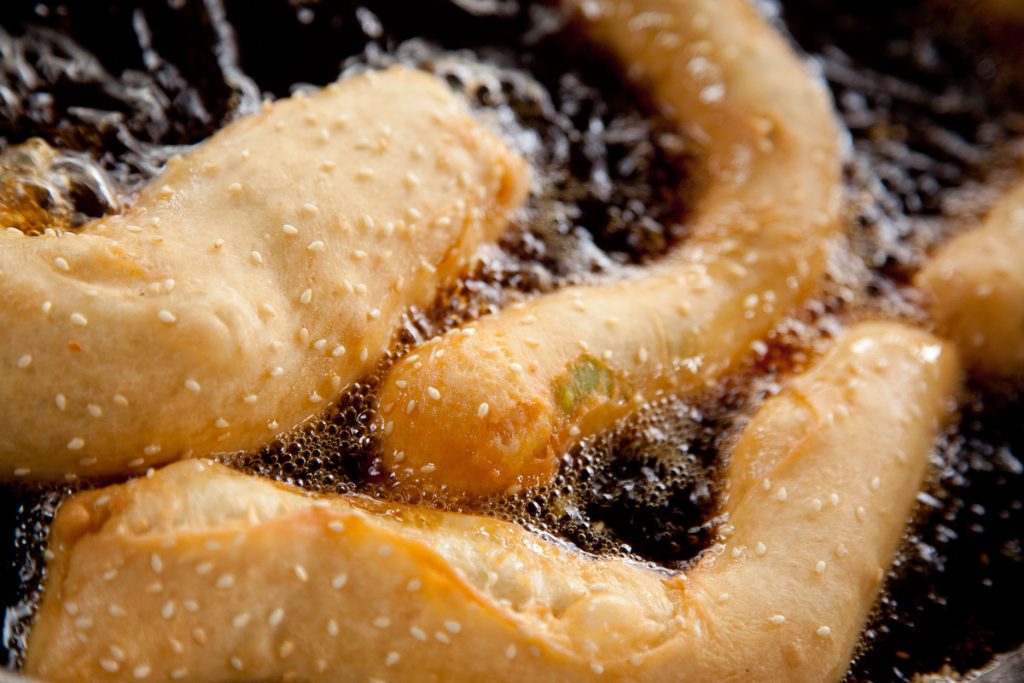
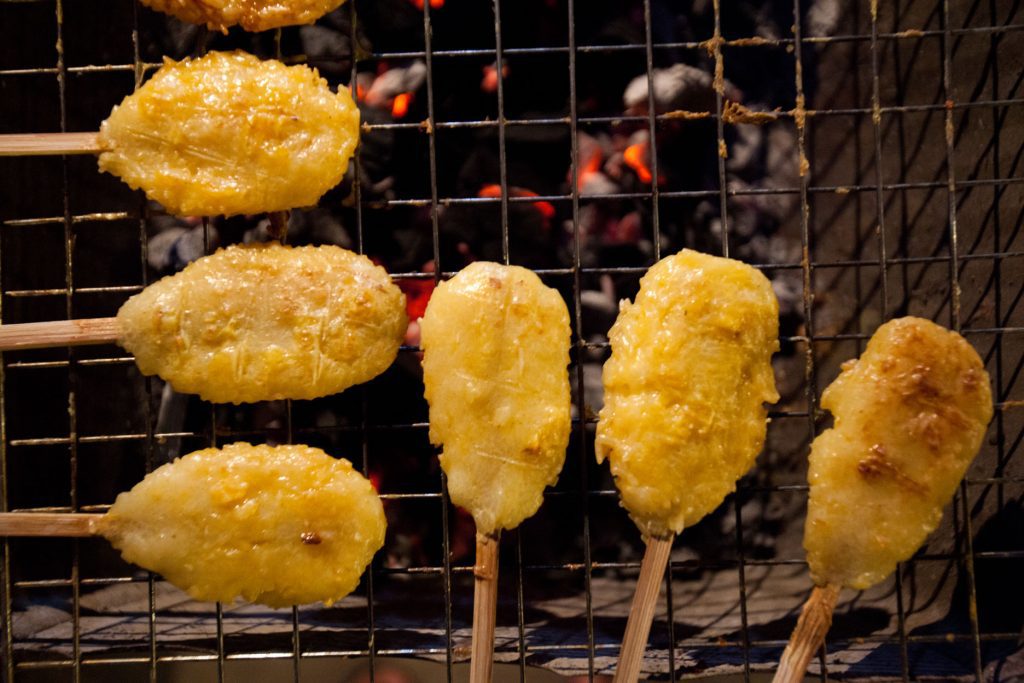
As you wander through town, you’ll also come across some of Chiang Khan’s favourite snacks. Khao Jee (ข้าวจี่), sticky rice grilled over charcoal after being brushed with beaten egg, is wonderfully smoky and fragrant. Another local favourite is stuffed Pa Tong Go (ปาท่องโก๋ยัดไส้), crispy fried dough filled with sweet or savoury fillings that makes for a perfect afternoon treat.
Slow down even further
One of Chiang Khan’s greatest attractions isn’t a landmark at all—it’s the chance to simply relax.
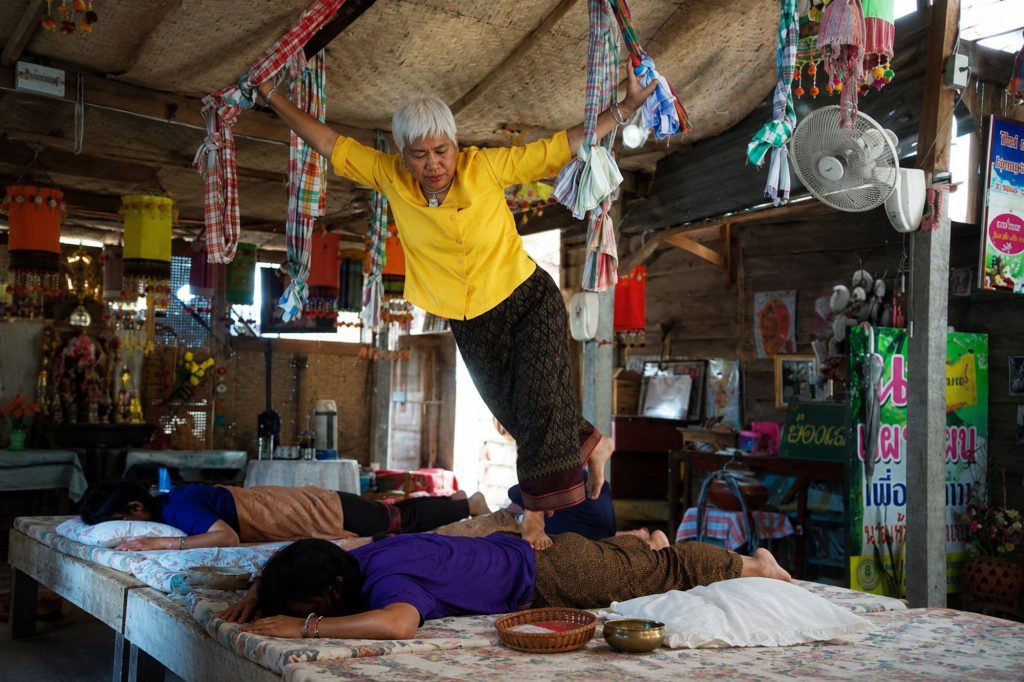
As the afternoon heat begins to fade, many visitors stop by Aunt Koi’s traditional massage shop. Here, therapists perform a unique foot-pressure massage while holding colourful cotton cloths suspended from the ceiling for balance. It’s an unusual technique that has become one of Chiang Khan’s most memorable local experiences.
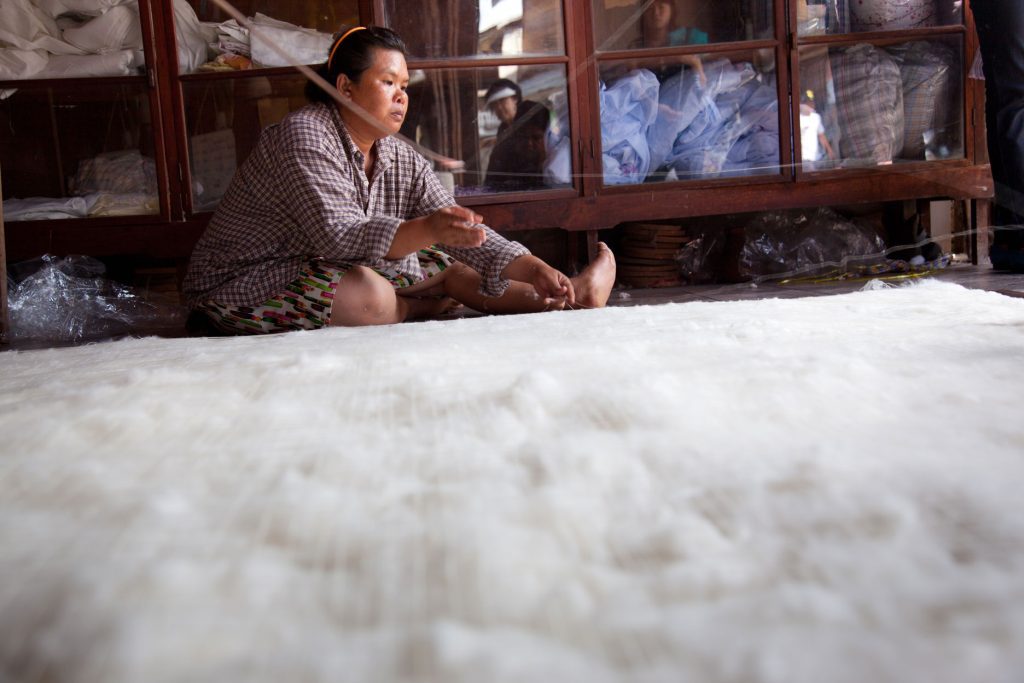
Nearby, small family workshops continue another long-standing tradition: hand-stitching thick cotton quilts made from locally grown cotton. Visitors can often watch artisans sewing each quilt by hand before choosing one to take home—a meaningful souvenir that reflects the town’s craftsmanship rather than mass production.


End the day beside the Mekong
As evening approaches, follow the river a little further north to Kaeng Khut Khu, just six kilometres from town.
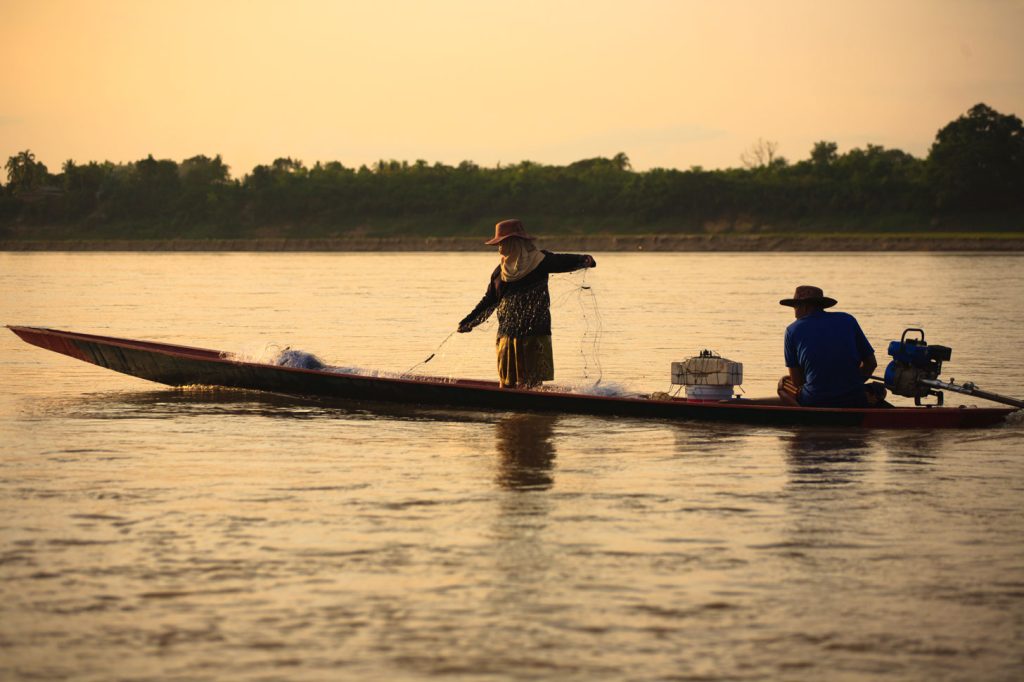
Small boats drift gently across the Mekong, passing rocky rapids while local fishermen cast their nets in the fading light. The scenery is peaceful, unhurried and unmistakably tied to the river that has shaped life here for centuries.
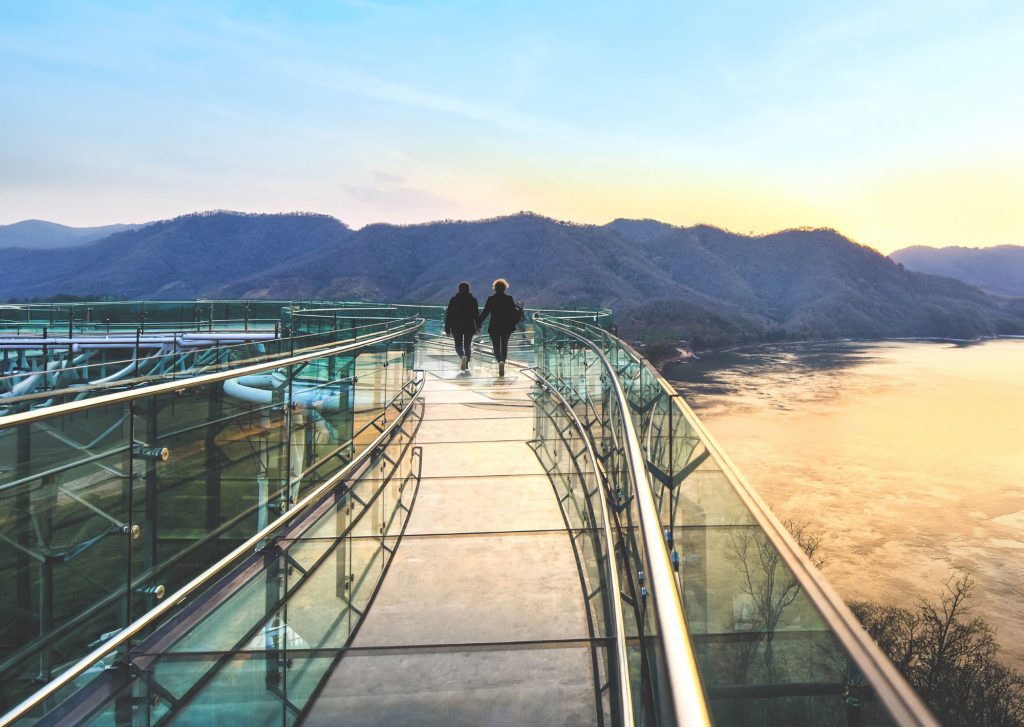
For a broader perspective, continue to the Chiang Khan Skywalk, perched high above one of the Mekong’s most beautiful bends. From here, you can watch the river begin its long journey as the natural border between Thailand and Laos while the setting sun paints the valley in warm golden light.
A place to simply be
Perhaps that’s why so many travellers end up staying longer than planned.
Chiang Khan isn’t a destination filled with famous attractions or bucket-list experiences. Its charm lies in everyday moments—sharing breakfast with locals, cycling without a destination, watching monks pass in silence, or simply sitting beside the Mekong as another day comes to an end.
Come to Chiang Khan not to tick off sights, but to experience the gentle rhythm of life along one of Southeast Asia’s greatest rivers.
Quick Info :
Getting there: Chiang Khan is located approximately 50 km from Loei City.
By bus: The most convenient option from Bangkok is the direct overnight bus from Bangkok Bus Terminal (Chatuchak / Mo Chit) to Chiang Khan. The journey takes around 9–10 hours, with departures in the evening and arrival the following morning.
By air: Thai AirAsia operates one daily flight between Don Mueang International Airport (Bangkok) and Loei Airport. From Loei Airport, Chiang Khan is approximately 56 km away (around 50–60 minutes by road). The easiest options are to rent a car at the airport or arrange a private local transfer to Chiang Khan.
Attraction :
Wat Si Khun Mueang : https://maps.app.goo.gl/28jATYcDr9Ln79rN8
Wat Mahathat : https://maps.app.goo.gl/SEQnrKjZZWe8yhcq8
Kaeng Khut Khu repids : https://maps.app.goo.gl/VnqoKycZ5g7xAqd19
Skywalk Chiang Khan : https://maps.app.goo.gl/XSP4M63rAtR7zMzz7
Phu Thok : https://maps.app.goo.gl/hERqZJLAeDQVyRaV9
Food & Others :
Kai Kratha
Luk Restaurant (ลุกโภชนา) : https://maps.app.goo.gl/WDz69hvL2ERSDzaM9
Khao Pun Nam Chaeo
Pa Lee Restaurant (ข้าวปุ้นน้ำแจ่วป้าลี่) : https://maps.app.goo.gl/VjxrR6USWVt2Rw2f7
Pa Tong Go(ปาท่องโก๋ยัดใส้)
Uncle Muk (ลุงมุขปาท่องโก๋ยัดไส้ (แม่อรุณศรี)) : https://maps.app.goo.gl/aWPQ8NHKNTPqbhMt9
Traditional foot pressured massage
Kidtung Chiang Khan ยองเส้น แม่คำก้อย ซอย19 : https://maps.app.goo.gl/QiszaRqG1UGsz3gV6
Handmade cotton quilt
Niyom Thai (Cotton Branket shop) : https://maps.app.goo.gl/ziUpKyfnUC53jcdh8
Share


