
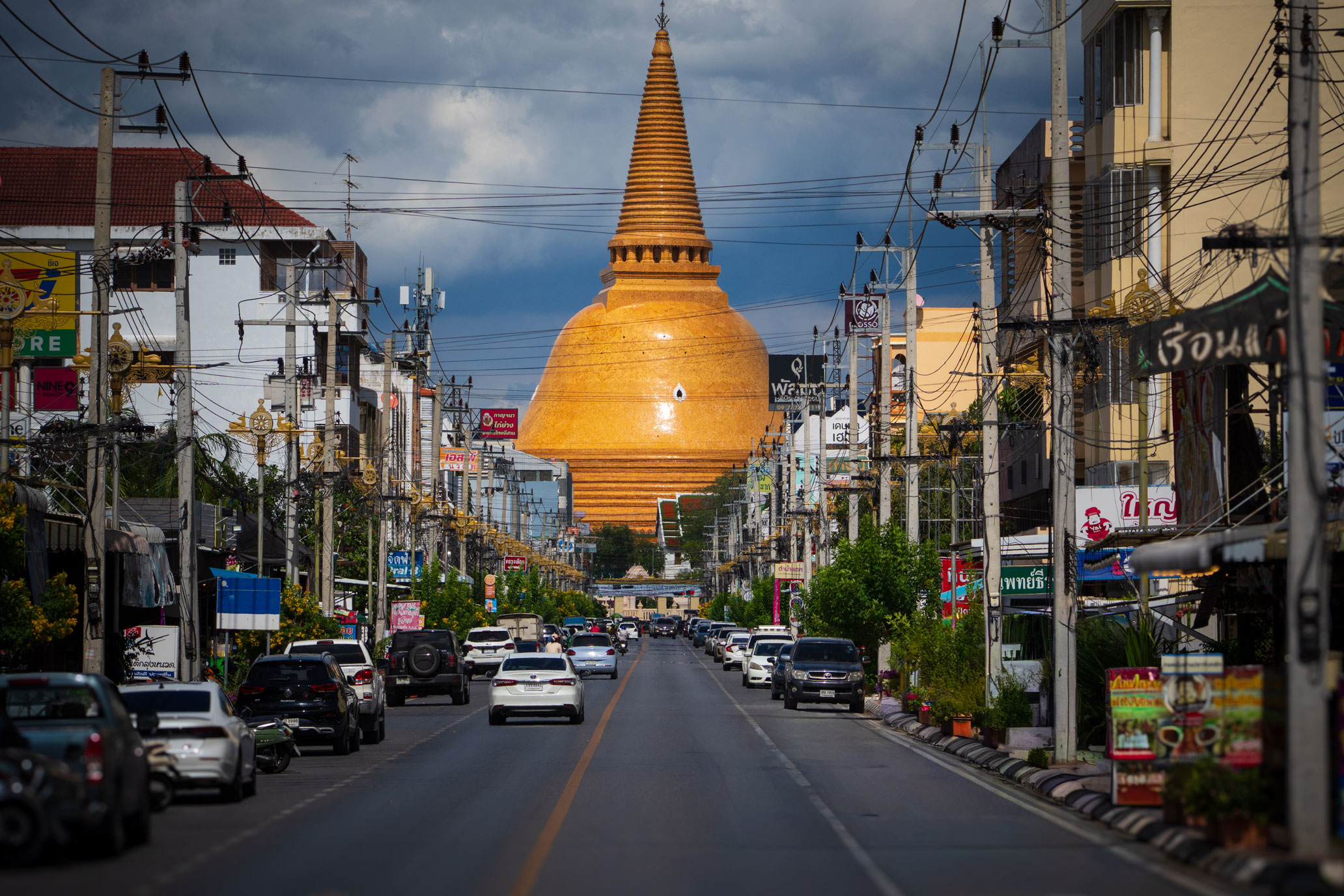
Only a short journey west of Bangkok, Nakhon Pathom is easy to reach, yet its landscape holds stories stretching back more than a thousand years.
At its centre rises one of Thailand’s most monumental Buddhist landmarks, rooted in the ancient Dvaravati world. Travel beyond the city and the scenery gradually changes: roads give way to canals, lotus ponds, rice fields and orchid farms, before the journey reaches a new generation of organic farming where traditional knowledge is being reinterpreted through hands-on experiences.
Together, these three journeys reveal very different sides of Nakhon Pathom—from an ancient city shaped by faith, to communities shaped by water, and finally to a contemporary organic movement rooted in the land.
Beneath the Shadow of the Great Chedi
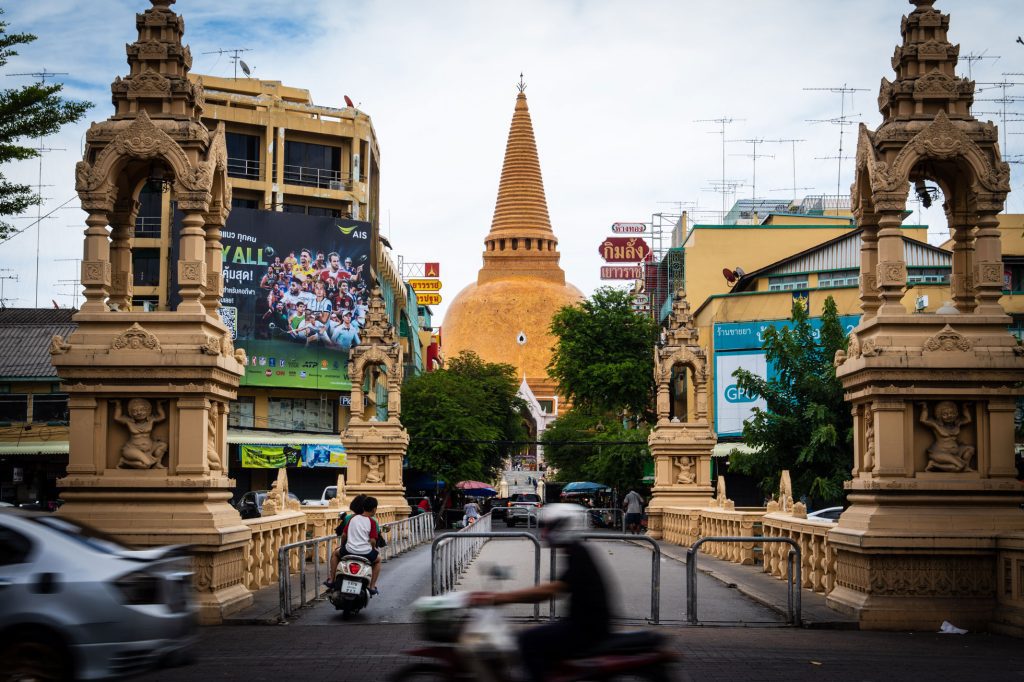
One of the easiest ways to arrive in Nakhon Pathom is by train. From the station, a road seems to point directly towards the immense golden form of Phra Pathom Chedi, rising above the low-rise city and visible long before you reach it.
The monument immediately gives Nakhon Pathom a sense of scale—and age. The site is believed to date back to the Dvaravati period, when this part of Central Thailand was already an important centre of Buddhist culture more than a thousand years ago. The chedi standing here today, however, is not the original monument. During the reign of King Mongkut, Rama IV, a far larger stupa was constructed around the ancient structure, preserving the earlier chedi inside the monument we see today.
Even the approach offers clues to the city’s layered past. Decorative architectural details around the temple grounds draw upon artistic traditions associated with different periods, while several important Buddha images reveal how Nakhon Pathom continued to evolve long after the Dvaravati age.
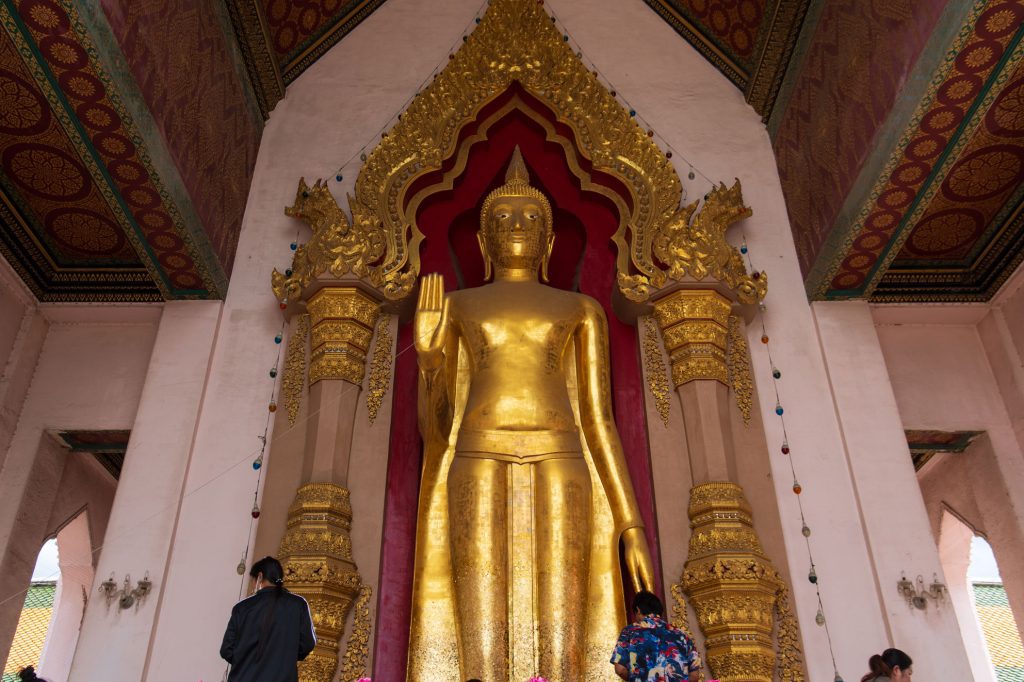
Facing the chedi is Phra Ruang Rojanarit, one of the city’s most revered Buddha images. Ancient parts of the image were brought from Si Satchanalai, while King Vajiravudh, Rama VI, commissioned the reconstruction of the complete standing Buddha. It is an unusual meeting of different periods: an older artistic inheritance given new life through a later royal project.
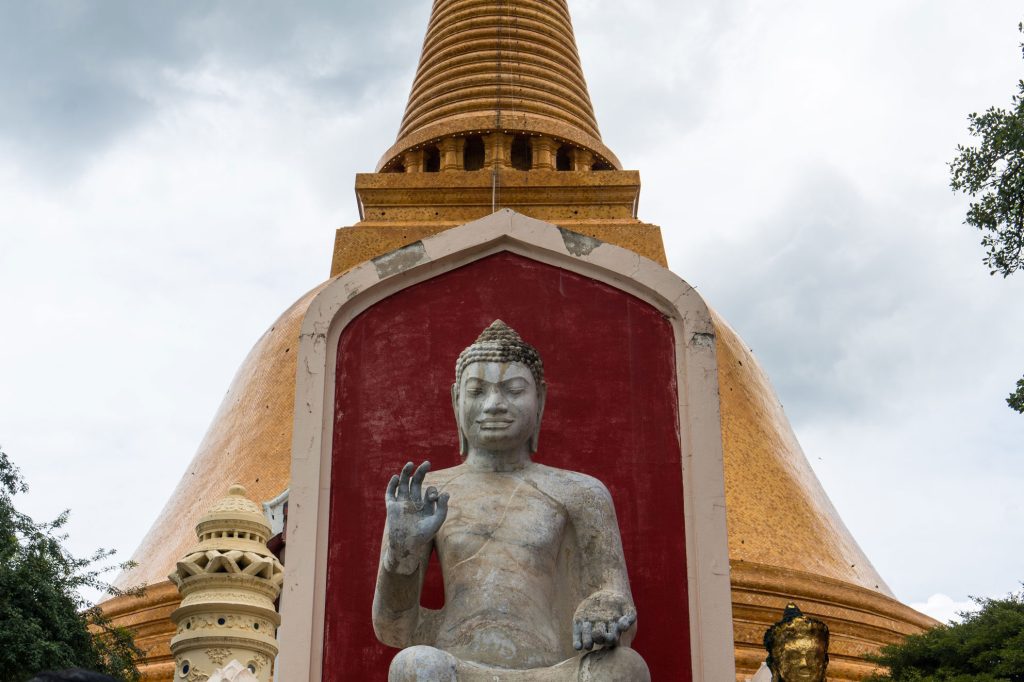
Elsewhere within the complex is Luang Pho Khao, the White Stone Buddha. Dating from the Dvaravati period, the image depicts the Buddha seated with both legs pendant and a hand raised in a teaching gesture. Its proportions and style are noticeably different from the Buddha images associated with later kingdoms, providing a rare glimpse of Buddhist art from an earlier world.
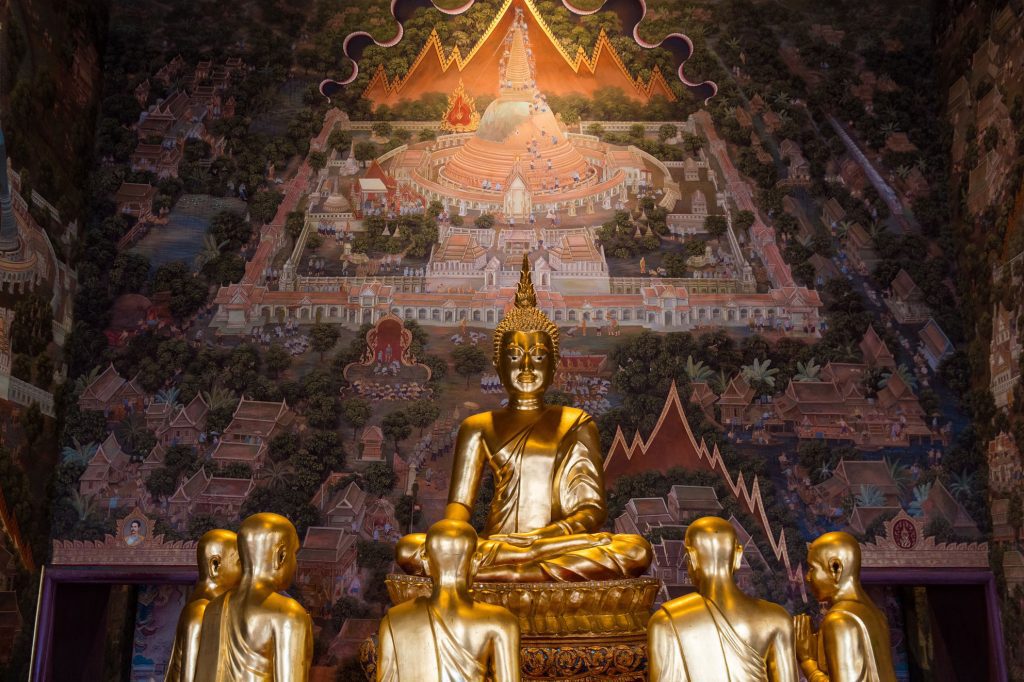
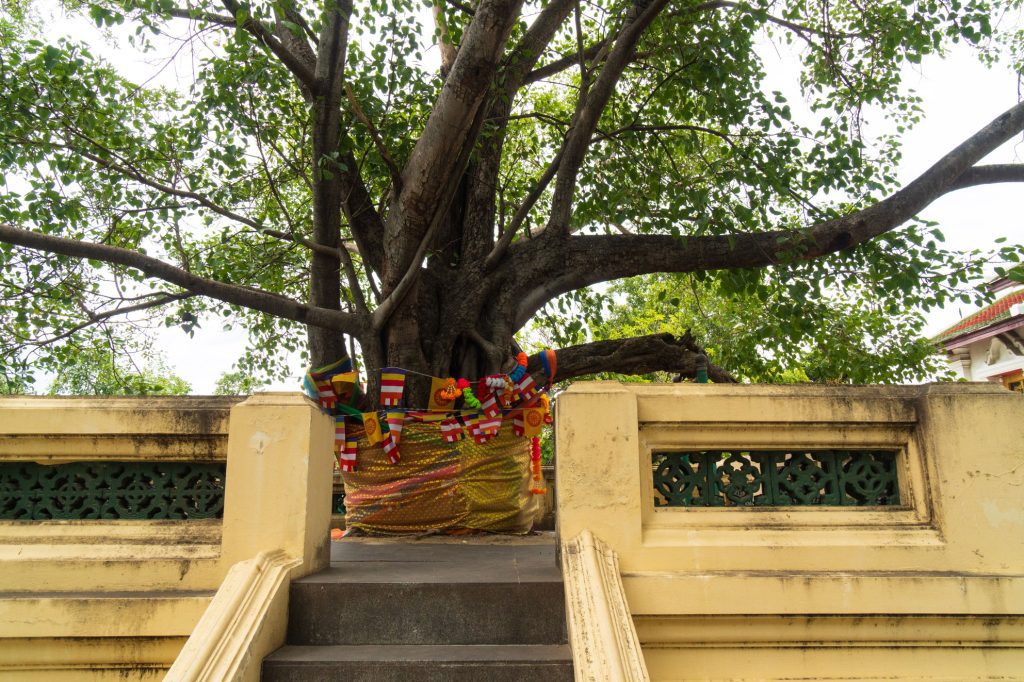
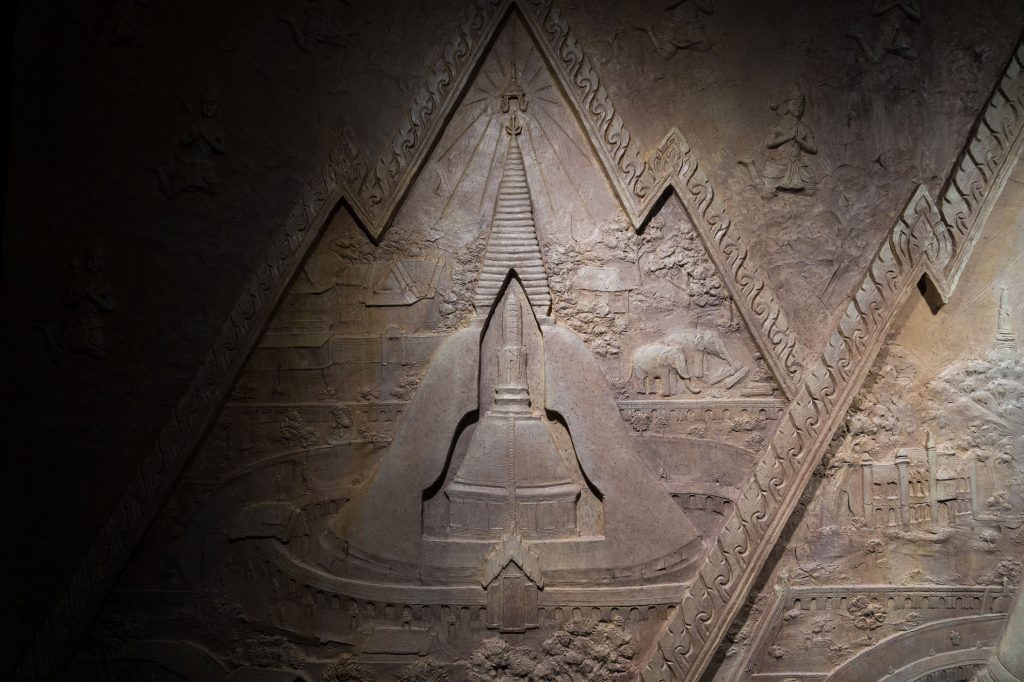
Look deeper into the story of Phra Pathom Chedi and the monument becomes even more fascinating. Murals and historical displays explain how the structure changed repeatedly over the centuries. A replica of an earlier form of the chedi helps visitors imagine the monument before the enormous stupa of Rama IV enveloped it.
The grounds also contain Bodhi trees connected symbolically with Bodh Gaya, the place where the Buddha attained enlightenment, reinforcing the importance of the complex not simply as an archaeological site but as a living place of Buddhist devotion.
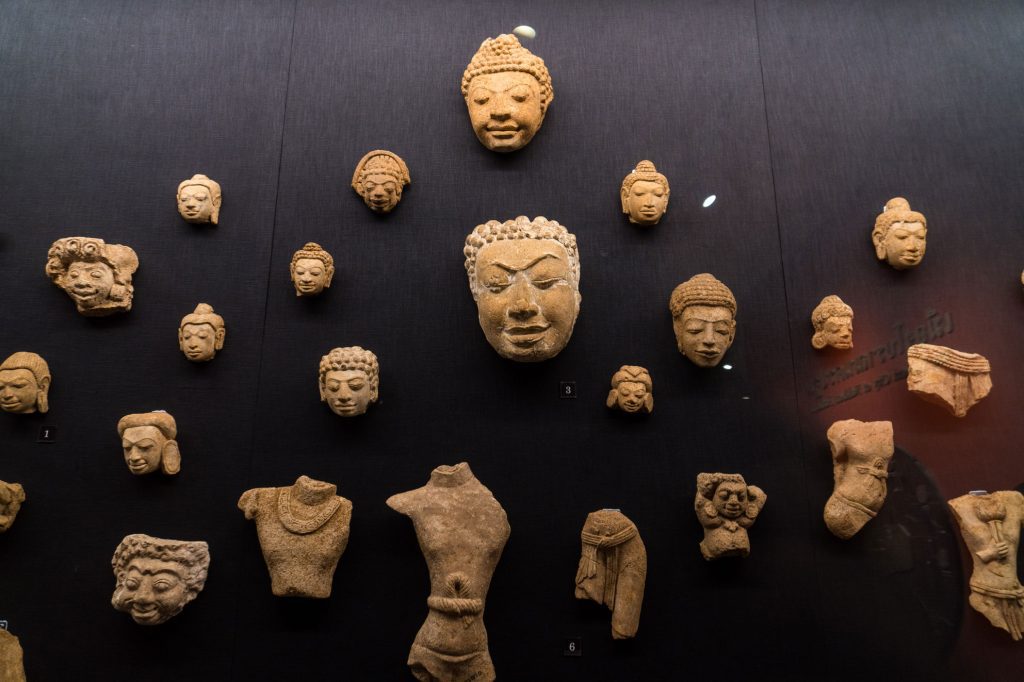
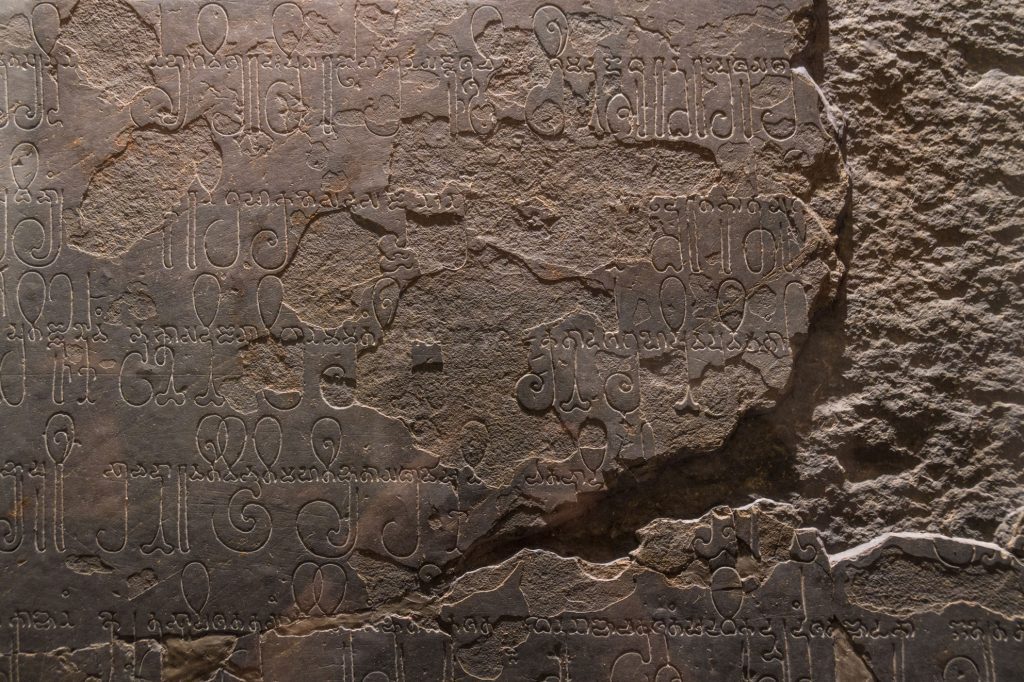
To understand the ancient city beyond the great chedi, continue to the Phra Pathom Chedi National Museum. Archaeological objects recovered around Nakhon Pathom—including sculpture, architectural fragments and religious artefacts—begin to reconstruct a landscape that has otherwise largely disappeared.
And that story does not end within the museum.
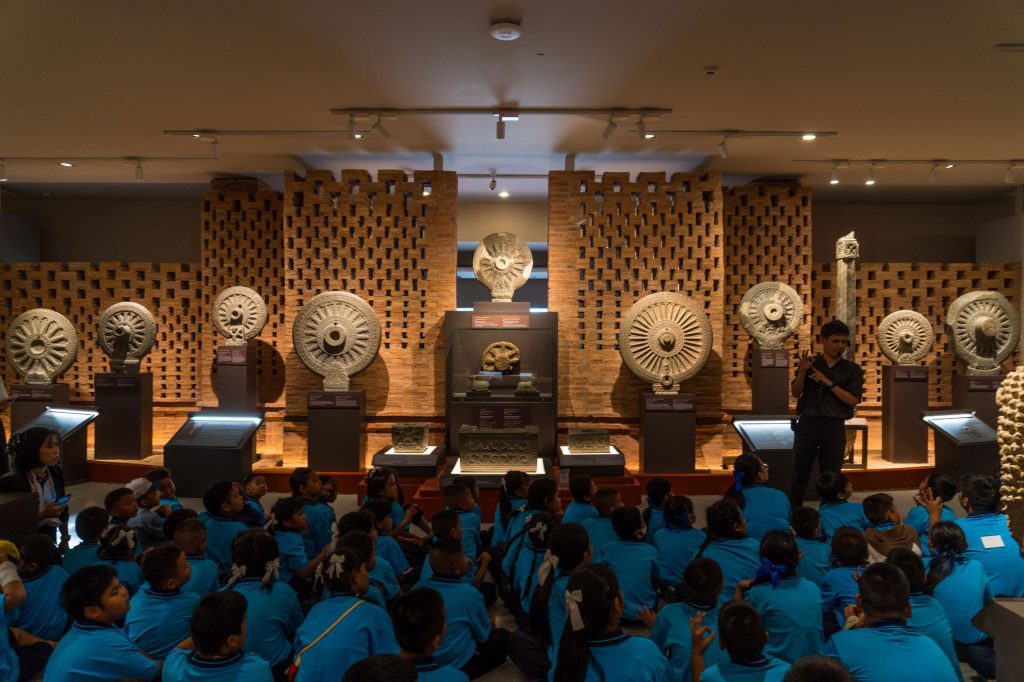
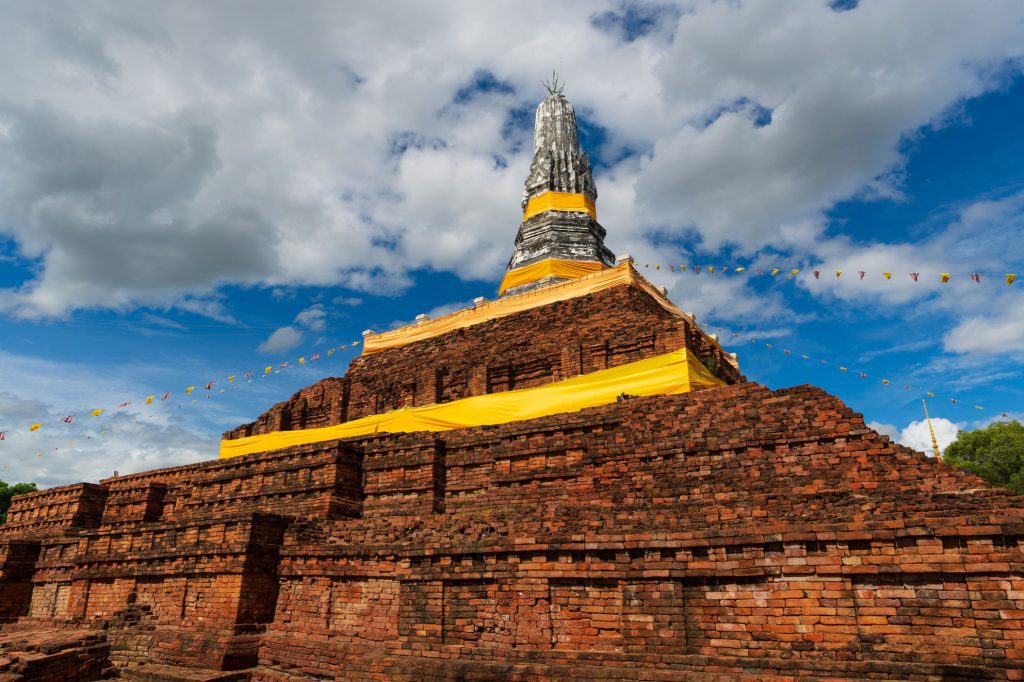
A short journey away stands Phra Prathon Chedi, another major monument associated with ancient Nakhon Pathom. Its massive lower structure preserves remains from the Dvaravati period, while a later prang-style structure was built above it. Rather than belonging to a single moment in history, the monument visibly records different periods one on top of another.
More remarkably, it remains within an active Buddhist temple. Ancient archaeology and contemporary religious life still occupy the same space.
Nearby, Chula Pathon Chedi presents the opposite experience. This is now an archaeological ruin, with only the substantial base of the ancient monument surviving. Excavations uncovered important Dvaravati stucco and terracotta decorations, some of which can now be seen in the museum.
Together, Phra Pathom Chedi, Phra Prathon Chedi and Chula Pathon Chedi make it easier to imagine something much larger than individual monuments: an ancient city whose traces still lie beneath modern Nakhon Pathom.
Along the Canal and Through the Fields
Leave the centre of Nakhon Pathom and another landscape begins to emerge.
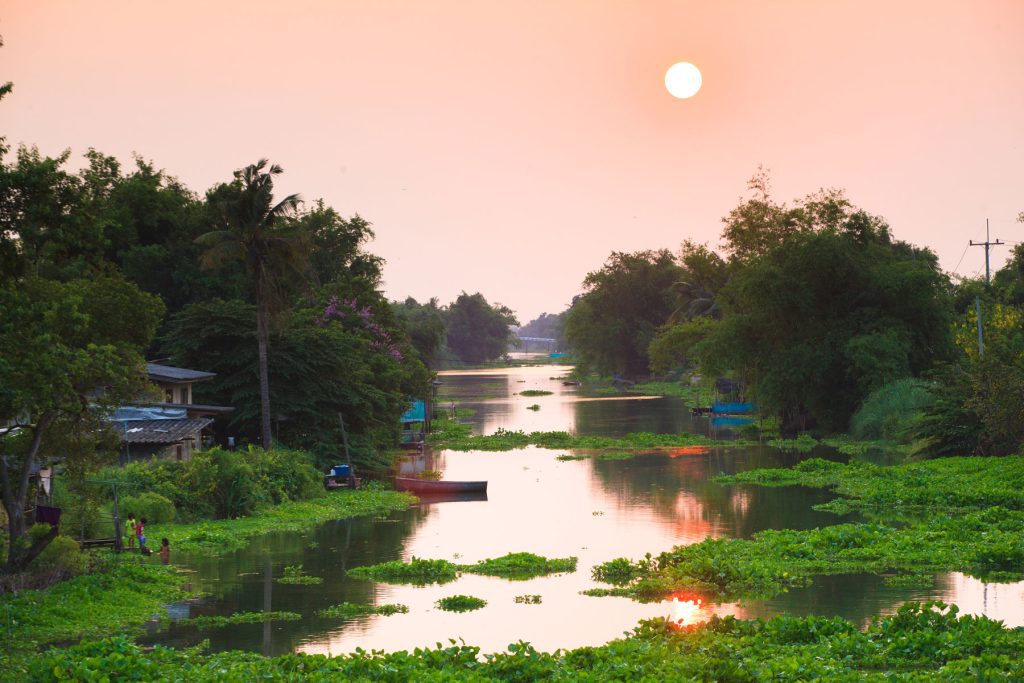
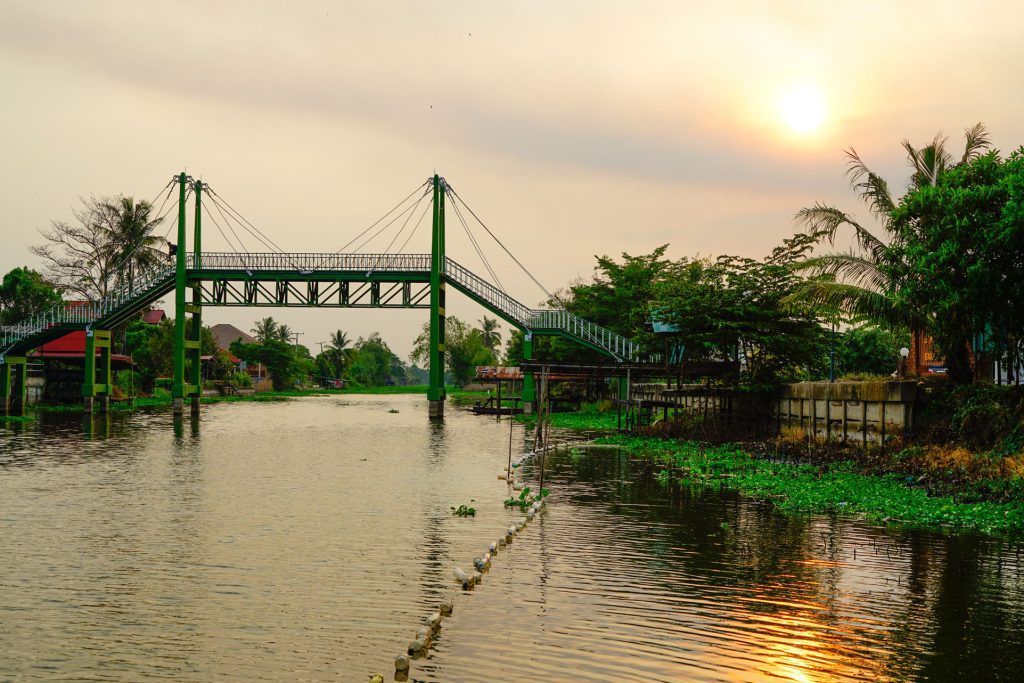
Khlong Maha Sawat, or the Maha Sawat Canal, was dug during the reign of King Rama IV, creating an important water route between the Bangkok side of the Chao Phraya basin and the Tha Chin River. It also formed part of the journey towards Phra Pathom Chedi.
Over time, settlements developed along the waterway and the fertile land around it became an important agricultural area. Today, around Baan Saladin, the canal offers one of the best ways to experience this rural landscape—not from a road, but from the water.
A community boat carries visitors along the main canal before slipping into smaller waterways that run between farms and homes. Rather than simply transporting you between attractions, the boat journey itself reveals how closely daily life here has been shaped by water.
One of the most distinctive stops is a local lotus farm.
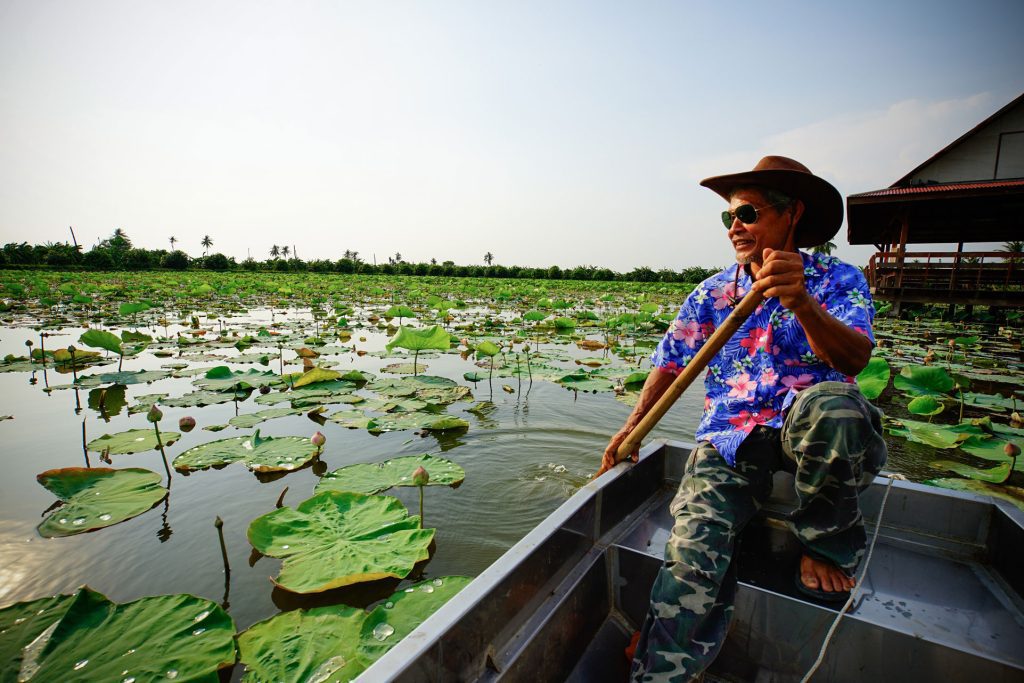
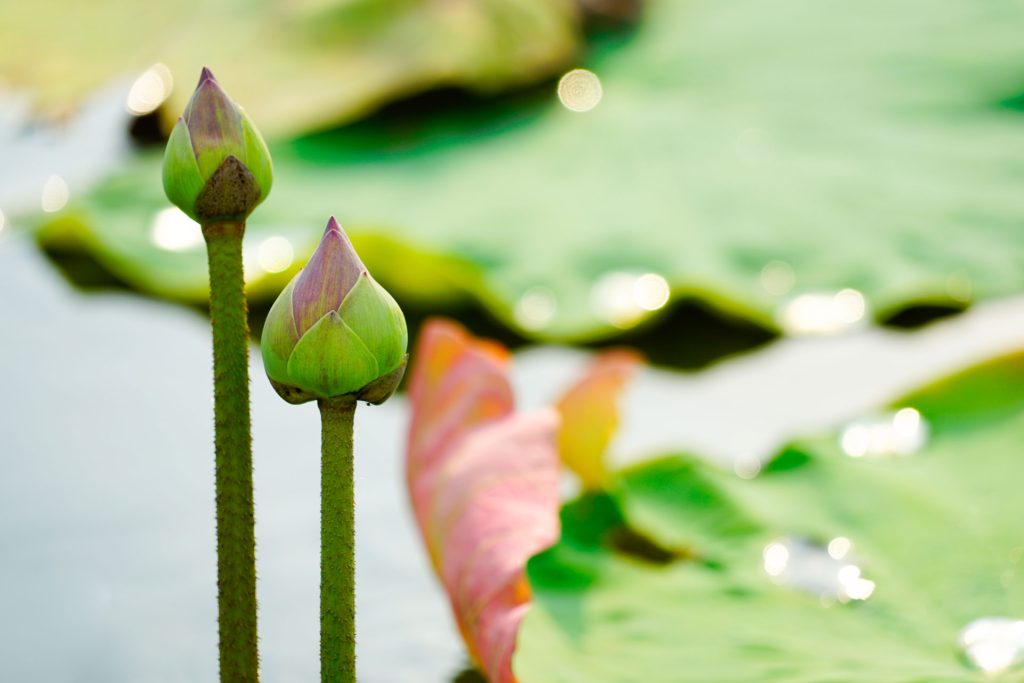
The boat leaves the larger canal and enters a narrow waterway before opening onto a broad pond filled with lotus plants. The flowers are grown as an agricultural crop, including for sale as offerings at Buddhist temples.
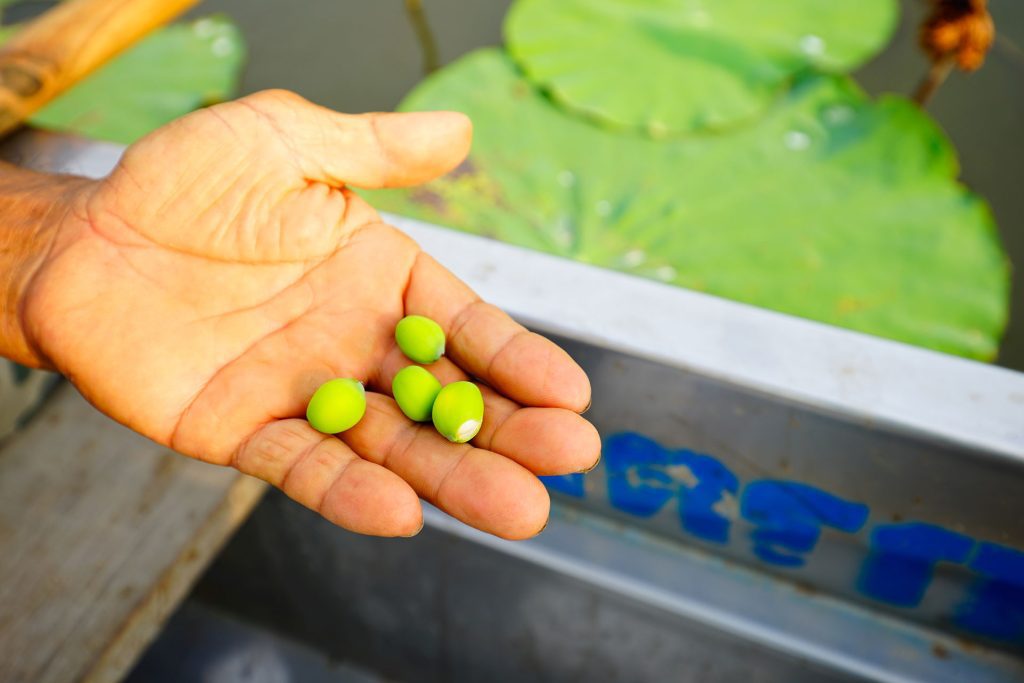
Visitors can take a smaller paddle boat through the pond, see how lotus flowers are harvested, and taste fresh lotus seeds straight from the pod. It turns an apparently simple flower into a glimpse of a complete local livelihood.
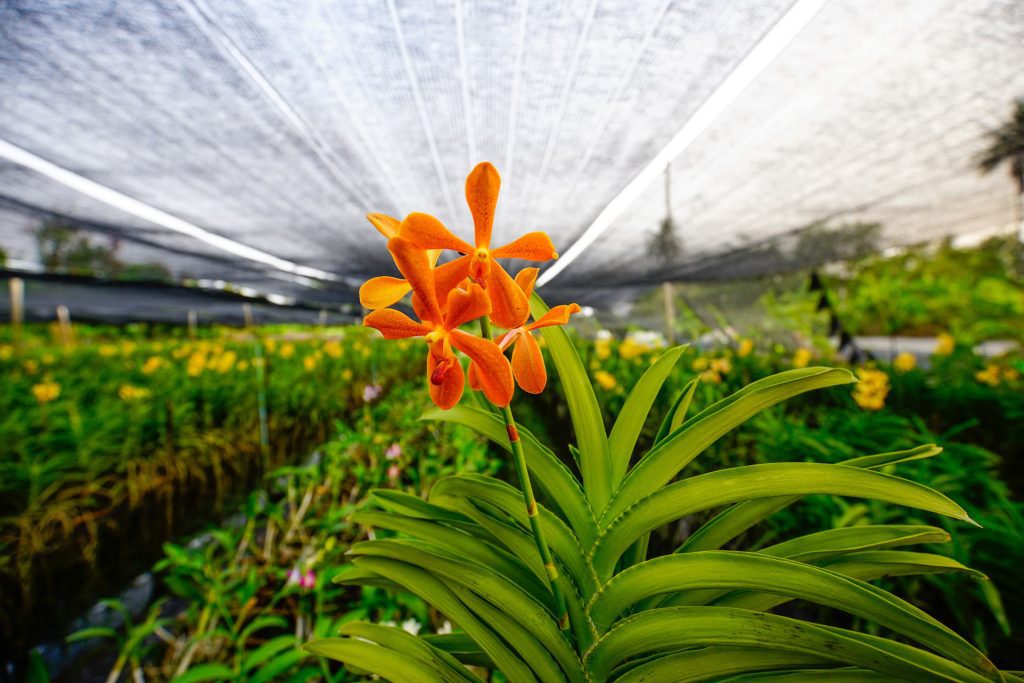
The route also passes orchid farms, another important form of cultivation in the area. Rows of orchids grow under carefully controlled shade, offering a chance to learn how these familiar tropical flowers are propagated and prepared for market—and, of course, to buy them directly from the growers.
Rice farming adds another dimension to the journey.
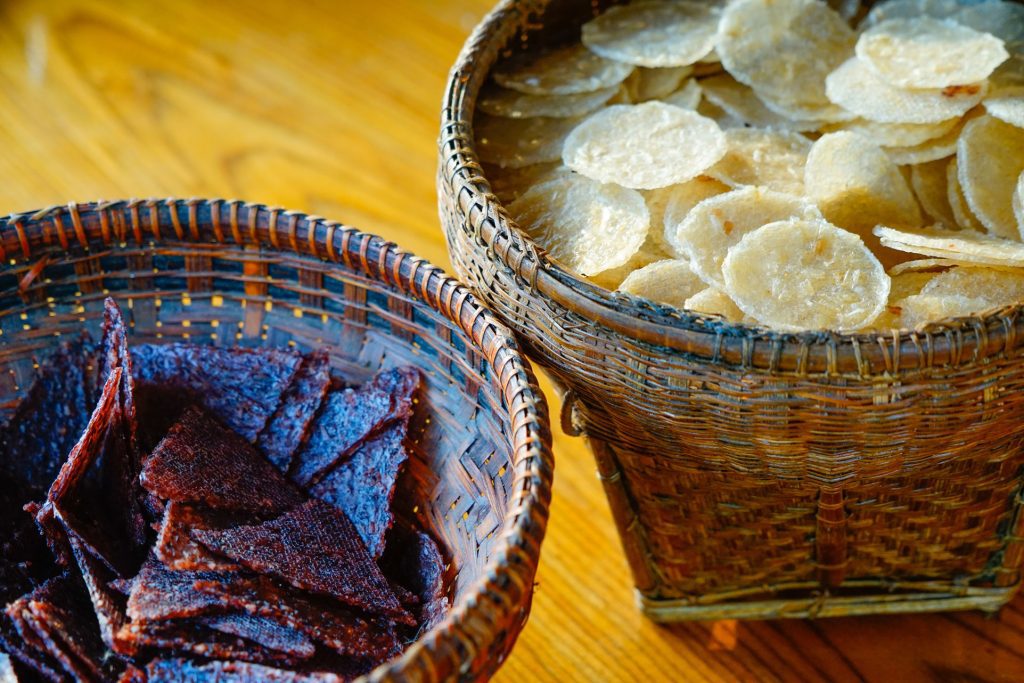
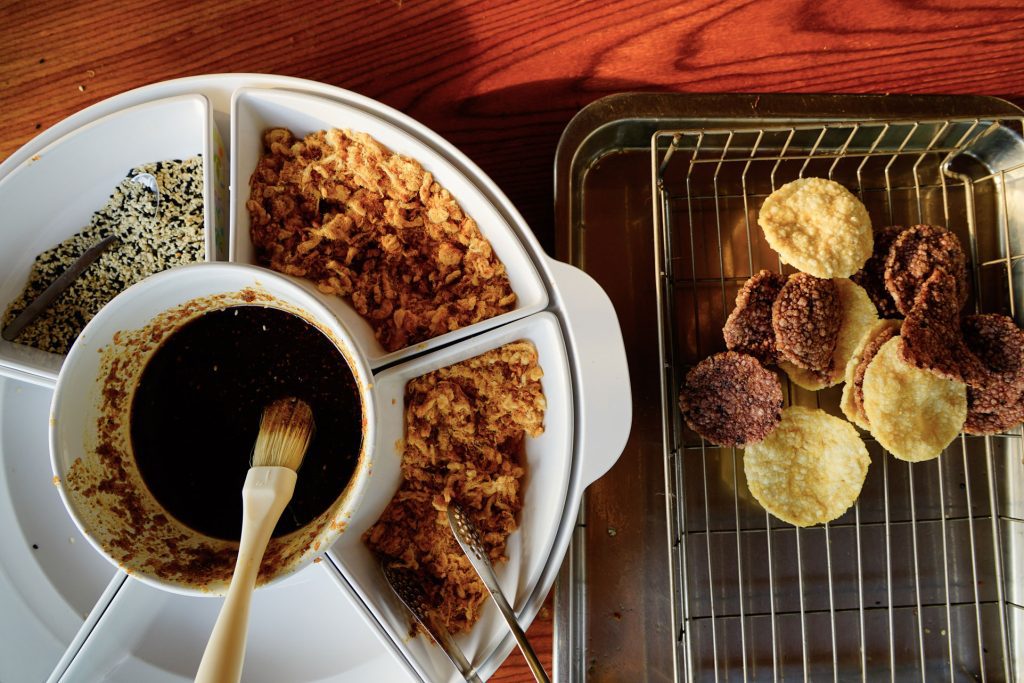
Local communities have developed agricultural products from the rice they grow, including khao tang, traditional crispy rice crackers. At community stops, visitors can see how the rice is transformed and try freshly fried khao tang served warm with its savoury accompaniment.
The experience is simple, but that is precisely its appeal. Instead of presenting agriculture as scenery viewed from a distance, Baan Saladin brings visitors into contact with the people, crops and waterways that form part of everyday rural life.
Organic Living, Hands On
Further south in Sam Phran, agriculture takes on another form at Patom Organic Village at Suan Sampran.
Here, the emphasis shifts from observing farms to understanding the journey of organic ingredients—from cultivation to food, crafts and everyday products.
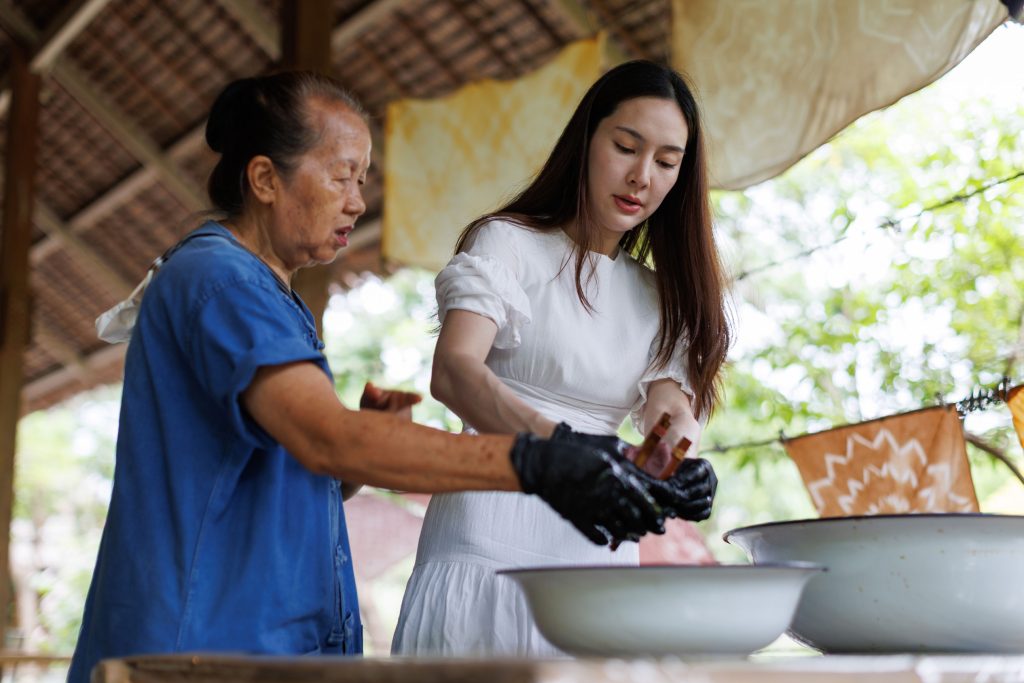
Patom works with organic farmers and uses workshops to translate agricultural knowledge and local wisdom into experiences visitors can actually take part in. The village currently offers a range of hands-on activities centred on natural materials and traditional skills.
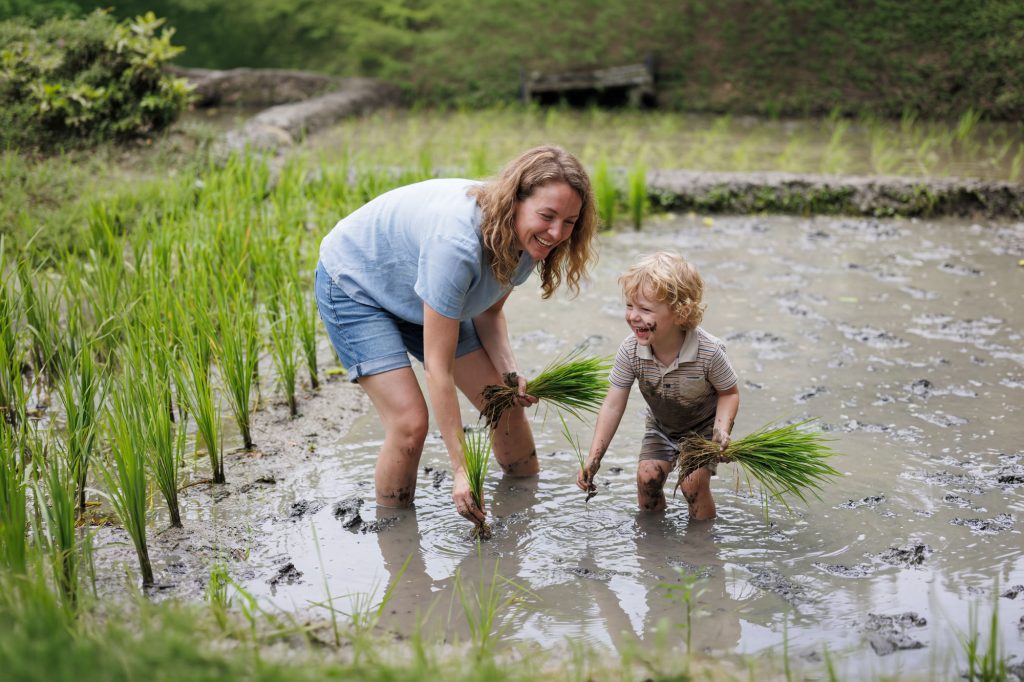
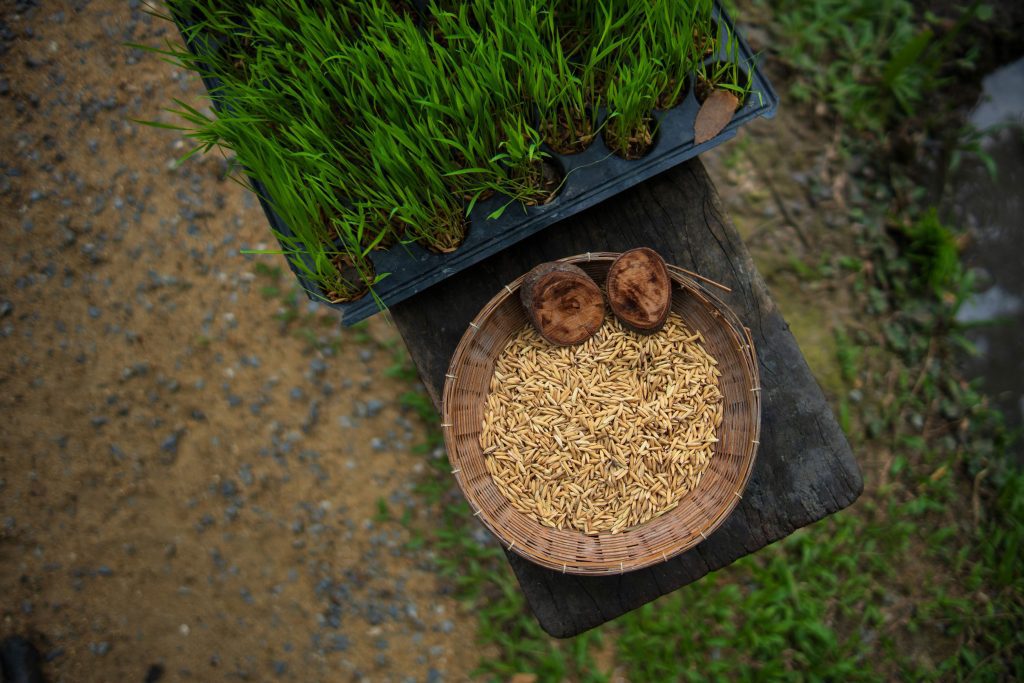
One of the most direct ways to begin is in a small demonstration rice field.
Stepping into the mud and trying some of the processes involved in rice cultivation changes the way we look at a grain normally encountered only on a plate. Even a short experience hints at the labour, water and knowledge behind one of Thailand’s most fundamental crops.
Nature also becomes a material for creativity.
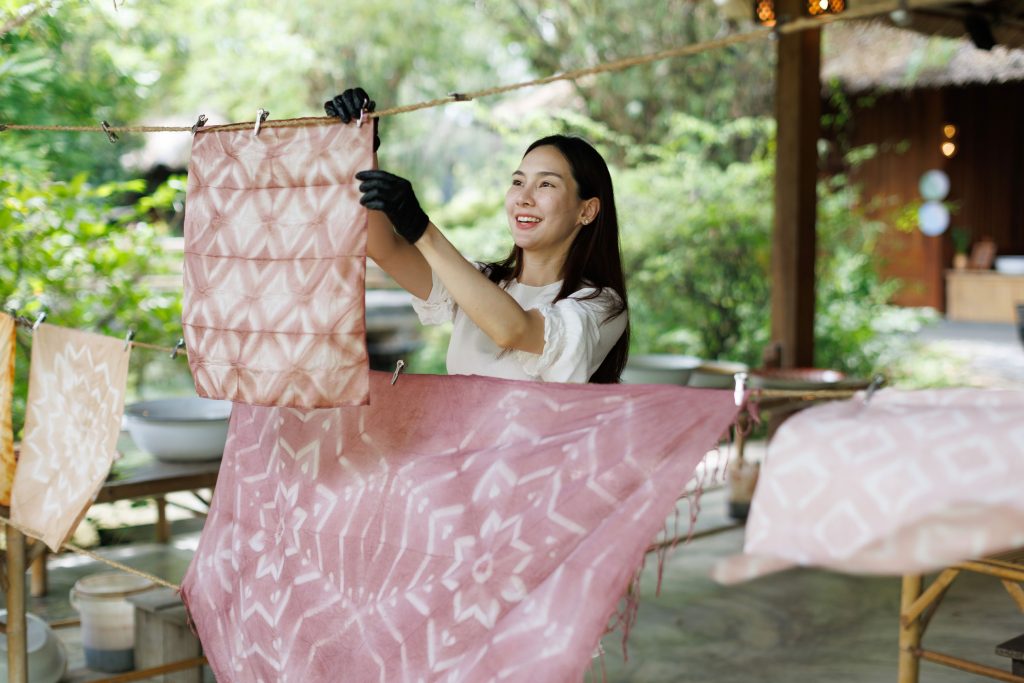
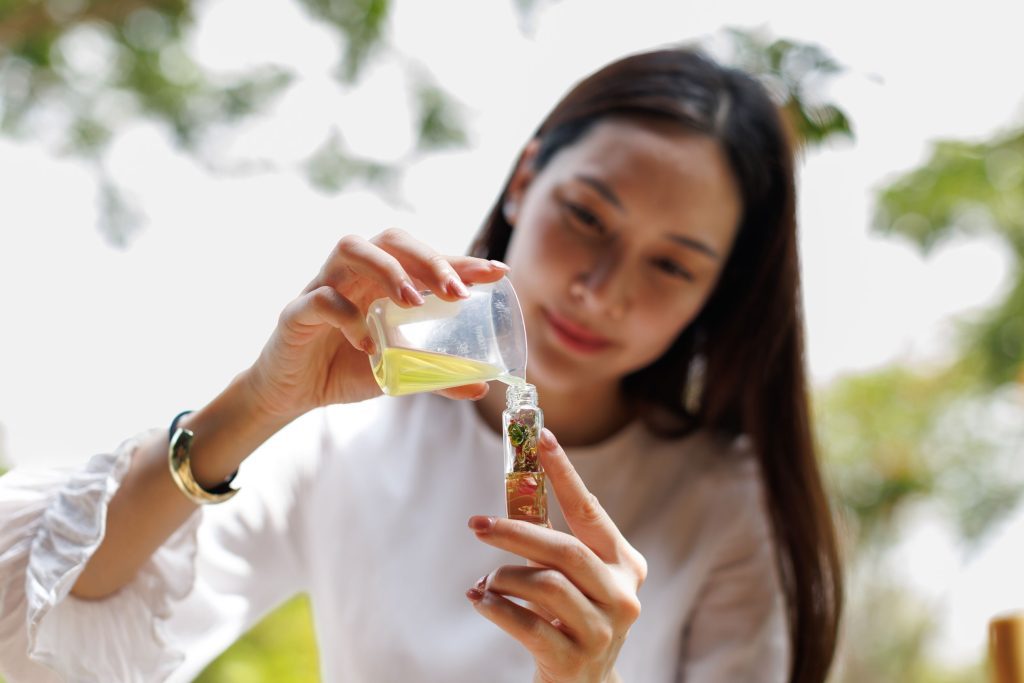
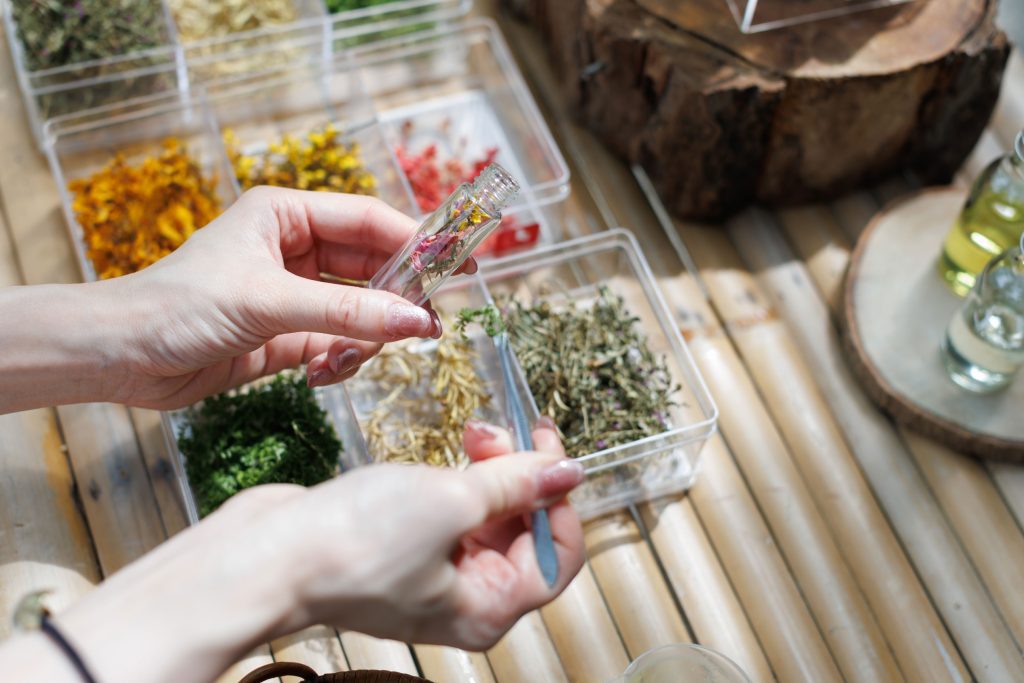
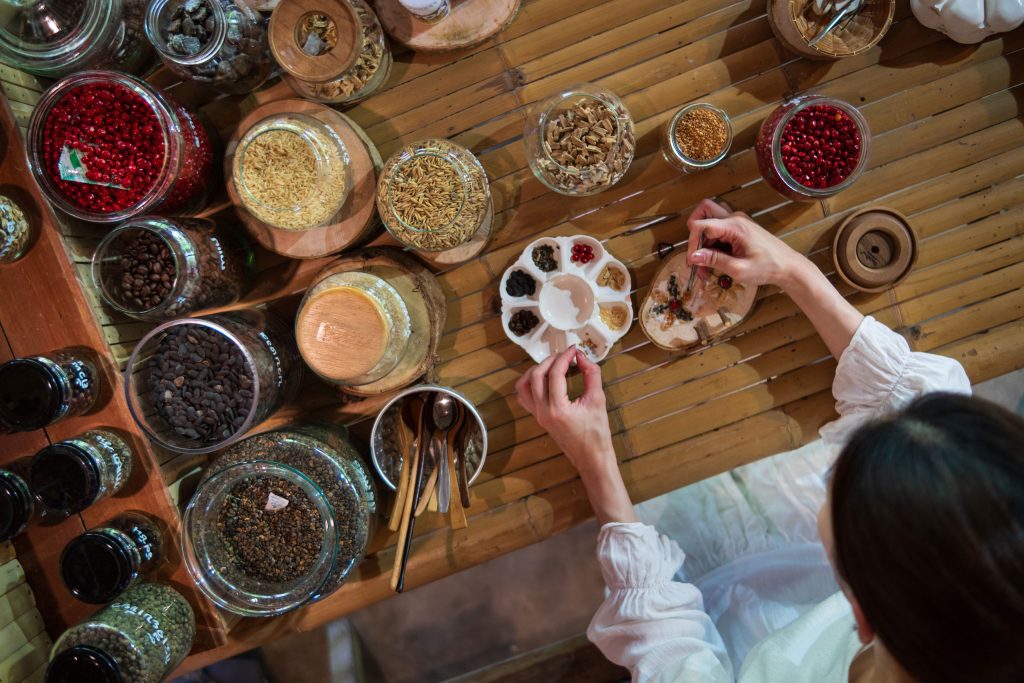
In the Creative Seeds workshop, seeds of different shapes, sizes and colours are arranged into small works of art. Other workshops use dried flowers and herbs to create aromatic oils, while Natural Tie-Dye introduces colours derived from botanical materials rather than synthetic dyes.
These activities are playful, but they also carry a simple idea: the same plants can move through many different roles—from something cultivated in a field to food, colour, fragrance or craft.
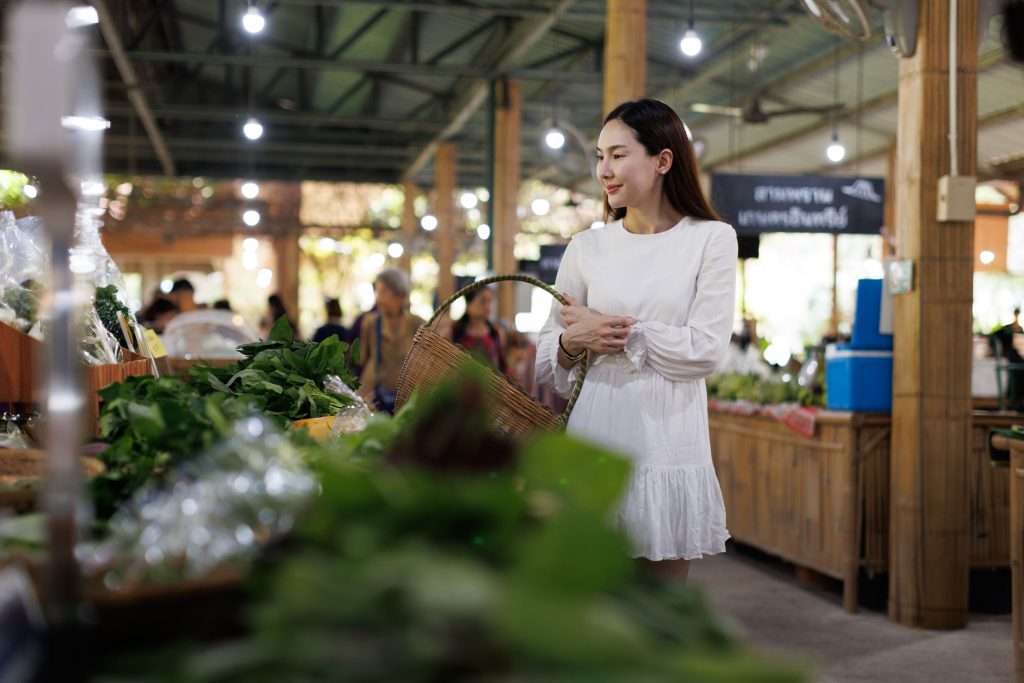
On weekends, the connection with the surrounding farming network becomes even clearer. Nearby, organic farmers sell vegetables, fruit and other produce directly to visitors at the farmers’ market, bringing growers and consumers into the same space.
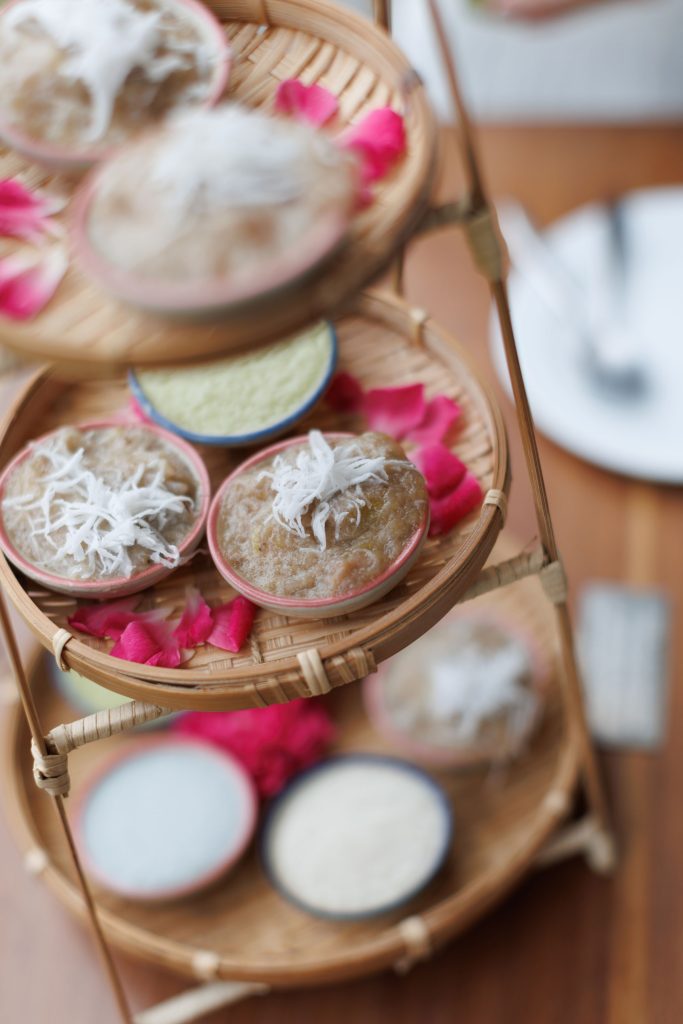
The experience can end at Patom Organic Café, overlooking green grounds where organic ingredients are grown and processed. The café extends the same philosophy into food and drinks, completing the journey from farm to table in the most relaxed way possible.
Nakhon Pathom is often introduced through its great chedi, and rightly so. But travel a little further and a broader picture appears.
The ancient monuments reveal a city shaped by more than a millennium of history. The Maha Sawat Canal shows how waterways created communities and agricultural landscapes. And places such as Patom demonstrate how those relationships with land and local knowledge continue to evolve.
From ancient brick and sacred monuments to lotus ponds, rice fields and organic workshops, Nakhon Pathom is not simply a place where the past survives.
It is a landscape where the past is still being lived—and continually reinterpreted.
Quick Info
- Bangkok to Nakhon Pathom: Take a Southern Line train to Nakhon Pathom Railway Station. Depending on the service, the journey takes roughly 45–60 minutes. From the station, Phra Pathom Chedi is within walking distance. Phra Ruang Rojanarit, Luang Pho Khao and the Phra Pathom Chedi National Museum are all located within the same temple complex.
- Evening food stop: Every evening, the area around Phra Pathom Chedi comes alive with the Phra Pathom Chedi Night Market, a colourful place to try local food and snacks.
- Phra Prathon & Chula Pathon Chedi: From Phra Pathom Chedi, the easiest option is to hire a taxi or local car. Allow around 20 minutes to reach the archaeological sites.
- Baan Saladin & Maha Sawat Canal: For the community agrotourism route, local trains can take you to Wat Suwan Railway Station, which is conveniently located beside Wat Suwannaram and the boat-tour area. Another option is to travel to Salaya and continue by taxi or local transport to the community.
Google Map
https://maps.app.goo.gl/CmCmxkrfvFHqdCjBA
Facebook Page
https://www.facebook.com/BAANSALADIN - Patom Organic Village: From the Salaya area, continue by taxi or private car to Patom Organic Village in Sam Phran, approximately 20 km away.
(See more : www.patom.com)
Share


