
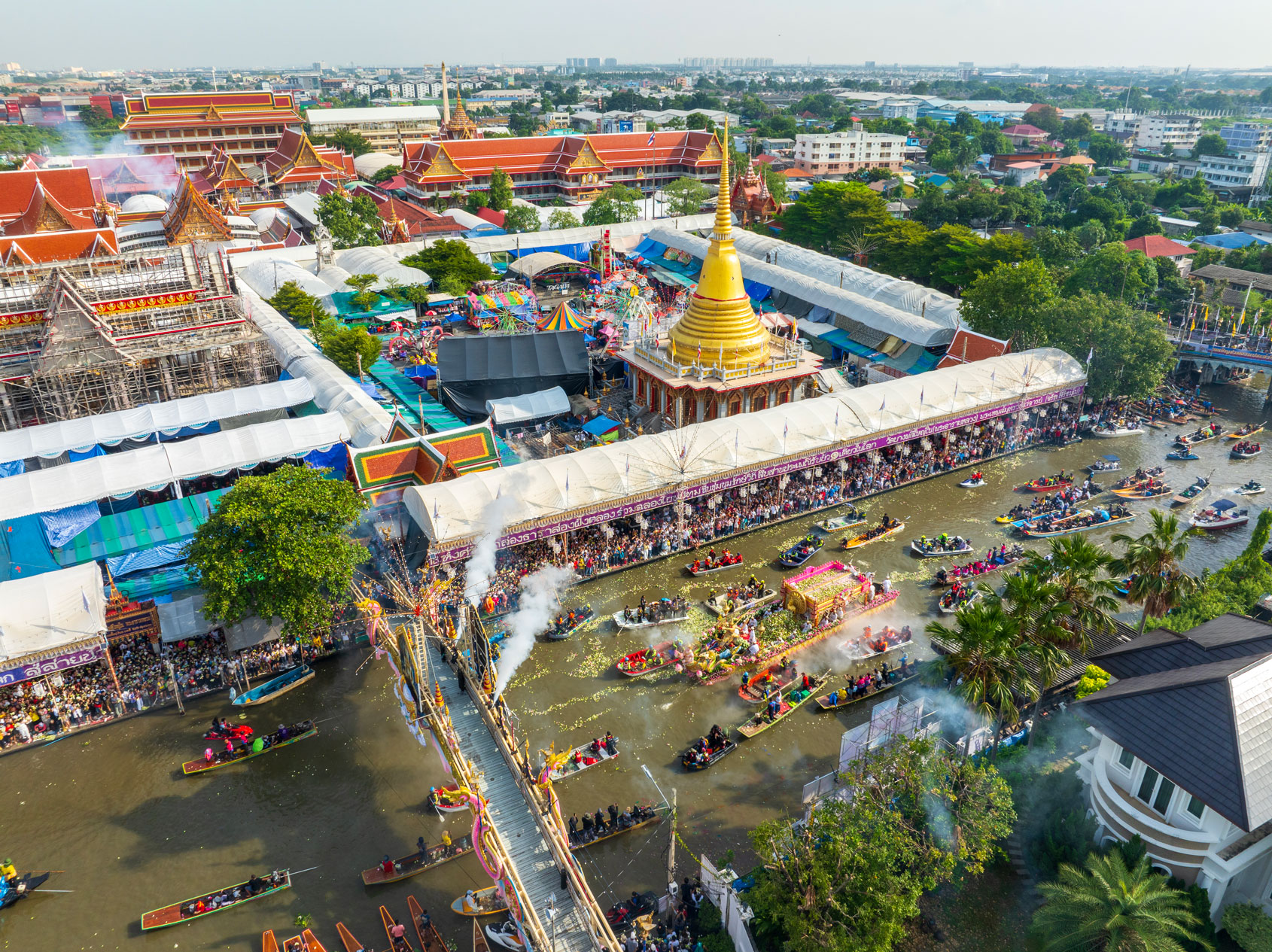
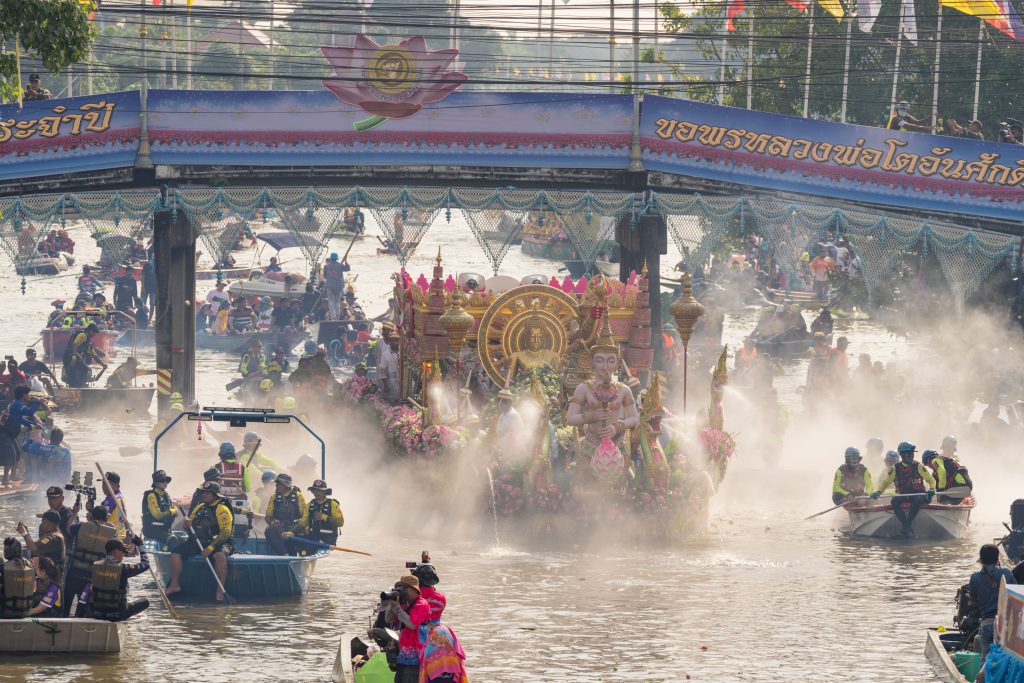
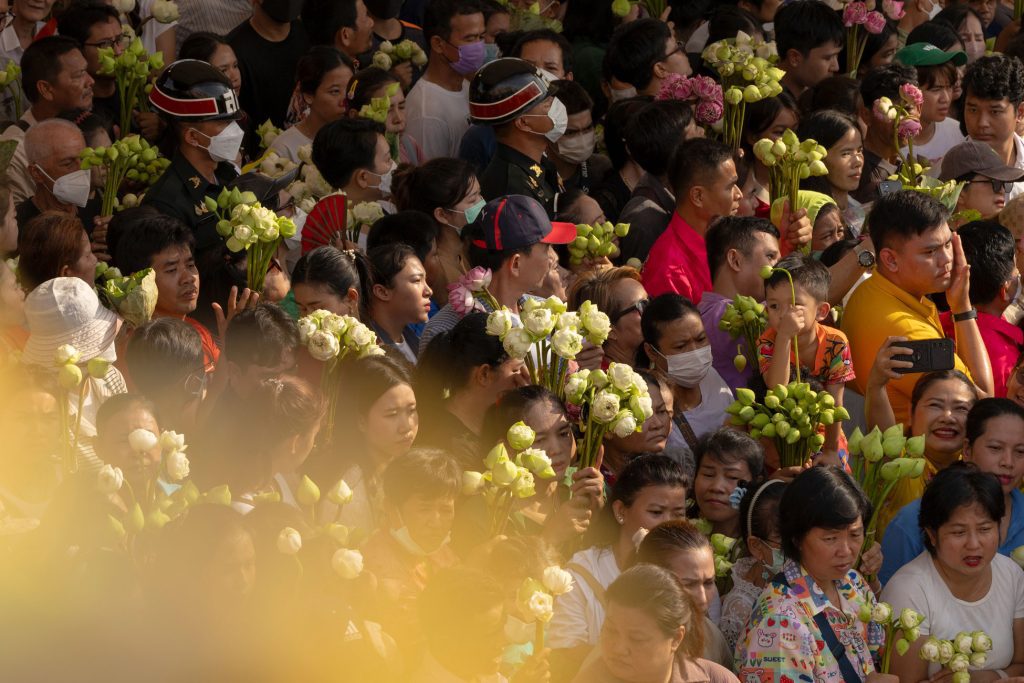
Once a year, the quiet waters of Khlong Samrong in Samut Prakan become the setting for an extraordinary expression of faith. Thousands of people gather along the canal, lotus flowers in hand, waiting for a boat carrying an image of Luang Pho To, the highly revered Buddha image of Wat Bang Phli Yai Nai.
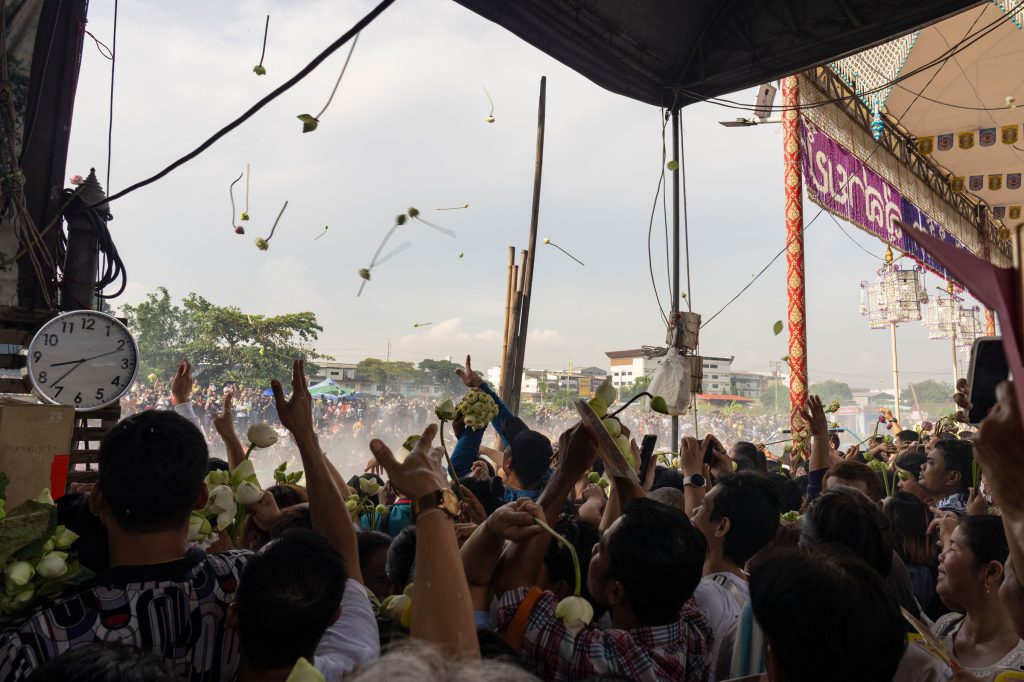
Then, as the boat approaches, the air suddenly fills with lotus flowers.
This is Rap Bua, an old tradition of Bang Phli held around the end of Buddhist Lent. Its name means “receiving lotus flowers”, although many people also know it as Yon Bua, or “throwing lotus flowers”. The two names reveal something about how the tradition itself has evolved.
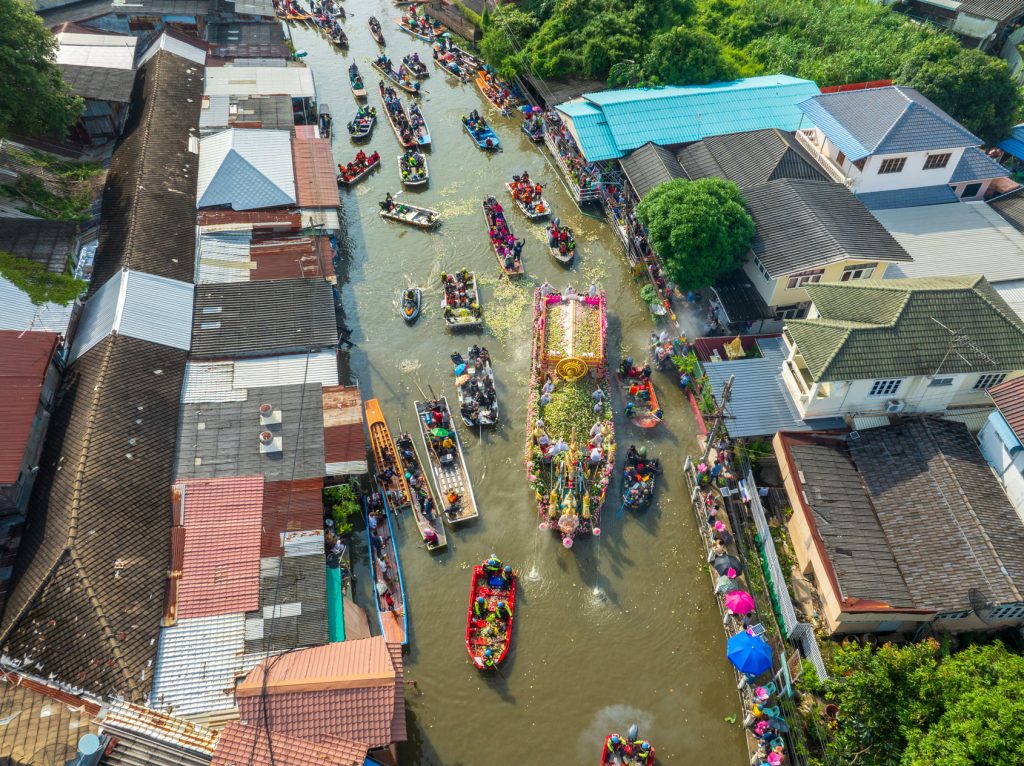
Long ago, the Bang Phli area was known for the lotus flowers that grew abundantly in its wetlands and waterways. Around the end of Buddhist Lent, people from neighbouring communities—including Mon communities associated with Phra Pradaeng—would travel by boat to Bang Phli to collect lotus flowers to take home for religious offerings. Rather than leave their visitors to gather the flowers themselves, local people began picking and preparing lotuses for them.
At first, the flowers were simply passed from hand to hand. But along a canal, boats could not always come close enough to the bank. When the distance was too great, people began gently throwing the flowers across the water to those waiting in the boats. What began as a practical gesture between neighbouring communities gradually became part of the local tradition.
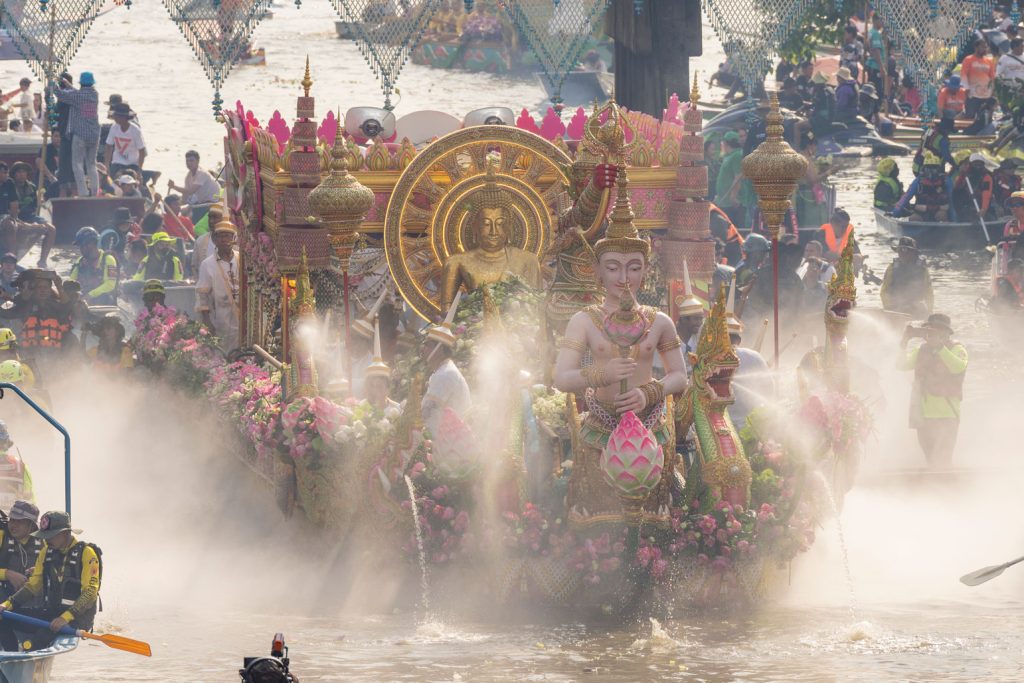
Over time, this custom became closely intertwined with devotion to Luang Pho To, the sacred Buddha image enshrined at Wat Bang Phli Yai Nai. A replica of the image is carried in procession along Khlong Samrong, allowing communities along the waterway to pay their respects. Instead of merely passing lotus flowers between people, worshippers began throwing them towards the boat carrying Luang Pho To as an offering.
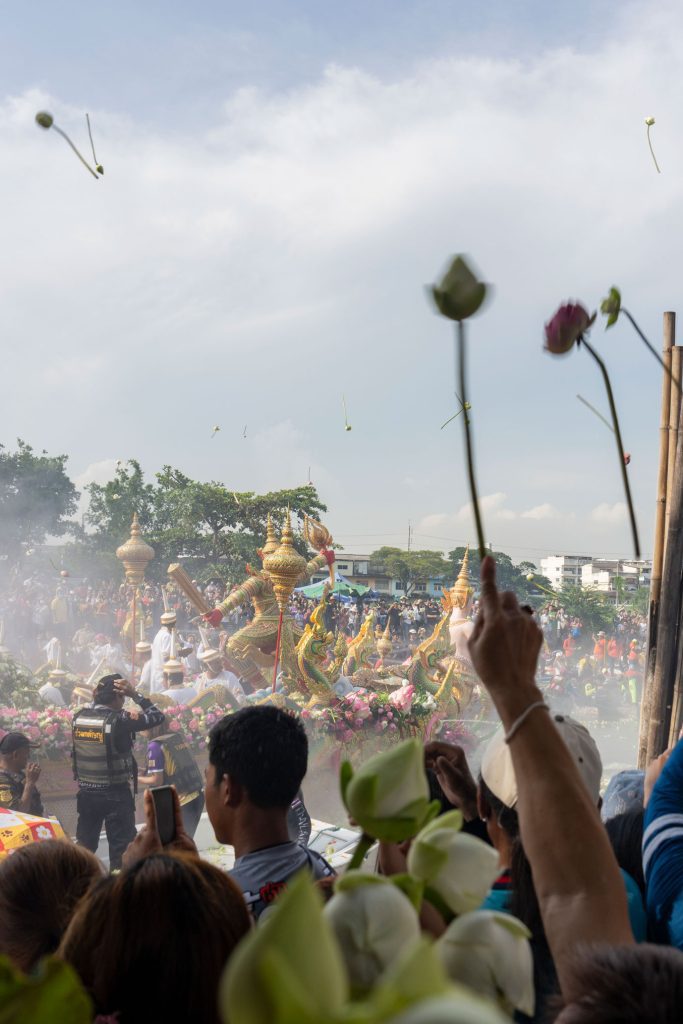
This explains a sight that can otherwise seem surprising. Throwing something towards a Buddha image might appear irreverent to someone unfamiliar with the tradition. Here, however, the gesture means exactly the opposite. Each lotus is an offering—often accompanied by a prayer or a wish—and people try to send their flower onto the ceremonial boat as it passes.
For a few moments, the scale of that devotion becomes visible. Hundreds, then thousands of lotus flowers fly from both banks of the canal. Some reach the boat, while others fall into the water, until the canal itself seems to carry the offerings downstream.
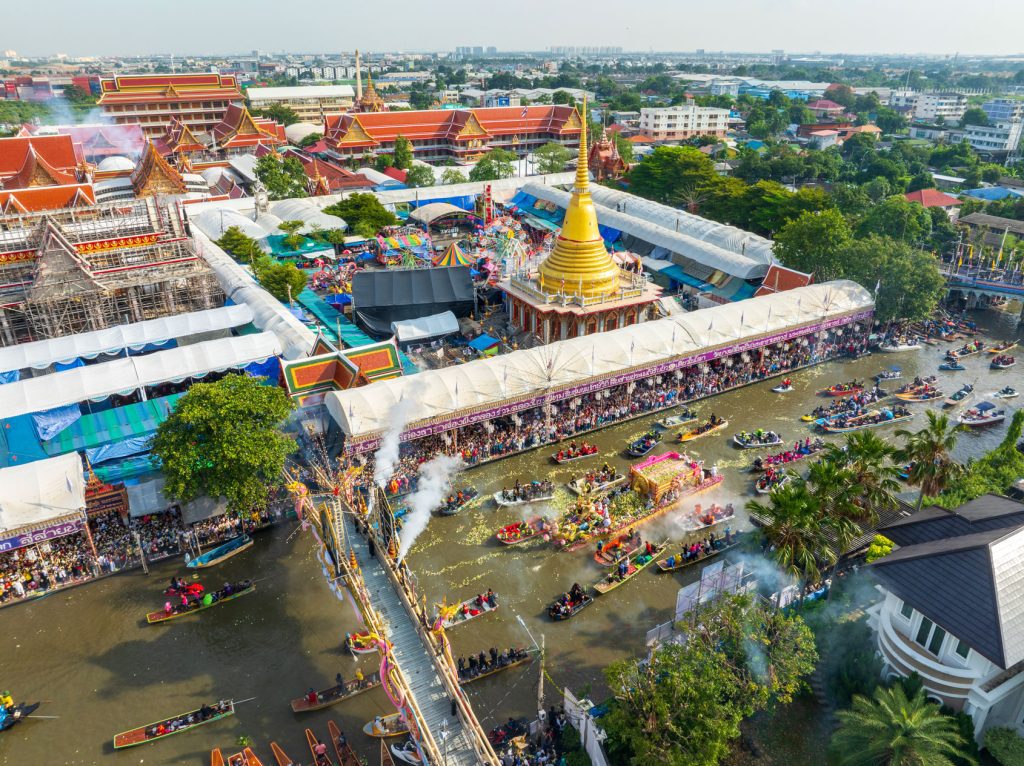
Today, Rap Bua is more elaborate than the simple exchanges of flowers from which it grew. Ceremonial boats are beautifully decorated, the procession has become a major community event, and large crowds arrive from beyond Bang Phli. Yet beneath the spectacle remains something much older: a relationship between people, water, Buddhism and a flower that once grew abundantly in the landscape around them.
In 2026, the Rap Bua Festival takes place from 19–27 October around Wat Bang Phli Yai Nai and Khlong Samrong, Bang Phli, Samut Prakan. The water procession of the replica of Luang Pho To takes place on 24 October, while the main Rap Bua lotus-offering ceremony begins on the morning of 25 October, with the main ceremony scheduled from around 07:00.
Share


