
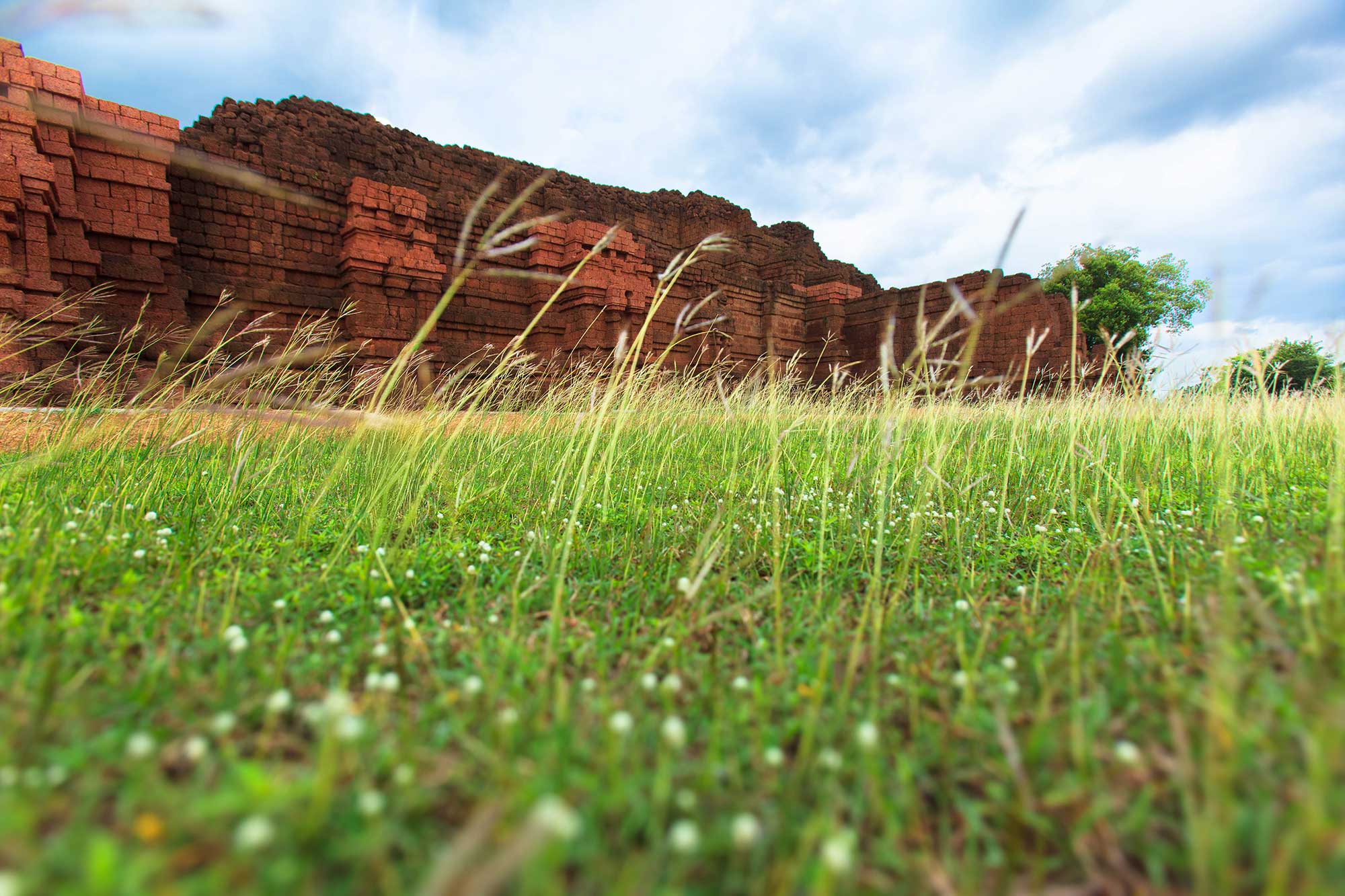
Long before Sukhothai and Ayutthaya rose to prominence, an extraordinary city flourished in what is now Phetchabun Province.
Si Thep stood at a cultural crossroads between central and northeastern Thailand. Over many centuries, ideas arriving from India and other parts of Southeast Asia were absorbed and transformed here, leaving traces of Theravada and Mahayana Buddhism alongside Hindu traditions. From this exchange emerged distinctive architecture and sculpture that developed into what is now recognised as the “Si Thep School of Art.”
In 2023, UNESCO inscribed The Ancient Town of Si Thep and its Associated Dvaravati Monuments on the World Heritage List. Its Outstanding Universal Value lies not in a single monument, but in an exceptional cultural landscape: the unusual twin-town plan surrounded by moats, the monumental Dvaravati stupa of Khao Klang Nok, and the sacred cave sanctuary of Khao Thamorrat. Together, they offer an extraordinary window into the Dvaravati civilisation that flourished between the 6th and 10th centuries.
Today, exploring Si Thep feels like walking through different layers of Thailand’s distant past — including a city that disappeared for centuries before its story was gradually rediscovered.
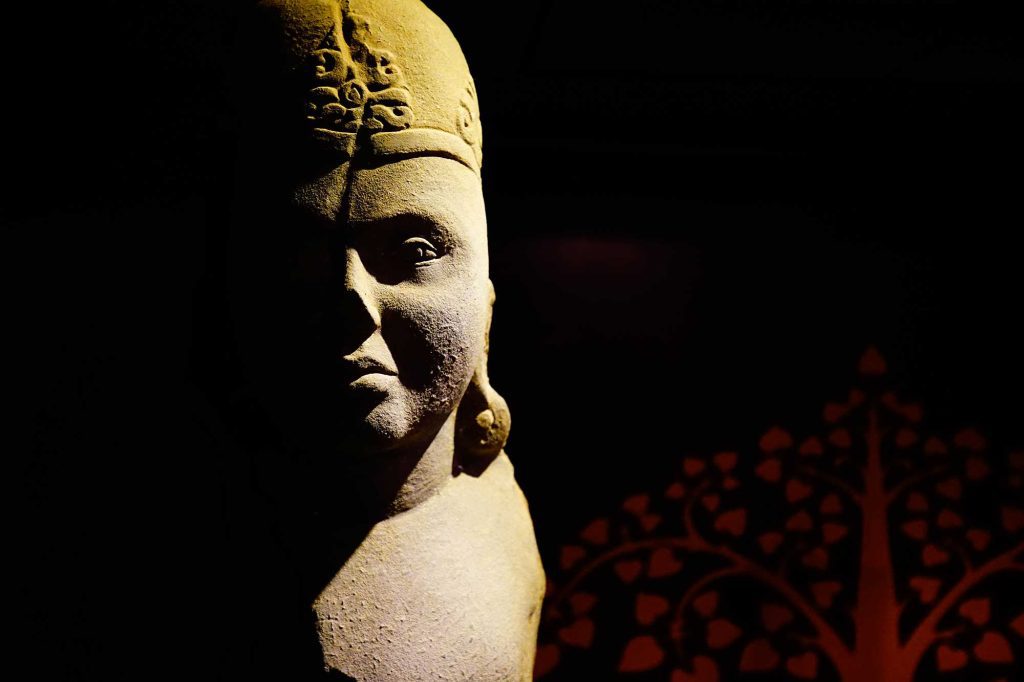
The Mystery of a Lost City
For centuries, the great ancient city had been abandoned and overgrown. Local people knew the ruins by the name “Mueang Aphai Sali”, but its original identity had been forgotten.
The mystery caught the attention of Prince Damrong Rajanubhab, often regarded as the father of Thai history and archaeology. While studying old administrative records, he encountered the name “Si Thep”. Another remarkable clue appeared in a samut dam, or traditional black manuscript, outlining the routes used to send news of the death of King Rama II to provincial towns. One route listed Saraburi, Chai Badan, Si Thep and Phetchabun in sequence.
Prince Damrong reasoned that the forgotten Si Thep must therefore have stood somewhere along the Pa Sak River basin. During an official journey to Phetchabun in 1904, his investigation eventually led him to this enormous ruined settlement. He proposed that the ancient city should be known as Si Thep — the name by which it is still known today.
At the Heart of the Ancient City
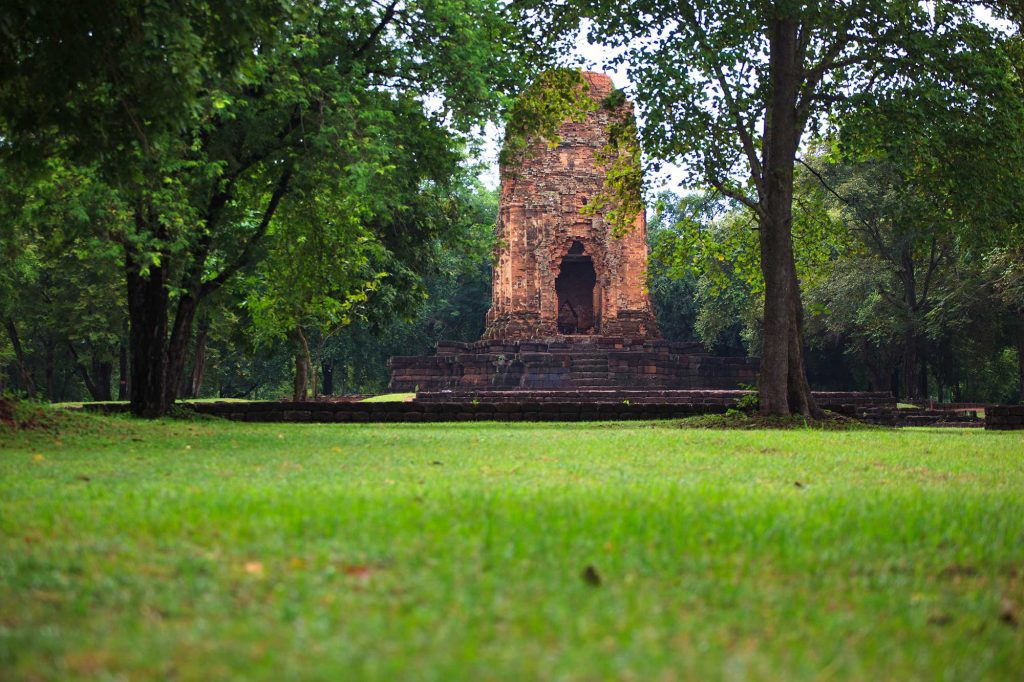
One of Si Thep’s most striking landmarks is Prang Si Thep, standing within the Inner Town.
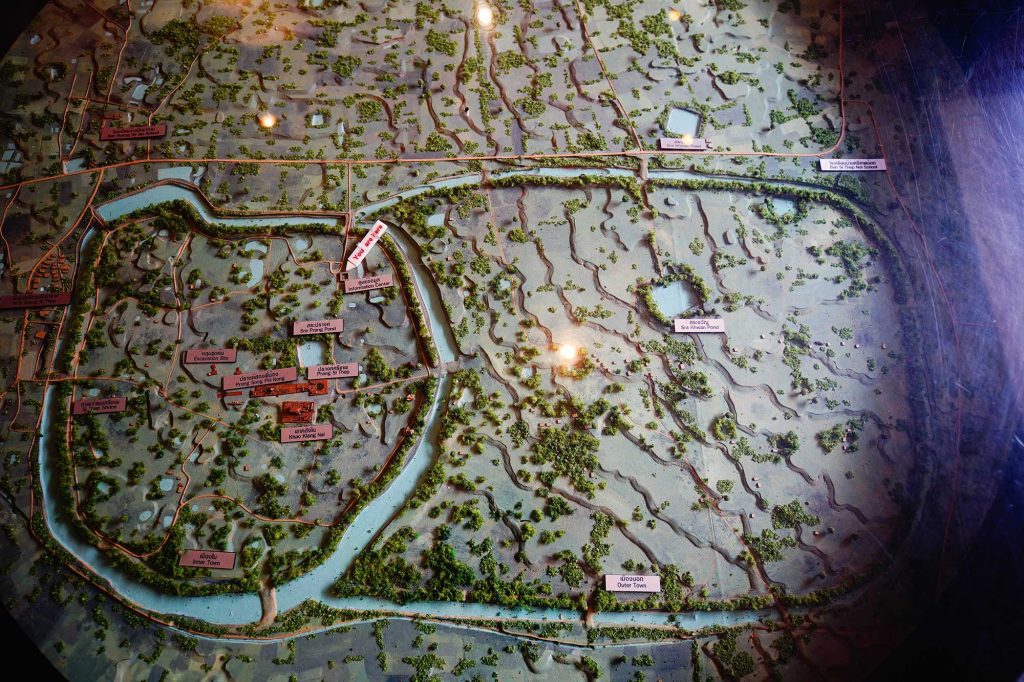
But before looking at the monument itself, look at the landscape around it. Si Thep was not a small settlement. Its ancient urban area covered around 4.7 square kilometres and developed into an unusual twin-town plan: the almost circular Inner Town and a later rectangular Outer Town extending eastwards, both defined by moats and earthworks. Numerous ponds and reservoirs were also integrated into the urban landscape.
Prang Si Thep belongs to a later chapter of this long history. The brick sanctuary, standing on a massive laterite base, was probably constructed around the 11th–12th centuries as a Hindu sanctuary associated with Shiva. Centuries later, during the reign of the Khmer king Jayavarman VII, attempts were made to adapt it for Mahayana Buddhist worship — evidence of how beliefs and political influences continued to reshape the city.
Prang Song Phi Nong — Changing Faiths, Changing Times
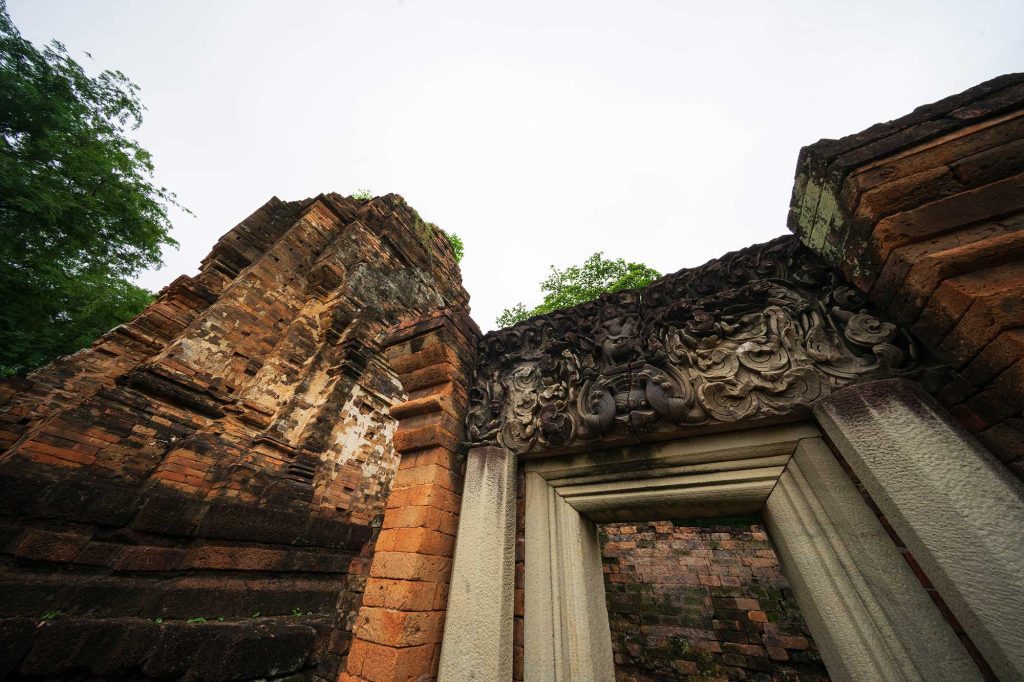
Nearby stand two brick sanctuaries on the same base, one larger and one smaller, giving the monument its Thai name Prang Song Phi Nong, or “the two sibling prangs”.
Archaeological finds reveal much more than its architecture. A beautifully carved lintel depicting Uma-Maheshvara — Shiva with his consort Uma — together with a Shiva linga, yoni and a sculpture of Nandi, indicate that the complex was originally a Hindu sanctuary dedicated to Shiva, probably around the 12th century.
Later, during the reign of Jayavarman VII in the late 12th and early 13th centuries, the sanctuary appears to have been adapted for Mahayana Buddhism. Even more intriguingly, archaeologists discovered an older sculpture of Surya, the Hindu sun god, dating several centuries earlier than the visible sanctuary.
Rather than representing occupation into the Ayutthaya period, Prang Song Phi Nong reveals something perhaps more fascinating: Si Thep was repeatedly transformed. New beliefs and new monuments appeared within a city already carrying the physical memories of earlier cultures.
Khao Klang Nai — Faces from the Dvaravati World
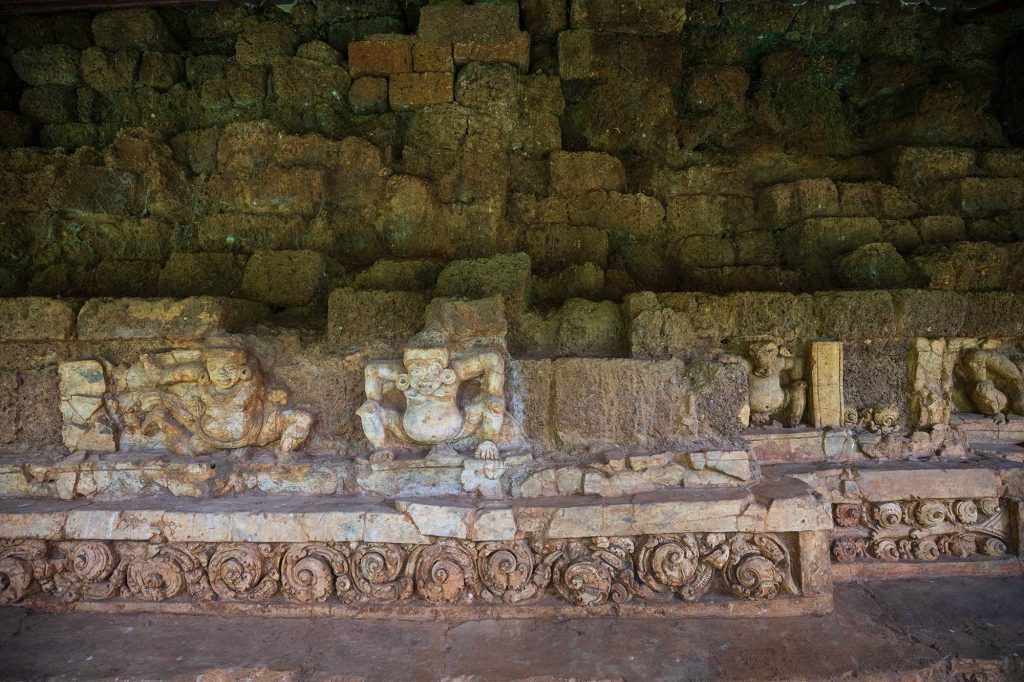
Among the monuments inside the city, Khao Klang Nai takes us further back into the Dvaravati period.
The massive laterite Buddhist monument measures approximately 28 by 44 metres at its base. Archaeological evidence suggests that it was first associated with Theravada Buddhism during the early development of Si Thep, before being modified in connection with Mahayana Buddhism several centuries later.
Look closely at its surviving base and you will find one of its most memorable details: lively stucco figures that appear to support the enormous monument above them.
These dwarf-like figures are far from identical. Some have human faces, while others incorporate features of animals such as elephants, lions and monkeys. Their expressions can appear playful, smiling or even strained beneath the imagined weight they carry. Beyond decoration, such figures were associated with protection, prosperity and abundance.
They also reveal something essential about Si Thep: ideas may have travelled here from distant cultures, but local craftsmen transformed them into something unmistakably their own.
Before There Was a City
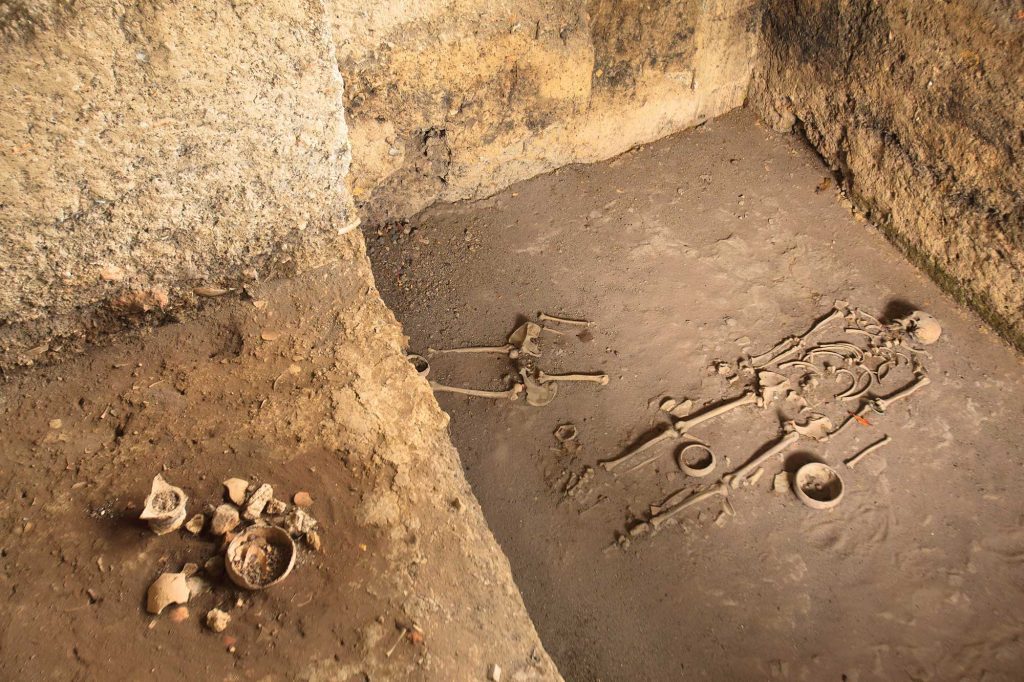
The story of Si Thep begins long before its temples.
An archaeological excavation inside the Inner Town in 1988 uncovered five human burials around four metres below the modern surface. Among the objects buried with them were pottery, bronze bracelets, iron implements and beads, including carnelian. The burials have been dated to approximately 2,000 years ago — evidence of a community living here before Si Thep developed into a major Dvaravati urban centre.
At a higher archaeological level, researchers made another unusual discovery: the almost complete skeleton of an elephant, approximately 3.75 metres long, accompanied by pottery and a grinding stone.
Its precise story remains uncertain, so it is better not to imagine a specific explanation. What archaeology does tell us is more interesting: beneath the monuments visible today lie different layers of human activity spanning centuries. Si Thep was not created at one moment in history. It grew, changed and was rebuilt over generations.
Khao Klang Nok — The Monument Beneath a Hill
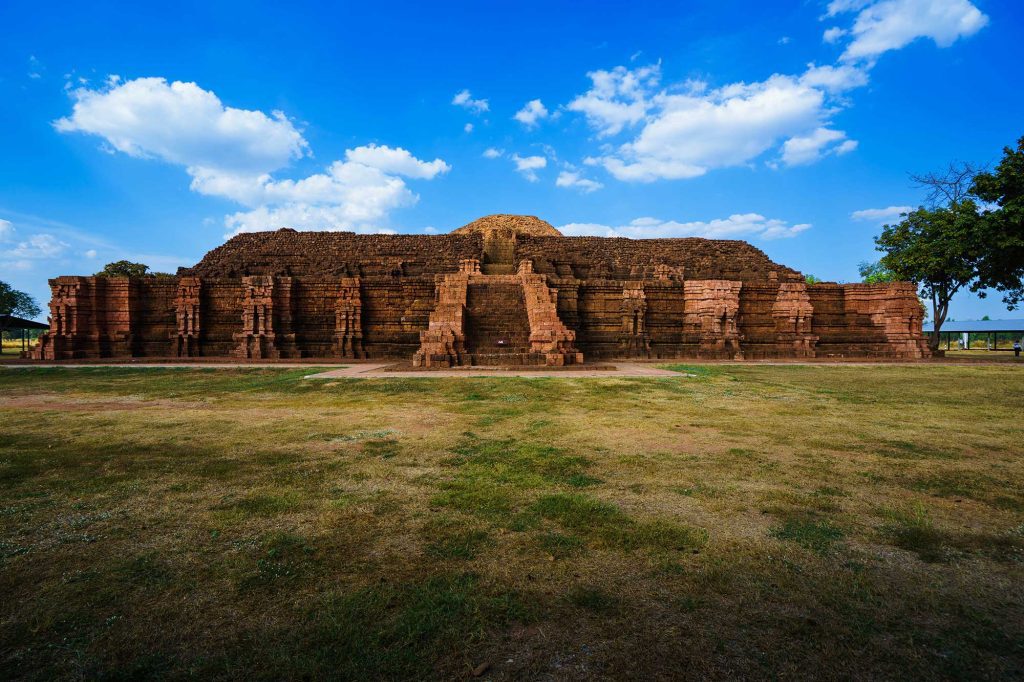
About two kilometres north of the ancient town stands perhaps the most astonishing monument of Si Thep: Khao Klang Nok.
For generations, it looked much like a great mound covered by earth and vegetation. Archaeological excavation and conservation work beginning in 2008 gradually revealed what had been hidden beneath: an enormous Dvaravati Buddhist monument.
Its scale is extraordinary. The laterite base measures roughly 64 metres on each side and the surviving structure rises around 20 metres. Stairways align with its four sides, while miniature architectural forms decorate its massive stepped base. A brick stupa once crowned the centre, although its upper portion has long since collapsed.
What makes Khao Klang Nok truly important, however, is not simply its size.
Most surviving Dvaravati stupas elsewhere have lost so much of their upper architecture that scholars have been left largely with their lowest foundations. At Khao Klang Nok, the surviving base and substantial architectural elements provide exceptionally rare evidence of how a monumental Dvaravati religious structure was conceived and constructed. Its design also reflects artistic connections reaching towards India and other parts of Southeast Asia.
UNESCO describes Khao Klang Nok as the largest surviving Dvaravati monument. Together with the ancient twin town and the sacred cave of Khao Thamorrat, it forms one of the three principal components of the World Heritage property.
Standing before it today, it is difficult to imagine that little more than a decade before Si Thep became a World Heritage Site, much of this monumental architecture was still concealed beneath what appeared to be a hill.
Perhaps that is the most fitting image of Si Thep itself — a great city whose story was never truly lost, only waiting beneath the surface to be read again.
Quick Info:
• Si Thep Historical Park is located in Si Thep District, Phetchabun Province, approximately 240 km from Bangkok.
• By car, the journey from Bangkok takes around 4–5 hours, following Highway 21 towards Phetchabun before turning onto Highway 2211 for the final 9 km to the historical park.
• By public transport, take a Bangkok–Phetchabun or Bangkok–Lom Sak bus from Mo Chit 2 Bus Terminal and get off at Si Thep town. From there, hire a local vehicle for the approximately 9 km journey to Si Thep Historical Park.
• Google map & info : https://maps.app.goo.gl/83S32T5AiWiaia6X9
Share


