

“Beyond the Bruises: The Quiet Wisdom of Muay Thai
To see Muay Thai only as a fight is to watch a dance and see only the sweat.
While the world sees a combat sport, practitioners know it as a living philosophy. It is a culture rooted in the soil of everyday life, shaped by a discipline that values control over force and awareness over urgency. In the ring, respect carries more weight than dominance; in the movements, history breathes.
For the uninitiated, the rhythm can feel alien and the rules opaque. But what truly matters in Muay Thai isn’t always what looks the most aggressive. These ten stories serve as your guide—an invitation to step past the spectacle and into a world of patience, memory, and quiet understanding.”
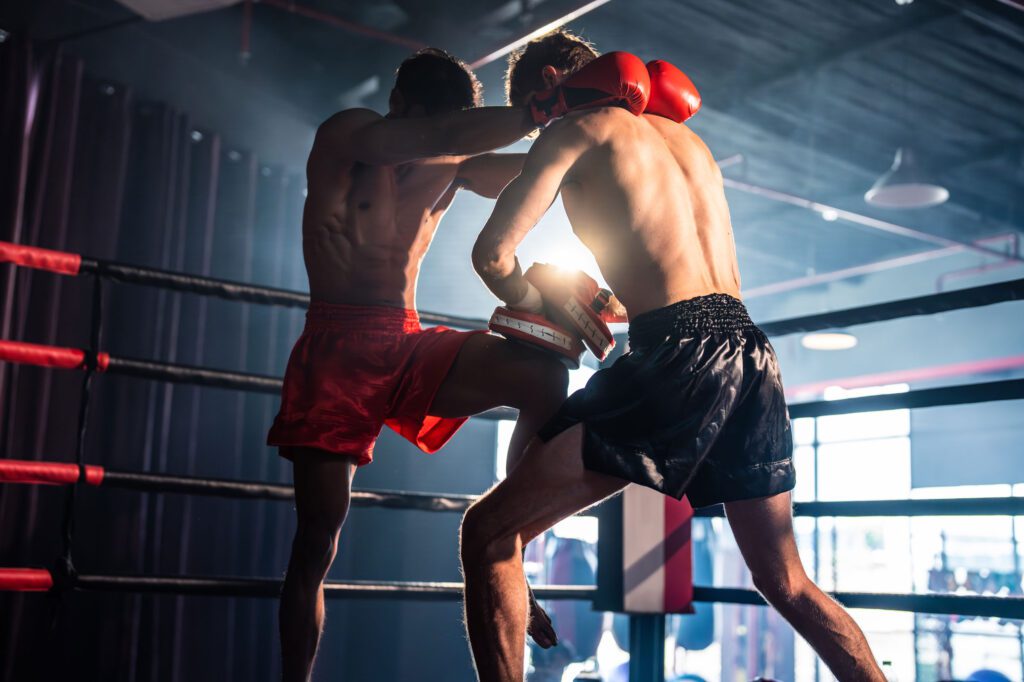
1. The Origin of Muay Thai
Where survival shaped discipline
Muay Thai did not begin as a sport.
It began as a necessity.
It emerged in times when people needed to protect themselves, their families, and their communities. In a world where certainty was rare, physical readiness mattered. The body had to respond instinctively, efficiently, and without hesitation.
These skills were not developed for display.
They were shaped by responsibility—toward others as much as toward oneself. Movements were practical. Techniques were refined through repetition. What worked remained. What did not, disappeared.
Over time, this knowledge spread beyond moments of conflict.
It settled into daily life, passed on through teaching and practice. What began as survival gradually became discipline. Instinct turned into control. Strength learned restraint.
This is why Muay Thai carries a quiet seriousness.
Power is present, but never careless.
Engagement is deliberate, never rushed.
Even today, its origins can still be felt.
In the calm before action.
In the respect for timing and distance.
In the understanding that true readiness is not constant aggression, but awareness—of oneself, and of others.
Muay Thai was shaped by the need to protect.
It endured because it taught people how to live with discipline, not just how to fight.
2. The Art of Using the Whole Body
What makes Muay Thai different
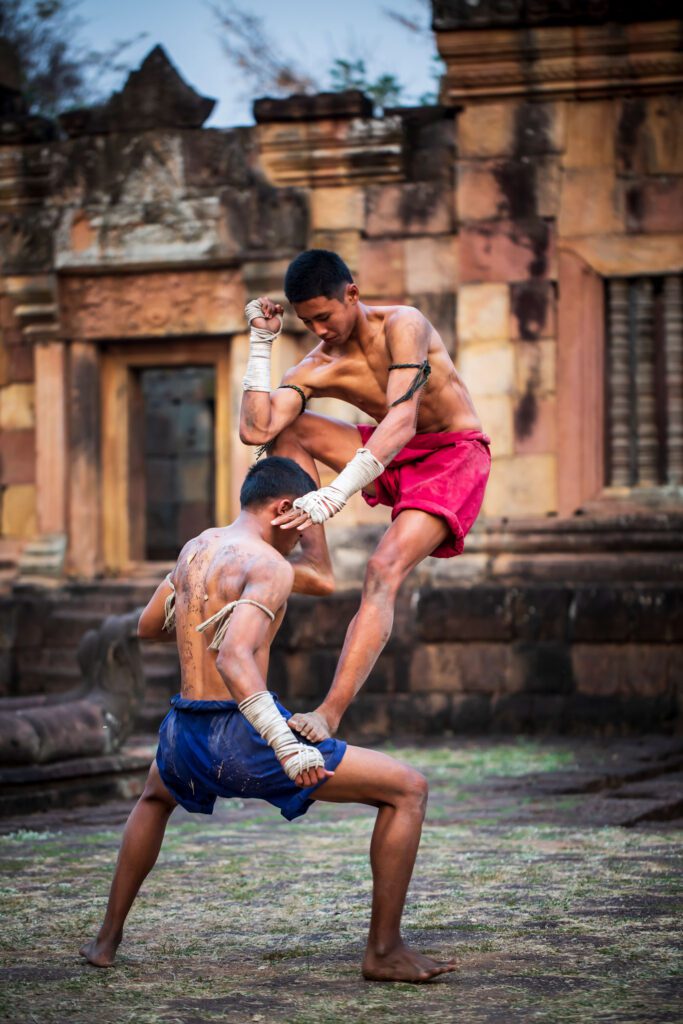
What truly sets Muay Thai apart from Western boxing is not aggression, but completeness.
While boxing focuses on the hands, Muay Thai trains the entire body as one connected system. Hands, elbows, knees, shins, posture, balance, and breath all work together. Nothing functions in isolation.
This approach changes how movement is understood.
A strike does not begin at the point of contact—it begins from the ground, travels through the legs, the core, and the spine, and only then reaches the surface. Every action is supported by structure.
Because of this, Muay Thai places great importance on stance, balance, and distance. Losing balance is considered a greater mistake than missing a strike. Control of space matters more than constant motion.
This is also why Muay Thai appears measured rather than explosive.
Fighters conserve energy, protect their posture, and wait for moments where the entire body can move as one.
Using every part of the body does not mean constant attack.
It means understanding when each part is appropriate—and when restraint is the wiser choice.
In Muay Thai, the body is not a collection of weapons.
It is a single instrument, trained to move with intention, efficiency, and awareness.
This philosophy is what gives Muay Thai its distinct rhythm—and why it feels less like a fight, and more like a practiced form of movement.
3. Inspired by Nature and Myth
How movement became meaning
Muay Thai is not built from technique alone.
Its movements carry stories.
Many traditional techniques draw inspiration from nature. The way animals move—how they balance, strike, and defend themselves—has long been observed and adapted. A movement inspired by a crocodile’s sweeping tail (Chorakhe Fad Hang – จระเข้ฟาดหาง), for example, reflects both power and control, delivered with grounded stability rather than speed alone.
At the same time, Muay Thai is shaped by imagination and belief.
Some movements are named after figures from classical literature and mythology. A technique inspired by Hanuman, the monkey warrior, is not only about agility, but about courage, loyalty, and spirit. These names are not decorative; they help practitioners remember both form and intention.
Nature offers efficiency.
Myth offers meaning.
Together, they remind practitioners that Muay Thai is more than mechanics. Each movement carries an attitude—decisive or restrained, playful or commanding. Technique becomes a way to express understanding, not just execution.
This blend of the physical and the symbolic gives Muay Thai its depth.
Training the body also trains perception. Learning a movement means learning when, why, and how it should exist.
In Muay Thai, movement is never empty.
It carries echoes of nature, imagination, and the human need to turn experience into meaning.
4. Why the Wai Kru Matters
Respect before resistance
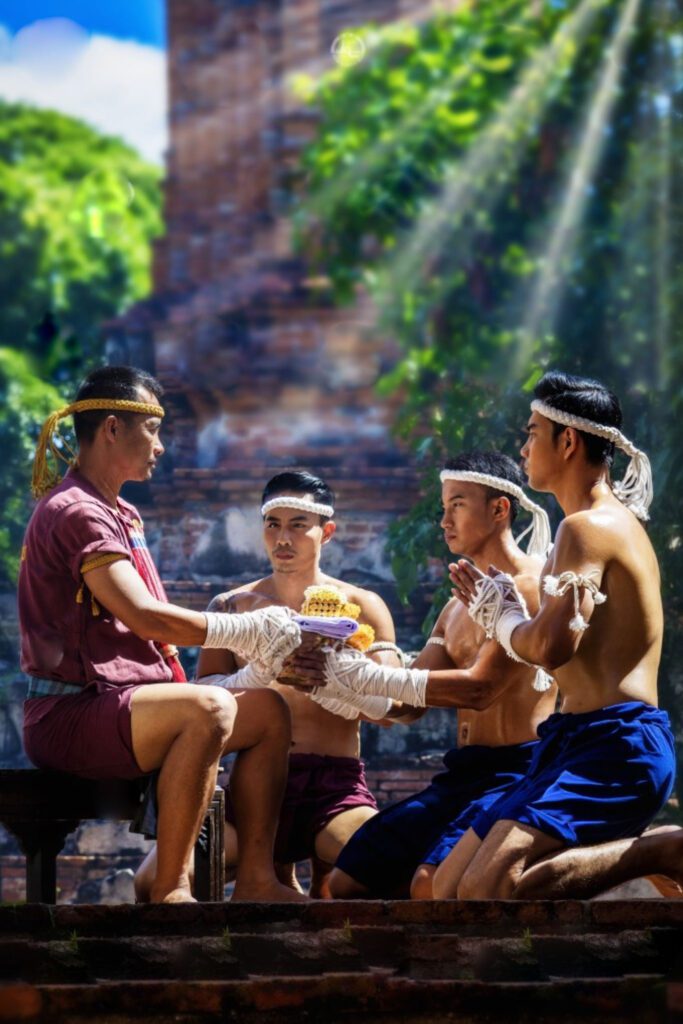
Before a Muay Thai fight begins, there is no strike, no confrontation.
There is the Wai Kru (a traditional ritual of respect performed before a match).
To an unfamiliar eye, it may look ceremonial.
To those who understand Muay Thai, it is essential.
The Wai Kru is a moment of grounding. Fighters slow their breath, calm their thoughts, and reconnect with where they come from. It is a gesture of respect—to teachers, to family, to lineage, and to the path that brought them here.
In Muay Thai, no one stands alone.
Every movement is inherited. Every skill is shaped by guidance. The Wai Kru acknowledges this invisible network of support before any physical exchange takes place.
This ritual also prepares the mind.
It marks a transition—from everyday life into focused presence. Aggression is set aside. Awareness takes its place. The fighter enters the space not to prove superiority, but to perform with discipline.
For this reason, the Wai Kru is not optional tradition.
It is part of training the inner state, just as much as pad work trains the body. Respect comes first, because without it, control cannot exist.
In a culture where competition often begins with confrontation, Muay Thai begins with humility.
The Wai Kru reminds us that strength is not only measured by force—but by the ability to pause, to acknowledge others, and to carry oneself with intention before action.
5. The Mongkhon
Progress you cannot rush
In Muay Thai, progress is not measured by titles or trophies alone.
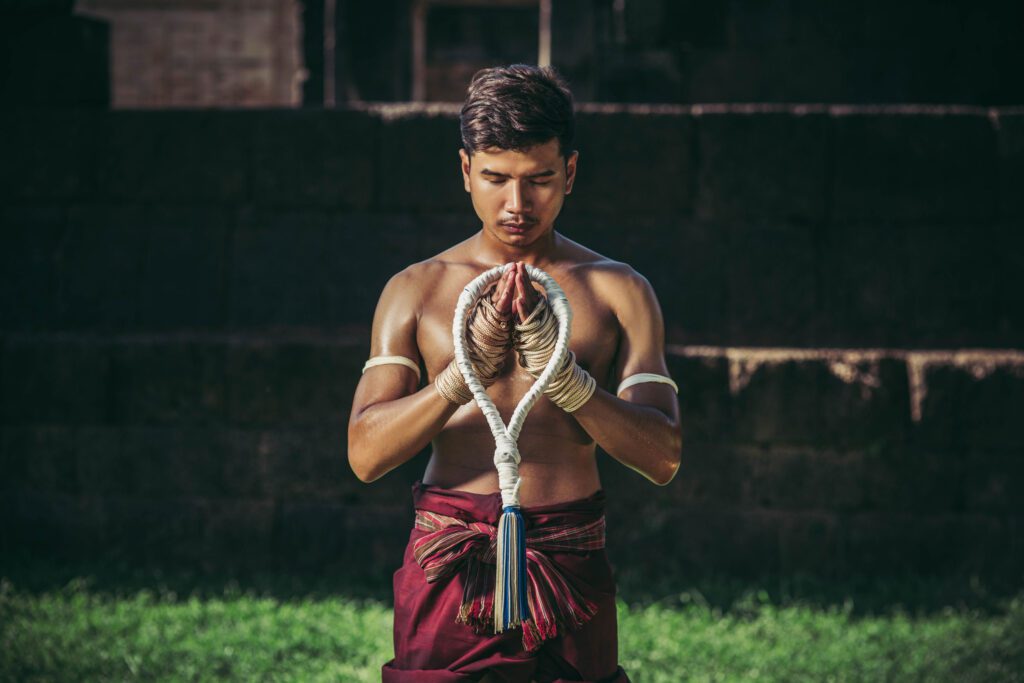
It is symbolized by the Mongkhon—the traditional headband worn by fighters.
The Mongkhon is not decoration.
It represents trust, time, and transmission of knowledge. Traditionally, it is given by a teacher, not chosen by the fighter. There are levels, but they are not standardized, and they cannot be demanded or accelerated.
This is what makes the Mongkhon different.
It does not reward ambition. It reflects readiness.
Receiving one means more than learning techniques. It suggests that a student has shown discipline, respect, and consistency. Skill matters, but attitude matters just as much. Progress is recognized quietly, often when the student is no longer focused on recognition.
In a world used to quick results and visible rankings, this approach feels unfamiliar.
Muay Thai accepts that growth is uneven. Some lessons take longer to settle into the body and mind. No symbol is given before its time.
The Mongkhon reminds practitioners that learning is relational.
Knowledge moves from teacher to student through patience and responsibility. Advancement is not taken—it is entrusted.
In Muay Thai, you cannot rush understanding.
And that is precisely why it lasts.
6. How to Watch Muay Thai with Understanding
A simple guide before you go deeper
If you’re watching Muay Thai for the first time, here is an easy way to follow the fight—without needing to know every rule.
Start by watching the distance.
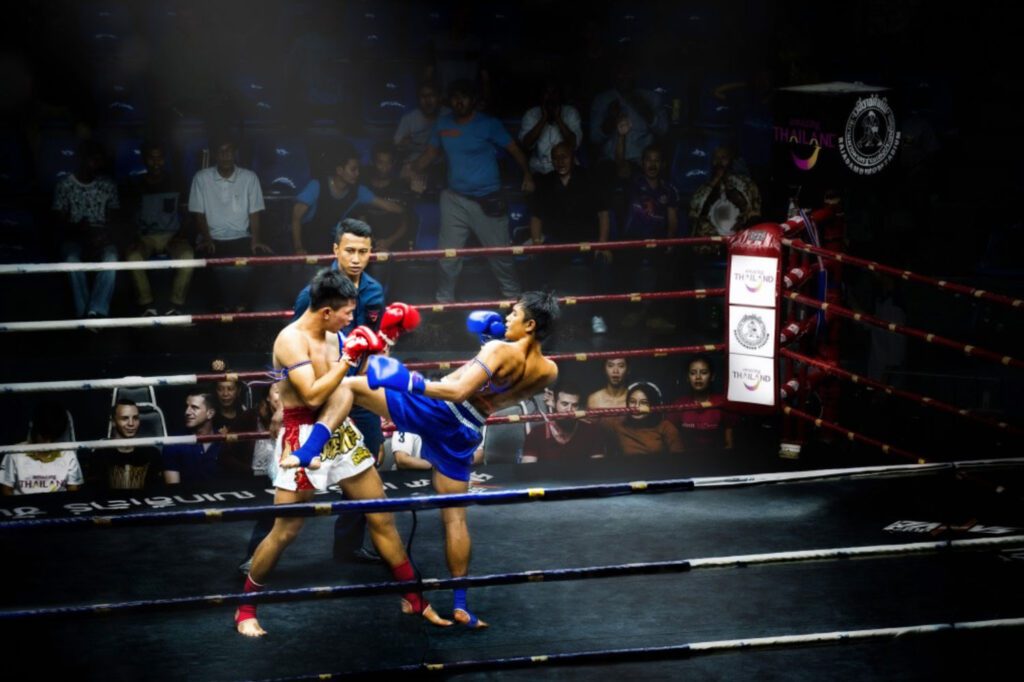
Notice how far the fighters stand from each other, and how that distance changes. Muay Thai is built on range. The closer they get, the more options appear—hands, elbows, knees, and kicks.
Then watch the balance.
After a strike lands, who stays stable? Who is forced to step back, stumble, or reset their posture? In Muay Thai, losing balance often says more than taking a hit.
Next, look for clean impact.
Not every strike carries weight. Some are touches, some are setups, and some are meant to disrupt rhythm. Watch which techniques clearly affect the opponent—physically or emotionally.
Now listen to the rhythm of the match.
Muay Thai is watched in many settings—local rings, tourist-friendly venues, or grand stadiums. The atmosphere can change, but the rhythm remains: moments of testing, moments of escalation, and moments of control.
For the most iconic experience, many fans look to Rajadamnern Stadium, where tradition is now presented with modern immersive lighting and sound design—making it easier for newcomers to follow the pace without losing the essence of the fight.
Once you feel these basics—distance, balance, clean impact, and rhythm—the deeper layer starts to reveal itself.
Because Muay Thai is not constant exchange.
It is a conversation of timing, control, and restraint. Fighters read each other, test reactions, and adjust pace. What looks quiet is often deliberate. What looks passive can be a form of dominance.
This is why experienced spectators watch differently.
They look beyond speed and volume. They observe composure, posture, and reaction. They notice who remains calm—and who is being pulled out of balance.
To watch Muay Thai with understanding is to slow down.
It is to accept that meaning often lives between movements, not within them.
Once this perspective settles in, Muay Thai changes—whether you’re watching in a small local ring or a grand stadium. It becomes precise, intentional, and deeply measured: a discipline you can see, even before you fully understand it.
Muay Thai can be experienced daily at Rajadamnern Stadium, located on Ratchadamnoen Avenue in the heart of Bangkok. Matches are held every day, starting at 5:00 PM, offering visitors the opportunity to witness Muay Thai in one of its most historic settings.
Program details and ticket reservations are available at www.rajadamnern.com
7. The Sound of the Fight
What the music tells you
If you’ve never watched Muay Thai before, the music can feel unexpected.
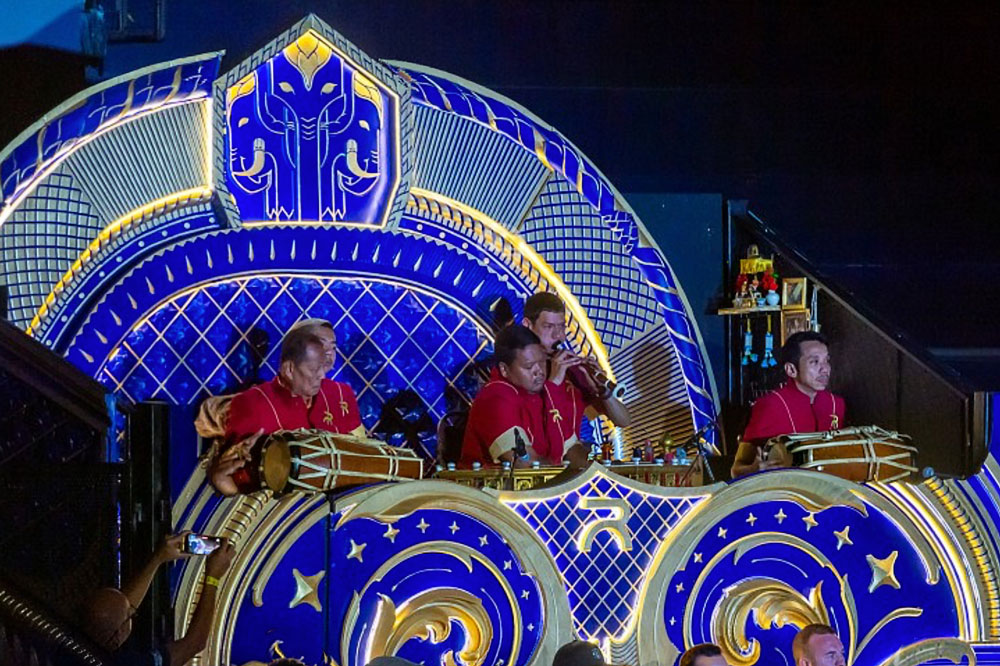
It plays throughout the match, rising and falling with the action. At first, it may sound unfamiliar—but it is not background noise.
Start by listening to the pace.
The music begins slowly, giving space for fighters to feel each other out. As the fight develops, the tempo increases. When the rhythm tightens, it signals escalation—more commitment, more intensity, more consequence.
Listen for changes, not volume.
The music does not simply get louder. It reacts. When the fight becomes tense, the sound sharpens. When control is established, it steadies. Even without watching closely, you can sense when the balance of the match is shifting.
This musical structure helps guide both fighters and spectators.
For fighters, it reinforces timing and emotional control. For viewers, it acts like a narrator—quietly telling you when something matters.
Once you become aware of this, the experience changes.
Muay Thai is not silent because it is violent.
It is musical because it is measured.
The sound creates a shared rhythm between movement and attention. It slows the urge to rush. It reminds everyone in the space—fighters, judges, audience—to stay present, to read the moment, and to respond rather than react.
This is why watching Muay Thai with the music muted feels incomplete.
The fight loses its pulse. The subtle transitions disappear.
In Muay Thai, sound is not decoration.
It is structure.
And once you begin to hear it, you realize that the fight is not only seen—it is listened to, felt, and understood through rhythm as much as force.
8. Understanding Muay Thai Scoring
A quick guide before going deeper
Before trying to understand the philosophy of Muay Thai, it helps to know how it is judged.
Muay Thai is scored over five rounds. Judges do not count how many strikes are thrown. They look at effect.
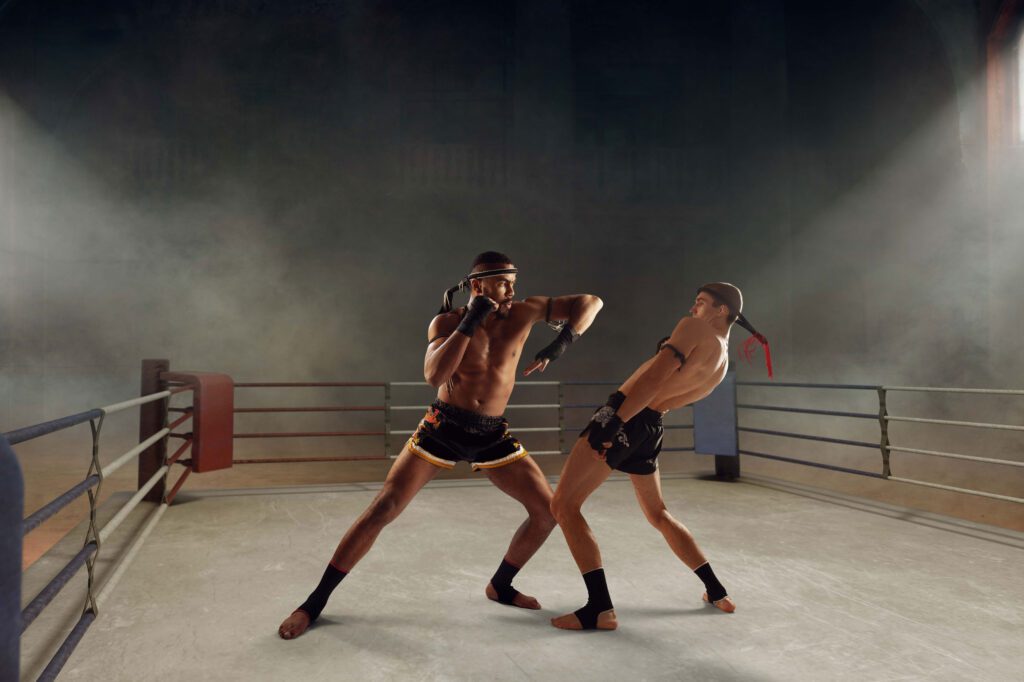
A technique scores when it lands cleanly and clearly affects the opponent. Kicks and knees that disrupt balance often carry more weight than fast punches that cause little reaction.
Balance is key.
If a fighter remains stable after contact while the opponent stumbles, steps back, or loses posture, the advantage is clear. Control matters more than constant pressure.
Clinch work also counts.
Knees delivered with control, dominance in position, and visible composure are valued. Holding without action is not.
Rounds are judged as a whole.
Judges assess who controls the pace, who adapts, and who finishes exchanges with authority. A single moment rarely decides a round unless it clearly shifts dominance.
This system explains why Muay Thai can look calm.
Fighters conserve energy, choose moments carefully, and avoid unnecessary exchanges.
Once these basics are understood, the philosophy becomes clearer.
Muay Thai rewards clarity over chaos, control over volume, and understanding over urgency.
9. Starting Muay Thai
How beginners begin
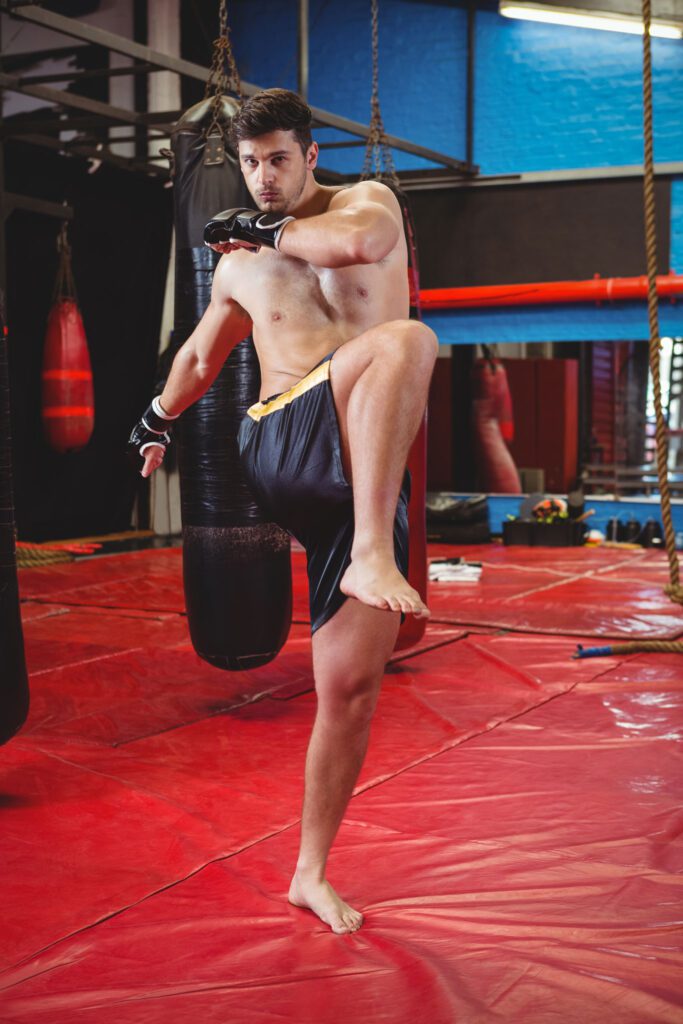
Starting Muay Thai does not require prior experience, nor does it demand full-time commitment. Most beginners begin with basic training that focuses on stance, balance, and simple movement. Before power or speed is introduced, students learn how to stand correctly, how to shift weight, and how to protect the body.
Training is usually gradual. Many people start by training two or three days a week, allowing the body time to adapt. Daily training is common among serious practitioners, but it is not expected from beginners. Progress comes from consistency rather than intensity.
While Muay Thai can be physically demanding, it is not inaccessible. Good gyms adjust training to individual ability, and mixed-level classes are common. Fatigue is part of the process, but pressure is not. Learning happens at a personal pace, guided by repetition and correction rather than competition.
Muay Thai is taught throughout Thailand in many forms. Some gyms are small and rooted in local communities, while others are structured to welcome international students. Training can last a few days, several weeks, or extend into months, depending on personal goals. There is no fixed timeline and no requirement to compete.
For those who wish to stay longer, Thailand now offers long-stay visa options that support cultural learning, including Muay Thai training. This makes extended study more accessible and allows visitors to train legally while immersing themselves in the practice.
Beginning Muay Thai is not about becoming a fighter.
It is about learning a discipline step by step—through movement, routine, and attention—without needing to rush the outcome.
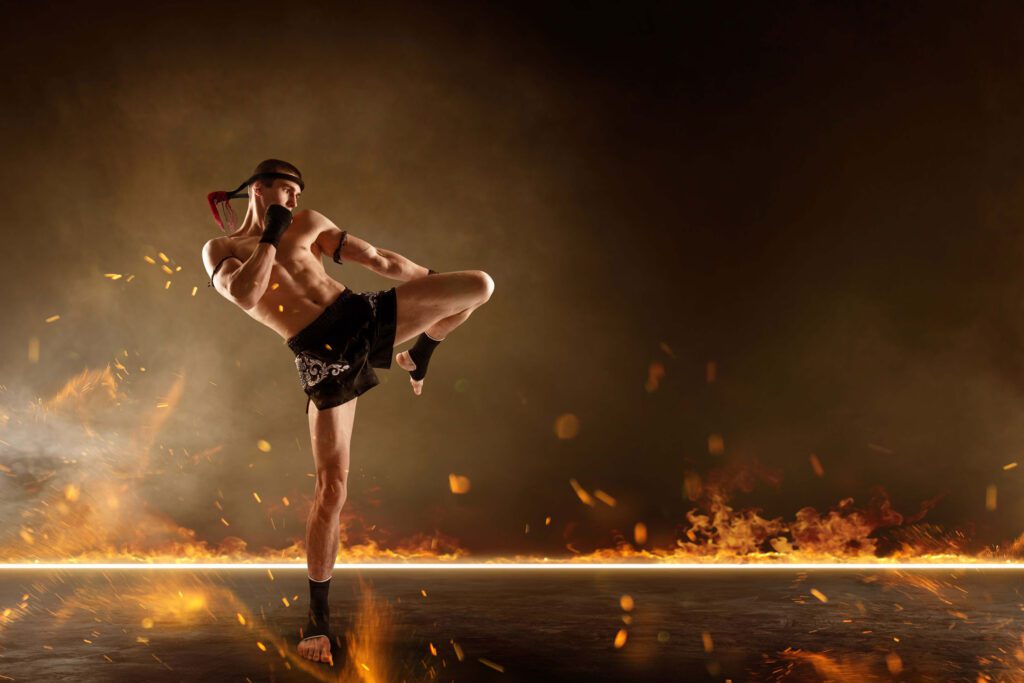
10. What Muay Thai Teaches Beyond the Ring
When practice becomes perspective
Muay Thai rarely announces what it teaches.
Its lessons appear gradually, often after the body has learned before the mind catches up.
Through repetition, movement becomes economical. Effort is no longer wasted. You learn to conserve energy, to breathe, to wait. Not every moment requires action. Not every opening must be taken. Restraint becomes a skill, not a hesitation.
Training also reshapes attention.
You become aware of balance—physical and mental. When posture breaks, recovery matters more than panic. When pressure rises, composure becomes a choice. These patterns extend beyond training and quietly enter daily life.
Respect is reinforced without instruction.
Progress depends on listening. Learning happens through patience, not force. Advancement is earned through consistency, not urgency. Over time, ego loses its usefulness.
This is why Muay Thai stays with people long after they stop training.
It offers a way to move through difficulty without rushing, to respond rather than react, and to understand that control is not the absence of power—but its proper use.
What begins as a physical practice often becomes something else entirely.
A rhythm.
A discipline.
A way of carrying oneself.
Muay Thai does not promise transformation.
It simply provides the conditions where it can happen—quietly, steadily, and on one’s own terms.
And that may be its most enduring lesson.
Recommend Muay Thai gyms
FITFAC Muaythai
Mahatun Plaza , Ploenchit, Bangkok
Facebook : Fitfac Muaythai – เพัลินจิต (Mahatun Plaza)
Project H Group
Samyan Mitrtown, Bangkok
Facebook : Project H Muay-Thai Gym
Khongsittha Muay Thai
Sukon Sawat road, Bangkok
Facebook : Khongsittha Muay Thai
Thai Fight Hotel
Lamai, Koh Samui
Facebook : Thai Flight Hotel, Lamai, Ko Samui
Buakaw Village
Mae Teang , Chiang Mai
Facebook : Buakaw Village บัวขาว วิลเลจ
The Bear Fight Club Muaythai Chiang Mai
Ratchamanka road, Chiang Mai City
Phuket Fight Club
Chalong, Phuket.
Facebook : Phuket Fight Club
Experience the Wai Kru in Its Full Meaning
Every year, Thailand hosts the World Wai Kru Muay Thai Ceremony, a gathering that brings together Muay Thai practitioners, teachers, and enthusiasts from around the world.
The event honors the tradition of Wai Kru through a large-scale ceremonial performance, cultural activities, and demonstrations of classical techniques. It is not a competition, but a celebration of respect, lineage, and shared heritage.
The ceremony takes place each March in Phra Nakhon Si Ayutthaya, the former capital of Thailand and a UNESCO World Heritage city—adding historical depth to the ritual itself.
For updates and festival information, visit:
www.thailandfestival.org
Share


